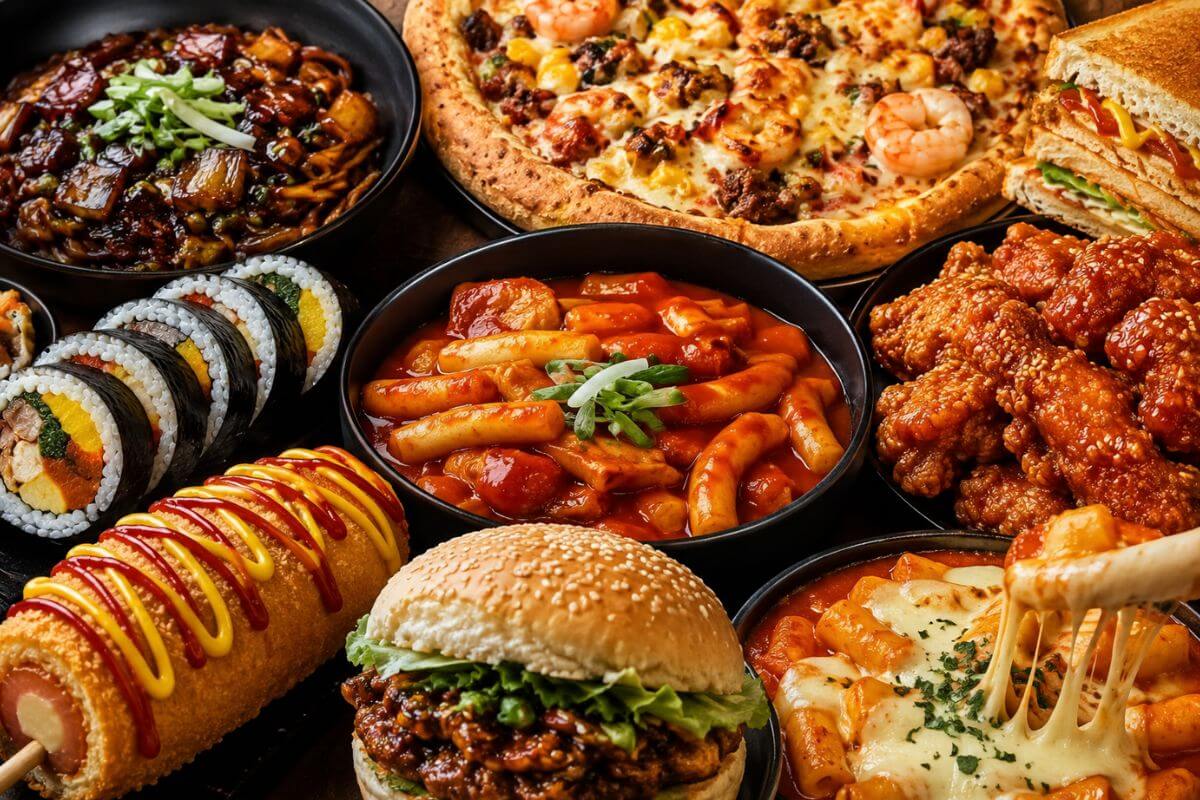
When you think about Korean food, dishes like kimchi, bibimbap, and bulgogi probably come to mind first. But if you spend time in South Korea, you quickly notice something interesting. Koreans are incredibly good at taking foods from other countries and turning them into something completely unique.
Instead of simply copying international dishes, Korea often adds bold flavors, spicy sauces, local ingredients, creative presentation, and fast-paced dining culture. The result is food that feels both familiar and totally different at the same time.
You might walk into a restaurant expecting ordinary pizza or fried chicken, only to discover flavors and combinations you would never see anywhere else. Some of these Korean versions have even become more popular than the originals among younger generations.
In this article, you will explore the top international foods that Koreans transformed into their own culinary creations and why these dishes became such a huge part of everyday life in Korea.
Quick Summary Table 📋
| Rank | Food | Original Country | Korean Twist |
|---|---|---|---|
| 1 | Fried Chicken | United States | Ultra crispy coating with spicy sauces |
| 2 | Pizza | Italy | Sweet potato crusts and unusual toppings |
| 3 | Chinese Black Bean Noodles | China | Jjajangmyeon became a Korean comfort food |
| 4 | Hot Dogs | United States | Korean corn dogs with sugar and cheese |
| 5 | Japanese Curry | Japan | Sweeter and milder Korean curry |
| 6 | Spam Dishes | United States | Turned into beloved comfort meals |
| 7 | Toast Sandwiches | Western Style | Street toast with cabbage and sauces |
| 8 | Sushi | Japan | Bigger rolls and stronger flavors |
| 9 | Hamburgers | United States | Bulgogi burgers and rice buns |
| 10 | Tteokbokki Fusion | Western Fusion | Cheese, cream sauces, and global flavors |
How We Ranked These Foods 🏆
We used several factors to decide which international foods truly became part of Korean food culture:
- Popularity across all age groups
- How different the Korean version feels from the original
- Influence on Korean street food and restaurant culture
- Unique Korean ingredients and flavors
- Long-term cultural impact
- Creativity and innovation
- How often locals choose the Korean version over the original
- Global recognition of the Korean adaptation
1. Korean Fried Chicken 🍗
Fried chicken may have started in the United States, but Korea completely reinvented it.
Korean fried chicken is famous for its incredibly crispy texture. The chicken is usually double-fried, which creates a thinner and crunchier coating than traditional American fried chicken. Instead of thick breading, Korean versions focus on light crispiness that stays crunchy longer.
The sauces are what truly changed the game. Korean fried chicken often comes coated in flavors like:
- Sweet and spicy gochujang sauce
- Soy garlic glaze
- Honey butter seasoning
- Cheese powder
- Green onion toppings
In Korea, fried chicken is not just fast food. It is deeply connected to social culture. People gather for “chimaek,” which combines chicken and beer, especially during sports games or late-night hangouts.
You will also notice that Korean fried chicken restaurants are everywhere, from tiny neighborhood shops to major chains. Many people outside Korea now specifically search for Korean-style fried chicken because it feels so different from the original American version.
2. Korean Style Pizza 🍕
Italian pizza lovers might be shocked by what Korea did to pizza, but many visitors end up loving it.
Korean pizza is known for being adventurous, colorful, and sometimes surprisingly sweet. While traditional Italian pizza focuses on simplicity, Korean pizza embraces creativity.
Some popular Korean pizza features include:
- Sweet potato mousse crusts
- Corn toppings
- Shrimp and seafood
- Bulgogi beef
- Pickles on the side
- Cheese-stuffed crusts
- Sweet dipping sauces
One of the biggest differences is balance. Korean pizza often mixes sweet, salty, creamy, and savory flavors all in one bite.
Korean pizza chains also focus heavily on presentation. Pizzas can look dramatic, overloaded with toppings, and designed for sharing during group gatherings.
Even though pizza came from Italy, Korean pizza has become its own food category entirely.
3. Jjajangmyeon 🍜
Jjajangmyeon originally came from Chinese immigrants, but Korea transformed it into one of its most beloved comfort foods.
The dish uses noodles topped with thick black bean sauce, diced pork, and vegetables. While inspired by Chinese zhajiangmian, the Korean version tastes noticeably different.
Korean jjajangmyeon is:
- Sweeter
- Thicker
- Less salty
- More sauce-heavy
Today, many Koreans associate jjajangmyeon with moving day, graduation, quick delivery meals, and Black Day celebrations for singles.
What makes this dish special is how deeply it became connected to Korean daily life. Most people in Korea no longer see it as foreign food. It simply feels Korean now.
You can also find endless variations, including seafood jjajangmyeon and spicy versions that barely resemble the original Chinese dish anymore.
4. Korean Corn Dogs 🌭
Korean corn dogs exploded globally thanks to social media, but they have been popular in Korea for years.
Unlike traditional American corn dogs, Korean versions are larger, crunchier, and much more creative.
You will commonly see fillings like:
- Mozzarella cheese
- Half sausage and half cheese
- Rice cakes
- Sweet potato cubes
After frying, many Korean corn dogs are coated with sugar before adding ketchup and mustard. That sweet and savory combination surprises many first-time visitors.
The outside coating is also different. Korean corn dogs often use panko breadcrumbs for extra crunch instead of traditional cornmeal batter.
This food perfectly represents Korea’s ability to take something simple and turn it into a fun, visually exciting street snack.
5. Korean Curry 🍛
Japanese curry entered Korea during the 20th century, but Korean curry eventually developed its own personality.
Korean curry is usually milder, sweeter, and lighter than many Japanese versions. It is often served over rice with vegetables, potatoes, carrots, and meat.
One major difference is convenience culture. Instant curry blocks became extremely popular in Korean households because they were affordable and easy to prepare.
Many Korean families grew up eating curry as a comforting home meal during busy weekdays.
Modern Korean restaurants have also expanded curry into creative forms like:
- Curry donkatsu
- Curry fried rice
- Cheese curry
- Spicy Korean curry fusion dishes
Even though its roots are foreign, curry now feels like a nostalgic childhood food for many Koreans.
6. Spam Dishes in Korea 🥫
Few countries embraced Spam as passionately as Korea.
Spam became popular during difficult economic periods after the Korean War, when processed foods from the United States military became more available. Over time, Koreans transformed Spam into an ingredient used in comforting and flavorful meals.
Today, Spam appears in dishes such as:
- Budae jjigae
- Kimchi fried rice
- Kimbap
- Spam rice bowls
In many Western countries, Spam is often treated as a joke food. In Korea, it became something genuinely appreciated.
Spam gift sets are even more popular during holidays like Chuseok and Lunar New Year. That level of cultural acceptance is rare anywhere else in the world.
Koreans found ways to pair Spam with rice, kimchi, eggs, and spicy sauces that made it feel perfectly suited to Korean cuisine.
7. Korean Street Toast 🥪
Korean street toast may look simple, but it has become one of Korea’s most iconic breakfast foods.
Inspired by Western toast sandwiches, Korea added its own style through sweetness, sauces, and texture combinations.
Typical Korean street toast includes:
- Egg omelet
- Cabbage
- Ham
- Cheese
- Sugar
- Ketchup
- Mayonnaise
The sweet and savory combination is what makes it memorable. The sugar sprinkled inside surprises many tourists at first, but it quickly becomes addictive.
Street toast is also strongly connected to the Korean commuting culture. Vendors near subway stations and schools helped make it an everyday breakfast option for students and office workers.
Today, many cafes and restaurants still modernize this humble street food with upgraded ingredients and gourmet versions.
8. Korean Style Sushi 🍣
Japan introduced sushi to Korea, but Korean-style sushi developed its own identity over time.
Korean sushi often uses stronger flavors, more fillings, and larger portions. It also tends to include ingredients that traditional Japanese sushi rarely uses.
Korean sushi restaurants may feature:
- Cream cheese
- Fried shrimp
- Spicy sauces
- Beef bulgogi
- Tempura flakes
Meanwhile, Korean kimbap evolved separately into another rice roll category entirely.
Korean diners often prefer richer flavors and more texture variety, which influenced how sushi changed locally. Many rolls are designed to feel more filling and satisfying as complete meals rather than delicate tasting experiences.
The Korean approach made sushi more approachable for younger and casual diners.
9. Korean Style Burgers 🍔
American burgers became extremely popular in Korea, but Korean restaurants quickly began adding local flavors.
One of the most famous examples is the bulgogi burger, which combines sweet marinated beef flavors with classic burger structure.
Korean burger trends also include:
- Kimchi toppings
- Rice buns
- Spicy sauces
- Shrimp patties
- Garlic-heavy flavors
Fast food chains in Korea frequently release limited-edition burgers inspired by Korean dishes and seasonal ingredients.
Another unique feature is presentation. Korean burger cafes often focus heavily on aesthetics, making burgers look trendy and social media-friendly.
Over time, Korean burgers became less about copying American fast food and more about creating hybrid comfort food.
10. Fusion Tteokbokki 🍲
Tteokbokki itself is Korean, but modern fusion versions show how Korea blends international food influences into traditional dishes.
Classic tteokbokki uses spicy red pepper sauce with chewy rice cakes. But today, restaurants constantly experiment with global flavors.
Popular fusion styles include:
- Cream tteokbokki
- Rose sauce tteokbokki
- Curry tteokbokki
- Carbonara tteokbokki
- Mala tteokbokki
These versions combine Korean street food culture with Italian, Chinese, and Western influences.
The result is something uniquely Korean because the dish still keeps its original identity while absorbing outside inspiration.
This constant reinvention is one reason Korean food culture feels so exciting and modern.
Conclusion 🎯
Korea has an incredible talent for transforming international foods into something new and unforgettable. Instead of simply importing dishes, Korean food culture adapts them to local tastes, social habits, and creativity.
That is why Korean fried chicken feels different from American fried chicken, and Korean pizza barely resembles traditional Italian pizza. These foods evolved into experiences shaped by Korean culture, ingredients, and dining style.
If you ever visit Korea, try these reinvented dishes to get a fascinating look at how global food can change when it meets local imagination. You may even discover versions you enjoy more than the originals.
Korean cuisine is not only about preserving tradition. It is also about constantly experimenting, mixing cultures, and creating flavors people never expected.
Frequently Asked Questions ❓
Why do Koreans change international foods so much?
Korean food culture values strong flavors, creativity, and shared dining experiences. Many international foods are adjusted to better match local tastes and social habits.
Are Korean versions of international foods healthier?
Not always. Some Korean adaptations use more sauces, cheese, sugar, or fried ingredients. However, many dishes also include vegetables, fermented foods, and balanced side dishes.
Which Korean fusion food became most famous globally?
Korean fried chicken is probably the most globally recognized Korean adaptation. Korean corn dogs and Korean pizza are also becoming increasingly popular worldwide.
Do younger Koreans prefer fusion foods over traditional foods?
Many younger Koreans enjoy both. Traditional foods remain important, but fusion dishes are popular because they feel modern, fun, and convenient.
Can you find these Korean style foods outside Korea?
Yes. Korean restaurants around the world now serve dishes like Korean fried chicken, Korean corn dogs, bulgogi burgers, and fusion tteokbokki due to growing global demand.