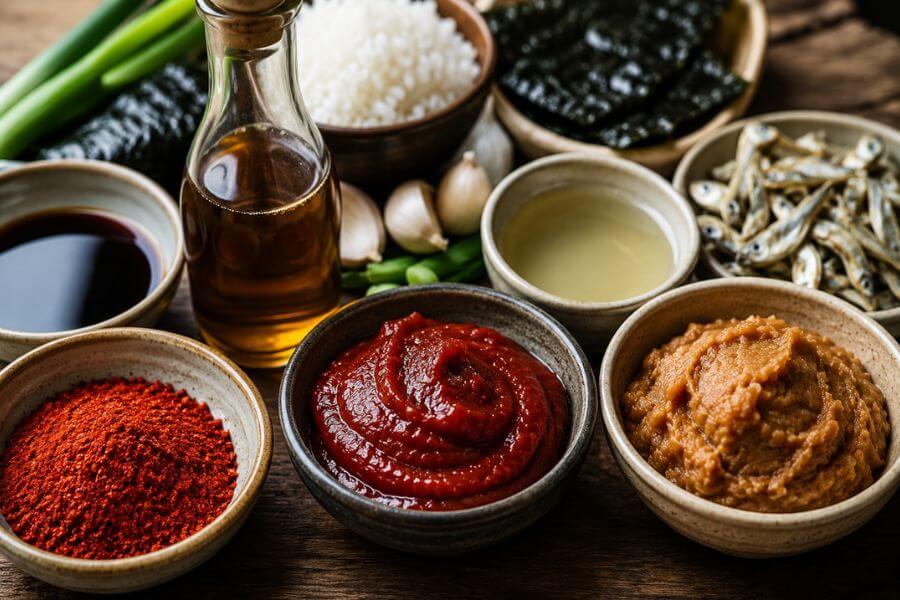
If you have ever watched a K-drama and suddenly felt hungry, you are not alone. From bubbling stews and sizzling barbecue to comforting ramen and colorful bibimbap, Korean dramas often showcase delicious food that becomes part of the story. The good news is that many of these iconic dishes use a handful of pantry staples that are easy to keep at home.
Stocking your pantry with the right Korean cooking ingredients allows you to recreate many of the meals you see on screen. Whether you are making a quick weeknight dinner or hosting a Korean-inspired feast, these ingredients provide authentic flavor and versatility. In this guide, you will discover the best K-drama cooking ingredients to stock in your pantry and how to use them in everyday cooking.
Quick Summary Table 🍜
| Ingredient | Best For | Flavor Profile |
|---|---|---|
| Gochujang | Stews, marinades, bibimbap | Spicy, sweet, savory |
| Gochugaru | Kimchi, soups, sauces | Smoky, mildly spicy |
| Soy Sauce | Marinades, stir-fries | Salty, umami-rich |
| Sesame Oil | Finishing dishes | Nutty and aromatic |
| Doenjang | Stews and soups | Deep, fermented flavor |
| Rice Vinegar | Dressings and side dishes | Mildly tangy |
| Korean Seaweed | Rice dishes and soups | Savory ocean flavor |
| Korean Rice | Everyday meals | Soft and slightly sticky |
| Anchovy Stock Packs | Soups and stews | Rich umami base |
| Corn Syrup | Korean sauces and glazes | Mild sweetness and shine |
How We Ranked These Ingredients 🔍
We evaluated each ingredient using the following factors:
- Authenticity in traditional Korean cooking
- Frequency of appearance in popular K-drama meals
- Versatility across different recipes
- Ease of storage in a home pantry
- Long shelf life
- Ability to create authentic Korean flavors
- Value for money
- Beginner friendliness for home cooks
1. Gochujang – Korean Red Chili Paste 🌶️
If there is one ingredient that represents Korean cooking, it is gochujang. This thick red chili paste appears in countless dishes featured in K-dramas. From spicy pork bulgogi to bibimbap and hearty stews, gochujang delivers the signature flavor many people associate with Korean cuisine.
Gochujang combines fermented soybeans, glutinous rice, red pepper powder, and salt. The result is a unique balance of sweetness, heat, and savory depth.
Why you should stock it:
- Creates authentic Korean flavor instantly
- Works in marinades, sauces, soups, and stews
- Lasts a long time when refrigerated
- A little goes a long way
Try mixing it with soy sauce, garlic, and sesame oil to create an easy marinade for chicken or beef.
2. Gochugaru – Korean Red Pepper Flakes 🔥
Many people confuse gochugaru with regular chili flakes, but they are very different. Korean red pepper flakes have a brighter color, milder heat, and slightly smoky taste.
Gochugaru is essential for making kimchi, spicy soups, and Korean side dishes. It provides beautiful color and balanced spice without overwhelming a dish.
Why you should stock it:
- Essential for authentic kimchi
- Adds color and flavor to recipes
- Less harsh than many chili powders
- Suitable for a wide variety of dishes
A small sprinkle can instantly make a simple soup taste more Korean.
3. Soy Sauce – The Foundation of Korean Cooking 🥢
Soy sauce appears in nearly every Korean kitchen. It provides saltiness and deep umami flavor that supports countless dishes.
In K-dramas, you often see soy sauce used in marinades for bulgogi, dipping sauces, and braised dishes. Korean soy sauce varieties can vary, but keeping a quality soy sauce in your pantry is a great starting point.
Why you should stock it:
- Used in countless recipes
- Enhances savory flavors
- Perfect for marinades and sauces
- Easy to find and store
Combining soy sauce with garlic, sesame oil, and sugar creates a classic Korean-style sauce.
4. Sesame Oil – The Secret Aroma ✨
One of the most recognizable smells in Korean cooking comes from sesame oil. Just a few drops can completely transform a dish.
Unlike cooking oils used for frying, sesame oil is often added at the end of cooking to preserve its nutty aroma. It is frequently used in bibimbap, vegetable side dishes, and dipping sauces.
Why you should stock it:
- Adds authentic Korean aroma
- Enhances vegetables and rice dishes
- Requires only small amounts
- Has many uses beyond Korean cuisine
Drizzle it over steamed rice for an easy K-drama-inspired comfort meal.
5. Doenjang – Korean Fermented Soybean Paste 🍲
Doenjang is one of Korea’s oldest and most important ingredients. This fermented soybean paste delivers rich savory flavor and complexity.
It is the star ingredient in doenjang jjigae, a comforting stew often featured in family scenes throughout K-dramas. The flavor is earthy, deep, and satisfying.
Why you should stock it:
- Excellent source of umami flavor
- Ideal for soups and stews
- Long shelf life
- Creates restaurant-quality depth
Many Korean households consider it an everyday essential.
6. Rice Vinegar – The Flavor Balancer 🍚
Rice vinegar may not get as much attention as gochujang or sesame oil, but it plays a valuable role in Korean cooking.
It adds brightness to side dishes, sauces, and vegetable preparations. The mild acidity balances spicy and rich flavors beautifully.
Why you should stock it:
- Creates balanced flavors
- Useful in dressings and pickles
- Mild taste compared to other vinegars
- Works in many Asian recipes
A splash of rice vinegar can refresh even the richest dishes.
7. Korean Seaweed (Gim) – A Pantry Hero 🌊
Korean seaweed is often served alongside rice, used in snacks, or added to soups. It is a common sight in Korean households and frequently appears in K-drama dining scenes.
Roasted seaweed sheets are especially convenient because they are ready to eat straight from the package.
Why you should stock it:
- Easy snack option
- Adds savory flavor to meals
- Rich in nutrients
- Requires no preparation
Pair seaweed with warm rice and sesame oil for a simple and satisfying meal.
8. Korean Rice – The Heart of Every Meal 🍽️
Most Korean meals start with rice. It serves as the foundation that brings together bold flavors from side dishes, stews, and grilled meats.
Short-grain Korean rice has a soft, slightly sticky texture that works perfectly with Korean cuisine.
Why you should stock it:
- Essential for authentic Korean meals
- Pairs with almost every dish
- Easy to prepare
- Filling and versatile
Many of the meals you see in K-dramas simply would not feel complete without a bowl of rice.
9. Anchovy Stock Packs – Instant Umami Boost 🐟
Many Korean soups and stews begin with anchovy broth. Traditionally, cooks simmer dried anchovies and seaweed to create a flavorful stock.
Modern anchovy stock packs make this process much easier while preserving authentic flavor.
Why you should stock it:
- Creates rich soup bases quickly
- Saves preparation time
- Essential for many traditional recipes
- Adds natural savory flavor
This ingredient helps recreate the comforting stews commonly seen in Korean family dramas.
10. Corn Syrup – The Glossy Sauce Secret 🍯
Corn syrup might seem surprising, but it is commonly used in Korean cooking. It adds sweetness while creating the glossy texture found in many Korean sauces.
You will often find it in spicy chicken dishes, stir-fries, and marinades.
Why you should stock it:
- Helps create authentic sauce texture
- Balances spicy ingredients
- Adds shine to finished dishes
- Easy to use in marinades
Many restaurant-style Korean dishes rely on corn syrup for their signature appearance and flavor balance.
Conclusion 🎬
Building a K-drama-inspired pantry is easier than you might think. With just a handful of core ingredients, you can recreate many of the meals that make Korean dramas so memorable. Gochujang, gochugaru, soy sauce, sesame oil, and doenjang form the foundation of countless recipes, while ingredients like seaweed, rice, and anchovy stock help complete authentic Korean meals.
By stocking these ten pantry essentials, you will always be ready to prepare comforting soups, flavorful rice bowls, spicy stir-fries, and many other dishes inspired by your favorite K-dramas. Over time, you will discover how these ingredients work together to create the bold and balanced flavors that have made Korean food popular around the world.
Frequently Asked Questions ❓
Can I make Korean food without all ten ingredients?
Yes. You can start with a few basics such as gochujang, soy sauce, sesame oil, and rice. As you cook more Korean dishes, you can gradually add the remaining ingredients to your pantry.
How long do Korean pantry ingredients usually last?
Most pantry staples, such as gochugaru, soy sauce, sesame oil, and seaweed, can last several months when stored properly. Fermented ingredients like gochujang and doenjang often last even longer when refrigerated.
Are Korean ingredients very spicy?
Not necessarily. Some ingredients, such as gochujang and gochugaru, add spice, but many Korean dishes focus on balanced flavors rather than extreme heat.
What is the best ingredient for beginners to buy first?
Gochujang is often the best starting point because it instantly adds authentic Korean flavor to many recipes and is very easy to use.
Where should I store these ingredients?
Dry ingredients should be kept in a cool, dry place. Fermented products, sesame oil, and opened sauces are generally best stored in the refrigerator to maintain freshness.