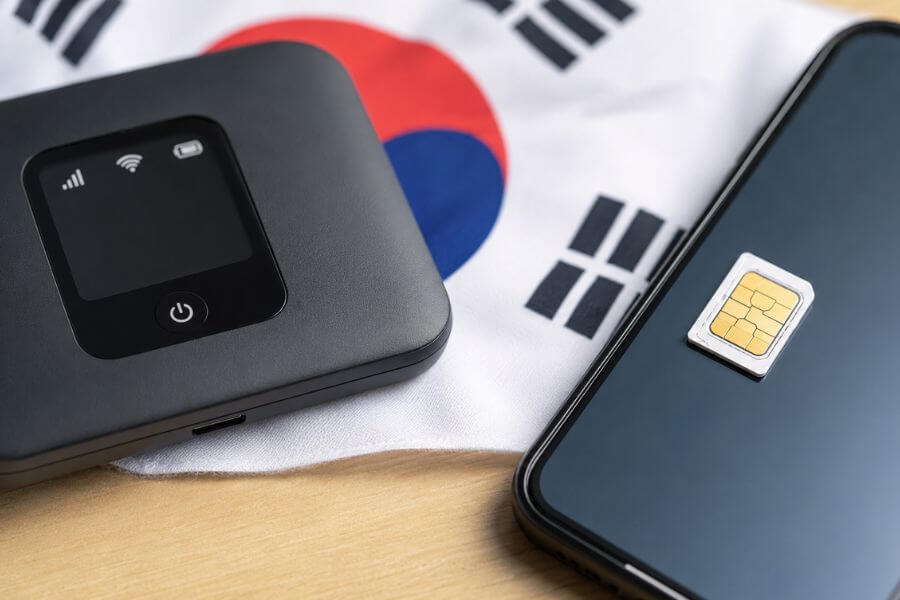
Staying connected in South Korea is easier than ever, but choosing the right internet solution can still feel overwhelming. Whether you’re visiting Seoul for a few days, exploring Busan’s beaches, skiing in Gangwon Province, or working remotely while traveling across the country, reliable internet is essential.
The good news is that South Korea has some of the fastest mobile networks in the world. You can choose between portable Wi-Fi routers that share internet with multiple devices or travel eSIMs that connect directly to your phone without needing any extra hardware.
In this guide, you’ll find the best portable Wi-Fi routers and travel eSIM options for South Korea in 2026. We evaluated each option based on speed, coverage, ease of use, value for money, and overall traveler experience.
Quick Summary Table 🌐
| Option | Type | Best For | Key Advantage |
|---|---|---|---|
| 1. KT Olleh Portable Wi-Fi | Portable Router | Families and groups | Excellent nationwide coverage |
| 2. SK Telecom Pocket Wi-Fi | Portable Router | Heavy data users | Fast 5G network access |
| 3. LG U+ Portable Wi-Fi | Portable Router | Budget travelers | Competitive pricing |
| 4. Solis Lite Hotspot | Portable Router | Multi-country trips | Works across many countries |
| 5. GlocalMe G4 Pro | Portable Router | Frequent travelers | No SIM card required |
| 6. Nomad eSIM | eSIM | Flexible travelers | Easy activation |
| 7. Airalo eSIM | eSIM | Budget-conscious visitors | Affordable plans |
| 8. Holafly eSIM | eSIM | Unlimited data users | Unlimited data options |
| 9. Ubigi eSIM | eSIM | Business travelers | Strong reliability |
| 10. GigSky eSIM | eSIM | Short-term visitors | Simple plan choices |
| 11. Maya Mobile eSIM | eSIM | Digital nomads | Flexible durations |
How We Ranked These Options 🔍
We evaluated each portable Wi-Fi router and travel eSIM using the following criteria:
- Network speed across major Korean cities
- Coverage in rural and mountain regions
- Ease of setup and activation
- Device compatibility
- Battery life for portable routers
- Data allowances and unlimited plans
- Overall value for money
- Customer support quality
- Reliability during peak travel seasons
- Suitability for tourists, remote workers, and business travelers
1. KT Olleh Portable Wi-Fi Router 📶
KT remains one of South Korea’s largest telecommunications providers and continues to offer one of the most reliable portable Wi-Fi solutions for visitors.
The KT Olleh Portable Wi-Fi router performs exceptionally well throughout Seoul, Incheon, Busan, Daegu, and Jeju Island. Coverage is strong even when traveling between cities on Korea’s extensive rail network.
One of its biggest advantages is its stability. Instead of experiencing frequent drops or slowdowns, users generally enjoy consistent speeds throughout their trip.
Why you’ll like it:
- Excellent nationwide coverage
- Reliable connection quality
- Strong battery performance
- Supports multiple devices simultaneously
- Great for families and travel groups
Potential downside:
- Usually costs slightly more than some competitors
2. SK Telecom Pocket Wi-Fi ⚡
If speed is your top priority, SK Telecom’s Pocket Wi-Fi is one of the strongest choices available.
SK Telecom operates one of the country’s most advanced mobile networks, delivering impressive 5G performance in urban areas. Streaming, video conferencing, and large file uploads are handled effortlessly.
This option works especially well for business travelers who need dependable internet throughout the day.
Why you’ll like it:
- Fast 5G speeds
- Excellent urban coverage
- Reliable for remote work
- Strong performance for video calls
Potential downside:
- Battery drains faster under heavy usage
3. LG U+ Portable Wi-Fi 💼
LG U+ offers an appealing balance between affordability and performance.
Many travelers choose this option because it provides solid speeds without the premium pricing often associated with larger providers. Coverage remains strong in most tourist destinations.
For travelers who simply need dependable internet for maps, messaging, social media, and occasional streaming, LG U+ is often more than sufficient.
Why you’ll like it:
- Good value for money
- Reliable city coverage
- Easy setup process
- Suitable for casual travelers
Potential downside:
- Slightly weaker rural coverage compared to KT and SK Telecom
4. Solis Lite Hotspot ✈️
The Solis Lite is ideal if South Korea is only one stop on a larger international trip.
Instead of renting a local hotspot, you can carry one device across multiple countries. This convenience appeals to travelers visiting Japan, Taiwan, Singapore, and South Korea in a single itinerary.
The compact size makes it easy to slip into a pocket or backpack.
Why you’ll like it:
- Works in many countries
- Compact and lightweight
- No local SIM swapping required
- Easy management through its mobile app
Potential downside:
- Data packages can become expensive for heavy users
5. GlocalMe G4 Pro 📡
The GlocalMe G4 Pro continues to be a favorite among international travelers.
Unlike many traditional hotspots, it uses cloud-based SIM technology, allowing users to connect without purchasing local SIM cards.
The touchscreen interface is simple and user-friendly, making it easy to monitor data usage while traveling.
Why you’ll like it:
- No physical SIM needed
- Global coverage options
- Touchscreen controls
- Supports multiple connected devices
Potential downside:
- Higher initial device cost
6. Nomad eSIM 📱
Nomad has quickly become one of the most popular eSIM providers for travelers visiting South Korea.
Setup is straightforward. You purchase a plan, scan a QR code, and activate the service before or after arrival.
The service performs particularly well in Seoul and other major metropolitan areas.
Why you’ll like it:
- Easy activation
- Flexible plans
- Good speed performance
- Works on many modern smartphones
Potential downside:
- Requires an eSIM-compatible device
7. Airalo eSIM 💳
Airalo remains one of the most recognized travel eSIM providers worldwide.
Its South Korea plans are often among the most affordable available, making it attractive for budget-conscious travelers who want reliable connectivity without spending too much.
The app is easy to navigate and allows you to purchase additional data when needed.
Why you’ll like it:
- Affordable pricing
- User-friendly app
- Wide device compatibility
- Fast installation process
Potential downside:
- Limited high-data plans compared to some competitors
8. Holafly eSIM 🚀
Holafly is best known for its unlimited data offerings.
If you’re constantly uploading content, streaming videos, or working remotely, unlimited data can provide peace of mind during your trip.
Many content creators and digital nomads appreciate not having to monitor data consumption every day.
Why you’ll like it:
- Unlimited data plans
- Simple setup
- Strong performance in cities
- Ideal for heavy internet users
Potential downside:
- Costs more than limited-data alternatives
9. Ubigi eSIM 💻
Ubigi has built a strong reputation among professionals and business travelers.
The service delivers stable connectivity and offers straightforward plan management through its mobile app. Users often praise its reliability during video conferences and cloud-based work.
Why you’ll like it:
- Reliable network performance
- Strong business travel features
- Easy account management
- Good coverage in major cities
Potential downside:
- Fewer promotional discounts
10. GigSky eSIM 🎯
GigSky focuses on simplicity.
Instead of overwhelming users with numerous plan choices, it offers a streamlined experience that works well for short vacations and business trips.
If you’re staying in South Korea for less than two weeks, GigSky can be a convenient solution.
Why you’ll like it:
- Easy plan selection
- Quick activation
- Reliable connectivity
- Suitable for short trips
Potential downside:
- Not always the cheapest option
11. Maya Mobile eSIM 🌟
Maya Mobile continues to gain popularity among long-term travelers and digital nomads.
Its flexible plans allow users to select durations and data amounts that match their specific needs. This flexibility is particularly useful for travelers staying in South Korea for several weeks or months.
Why you’ll like it:
- Flexible plan durations
- Good value for longer stays
- Simple activation
- Reliable network access
Potential downside:
- Some plans may cost more than short-term alternatives
Conclusion 🧳
South Korea offers some of the best mobile connectivity in the world, so it’s difficult to make a bad choice. The right option depends largely on your travel style.
If you’re traveling with family or multiple devices, a portable Wi-Fi router like KT Olleh or SK Telecom Pocket Wi-Fi can provide excellent value and convenience.
If you prefer traveling light and have a compatible smartphone, an eSIM is usually the easiest solution. Airalo and Nomad offer excellent value, Holafly is ideal for unlimited data users, and Ubigi works particularly well for business travelers.
For most visitors in 2026, a travel eSIM provides the simplest and most convenient way to stay connected throughout South Korea. However, groups and heavy multi-device users may still find portable Wi-Fi routers to be the better choice.
Frequently Asked Questions ❓
Do I need a Korean phone number when using a travel eSIM?
Most travel eSIMs focus primarily on data connectivity and do not include a local Korean phone number. You can still use messaging and calling apps such as WhatsApp, FaceTime, Telegram, and KakaoTalk over the internet.
Can I use both my home SIM and a Korean eSIM at the same time?
Many modern smartphones support dual SIM functionality. This allows you to keep your home number active for calls and texts while using a Korean eSIM for mobile data during your trip.
Are portable Wi-Fi routers better than eSIMs for groups?
Yes. Portable Wi-Fi routers are often the better choice for families or groups because several devices can share a single internet connection. This can reduce overall costs compared to purchasing multiple eSIM plans.
Will my internet work on the subway and high-speed trains in South Korea?
In most cases, yes. South Korea has extensive mobile network coverage throughout subway systems, trains, and major transportation routes. Temporary signal drops may occur in tunnels, but they are usually brief.
How much data do most travelers use during a one-week trip to South Korea?
Most travelers use between 5 GB and 15 GB during a typical week-long trip. If you frequently upload videos, stream content, use navigation apps all day, or work remotely, you may need significantly more data or an unlimited plan.