Key Takeaways for Your Culinary Journey
- Jeonju is the heart of Korean food, recognized by UNESCO for its rich culinary heritage and unique traditions.
- The city is most famous for its signature dish, Bibimbap, which uses high-quality ingredients like rice cooked in beef broth and fresh, local vegetables.
- You should experience the “Makgeolli Alley” culture, where ordering a kettle of rice wine unlocks an incredible spread of side dishes.
- Hanjeongsik is the ultimate way to dine, offering a traditional full-course meal with dozens of small plates that showcase seasonal flavors.
- Walking through the Jeonju Hanok Village allows you to sample modern street snacks like Bibimbap waffles and sweet Choco Pies.
- The secret to Jeonju’s taste lies in the region’s fertile soil, which provides the best rice, vegetables, and fermented ingredients in the country.
The Magic of Jeonju
When you step into Jeonju, you enter a world where food is more than just fuel. It is an art, a history lesson, and a way of life. Located in the southwest of South Korea, this city has earned the title of the nation’s food capital for good reason. For centuries, the surrounding fertile plains have provided the freshest rice and vegetables, while the nearby mountains and sea have offered an endless variety of ingredients. You will quickly notice that the people here take great pride in their kitchen skills. Every bite you take tells a story of generations of cooks who perfected their craft to bring the best flavors to your table.
The Legendary Jeonju Bibimbap
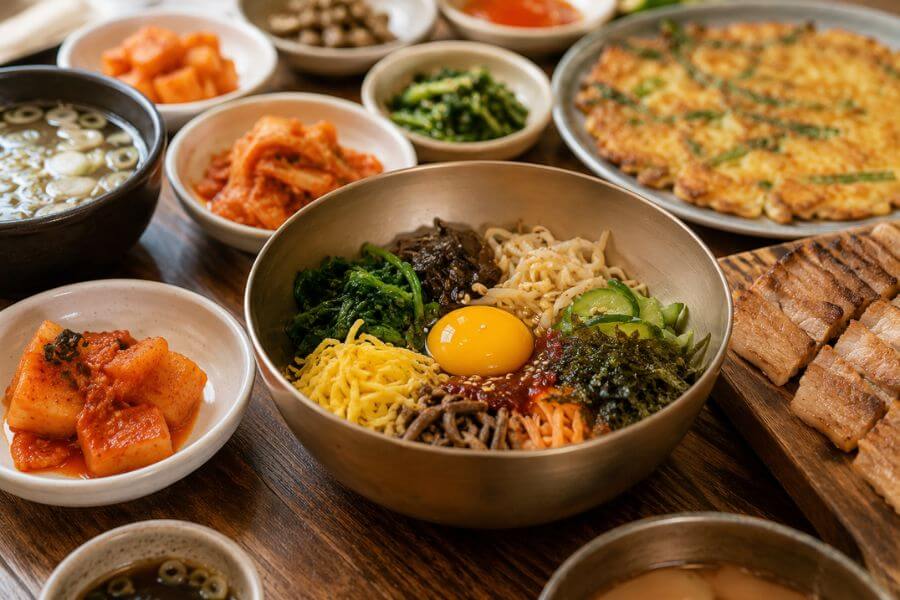
You cannot talk about this city without starting with its most famous export. Bibimbap is a dish you might have seen before, but you have not truly tasted it until you have tried it here. Unlike versions found elsewhere, the Jeonju style is special. The rice is often cooked in a rich beef bone broth, giving it a deep and savory base. It is then topped with a colorful array of fresh vegetables, a golden egg yolk, and sometimes raw beef. When you stir your bowl, you are not just mixing ingredients; you are creating a perfect balance of color, texture, and taste.
Understanding the Heart of Jeonju Flavor
The secret to why everything tastes so good here comes down to the ingredients. Because Jeonju sits in the middle of a major farming region, the produce is always at its peak. You will find that the bean sprouts are crunchier, the spinach is sweeter, and the fermented sauces are deeper in flavor. This is also a place where fermentation is respected. Traditional techniques passed down through families mean that the soy sauce, bean paste, and chili paste used in every meal have a complexity you cannot find in store-bought jars.
A Feast Fit for Royalty: Hanjeongsik
If you want to feel like a king or queen of the old Joseon Dynasty, you must try Hanjeongsik. This is not just a meal; it is a full-course experience. You will sit at a low table, and before you know it, the staff will start bringing out dish after dish. It is common for a single table to be covered in twenty or more small plates. You will see grilled fish, seasoned mountain greens, savory pancakes, spicy stews, and perfectly fermented kimchi. It is designed to offer a balance of health and luxury, ensuring you get a little bit of everything in one sitting.
The Unique Culture of Makgeolli Alleys
One of the most fun parts of your visit will be finding a Makgeolli Alley. This is a very specific social experience found in Jeonju. When you walk into a traditional bar in these areas, you do not just order a drink. You order a kettle of Makgeolli, which is a milky, sweet, and slightly fizzy rice wine. The moment that kettle hits your table, the magic happens. The server will bring out an entire spread of food to go with your drink. If you order more, they keep the food coming. It is a loud, happy, and incredibly delicious way to spend an evening with friends.
Street Food Adventures in the Hanok Village
The Hanok Village is where the old world meets modern creativity. As you walk through the narrow streets lined with traditional houses, the smell of street snacks will draw you in. You should keep an eye out for creative twists on local classics. You might find a crispy baguette stuffed with spicy meat, a waffle iron used to press rice and vegetables into a portable snack, or fried dumplings filled with local ingredients. Do not forget to grab a Choco Pie on your way out. These soft, marshmallow-filled treats are a local specialty and make for the perfect souvenir.
Comparing Traditional Dining Styles
To help you plan your meals, here is a simple look at how different ways of eating in Jeonju compare.
| Dining Style | Best For | Typical Experience |
| Bibimbap Specialty | A quick but legendary lunch | A single, hearty, and beautiful bowl of mixed ingredients. |
| Hanjeongsik | A slow, special evening meal | A massive table filled with dozens of side dishes. |
| Makgeolli Alley | Socializing and fun nights out | Rice wine paired with a never-ending flow of snacks. |
| Hanok Street Food | On-the-go snacking | Unique, modern, and fun bites while walking around. |
Why Jeonju Stays Ahead
The city works hard to keep its reputation. It hosts massive food festivals every year, inviting chefs from all over the world to learn the secrets of local fermentation and cooking. Universities here offer classes specifically focused on the science and history of Jeonju food. Because of this, the quality remains high across the board. Whether you go to a high-end restaurant or a small stall in a market, you are likely to have a meal that you will remember for the rest of your life.
Frequently Asked Questions
Why is Jeonju called the food capital of South Korea?
Jeonju earned this title because it is located in a region with perfect geography for farming. The mix of high-quality ingredients and a deep history of culinary traditions passed down from the royal court and local families makes it a world-class destination for food lovers.
Is the food in Jeonju very spicy?
While many Korean dishes use red chili paste, Jeonju food is known more for its depth of flavor rather than just heat. You will find that the spice is usually balanced with sweetness or savory notes from bone broths and fermented sauces.
Do I need a reservation for a Hanjeongsik meal?
It is a good idea to book ahead if you have a specific place in mind, especially on weekends. However, many restaurants in the Hanok Village are welcoming to walk-ins. Just be prepared to wait a little while during the busy dinner hours.
Can vegetarians find good food in Jeonju?
Yes. Many of the side dishes in Hanjeongsik and the base of the famous bean sprout soup are naturally meat-free. While the city loves its beef, you can easily find plenty of vegetable-focused meals and snacks if you ask the servers to clarify the ingredients.
What is the best way to enjoy a Makgeolli Alley?
Bring a group of friends! The food spreads are massive, so the more people you have, the more you can try. Go with an empty stomach and a willingness to try whatever the restaurant decides to serve that night, as the menu is often chosen by the cook based on what is freshest.