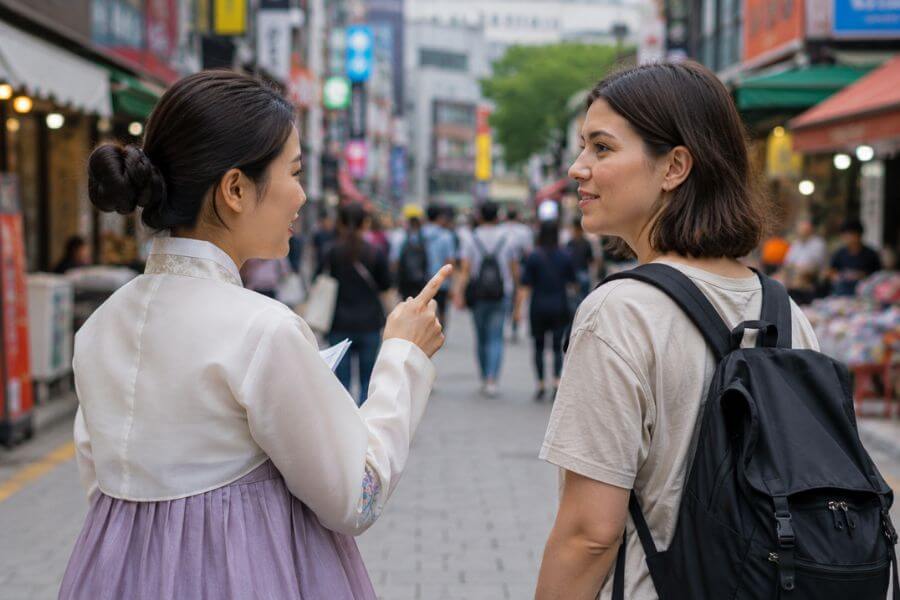
Stepping into South Korea is like walking into a vibrant, high-energy dream. The neon lights of Seoul pulse with life, the historic palaces stand as silent witnesses to centuries of tradition, and the scent of sizzling street food invites you into every alleyway. As you prepare for this adventure, you might feel a bit nervous about the language gap. You do not need to be fluent to have a marvelous time, but learning a handful of expressions will transform your trip from a simple visit into a truly immersive experience. When you show locals that you are making an effort to speak their language, doors open, smiles widen, and you will find yourself connecting with people on a much deeper level.
Key Takeaways
- Politeness is the foundation of Korean social interaction; adding small honorifics makes a massive difference.
- The phrase “Excuse me” acts as your universal tool for getting attention, asking for directions, or maneuvering through crowds.
- Knowing how to express gratitude and apologies will help you navigate small misunderstandings with grace.
- Ordering food becomes much more enjoyable when you can confidently ask for recommendations or specify your needs.
- Learning how to ask about costs and availability ensures you stay within your budget and manage your time well.
- Most Koreans appreciate the effort behind your pronunciation, even if you are not perfect.
The Magic of Being Polite
In Korean culture, the way you say something is just as important as what you are actually saying. You will notice that people are generally very respectful toward one another. When you are a visitor, people will not expect you to master all the complex social hierarchies, but they will be genuinely charmed when you use polite forms. The ending of a sentence determines how formal you sound. By adding a specific sound to the end of your verbs, you signal that you respect the person you are talking to. It is the quickest way to show that you are a thoughtful and kind traveler.
The Universal Helper: Excuse Me
If there is one phrase you memorize before you land in Seoul, let it be Jeogiyo (Excuse me). This is the golden key for almost any situation. Whether you are trying to grab a server’s attention in a busy restaurant or need to ask a stranger for help, this phrase is your best friend. For a more formal way to pass through a crowd, use Sillyehamnida (Excuse me / Pardon me). Use these with a small nod of your head, and you will find that people are very willing to assist you. If you need someone to wait a moment, simply say Jamsimanyo (Wait a moment).
Showing Gratitude and Affirmation
Koreans value genuine appreciation. When someone helps you, gives you directions, or serves you a delicious meal, saying Gamsahamnida (Thank you – formal) is the most standard way to show appreciation. If you want to sound a little more casual, perhaps with someone you have been chatting with for a while, you can use Gomawoyo (Thank you – casual). Along with these, you will need to know Ne (Yes) and Aniyo (No). These are simple but essential for answering questions from shopkeepers or train station staff.
The Art of Apology
Sometimes, you might step on someone’s foot in a crowded subway or bump into someone while distracted by the beauty of a palace. In these moments, Joesonghamnida (I am sorry) will be your lifesaver. This phrase carries a weight of sincere regret. If you make a small mistake and someone says it is fine, they might say Gwaenchanayo (It is okay / I am fine). Learning this helps you understand when a situation is resolved so you do not have to keep worrying about it.
Ordering Like a Local
One of the highlights of your trip will be the food. When you sit down at a restaurant, you might want to ask what the best item on the menu is. Using Ige mwoyeyo? (What is this?) allows you to ask what something is, which is perfect for identifying dishes you are curious about. If you are ready to order, you can simply point to the item on the menu and say Ige juseyo (Please give me this). Once the food arrives and you take your first bite, you can compliment the chef by saying Masisseoyo (It is delicious). When you finish your meal, it is common to say Jal meogetseumnida (Thank you for the meal).
Navigating the Streets
Getting lost is part of the fun, but sometimes you have a schedule to keep. When you need to find a specific landmark, the Hwajangsil (Restroom), or the Jihacheol-yeok (Subway station), you need to know how to ask for the location. Eodiyeyo? (Where is…?) is the word you attach to the end of any place you are looking for. For example, if you are looking for the train station, you say “Jihacheol-yeok eodiyeyo?” If you are truly stuck, use Dowajuseyo (Please help me). If you need someone to explain something again, use Cheoncheonhi malhaejuseyo (Please speak slowly).
Saying Hello and Goodbye
These are the bookends of every interaction. Annyeonghaseyo (Hello) is the standard greeting you should use at any time of the day. You will hear it everywhere. When you are leaving a shop or saying goodbye to a new friend, Annyeonghi gyeseyo (Goodbye – if you are leaving and they are staying) is the polite way to depart. If you are the one staying and they are leaving, use Annyeonghi gaseyo (Goodbye – if you are staying and they are leaving).
Handling Money and Purchases
Shopping in Korea is a delight. If you are at a market and want to know how much an item costs, ask Eolmayeyo? (How much is it?). The shopkeeper will either tell you the number or type it out on a calculator for you. If you are worried about whether a store takes credit cards, you can ask Kadeu doeyo? (Do you take credit cards?). Being able to handle basic transactions helps you maintain your independence while exploring the many markets and shopping districts.
Dealing with Language Barriers
Even with your list of phrases, there will be times when you simply do not understand. If you get stuck, you can say Hanguk-mal jal mot haeyo (I cannot speak Korean well). You can also ask the person if they speak your language by saying Yeong-eo haseyo? (Do you speak English?). Most people will immediately understand that you are a visitor and will be patient. Never be afraid to use your hands to gesture or to smile when you are confused.
Summary of Your 25 Phrases
| Phrase | Meaning |
| Annyeonghaseyo | Hello |
| Annyeonghi gyeseyo | Goodbye (leaving) |
| Annyeonghi gaseyo | Goodbye (staying) |
| Jeogiyo | Excuse me (attention) |
| Sillyehamnida | Excuse me (pardon) |
| Jamsimanyo | Wait a moment |
| Gamsahamnida | Thank you (formal) |
| Gomawoyo | Thank you (casual) |
| Ne | Yes |
| Aniyo | No |
| Joesonghamnida | I am sorry |
| Gwaenchanayo | It is okay |
| Ige mwoyeyo | What is this? |
| Ige juseyo | Please give me this |
| Masisseoyo | It is delicious |
| Jal meogetseumnida | Thank you for the meal |
| Hwajangsil | Restroom |
| Jihacheol-yeok | Subway station |
| Eodiyeyo | Where is…? |
| Dowajuseyo | Please help me |
| Cheoncheonhi malhaejuseyo | Please speak slowly |
| Eolmayeyo | How much is it? |
| Kadeu doeyo | Do you take credit cards? |
| Hanguk-mal jal mot haeyo | I cannot speak Korean well |
| Yeong-eo haseyo | Do you speak English? |
Frequently Asked Questions
Do I need to be fluent in Korean to visit?
Absolutely not. While knowing the local language is a wonderful skill, the vast majority of tourists get by perfectly well with just a few polite phrases. Most tourist areas, signs, and transportation systems are set up to be accessible to international visitors. Your effort to learn even the basics will be more than sufficient to have a fantastic time.
What is the most important thing to remember when speaking to locals?
The most important aspect is your attitude. Being polite, patient, and respectful is far more significant than having perfect grammar or pronunciation. If you approach every interaction with a genuine smile and a desire to be kind, people will overlook any mistakes you make and will likely go out of their way to help you.
Is it rude to try to speak Korean if I am not good at it?
It is never rude to try. In fact, most Koreans find it very endearing and respectful when a visitor makes an effort. Even if you only know a few words, using them shows that you are interested in their culture. As long as you remain polite, there is no reason to feel self-conscious or worried about offending anyone.
Where is the best place to practice these phrases?
Marketplaces and restaurants are the best places to start. These environments are naturally interactive, and you will have plenty of chances to use phrases for ordering, asking for prices, and saying thank you. As you gain more confidence, you can try them out in more formal settings, such as at a museum information desk or with your hotel staff.
What should I do if I am still misunderstood?
If you find that your pronunciation is not being understood, do not be discouraged. Try to write the word down on your phone, or use a translation app to show the text to the person you are speaking with. Often, seeing the written characters or a clear translation will instantly resolve the confusion. Remember that you are in a different country, and these small hiccups are all part of the unique experience of travel.