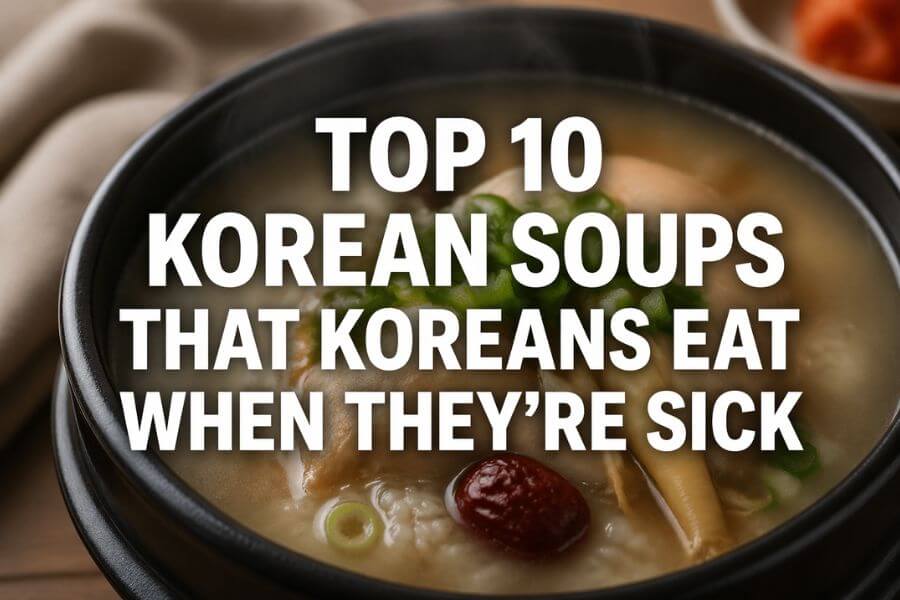
When you feel sick, tired, or low on energy, what you eat can make a big difference. In Korea, soups are not just comfort food. They are often seen as healing meals that help your body recover faster. These soups are warm, easy to digest, and full of nutrients that support your immune system. Whether you have a cold, stomach pain, or just feel weak, there is always a Korean soup that people turn to for comfort and recovery.
In this guide, you will discover the top 10 Korean soups that Koreans commonly eat when they are sick. Each one has its own benefits and flavors, but they all share one goal: helping you feel better. Let’s explore these soothing and nourishing dishes.
1. Samgyetang (Ginseng Chicken Soup)
Samgyetang is one of the most famous Korean health soups, especially when you are feeling weak or recovering from illness. This soup is made with a whole young chicken stuffed with sticky rice, garlic, jujubes, and ginseng, then simmered until tender. It may sound heavy, but it is actually very gentle on your stomach. The broth is light but rich in nutrients that help boost your energy. Koreans believe ginseng helps restore strength and improve immunity, making this soup a top choice when you feel exhausted or sick.
2. Miyeok-guk (Seaweed Soup)
Miyeok-guk is a simple and clean soup made from seaweed and usually cooked with beef or seafood. It is commonly eaten after childbirth, but it is also a go-to soup when you are sick. Seaweed is packed with vitamins and minerals that support recovery. The soft texture makes it easy to eat even when you have no appetite. The mild flavor is gentle on your stomach, and the soup helps keep you hydrated while providing essential nutrients.
3. Dakjuk (Chicken Porridge Soup)
Dakjuk is a rice porridge made with chicken, and it is one of the easiest foods to eat when you feel unwell. It has a smooth and soft texture that requires very little chewing, making it perfect if you have a sore throat or digestive issues. The chicken adds protein, while the rice provides energy. It is often lightly seasoned, so it does not irritate your stomach. Many Koreans eat dakjuk when they have a cold or feel too weak to eat regular meals.
4. Seolleongtang (Ox Bone Soup)
Seolleongtang is a milky white soup made by simmering ox bones for many hours. The long cooking time extracts nutrients like calcium and collagen, which help support your body during recovery. The flavor is mild, and you can adjust the seasoning with salt and green onions. This soup is filling but not heavy, making it a good option when you need strength without overwhelming your stomach. It is especially popular when you feel physically drained.
5. Kongnamul-guk (Soybean Sprout Soup)
Kongnamul-guk is a light and refreshing soup made with soybean sprouts. It is known for its clean taste and is often used to help relieve hangovers, but it is also great when you are sick. The sprouts are rich in vitamins and help support your immune system. The broth is very light, which makes it easy to drink even when you have no appetite. It is also hydrating, which is important when your body needs to recover.
6. Galbitang (Beef Short Rib Soup)
Galbitang is a clear soup made with beef short ribs, radish, and glass noodles. It has a rich but clean flavor that provides both comfort and nutrition. The beef gives you protein and energy, while the broth is soothing and easy to digest. This soup is often eaten when you need to regain strength after being sick. Even though it is hearty, it does not feel too heavy, making it a balanced choice during recovery.
7. Doenjang-guk (Soybean Paste Soup)
Doenjang-guk is made with fermented soybean paste, vegetables, and sometimes tofu or seafood. The fermentation process gives it beneficial probiotics that support your gut health. When you are sick, your digestive system can become sensitive, and this soup helps restore balance. The warm broth is comforting, and the simple ingredients make it easy to eat. It is a common home-cooked meal that many Koreans turn to when they feel under the weather.
8. Yukgaejang (Spicy Beef Soup)
Yukgaejang is a spicy soup made with shredded beef, vegetables, and chili oil. While spicy food might not be for everyone when sick, many Koreans believe it helps clear the sinuses and warm the body. The heat can make you sweat, which some people find helpful when dealing with a cold. The soup is also rich in protein and nutrients. If you can handle spice, this dish can be both comforting and energizing.
9. Jangeo-guk (Eel Soup)
Jangeo-guk is a less common but highly nutritious soup made with eel. Eel is known for being rich in vitamins and healthy fats that help restore energy and strength. The soup is often eaten when you feel very weak or need a boost in stamina. The flavor is rich but not overwhelming, and it is believed to help your body recover faster. This soup is especially popular among people who need extra nourishment.
10. Baechu-guk (Napa Cabbage Soup)
Baechu-guk is a simple soup made with napa cabbage and a light broth, often flavored with soybean paste or anchovy stock. It is one of the most gentle soups you can eat when you are sick. The cabbage becomes soft and easy to digest, and the broth is warm and comforting. This soup is perfect if you have a sensitive stomach or no appetite. It helps keep you hydrated and provides basic nutrients without being heavy.
Conclusion
Korean soups are more than just food. They are part of a long tradition of using simple, natural ingredients to support health and recovery. When you feel sick, your body needs warmth, hydration, and easy-to-digest nutrition, and these soups provide exactly that. From the rich and nourishing samgyetang to the light and gentle baechu-guk, each soup offers its own benefits. The next time you feel unwell, trying one of these Korean soups can help you feel more comfortable and support your recovery in a natural way.
Frequently Asked Questions
Which Korean soup is best for a cold?
Samgyetang and yukgaejang are popular choices for a cold. Samgyetang helps boost your energy, while yukgaejang can help clear your sinuses due to its spicy flavor.
Are Korean soups easy to digest when sick?
Yes, most Korean soups are designed to be light and easy on your stomach. Soups like dakjuk and miyeok-guk are especially gentle and ideal when you have digestive issues.
Can you eat spicy Korean soup when sick?
You can eat spicy soup if you feel comfortable with it. Some people find that spicy soups help relieve congestion, but if your stomach is sensitive, it is better to choose mild options.
Why do Koreans eat soup when they are sick?
Koreans believe soup helps hydrate the body, provide nutrients, and support healing. Warm broth also feels soothing and easier to consume when you have a low appetite.
Can Korean soups help with recovery after illness?
Yes, many Korean soups contain ingredients like ginseng, garlic, and fermented foods that support immunity and help your body regain strength after being sick.