Moving to Seoul is an incredible adventure. The neon lights, the midnight convenience store runs, the late-night karaoke, and the efficient subways are waiting for you. But before you can dive into city life, you need a place to rest your head. Finding an apartment in this massive metropolis can feel overwhelming, especially when you encounter a housing system that exists nowhere else in the world.
Do not let the paperwork and the unique vocabulary scare you away. Whether you are a student, a young professional, or an expat starting a new chapter, this guide will walk you through every single step of the process. From understanding the local leasing systems to negotiating with agents, you will learn exactly how to secure your dream home in Seoul.
Decoding the Korean Rental Systems
Before you open a single property app or step into an agency, you must understand how renting works in South Korea. Unlike most Western countries where you simply pay a monthly fee and a small security deposit, Korea uses two main systems: Wolse; and Jeonse. Choosing the right one depends entirely on your financial situation and how long you plan to stay.
Understanding Wolse (Monthly Rent)
Wolse is the system that most international renters and young locals choose. It looks similar to the monthly rental model used around the world, but it has a very distinct twist.
When you sign a Wolse contract, you pay a monthly rent, but you also must provide a large lump-sum deposit called Bojeunggeum. This deposit is much higher than what you might expect in your home country. Instead of just one or two months of rent, a typical Seoul Wolse deposit ranges from five million Korean Won to twenty million Korean Won, and sometimes even higher for newer buildings.
The unique rule of Wolse is the relationship between the deposit and the monthly rent. If you have more money saved up for a deposit, you can often negotiate a lower monthly payment. Landlords love large deposits because they can invest that money or put it in high-interest bank accounts. If your budget is tight on a monthly basis but you have cash in the bank, you can ask an agent if a landlord accepts a higher deposit in exchange for cheaper rent.
Demystifying Jeonse (The Key Money System)
Jeonse is a rental system unique to South Korea that often leaves outsiders completely baffled. Instead of paying monthly rent, you give the landlord a massive, lump-sum deposit. This amount is usually sixty to eighty percent of the actual market value of the apartment.
You live in the apartment completely rent-free for the duration of your contract, which is typically two years. The only regular housing costs you pay are your utilities and the building maintenance fees. When your contract ends and you move out, the landlord returns every single Won of that massive deposit back to you.
How do landlords make money? They take your huge deposit and invest it, pocketing the interest or investment returns over those two years. For renters who have access to large amounts of cash or can secure a specialized Jeonse bank loan, this system allows them to live in Seoul almost for free. However, Jeonse requires deep pockets, and it carries specific risks that we will discuss later in this guide.
Comparing Wolse and Jeonse
To help you decide which path fits your wallet, let us look at how these two systems match up against each other in real-world scenarios.
| Feature | Wolse (Monthly Rent) | Jeonse (Key Money) |
| Upfront Deposit | Moderate to High (usually $4,000 to $15,000 USD) | Extremely High (usually $80,000 to $300,000+ USD) |
| Monthly Payment | Fixed monthly rent amount | Zero monthly rent |
| Ongoing Costs | Utilities + Building maintenance fees | Utilities + Building maintenance fees |
| Contract Length | Usually 1 year or 2 years | Almost always a strict 2-year term |
| Financial Risk | Lower risk of losing life savings | Higher risk if the landlord faces financial trouble |
| Best Suited For | Students, short-term expats, young workers | Long-term residents, families, high-savers |
Choosing Your Ideal Type of Housing
Seoul does not just have standard apartments. The city offers a variety of housing types tailored to different lifestyles, budgets, and privacy preferences. Knowing the names of these options will help you narrow down your search immediately.
The Officetel: Modern and Convenient
An officetel is a hybrid building that combines residential living with commercial spaces. The lower floors often contain convenience stores, cafes, gyms, and dry cleaners, while the upper floors hold individual apartments.
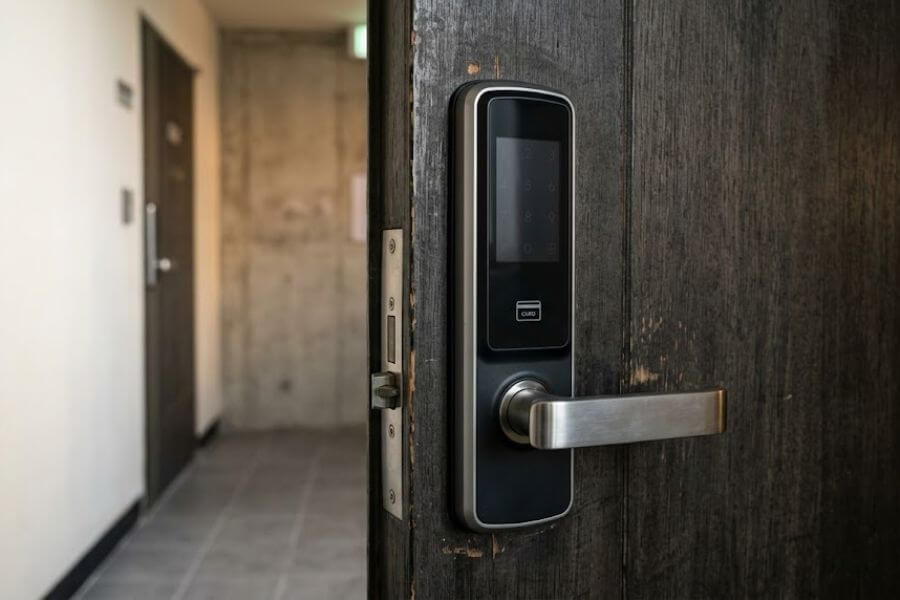
Most officetels are single-room studio apartments, known locally as a one-room. They are incredibly popular among young professionals and university students because they are modern, clean, and come with high-tech security features like digital door locks, security guards, and elevator keycards.
- Pros: Excellent security, great locations near subway stations, modern built-in appliances.
- Cons: Higher monthly maintenance fees, smaller living spaces, thin walls in older buildings.
The One-Room and Two-Room: Budget-Friendly Neighborhood Living
When locals talk about a one-room or a two-room, they are usually referring to apartments located in low-rise residential buildings, often three to five stories tall. These buildings are tucked away in the winding alleyways of Seoul neighborhoods rather than on main roads.
A one-room means the kitchen, bedroom, and living space are all in a single room, with a separate bathroom. A two-room means you have a separate bedroom and a living area, or two distinct bedrooms. These apartments are generally cheaper than officetels and have much lower monthly maintenance fees.
- Pros: Affordable deposits and rents, low maintenance fees, authentic neighborhood vibe.
- Cons: Older buildings might lack insulation, no security guards, parking can be a nightmare.
The Goshiwon: Ultimate Budget Minimalism
If you are a student on a razor-thin budget or just need a temporary place to crash for a few months, a goshiwon might be your best option. These are tiny, private rooms located in dedicated buildings or specific floors of a commercial building.
A typical goshiwon room contains a single bed, a desk, a mini-fridge, and maybe a tiny private bathroom. The kitchen and laundry facilities are shared with everyone else on the floor. The biggest selling point is that goshiwons require almost no deposit, and the monthly fee includes all utilities, internet, and often free basic foods like white rice, instant ramen, kimchi, and coffee.
- Pros: No deposit required, incredibly cheap, flexible short-term stays, free basic foodstuffs.
- Cons: Extremely cramped space, absolutely no privacy, strict rules about guests and noise.
The Share House: Community and Instant Friends
Share houses have skyrocketed in popularity across Seoul over the past decade. In this setup, a company or a landlord rents out a large apartment or a multi-story house to a group of individuals. You can choose to have a private bedroom or share a room with a roommate, while the living room, kitchen, and bathrooms are shared community spaces.
This is an excellent option for newcomers who want to make friends quickly. Many share houses cater specifically to a mix of domestic Korean students and international expats, creating a built-in community for language exchange and social outings.
- Pros: Low deposits, fully furnished spaces, built-in social life, spacious common areas.
- Cons: Sharing bathrooms with multiple people, potential lifestyle clashes with housemates.
The Apartment Complex (Apatu): Premium Family Living
In Korea, the English word apartment specifically refers to high-rise residential complexes, often managed by major corporations like Hyundai or Samsung. These are huge complexes consisting of multiple towers, playgrounds, walking paths, underground parking lots, and community centers.
These homes are designed for families and are generally spacious, featuring two, three, or four bedrooms. Because they are highly desirable and located in premium school districts, they require astronomical deposits, whether you choose Wolse or Jeonse.
- Pros: Top-tier security, spacious layouts, family-friendly environments, great resale and rental stability.
- Cons: Prohibitively expensive for single renters or students, high monthly management fees.
Mapping Out the Neighborhoods of Seoul
Seoul is a massive city split in half by the Han River. It has twenty-five distinct districts, known as gu, and hundreds of individual neighborhoods, known as dong. Where you live will define your daily routine, your commute, and your social life.
Mapo-gu and Seodaemun-gu: The Youth and Culture Hubs
Located northwest of the river, this region is the beating heart of Seoul student life. It holds major institutions like Yonsei University, Ewha Womans University, and Hongik University.
The neighborhoods of Hongdae, Sinchon, and Edae are packed with affordable studio apartments, trendy clothing boutiques, cheap restaurants, and endless nightlife. If you move a bit closer to the river into neighborhoods like Yeonnam-dong or Mangwon-dong, you will find a more laid-back, artsy atmosphere filled with indie coffee shops, local markets, and parks.
- Vibe: Energetic, artistic, youthful, and vibrant.
- Housing Types: Abundant one-rooms, share houses, and modern officetels.
- Commute: Excellent connectivity via Subway Line 2 and the Airport Railroad line.
Gangnam-gu and Seocho-gu: The Upscale Business District
South of the Han River lies Gangnam, the glamorous, fast-paced commercial hub made famous around the world. This area is home to glittering skyscrapers, luxury flagship stores, massive corporate headquarters, and high-end residential towers.
Living here means you are steps away from premier dining, upscale bars, and major business events. However, Gangnam features some of the highest real estate prices in the country. Neighborhoods like Yeoksam, Samseong, and Sinsa are filled with expensive officetels catering to wealthy single professionals, while areas like Daechi are dominated by massive family apartment complexes.
- Vibe: Professional, luxurious, crowded, and fast-paced.
- Housing Types: Premium officetels, high-rise apartments, luxury villas.
- Commute: Central hub for Lines 2, 3, 7, 9, and the Shinbundang Line.
Yongsan-gu: The Expat Center and Geographical Heart
Yongsan sits right in the physical center of Seoul, just north of the Han River. It is home to the scenic Namsan Mountain, the massive Yongsan Family Park, and the newly developed business hubs around Yongsan Station.
This district is also famous for Itaewon and Hannam-dong. Itaewon has historically been the primary expat neighborhood in Seoul, offering international supermarkets, global restaurants, and English-friendly services. Hannam-dong, on the other hand, is an ultra-luxurious neighborhood where celebrities and corporate executives live in secluded villas overlooking the river.
- Vibe: International, diverse, central, and scenic.
- Housing Types: Vintage multi-villa homes, high-rise luxury apartments, older one-rooms.
- Commute: Ideal central location with access to Lines 1, 4, 6, and the Gyeongui-Jungang Line.
Seongbuk-gu and Dongdaemun-gu: Budget-Friendly and Traditional
If you want to stretch your budget further while still staying within a reasonable distance of central Seoul, look toward the northeast. This area hosts schools like Korea University, Kyung Hee University, and Hankuk University of Foreign Studies.
Neighborhoods like Anam, Hoegi, and Jegi-dong offer a much lower cost of living compared to Mapo or Gangnam. The streets are filled with traditional markets, affordable mom-and-pop restaurants, and historic residential areas. It provides a more authentic, old-school look at daily life in Seoul.
- Vibe: Academic, traditional, quiet, and highly affordable.
- Housing Types: Budget one-rooms, traditional low-rise villas, student goshiwons.
- Commute: Good access via Subway Lines 1, 4, and 6.
Mastering Real Estate Apps and Websites
Before you start walking into neighborhood real estate offices, you should use digital tools to get a sense of current market prices. This will prevent you from facing price gouging and help you pinpoint exactly what your budget can buy.
The Big Two: Dabang and Zigbang
Dabang and Zigbang are the undisputed kings of Korean real estate apps. They are free to download and allow you to filter properties by location, housing type, rental system (Wolse versus Jeonse), deposit range, and monthly budget.
The user interfaces are clean and visual, showing photos of the rooms, floor plans, and lists of included appliances. You can use a map view to see exactly how close an apartment is to a specific subway station or university campus.
However, you must look out for false listings, known as Heowi Maemul. Some dishonest agents post beautiful photos of cheap apartments that do not actually exist or have already been rented out. They do this simply to get you to call them and visit their office. If a listing looks incredibly beautiful but the price is half of everything else in the neighborhood, treat it with caution.
For Foreign Residents: Naver Real Estate and Foreigner-Friendly Platforms
While Dabang and Zigbang are great for browsing, local Koreans and serious property hunters rely heavily on Naver Real Estate, known as Naver Budongsan. This platform is operated by Korea’s largest search engine and has the most accurate, up-to-date listings with a very low rate of fake entries. The downside is that it is completely in Korean and can be difficult to navigate if you do not know the language.
If your Korean skills are limited, you can check out English-language platforms and social media groups. Facebook groups like Housing in Seoul or Seoul Apartments are great places to find lease takeovers from expats who need to leave the country quickly. There are also specialized expat-focused agencies with English websites, though their rental inventories might be smaller and slightly more expensive.
Navigating the Real Estate Agent Experience
In South Korea, you almost never rent an apartment directly from a landlord. Instead, nearly every transaction goes through a licensed neighborhood real estate agent called a Budongsan. These agents act as the vital bridge between you and the property owner.
How to Find and Choose a Budongsan
Finding a real estate office in Seoul is incredibly easy. They are located on almost every single street corner, easily identified by their bright signs, often featuring the word Budongsan or Gongin Jungguesa written in large letters.
The best strategy is to visit the exact neighborhood where you want to live. Walk down the street and look at the windows of the real estate offices. They usually paste paper printouts of their current available properties, listing the deposit, monthly rent, and room type right on the glass.
If you do not speak fluent Korean, look for offices that have signs saying English Spoken, Global Real Estate, or Foreigner-Friendly. These certified global agencies have at least one staff member who can handle contracts and explanations in English.
Step-by-Step Guide to the Office Visit and Property Viewings
When you walk into a real estate office, the agent will welcome you and sit you down at a desk. To make the process fast and successful, follow this exact sequence:
- State Your Parameters Clearly: Immediately tell the agent your rental type (Wolse or Jeonse), your maximum deposit, your absolute highest monthly rent, your preferred move-in date, and your required apartment type.
- Review the Agent’s Database: The agent will open a specialized internal computer database shared among local realtors. They will select three to five properties that match your criteria and show you basic descriptions.
- Go on the Neighborhood Tour: The agent will grab their keys, lead you out of the office, and take you to look at the properties in person. They will walk you through the streets, show you the building security, and unlock the apartments for you.
- Inspect the Interior Details: While inside, do not just look at the wallpaper. Turn on the water faucets to check the water pressure, flush the toilet, check under the sink for water leaks, look around the windows for any signs of black mold, and ask which appliances are included.
- Give Immediate, Honest Feedback: Tell the agent exactly what you liked and disliked about each place. If a room is too dark, say so. This helps the agent fine-tune their search, and they might call a neighboring office to find the perfect alternative.
Understanding Agent Fees (Bokbi)
Real estate agents in South Korea do not work for free, but their fees are strictly regulated by the government. You do not need to worry about an agent making up a random price to exploit you. This service fee is known colloquially as Bokbi.
The fee is calculated as a small percentage of the total transaction value, and it is paid by both the tenant and the landlord at the time of signing the final contract. The percentage typically ranges from 0.3 percent to 0.5 percent depending on whether the deal is a Wolse or a Jeonse, and whether the property is classified as a residential home or a commercial officetel. Government websites provide simple calculators where you can type in your deposit and rent amounts to find out the exact maximum fee you legally owe.
The Contract, the Deposit, and Legal Protections
Once you find the perfect apartment, you enter the most important phase: securing the property and protecting your money. Because housing deposits in Seoul are so high, you must follow legal procedures to ensure you get your cash back when you leave.
The Safe Contract Checklist
When you sit down at the agent’s desk to sign the official contract, known as the Gyeyakseo, you must verify several key legal documents before pick up a pen.
- Check the Deunggibonbon (Real Estate Register): This document is the official title deed of the property. The agent must print a fresh copy on the spot. Look at the owner’s name and national ID number, and make sure they match the identity card of the landlord sitting across from you.
- Look for Collateral and Debts: The Deunggibonbon will also list any mortgages or debts secured against the property under a section called Eul-gu. If the landlord has massive loans taken out against the building, there is a risk the building could go into foreclosure if they go bankrupt. Make sure the total debt on the building plus all tenant deposits does not exceed seventy percent of the building’s market value.
- Verify Included Options: Ensure the contract explicitly lists all the appliances provided by the landlord, such as the washing machine, refrigerator, air conditioner, and induction stove. This prevents future arguments about who owns what.
The Financial Steps: From Holding Deposit to Final Payment
The payment process follows a standard sequence designed to protect both parties during the transaction.
- The Holding Deposit (Gagyeyakgeum): If you love an apartment but need a day or two to prepare the paperwork, you can pay a small holding fee, usually around five hundred thousand to one million Korean Won. This takes the apartment off the market. Be careful: if you change your mind, you forfeit this money.
- The Contract Deposit (Gyeyakgeum): When you sign the official contract, you pay ten percent of your total deposit amount directly to the landlord’s bank account. The holding deposit you already paid counts toward this ten percent.
- The Balance Payment (Jandong): On the actual day you move into the apartment, you transfer the remaining ninety percent of the deposit to the landlord. You should do this in the morning, right before you start loading your boxes into the property.
Securing Your Rights: Changing Your Address and the Secured Date
The very moment you get your keys and transfer the balance payment, you must complete two urgent legal steps to protect your deposit from a landlord bankruptcy or a foreclosure.
First, take your lease contract and your identification card to the local community center, known as the Dong Juminsolter, in your new neighborhood. If you are a foreign resident, you can also go to the local district office. Register your change of address within fourteen days of moving.
Second, ask the government official at the desk for a Daeyangnyeok stamp, commonly called a Hwakjeong Ilja, which means a secured date. The official will stamp your physical lease contract with the current date and log it into the government database.
This stamp gives you immediate legal priority over any future creditors. If the landlord faces financial ruin and the building is sold off at a court auction, the secured date guarantees that the government will use the auction proceeds to pay back your deposit before other corporate lenders can touch the money.
Hidden Costs and Moving Day Survival
The financial obligations of renting an apartment in Seoul do not stop at the deposit and the monthly rent. You need to budget for several recurring hidden costs and know how to handle the moving logistics.
Budgeting for Maintenance Fees (Gwanribi)
Every apartment and officetel building in Seoul charges a monthly maintenance fee called Gwanribi. This fee covers the cost of building security guards, cleaning staff for the hallways, elevator maintenance, and communal electricity.
The Gwanribi can vary wildly. For a standard one-room in an older low-rise building, it might be a modest thirty thousand to fifty thousand Korean Won per month, often including your internet and water bill. However, for a modern officetel with a fitness center and twenty-four-hour security, the fee can easily skyrocket to one hundred and fifty thousand or two hundred and fifty thousand Korean Won per month, completely excluding your personal utility usage. Always ask your agent for the exact Gwanribi amount before signing.
Managing Utilities in Seoul
In addition to your rent and maintenance fees, you will receive individual bills for your personal utility usage every month.
- Electricity (Jeonse): Managed by the Korea Electric Power Corporation. Bills are generally low during the spring and autumn but can jump significantly during the humid summer months of July and August when you run your air conditioner around the clock.
- City Gas (Gasubill): This is used for cooking on your stove and, most importantly, for your floor heating system, known as Ondol. While gas bills are negligible in the summer, they can become quite expensive during the freezing Seoul winters. To save money, use the save or sleep mode on your boiler control panel when you leave the house rather than turning the system completely off.
Surviving Moving Day
Moving day in Seoul is an efficient, fast-paced operation. Most locals hire specialized moving services called Yongdal or Sadariicha.
If you live on a high floor, do not expect the movers to carry your heavy sofas and beds down the narrow building elevator. Instead, they will bring a specialized ladder truck, known as a Sadariicha. This truck parks outside your window, extends a giant motorized ladder platform up to your balcony or window frame, and flies your furniture down to the street level in a matter of minutes.
On the morning of your move, remember to visit your old landlord to collect your full deposit balance. At the same exact time, your agent will help you calculate your final utility bills down to the exact hour of your departure so you can pay off your remaining balances before handing over the keys to the new tenant.
Frequently Asked Questions
Can an international student or a foreign worker secure a Jeonse bank loan?
It is possible, but it is extremely challenging compared to the process for citizens. Most major Korean commercial banks require foreign loan applicants to hold a specific long-term visa, such as a residency visa or a permanent residency visa, along with a stable, documented income inside South Korea proved by tax return certificates. Most international students on student visas or young English teachers on working visas will not meet these strict banking requirements and choose the monthly Wolse system instead.
What happens to my deposit if the landlord refuses to give it back on moving day?
If your contract ends and your landlord claims they do not have the liquid cash to return your deposit, do not panic, and absolutely do not move your physical belongings out of the apartment. If you move out and remove your furniture, you lose your legal right of possession. You must immediately apply for a Leasehold Registration Order at the local district court. This places a permanent legal lien on the building’s official title deed, making it impossible for the landlord to sell the property or rent it to anyone else until they pay you back every single Won.
Is the building maintenance fee negotiable with the landlord?
No, the maintenance fee is almost never negotiable. The building management office, rather than your individual landlord, sets this fee based on the total operating costs of the entire residential complex. The landlord simply passes this fixed cost down to the tenant as part of the standard housing agreement.
Can I paint the walls or drill holes for shelves in a rented Seoul apartment?
You should never make permanent alterations to a rental property without receiving explicit, written permission from your landlord first. Korean rental culture is strict about maintaining the property in its exact original condition. If you scratch the wallpaper, paint a room, or drill deep holes into the concrete walls to hang a television, the landlord can deduct the full cost of professional repairs and professional wallpaper replacement directly from your deposit when you move out. Always use damage-free adhesive hooks and temporary decor instead.
What should I do if something breaks down, like the air conditioner or the boiler?
Under Korean civil law, the landlord is legally responsible for paying for major repairs related to the basic livability of the home, such as a broken boiler heating system, structural water leaks, or a failed built-in air conditioner. However, the tenant is responsible for minor maintenance, such as replacing light bulbs, buying new fire alarm batteries, or fixing a minor toilet clog. If a major appliance breaks down through normal wear and tear, take a clear photo or video immediately, send it to your landlord via text message, and ask them to coordinate and pay for a professional repair technician.
Can I break my lease contract early if I have to leave South Korea unexpectedly?
If you must vacate your apartment before the official contract end date, you remain legally responsible for paying the monthly rent and utilities until the original expiration date. To get out of this financial obligation, you must find a replacement tenant to take over your lease. You will need to contact a local real estate agent, pay for the new marketing listings out of your own pocket, and cover the landlord’s real estate agent fees for the new transaction. Once the new tenant signs the contract and transfers their deposit, the landlord will release you from your contract and return your remaining funds. Your journey to finding a home in Seoul is now ready to begin. With these legal tips, neighborhood insights, and financial strategies in mind, you can confidently navigate the real estate market and secure a comfortable home in this incredible city.