Key Takeaway
Gyeongju serves as the grand historical heart of South Korea. Visiting this coastal city allows you to walk through a vast open museum where ancient royal burial mounds, centuries-old Buddhist temples, and historic stone palaces stand in the middle of modern neighborhoods. You will discover how a single kingdom ruled the land for nearly one thousand years, leaving behind golden crowns, brilliant stone structures, and artistic traditions that still shape the identity of the nation today.
Introduction to the Golden Kingdom
Welcome to Gyeongju, a city located in the southeastern corner of South Korea. For nearly a millennium, this city served as the proud capital of the Silla Kingdom, which ruled from 57 BC to 935 AD. Silla is famous for unifying the Korean Peninsula for the first time in history, creating a golden era of peace, art, wealth, and spiritual growth.
When you arrive in Gyeongju, you are stepping into a place that locals often call a roofless museum. Historical items and archaeological digs sit right next to busy coffee shops, traditional markets, and modern homes. Unlike other major world capitals where old structures were torn down to make room for big skyscrapers, this city preserved its heritage. The global community recognizes this unique value, which is why large sections of the city are protected as UNESCO World Heritage sites.
Whether you love ancient mysteries, deep spiritual art, beautiful walks in nature, or unique food experiences, this destination offers something special. You will experience a rare mix of the past and the present that forces you to slow down, look closely, and admire how people lived long ago. This comprehensive guide will help you navigate the historic streets, understand the deep meaning behind the monuments, and plan an unforgettable journey into the ancient soul of Korea.
Understanding the Silla Legacy
To fully appreciate your time in Gyeongju, you must first understand the people who built it. The Silla Kingdom started as a small cluster of villages but eventually grew into a massive power. The rulers of Silla were master builders, astronomers, artists, and deeply religious people who embraced Buddhism as their state philosophy. This spiritual belief inspired some of the most beautiful architecture and artwork ever created in East Asia.
The kingdom was also famous for its wealth. Roman glass, Persian fabrics, and exotic spices found their way to the city through the ancient Silk Road trading routes. Silla royalty wore clothing woven with gold thread and adorned themselves with heavy gold jewelry. When these rulers died, they were buried with their treasures inside giant wooden chambers covered by massive mounds of river stones and thick layers of soil. Because these tombs do not have doors or entry tunnels, grave robbers could not break in over the centuries. This protected the incredible gold artifacts until modern researchers carefully uncovered them.
As you explore the city, you will see the word Silla everywhere. The spirit of this ancient empire still defines the local culture. By learning about their achievements in science, their devotion to faith, and their artistic eye, you will view each monument not just as an old pile of rocks, but as a living piece of a brilliant civilization.
Essential Travel Logistics
Planning your journey requires some practical knowledge about how to get to the city, when to visit, and how to get around the local neighborhoods. While the city feels like an ancient world, it features modern transportation networks that connect it to the rest of South Korea.
Choosing the Best Season to Visit
Each season brings a completely different look to the old landscapes of the city. Spring and fall are widely considered the most beautiful times to plan your trip, though winter and summer offer unique advantages for certain types of travelers.
- Spring (April to May): This is a magical time when thousands of cherry blossom trees bloom simultaneously across the historic valleys. The pale pink flowers create a stunning contrast against the deep green grass of the royal burial mounds. The weather is cool and pleasant, making it perfect for long walks, though you should expect large crowds of weekend travelers.
- Summer (June to August): Summers are hot and humid, with heavy rain showers during the mid-summer monsoon season. However, this is also when the historical lotus ponds fill with massive green leaves and bright pink flowers. If you enjoy vibrant green landscapes and do not mind the heat, summer offers beautiful views and energetic night markets.
- Fall (September to November): Autumn brings cool breezes and clear blue skies. The leaves on the maple and ginkgo trees turn brilliant shades of red, orange, and gold, framing the old wooden temples beautifully. This is an excellent season for hiking the holy mountains and exploring outdoor historic zones without the intense heat of summer.
- Winter (December to March): Winters are cold and dry, but the crowds disappear, giving you a quiet, peaceful experience at the historic monuments. Seeing the giant royal tombs covered in a fresh layer of white snow is an incredible sight that few international travelers get to witness.
Getting to the City
The city does not have its own commercial airport, but you can reach it via high-speed trains, express buses, or regional flights into nearby cities.
If you travel from Seoul, the fastest option is the KTX high-speed train. The train departs from Seoul Station and arrives at Singyeongju Station in about two hours. Singyeongju Station is located outside the main city center, so you will need to take a local bus or a taxi for about twenty minutes to reach the historic district.
If you are coming from Busan, you can take a quick fifteen-minute high-speed train ride or hop on an express bus from the Busan Central Bus Terminal. The express buses are affordable and drop you off at the Gyeongju Intercity Bus Terminal, which sits right in the middle of the downtown area.
Navigating the Historic Neighborhoods
Once you are in the city, you will find that the downtown historic area is remarkably flat, making it highly accessible for walkers and cyclists. Many of the most famous monuments, such as the central tomb complex and the old observatory, sit within short walking distance of one another.
Renting a bicycle is one of the most popular ways to explore. You can find numerous rental shops near the main bus terminal and the popular tourist streets. Dedicated bike paths run alongside the ancient parks, allowing you to move between sites safely.
For destinations located further out in the mountains, such as the famous hillside temples, you can utilize the local public bus system. Bus number 10 and bus number 11 are specifically designed for travelers, running in a continuous loop that connects the downtown bus terminals, the central historic sites, the lakeside resort area, and the mountain temples. Taxis are also plentiful and affordable for short trips.
Detailed Attraction Comparison
To help you prioritize your days, it helps to compare the primary historic districts. The city is generally split into distinct geographical zones, each offering a unique atmosphere and specific types of historical treasures.
| Historic Zone | Primary Focus | Best Time of Day to Visit | Recommended Stay Duration |
| Downtown Tumuli Park | Royal burial mounds, gold artifacts, flat walking paths | Early morning or late afternoon | Two to three hours |
| Wolseong Core Zone | Ancient palace sites, astronomy, night lighting | Sunset and early evening | Two hours |
| Tohamsan Mountain | Deep Buddhist spirituality, mountain views, ancient stone carving | Early morning | Half a day |
| Bomun Lake Resort | Modern hotels, lake views, family entertainment, cherry blossoms | Afternoon | Three to four hours |
| Yangdong Village | Living history, traditional architecture, clan heritage | Morning to midday | Three hours |
Exploring Downtown Tumuli Park and Royal Tombs
Your exploration should begin in the center of the city, where the giant burial mounds dominate the horizon. These grass-covered hills are known as tumuli, and they hold the remains of Silla kings, queens, and high-ranking nobles.
Walking Through Daereungwon
Daereungwon is the largest and most famous tomb complex in the city center. It is a beautifully landscaped park surrounded by old stone walls, tall pine trees, and smooth walking paths. Walking among these giant green structures feels peaceful and slightly mysterious. The mounds vary in size, with some standing as tall as a multi-story building.
The park is carefully maintained, offering a quiet escape from the surrounding city streets. As you walk through the paths, you will notice how the light changes the shape of the mounds, creating beautiful shadows on the green grass. It is a place meant for quiet reflection rather than loud activities, as these sites are still treated with great respect by the local people.
Stepping Inside Cheonmachong
While most of the tombs remain sealed to protect their structural integrity, one famous mound has been carefully excavated and opened to the public. This is Cheonmachong, also known as the Heavenly Horse Tomb. The name comes from a beautiful painting of a flying white horse discovered on a birch-bark saddle flap inside the burial chamber.
When you step inside the climate-controlled interior of Cheonmachong, you can view a detailed cross-section of how these massive tombs were built. You will see the heavy wooden coffin where the king was laid to rest, surrounded by piles of large river stones.
The interior displays exact replicas of the breathtaking treasures found inside during the 1970s excavation. These include a magnificent crown made of pure gold and green jade, gold belts, heavy necklaces, swords, and fine pottery. Seeing these sparkling objects up close gives you a clear sense of the immense wealth and power that the Silla rulers possessed.
Discovering the Twin Peaks of Hwangnam Daechong
Located just a short walk from the Heavenly Horse Tomb within the same park stands Hwangnam Daechong, the largest tomb in Gyeongju. This is a double-mound tomb that resembles a pair of green mountain peaks joined together.
Excavations revealed that this giant structure belongs to a Silla king and his queen. Interestingly, researchers discovered that the queen’s tomb contained a grander gold crown than the king’s tomb, leading historians to believe that Silla women held high social status and political influence within the royal court. A beautiful reflection pond sits right in front of these twin mounds, creating a highly photogenic spot where you can sit on a wooden bench and admire the ancient engineering marvel.
The Architectural Wonders of the Wolseong Zone
Just south of the main tomb complex lies the Wolseong zone, which served as the heart of the royal palace grounds during the height of the kingdom. While the grand wooden palaces disappeared long ago, the stone monuments that remain offer an incredible look into ancient science and royal leisure.
Looking up at Cheomseongdae Observatory
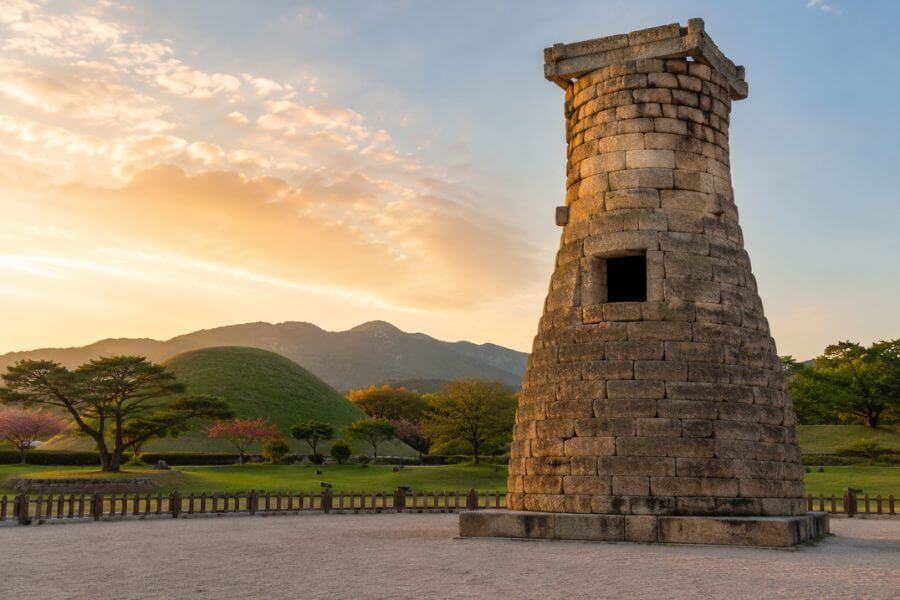
Standing alone in a wide grassy field is Cheomseongdae, the oldest surviving astronomical observatory in East Asia. Built in the seventh century under the direction of Queen Seondeok, this simple stone tower hides a complex mathematical design.
The tower is constructed from exactly 365 granite stones, matching the number of days in a full calendar year. It features twenty-seven layers of stone, which historians believe represents Queen Seondeok’s position as the twenty-seven ruler of the Silla Kingdom. A small square window sits in the middle of the tower, dividing the layers equally.
Ancient astronomers would climb inside the tower using a ladder to observe the stars, predict eclipses, and track the movements of the planets to help local farmers plan their crops. The structure has survived multiple massive earthquakes over thirteen centuries, a true testament to the skill of the ancient stone cutters.
Wandering Donggung Palace and Wolji Pond
As the sun begins to set, you should walk toward Donggung Palace and Wolji Pond. This complex was once the secondary palace where the Silla crown prince lived, and it served as the grand banquet hall where the royal family entertained important foreign guests.
The main feature of this site is a large artificial pond designed with winding edges so that you can never see the entire pond from a single vantage point. This clever design made the small body of water feel like a vast, endless lake.
The real magic happens after dark when the local authorities turn on floodlights beneath the reconstructed wooden palace pavilions. The glowing orange buildings and dark green pine trees reflect perfectly onto the still black surface of the water, creating one of the most famous nighttime views in all of South Korea. Walking along the illuminated pathway that circles the water is an essential evening experience.
Crossing the Grand Woljeonggyo Bridge
Another nighttime wonder located nearby is Woljeonggyo Bridge. This massive wooden covered bridge spans across a wide river, connecting the old royal palace grounds to the sacred mountains in the south. The original bridge was destroyed by fire centuries ago, but it was fully restored to its historical glory using ancient architectural texts.
The bridge features an intricate green, red, and blue wooden roof system supported by thick stone pillars. You can walk completely across the interior of the bridge, admiring the massive wooden beams and looking out the windows at the flowing water below.
On the second floor of the bridge pavilions, a small exhibition room displays the original stones and architectural models used during the massive rebuilding process. Like the palace pond, the bridge is beautifully lit at night, casting a long, colorful reflection across the moving river water.
Spiritual Treasures of Tohamsan Mountain
To see the highest achievements of Silla Buddhist art, you must leave the flat city center and travel up the forested slopes of Tohamsan Mountain. This sacred peak houses two of the most historically significant religious sites in East Asia.
The Majestic Grounds of Bulguksa Temple
Bulguksa Temple is the crown jewel of Gyeongju’s religious architecture. Built in the eighth century, this sprawling complex was designed to represent the ideal Buddhist paradise on earth. The temple grounds are divided into multiple wooden halls connected by stone bridges, wide staircases, and hidden courtyards.
As you enter the main courtyard, you will encounter two famous stone pagodas that look completely different from one another.
- Seokgatap: This pagoda represents simplicity and balance. It features three clean, unadorned stone tiers that rise symmetrically into the sky. It represents the historical Buddha who achieved enlightenment through deep meditation and simple living.
- Dabotap: Located directly across the courtyard, this pagoda is incredibly complex and ornate. It features detailed stone staircases, stone railings, and a small carved lion sitting on its base. It represents the decorative beauty and mystery of the spiritual universe.
The wooden halls of Bulguksa feature intricate paintings on the ceilings and walls, with bright floral patterns and hidden dragon carvings. Walking through the quiet courtyards while listening to the gentle chime of wind bells hanging from the eaves is a deeply peaceful experience.
The Serene Buddha of Seokguram Grotto
Higher up the mountain trail from Bulguksa sits Seokguram Grotto, an artificial stone cave built from blocks of white granite. Inside this quiet chamber sits a massive, beautifully carved statue of the Buddha looking out over the sea toward the eastern horizon.
The engineering of Seokguram is legendary. Silla builders designed a natural ventilation system beneath the floor using cold spring water to keep the granite chamber dry and prevent mold from growing on the sacred statues. The main Buddha sits surrounded by detailed wall carvings of guardians, disciples, and spiritual beings.
To protect the ancient stone from humidity and human breath, the interior is now sealed behind a large glass window, but the sight of the serene face remains deeply moving. If you are willing to wake up early, arriving at the grotto at dawn allows you to witness the sun rising over the East Sea, lighting up the mountain forests in a brilliant morning glow.
Living History at Yangdong Folk Village
If you want to understand how people lived after the Silla era during the later Joseon Dynasty, you should plan a half-day trip to Yangdong Folk Village. Located north of the main city, this is South Korea’s largest traditional clan village, where real families still live in homes that have passed down through generations for over five hundred years.
Traditional Architecture and Clan Hierarchy
The village is nestled into a beautiful valley surrounded by green hills, rolling agricultural fields, and old lotus ponds. The layout of the homes reflects the strict social structure of the past.
High-ranking noble families built their large tile-roofed homes on the higher slopes of the hills, allowing them to look down over the rest of the community. The working-class families lived at the bottom of the hills in smaller homes with roofs made from tightly woven rice straw.
Walking through the unpaved dirt lanes of Yangdong feels like stepping directly into a historical movie. You will see grandmothers tending to small vegetable gardens, traditional wooden chimneys releasing smoke into the air, and old schoolhouses where children used to study classic texts. The village has no modern convenience stores or neon signs, allowing you to experience old rural life in its purest form.
Experiencing Cultural Traditions
Many of the historic homes in Yangdong open their courtyards to visitors, offering a look at ancient daily life. You can observe traditional clay walls packed with straw, large ceramic jars used for fermenting sauces, and old wooden verandas where families gathered during the hot summer months.
Depending on the day of your visit, you might see locals making traditional rice cakes using large wooden mallets or practicing classical calligraphy. It is a living community, so travelers are asked to walk quietly and respect the privacy of the residents who still call these historic houses home.
Modern Culture and Dining on Hwangridan-gil
While Gyeongju is deeply rooted in the ancient past, it also boasts one of the trendiest neighborhoods in South Korea. Hwangridan-gil is a long street lined with old, traditional Korean houses known as hanoks that have been transformed into modern cafes, boutique shops, and unique eateries.
The Fusion of Old and New
What makes Hwangridan-gil so fascinating is its visual style. You can walk into a building with a traditional tiled roof, exposed wooden support beams, and classic paper windows, only to find a modern coffee roaster, a trendy clothing shop, or a studio where you can print custom photos.
The street is incredibly popular with young travelers who wear rented traditional clothing, known as hanbok, while strolling between the historic buildings. The neighborhood comes alive in the afternoon and evening, filled with the aroma of freshly brewed coffee and sweet street food.
Shopping for Unique Keepsakes
The side streets branching off Hwangridan-gil are packed with independent bookstores, ceramic shops, and local art galleries. Instead of standard tourist trinkets, you can find high-quality souvenirs made by local artists, such as hand-painted postcards of the royal tombs, handmade jewelry inspired by Silla gold artifacts, and custom-scented candles that smell like the pine forests of the sacred mountains. It is an excellent place to spend a slow afternoon hunting for memories to take back home.
Culinary Traditions of the Ancient Capital
Food is an essential part of the travel experience, and this region has several unique culinary specialties that you cannot find anywhere else in the country. The local dishes reflect both the royal history of the court and the abundant agricultural land surrounding the city.
Savoring Gyeongju Ssambap
Ssambap translates directly to rice wraps, and it is the ultimate local dining experience. When you order this meal at a traditional restaurant near the tomb parks, the staff will completely cover your low wooden table with dozens of small side dishes.
The star of the meal is a large platter of fresh leafy greens, including lettuce, perilla leaves, cabbage, and pumpkin leaves. You take a leaf in your hand, add a spoonful of rice, choose from various seasoned meats or stews, and top it with a rich, savory soybean paste. Eating ssambap is an interactive, slow dining process that allows you to taste a massive variety of local vegetables, wild roots, fermented side dishes, and grilled seafood in a single sitting.
The Comfort of Soft Tofu Stew
Near the lakeside resort area lies a famous dining district dedicated entirely to sundubu jjigae, or soft tofu stew. Local cooks make the tofu fresh every morning by grinding soybeans by hand and boiling them with clean mountain water.
The stew arrives at your table bubbling hot in a thick stone bowl. The soft, silky tofu melts in your mouth, swimming in a rich, spicy broth flavored with red pepper, garlic, mushrooms, and your choice of fresh seafood or minced beef. Many restaurants provide a raw egg that you crack directly into the boiling soup at the table, creating a rich, creamy texture that perfectly counters the spicy heat of the broth.
Treating Yourself to Hwangnam Bread
You cannot leave the city without trying its most famous sweet treat, known interchangeably as Gyeongju bread or Hwangnam bread. This small pastry dates back to the 1930s and has become a symbol of the city.
The bread features a very thin, soft outer crust made from flour and eggs, stamped with a beautiful geometric pattern that resembles a traditional Silla flower design. The interior is packed tightly with a dense, sweet paste made from high-quality locally grown red beans. The bread is not overly sweet, making it a perfect accompaniment to a hot cup of green tea or a bitter espresso. You can buy them fresh out of the oven in small bakery boxes across the downtown area.
Comparing Traditional Dining Options
To help you decide where to eat during your busy days of exploring, consider how these traditional meals fit into your daily travel budget and schedule.
| Local Dish | Flavor Profile | Serving Style | Best Neighborhood to Find It |
| Gyeongju Ssambap | Fresh, savory, variety of textures | Feast style with over twenty small side dishes | Near the central Daereungwon Tomb Park |
| Sundubu Jjigae | Spicy, rich, silky, comforting | Individual boiling stone bowls | Bukgun-dong Tofu Village near the lake |
| Hanjeongsik | Royal, complex, mild, traditional | Multi-course structured historic meal | Gyochon Traditional Village |
| Hwangnam Bread | Sweet, earthy, smooth interior | Small hand-held pastries sold in boxes | Downtown street corners and bakeries |
Outdoor Recreation around Bomun Lake
When you need a break from exploring historical ruins and ancient tombs, you should head east toward the Bomun Tourist Complex. This area centers around a large, scenic artificial lake surrounded by walking paths, luxury hotels, manicured gardens, and family-friendly entertainment parks.
Walking the Lakeside Trails
A wide, paved walking trail loops completely around the edge of Bomun Lake, spanning several miles. The entire path is lined with thousands of mature cherry blossom trees and willow trees that drape gracefully over the water.
Walking along this path offers stunning views of the surrounding mountains and the quiet lake water. Along the way, you will pass small wooden gazebos, arched stone footbridges, and quiet parks where you can sit and rest. If you prefer to get onto the water, you can rent a pedal boat shaped like a giant swan from the main marina and spend an hour drifting across the calm lake currents.
Visiting the Art Museums and Cultural Parks
The lake district is also home to several modern cultural institutions. The Solgeo Art Museum sits nestled into a quiet hillside inside the Gyeongju Expo Grand Park. The building itself is a modern work of art, featuring large glass windows that perfectly frame the outdoor lake landscape as if it were a painted canvas.
Inside, you can admire classical and contemporary Korean artwork, including massive ink paintings by local masters. The surrounding expo park also features a massive observation tower shaped like the silhouette of a giant ancient pagoda, offering sweeping views of the entire valley from its top floor.
Hidden Gems Outside the Main Paths
If you have extra days to spend in the region, several fascinating sites sit well away from the standard tourist paths, offering a quiet look at history without the presence of large tour buses.
The Mysterious Stone Pagoda of Bunhwangsa
Located just on the edge of the downtown district lies Bunhwangsa Temple. Today, the temple grounds are small, but they hold one of the most unique structures in South Korea: a stone pagoda built to resemble traditional brick.
Instead of baking actual clay bricks, ancient Silla craftspeople meticulously cut dark granite stones into flat, brick-like shapes and stacked them to form a massive tower. The original structure may have stood seven or nine stories tall, but only three stories remain today.
Four stone lions guard the corners of the base, and beautifully carved stone guardians stand watch over the small doorways on each side. The dark, weathered stone gives the pagoda a powerful, ancient energy that contrasts beautifully with the bright fields of wild poppies that bloom around the temple during the summer months.
The Sacred Slopes of Namsan Mountain
For outdoor enthusiasts who love hiking, Namsan Mountain is an absolute paradise. This rugged mountain stands south of the city center and is considered a holy site. The valleys and ridges of Namsan hide hundreds of ancient Buddhist monuments, including rock-carved statues, stone pagodas, and old temple foundations.
Hiking up Namsan feels like an outdoor treasure hunt. You can follow a narrow dirt path through thick pine forests and suddenly find yourself standing before a massive Buddha face carved directly into a sheer cliff wall. Many of these statues have been weathered by centuries of wind and rain, blending seamlessly into the natural rock formations. The trails range from gentle walks along stream beds to steep climbs up rocky ridges, offering incredible panoramic views of the entire Gyeongju valley from the summits.
The Underwater Tomb of King Munmu
For a truly unique coastal excursion, you can travel east to the rocky shores of the East Sea to see the underwater tomb of King Munmu. This ruler was responsible for completing the unification of the kingdom, and his final wishes were as dramatic as his life.
King Munmu requested to be buried at sea rather than inside a grass mound, believing that his spirit would transform into a powerful sea dragon that would protect the nation from foreign invaders coming across the ocean. His ashes were placed beneath a small cluster of rocky granite islands located just a short distance from the beach. Standing on the pebbled shore and watching the rough ocean waves crash over the sacred burial rocks is a powerful experience, especially during the stormy winter months.
Practical Sample Itineraries
To help you organize your time effectively, consider these structured daily plans designed to maximize your exploration without causing unnecessary travel fatigue.
The Essential Two-Day Highlights Plan
This plan focuses on the most famous, must-see monuments located in the city center and on the sacred mountain.
- Day 1: The Heart of the Capital. Start your morning early at Daereungwon Tomb Park to walk among the mounds before the midday heat arrives. Step inside the Heavenly Horse Tomb to see the golden replicas. In the afternoon, walk over to the nearby Cheomseongdae Observatory for a quick photo session, then spend your late afternoon exploring the trendy shops and cafes of Hwangridan-gil. As darkness falls, head over to Donggung Palace and Wolji Pond to see the illuminated pavilions reflecting on the water, then close your night by crossing the grand Woljeonggyo Bridge.
- Day 2: Sacred Peaks and Ancient Art. Dedicate your morning to Tohamsan Mountain. Take the regional bus up to Bulguksa Temple to admire the grand stone pagodas and wooden halls. Afterward, travel further up the mountain road to view the serene stone Buddha inside Seokguram Grotto. Head back down to the city for a late lunch of spicy soft tofu stew, then spend your afternoon exploring the vast collection of real gold crowns and ancient bells housed inside the Gyeongju National Museum.
The Deep Three-Day Immersion Plan
This plan expands on the highlights by adding cultural villages, hidden temples, and scenic nature walks.
- Day 1: Imperial Center. Follow the day one highlights by exploring the central royal tombs, the ancient star observatory, and the trendy shops of Hwangridan-gil. Make sure to try a box of hot Hwangnam bread for an afternoon snack. Enjoy a massive feast of traditional ssambap for dinner near the park walls.
- Day 2: Living History and Sacred Hikes. Spend your morning exploring the traditional tile-roofed houses and dirt paths of Yangdong Folk Village. In the afternoon, head back toward the city to view the unique brick-style stone pagoda at Bunhwangsa Temple. Spend your early evening taking a relaxing walk around the scenic paths of Bomun Lake, enjoying the weeping willow trees and mountain views.
- Day 3: Mountain Wonders and Coastal Dragons. Spend your morning hiking the lower trails of Namsan Mountain to discover hidden rock carvings inside the pine forests. In the afternoon, take a taxi or bus out to the coast to watch the ocean waves crash over the underwater tomb of King Munmu. Return to the city for a final comforting bowl of hot soft tofu stew.
Frequently Asked Questions
What makes Gyeongju different from other major cities like Seoul or Busan?
Seoul and Busan are large, modern metropolises filled with glass skyscrapers, massive shopping malls, and busy underground train networks. This city is vastly different because it functions as an open air museum. The local government maintains strict building codes to protect the old landscape, meaning you will not see giant modern high-rises in the historic center. Instead, the skyline is defined by rolling green burial mounds, old wooden palace gates, and traditional tiled roofs. It offers a much slower, peaceful pace of life that focuses entirely on preserving the ancient heritage of the land.
Is it necessary to hire a tour guide to enjoy the historic sites?
You do not need to hire a guide to have a wonderful experience, as most of the major monuments feature excellent informational signs written clearly in English. The central historic parks are straightforward to navigate on your own using a bicycle or a simple smartphone map. However, if you are a deep history enthusiast, joining a small group walking tour can enhance your visit. A professional local guide can share personal stories, explain hidden architectural symbols on the temples, and paint a vivid picture of what daily life looked like inside the royal court thirteen centuries ago.
How many days should I plan to spend in the region?
A two-day, one-night stay allows you to see the absolute core attractions, such as the central tomb complex, the evening palace pond, and the famous mountain temples. However, a three-day visit is highly recommended if you want to explore at a relaxed pace. Extra time allows you to travel out to the traditional living community of Yangdong Folk Village, hike the hidden stone paths of Namsan Mountain, or view the dramatic underwater tomb of King Munmu on the coast without feeling rushed.
Can I travel through the historic areas if I have limited mobility?
The downtown core area, including Daereungwon Tomb Park, Cheomseongdae Observatory, and the paths surrounding the palace pond, is remarkably flat and well-paved, making it highly accessible for visitors with limited mobility or those traveling with strollers. However, the mountain destinations require caution. Bulguksa Temple features numerous historic stone staircases and uneven gravel courtyards that can be difficult to navigate, while reaching Seokguram Grotto requires a long walk up a sloping dirt forest trail. Yangdong Folk Village also features steep dirt paths leading to the historic noble houses.
What should I wear while exploring the ancient capital?
Comfortable walking shoes are the single most important item to pack for your trip. Even if you utilize the local bus system, you will easily walk several miles each day as you wander through the expansive tomb parks, palace grounds, and temple courtyards. If you plan to visit the mountain sites or hike Namsan Mountain, sturdy athletic shoes or hiking boots with good traction are essential. Additionally, remember to dress respectfully when entering active Buddhist temple halls, which means keeping your shoulders covered and removing your shoes before stepping onto the smooth wooden floors of the prayer rooms.
Is the city a suitable destination for families traveling with young children?
This is a fantastic destination for families. Children often find the massive, mountain-like royal burial mounds incredibly fascinating, and the wide, open grassy parks provide plenty of room to walk safely away from city traffic. Renting a family-sized pedal boat on Bomun Lake or exploring the interactive digital history displays inside the Gyeongju National Museum are great ways to keep younger travelers engaged. The local street food treats, like the sweet red bean pastries and cheese-filled coins, are also big hits with children of all ages.