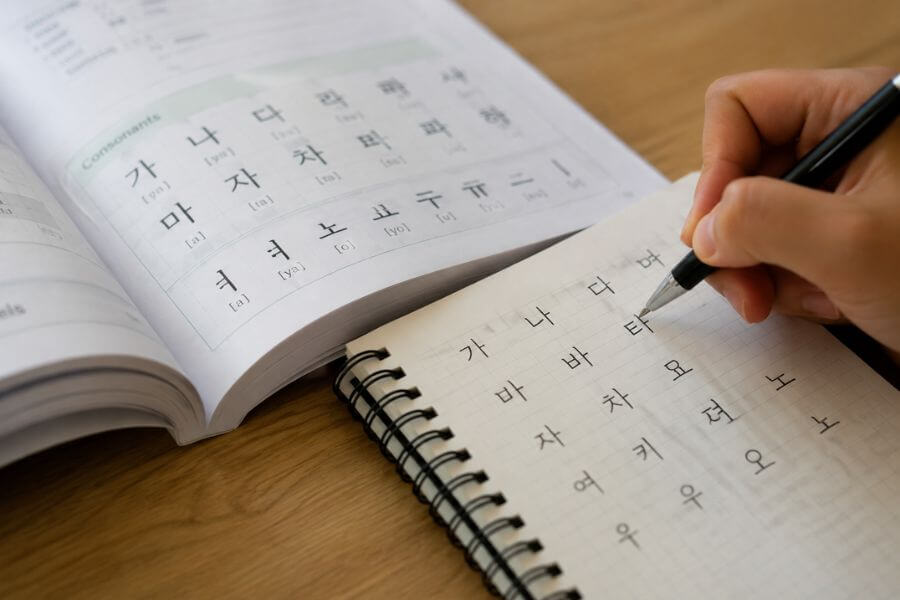
Key Takeaway
Learning the Korean alphabet is one of the fastest skills you can acquire. By breaking down the letters into small, memorable building blocks, you can master the entire writing system today. You do not need to memorize thousands of symbols. Instead, you just need to understand how twenty-four basic letters connect to build syllables. Once you see the shapes as physical maps of your mouth, reading becomes a natural, automatic process.
The Secret Story Behind the Letters
Imagine waking up in a world where only the wealthy can read. For centuries, this was the reality in Korea. People used complex Chinese characters to write down their thoughts. It required years of intense study to master those symbols. Most everyday citizens simply did not have the time to learn them. They could speak their language perfectly, but they could not write a letter to their family, read a government notice, or write down their memories.
In the year 1443, a leader decided that this was unfair. King Sejong the Great believed that every person had the right to read and write. He gathered a group of top scholars and gave them a mission: create a brand new alphabet from scratch. This new system needed to match the sounds of the spoken language perfectly. Most importantly, it had to be simple enough for anyone to pick up in a single morning.
The scholars succeeded beyond anyone’s wild expectations. They created an alphabet originally called Hunminjeongeom, which means “The Proper Sounds for the Education of the People.” Today, we call this system Hangul. When it was released, critics who preferred the old, complex characters mocked it. They called it “the morning script” because they said a clever person could learn it before breakfast. They were right, and that is exactly why it is so brilliant.
When you learn these shapes, you are not just memorizing random lines. You are stepping into a beautifully engineered system designed specifically for quick understanding. King Sejong wanted to give his people a voice, and today, that same system will give you yours as you step into the world of Korean.
Understanding the Architectural Design
Most Western languages use an alphabet that sits in a straight line, like beads on a string. You read the letters one by one from left to right. For example, when you read the word “cat,” your eyes move horizontally across C, then A, then T.
Hangul works differently, but it follows a highly organized logic. Instead of stretching out in a long line, the letters stack together into neat little square blocks. Each block represents exactly one spoken syllable. Think of it like building with children’s toy blocks. Every syllable block must have at least one consonant and one vowel.
To understand how this looks, let us look at a basic breakdown of how these blocks form:
Left-to-Right Syllables
When a vowel has a long vertical line, the consonant sits on the left side, and the vowel sits on the right side. They stand next to each other like two friends talking.
Top-to-Bottom Syllables
When a vowel has a long horizontal line, the consonant sits on top, and the vowel sits underneath it. They stack like the floors of a small house.
The Three-Part Stack
Sometimes, a syllable has a final consonant at the bottom. When this happens, the first consonant and vowel sit on top, and the final consonant supports them from underneath, acting like a strong foundation.
By grouping letters into squares, the language allows your brain to process entire chunks of sound at a single glance. It gives the written page a beautiful, balanced look that resembles a grid. Once you learn the rules of how to move your eyes inside each square, you can pronounce any word automatically.
The Vowel Canvas: Earth, Man, and Sky
Before we look at the consonants, we must understand the core of every syllable: the vowels. The creators of this alphabet did something deeply creative when they designed the vowels. They based the shapes on three foundational elements of nature. By combining these three simple shapes, they created every vowel sound in the language.
The Elements of Design
- The Horizontal Line: This represents the flat Earth.
- The Vertical Line: This represents a standing Man.
- The Short Dash or Dot: This represents the round Sky or the Sun.
When you see a vowel, you are looking at a combination of these elements. The position of the short dash tells your tongue where to move. If the dash points outward or upward, it creates a bright, forward sound. If the dash points inward or downward, it creates a deep, dark sound.
Let us look at the fundamental vertical vowels first. These are the letters where the standing man line is the main feature.
The first one is a vertical line with a short dash pointing to the right. This makes the sound “ah,” like the sound you make when a doctor checks your throat. The second one is a vertical line with a short dash pointing to the left. This makes the sound “uh,” similar to the vowel sound in the English word “up” or “bus.” The third vertical vowel is just a clean, standing line with no dashes at all. This makes the sound “ee,” like the double-E in the word “meet.”
Now let us look at the horizontal vowels. These are the shapes where the flat Earth line is the main feature.
The first horizontal vowel is a line with a short dash pointing straight up. This makes the sound “oh,” like the vowel sound in the word “boat.” The second horizontal vowel is a line with a short dash pointing straight down. This makes the sound “oo,” like the sound in the words “boot” or “cool.” The final basic horizontal vowel is just a clean, flat line with no dashes. This makes a unique sound that we do not really have in English. To make it, you pull the corners of your mouth back slightly and make a grunting sound, like “uuh.” It is similar to the sound you make if you see something unpleasant, or the vowel sound at the end of the word “taken.”
Basic Vowel Comparison
| Shape | Main Orientation | English Sound Match | Pronunciation Hint |
| Vertical with right dash | Vertical | ah | Opening wide at the doctor |
| Vertical with left dash | Vertical | uh | The middle sound in “bus” |
| Plain vertical line | Vertical | ee | The bright sound in “tree” |
| Horizontal with top dash | Horizontal | oh | Surprised expression: “Oh!” |
| Horizontal with bottom dash | Horizontal | oo | The deep sound in “moon” |
| Plain horizontal line | Horizontal | uuh | Tight smile, slight stomach grunt |
The Y-Vowels: Adding a Dash of Sound
Once you know the basic vowels, you can unlock a whole new set of sounds with one simple mental trick. The scholars who created the alphabet realized they did not need to invent totally new symbols for related sounds. Instead, they added a second short dash to the existing vowel shapes.
Whenever you see a vowel shape that has two small dashes instead of one, it means you add a quick “Y” sound to the very beginning of that vowel. It modifies the breath instantly.
Let us see how this rule transforms the vertical vowels we just learned. The shape with one dash to the right makes the sound “ah.” If you look at the shape with two dashes pointing to the right, it becomes “yah,” like the first sound in the word “yard.” The shape with one dash to the left makes the sound “uh.” If you see two dashes pointing to the left, it becomes “yuh,” like the first sound in the word “young.”
The same pattern applies to the horizontal vowels. The shape with one dash pointing up makes the sound “oh.” If you see two dashes pointing up, it becomes “yoh,” like the classic children’s toy, the yo-yo. The shape with one dash pointing down makes the sound “oo.” If you see two dashes pointing down, it becomes “yoo,” exactly like the English word “you.”
By using this logical pattern, the alphabet saves you from hours of useless memorization. You do not have to learn four brand new letters. You simply learn one rule: an extra dash adds a “Y” sound. This predictability is why you can move through the writing system so quickly without feeling overwhelmed.
The First Consonant Group: Shapes that Mimic Your Mouth
Now we are ready to explore the consonants. This is where the alphabet reveals its most beautiful secret. The shapes of the consonants are not random drawings. They are actual diagrams of what your mouth, tongue, teeth, and throat look like when you speak those sounds aloud.
When you look at a letter, it tells your tongue exactly where to go. This makes the alphabet highly intuitive. Let us look at the first five foundational consonant shapes and see how they map onto your face.
The first shape looks like a sharp corner or a backward English letter L. It represents the back of your tongue rising up to block the back of your throat. This letter makes a sound between a hard G and a K. When it sits at the start of a word, it sounds a bit closer to a K, and when it sits between vowels, it sounds closer to a G. For now, think of it as the sound in “gold” or “kite.”
The second shape is the exact opposite. It looks like a perfect English letter L. This shape represents the tip of your tongue curving upward to touch the roof of your mouth, just behind your front teeth. This letter makes the N sound, exactly like the N in the words “nest” or “now.”
The third shape looks like a clear square box. This shape represents your two lips coming together to close your mouth. Because it represents closed lips, it makes the M sound, just like the M in the words “map” or “mother.”
The fourth shape looks like an upside-down V or a small tent. This shape represents a sharp front tooth. Because it looks like a tooth, it makes the S sound, like the S in the words “sun” or “star.” When this letter meets certain vowels like “ee” or the “Y-vowels,” it naturally softens into a “sh” sound, like the word “shoe.”
The fifth basic shape is a perfect circle. This shape represents the open, hollow back of your throat where air flows freely. This letter has a fascinating double personality depending on where it sits inside the syllable block. When it sits at the very beginning of a syllable block, it is completely silent. It acts as an empty placeholder because a Korean syllable block cannot start with a vowel shape alone. However, if this circle sits at the very bottom of a syllable block, it wakes up and makes a strong “ng” sound, like the ending sound in the English words “sing” or “ring.”
Anatomy of Basic Consonants
- The Throat Blocker: The backward L shape mimics the tongue blocking the throat to create the G/K sound.
- The Roof Toucher: The regular L shape mimics the tongue touching the roof of the mouth to create the N sound.
- The Lip Box: The square box mimics your outer lips framing a closed mouth to create the M sound.
- The Sharp Tooth: The tent shape mimics a tooth cutting through the air to create the S sound.
- The Hollow Airway: The circle mimics an open throat, staying silent at the top but ringing with an “ng” sound at the bottom.
Expanding the Consonants: Adding Lines for Air
Just like the vowels, the consonants expand using a clear, mechanical rule. The scholars realized that some sounds use the exact same part of the mouth but require you to push out a stronger blast of air. To show this on the page, they simply added an extra line to the basic shapes. These are called aspirated letters because they involve a strong breath of air.
Let us build on the shapes we already know. Take the backward L shape, which makes the G/K sound. If you add a horizontal line across the middle, it turns into a shape that looks like the English capital letter E. This extra line tells you to blow out air. It transforms the sound into a sharp, crisp K sound, like the K in “kitchen.” If you hold your hand in front of your mouth when you say it, you should feel a distinct puff of wind against your skin.
Now take the regular L shape, which makes the N sound. If you add a line across the top, it turns into a shape that looks like a backward C, or an open box on its side. This represents the tongue pressing firmly against the roof of the mouth. This shape makes a sound between a D and a T. If you add one more line across the middle of that shape, it looks like the capital English letter E without the back spine, or a Roman numeral three. This extra line means more air, turning the sound into a sharp, clear T sound, like the T in “tiger.”
Let us look at the square box shape, which makes the M sound. If you extend the two vertical side lines upward so they poke past the top bar, the shape begins to look like a small bucket or a goalpost. This shape makes a sound between a B and a P. If you take that shape and turn the lines horizontally, creating two flat bars with two vertical pillars between them, it looks like a house frame. This extra structure changes the sound into a clear, strong P sound, like the P in “paper.”
Finally, let us look at the tooth shape, which makes the S sound. If you add a flat horizontal bar across the top of the tent, it turns into a shape that makes a soft J sound, like the J in “jump.” If you add a tiny vertical tick or another small bar on top of that flat bar, it looks like a person wearing a wide hat. This extra line means you must release a burst of air, changing the sound into a sharp CH sound, like the CH in “chair.”
By seeing how these extra lines represent your own breath, you can connect the letters together in your mind. You do not need to memorize a list of isolated shapes. You just need to look for the extra lines that say, “push air out of your mouth right now.”
The Twin Consonants: Double the Strength
There is one final group of consonants you need to know, and they are the simplest to recognize visually. Sometimes, you want to make a sound that is extremely tight, tense, and sharp. In English, we might try to show this by emphasizing a word or speaking with extra energy. In Hangul, the writing system shows this by placing two identical basic consonants right next to each other inside the same syllable block. These are called double consonants or twin consonants.
When you see a twin consonant, you do not pronounce the sound twice. Instead, you hold your breath for a tiny fraction of a second, build up pressure behind your teeth or tongue, and release the sound with absolute tightness. There is no air blowing out of your mouth when you say these. They are completely dry and sharp.
There are five twin consonants in total, built directly from the shapes you have already mastered:
The Double Backward L
This takes the basic G/K shape and doubles it. Instead of a soft sound, it makes an incredibly crisp, hard K sound with zero air escape. It sounds like the sharp K sound in the middle of the English word “ski.”
The Double Flat Box
This takes the basic D/T shape and doubles it. It creates a completely solid, hard T sound. It matches the crisp T sound in the middle of the English word “stop.”
The Double Bucket
This takes the basic B/P shape and doubles it. It creates a tight, popping P sound with no breath behind it. It sounds like the P sound in the middle of the English word “spy.”
The Double Tent
This takes the basic S tooth shape and doubles it. It turns the soft, breathing S into a fierce, hissing, high-pressure S sound. Think of the way you hiss the word “snake” when you are trying to be quiet but forceful.
The Double Hatted Shape
This takes the basic J shape and doubles it. It creates a tight, sharp, biting J sound. It is similar to the very crisp, snapping J sound you might hear in a word like “juice” if you said it with immense emphasis.
To practice these, think of them as muscular versions of the original letters. You are tightening the muscles in your throat and mouth to pop the sound out cleanly. Visually, they are instantly recognizable because they look like reflections in a mirror.
The Maverick Shape: The Free Spirit Letter
There is one letter in the alphabet that does not fit neatly into the line-adding groups, but it is one of the most common and important letters you will encounter. It looks like a zigzag line or a small snake curving back and forth, resembling a squared-off number two or a stylized letter S.
This letter represents a sound that slips between an L and an R. In English, we think of L and R as completely different sounds that require different tongue positions. To make a clean English L, the tip of your tongue presses flat against the roof of your mouth. To make an English R, your tongue curls backward into the middle of your mouth without touching anything.
The Korean letter sits exactly halfway between those two actions. To make this sound, you do not press your tongue flat, and you do not curl it far back. Instead, you quickly snap or flick the tip of your tongue against the roof of your mouth, right behind your front teeth. It is the exact same movement your tongue makes when you say the middle double-T sound in the American pronunciation of words like “water” or “butter.”
Because this letter is fluid, its sound changes based on where it lands in a syllable block. When it sits at the very beginning of a syllable block between two vowels, it rolls smoothly and sounds closer to an English R. When it sits at the very bottom of a syllable block, ending a word, your tongue stays pressed against the roof of your mouth, making it sound closer to a clean English L.
Think of this letter as a liquid sound that adapts to its surroundings. It adds a beautiful, flowing rhythm to the language, and once you practice that quick tongue tap, you will sound like a natural speaker.
The Complex Vowels: Blending Sounds Together
Now that you have mastered the basic vowels and consonants, you are ready for the final piece of the puzzle: complex vowels. Sometimes people call these diphthongs, which is just a fancy linguistic word for two vowel sounds that slide together into a single syllable.
Do not let these shapes worry you. They are built entirely by gluing the basic vertical and horizontal vowels together side-by-side. When you look at them, read them from left to right, sliding the sounds into each other until they fuse.
The first group of complex vowels are the “E” sounds. They look like two vertical lines connected by a short bridge. One looks like an H with the bridge pointing inward, and the other looks like an H with the bridge pointing outward. In modern spoken Korean, these two shapes actually sound completely identical. They both make the sound “eh,” like the vowel sound in the words “bed” or “met.” You do not need to stress about telling their sounds apart; your eyes will learn to recognize which one belongs to which word over time.
The next group involves the horizontal vowel for “oo” or “oh” combining with a vertical vowel. Let us trace the visual logic:
If you take the horizontal line for “oh” and place it next to the vertical line for “ah,” you get a combined shape. Say “oh” and “ah” faster and faster: “oh-ah, oh-ah, wah.” It naturally turns into the English sound “wah,” like the first sound in the word “water.”
If you take the horizontal line for “oo” and place it next to the vertical line for “uh,” you get another combination. Say “oo” and “uh” quickly together: “oo-uh, oo-uh, wuh.” It makes the sound “wuh,” like the vowel sound in the word “wonder.”
If you take the horizontal line for “oo” and place it next to the simple vertical line for “ee,” you get a shape that combines them. Say “oo” and “ee” together fast: “oo-ee, oo-ee, wee.” It makes the sound “wee,” exactly like the English word “we.”
There are a few other small combinations, but they almost all follow this exact same pattern of sliding the left sound into the right sound. By treating them as combinations rather than separate letters, you can figure them out on the fly without having to memorize a giant list of new rules.
Complex Vowel Blending Guide
| Visual Combination | Components | Resulting Sound | English Keyword Match |
| Vertical H-shape (inner bridge) | uh + ee | eh | The vowel in “net” or “pen” |
| Vertical H-shape (outer bridge) | ah + ee | eh | Identical sound to the one above |
| Horizontal top-dash + right-dash | oh + ah | wah | The opening sound of “water” |
| Horizontal bottom-dash + left-dash | oo + uh | wuh | The opening sound of “one” |
| Horizontal bottom-dash + plain vertical | oo + ee | wee | The joyful sound of “weekend” |
Building Your First Blocks: Step-by-Step Construction
Now that you know all twenty-four pieces of the machine, it is time to assemble them into words. Remember, every single Korean syllable is a square block made of letters. You cannot simply throw letters in a random pile. You must follow the precise grid rules that King Sejong’s scholars created.
Let us practice building a syllable from the ground up so you can see exactly how your eyes should travel across the square.
Imagine we want to write the word for “moon” or “month,” which is pronounced “dal.” We need three sounds: the D sound, the AH vowel, and the fluid L sound.
First, we look at our consonants to find the D sound. We remember the regular L shape means N, and adding a top bar gives us the side box shape that makes the D/T sound. This will be our opening letter. It sits in the top-left position of our block.
Next, we need the vowel sound “ah.” We remember the vertical line with a short dash pointing to the right represents “ah.” Because this is a vertical vowel, the rules say it must stand side-by-side with the first consonant. So, we place the “ah” line right next to our D consonant. Now we have a two-part block that looks like a D and an AH standing together. This reads as “da.”
Finally, we need to add the closing L sound to the end of the syllable. We look for our fluid zigzag shape that looks like a squared number two. Since this sound comes at the very end of the syllable, it cannot stand on the side. It must slide underneath both the D and the AH, acting as a flat floor that supports the entire block.
When you look at the completed block, your eyes start at the top left (D), move to the right (AH), and then drop straight down to the bottom floor (L). You read it smoothly in one downward sweep: D-AH-L, “dal.” You have just built and read an authentic syllable block. Every single word in the language builds itself using this exact spatial logic.
Deciphering Common Words: Real-World Reading
The best way to solidify your new skill is to apply it to real words you might see on signs, menus, or maps. Let us walk through a few common terms together, breaking down the blocks step by step so you can see how the reading process feels in real time.
Our first word is the name of the language’s home country: Korea. In the local language, this is written using two syllable blocks, pronounced “Han-guk.” Let us look at the first block.
The first block starts with a shape we have not discussed in detail yet, but it is easy to spot: it is a circle with two horizontal bars on top, looking like a person wearing a small hat over a round face. This represents a deep breath from the throat, making the H sound. Below this H consonant sits the vertical vowel with a right-hand dash, which is “ah.” Underneath them both sits the regular L shape, which makes the N sound. Reading from top to bottom, we get H-AH-N: “Han.”
The second block starts with the backward L shape, which makes the G/K sound. Below it sits the horizontal vowel with a downward dash, which makes the “oo” sound. At the very bottom of this block sits another backward L shape. Since it is at the bottom, it acts as a crisp closing consonant. Reading from top to bottom, we get G-OO-K: “guk.” Put them together, and you have “Han-guk.”
Let us try another common word that you hear in everyday greetings: “Kimchi.” This word also uses two blocks.
The first block starts with the backward L shape (G/K). Next to it stands the simple vertical line, which makes the “ee” sound. Underneath them sits the square box, which makes the M sound. Reading from top to bottom, we get K-EE-M: “Kim.”
The second block starts with the person wearing a wide hat, which represents the sharp CH sound. Next to it stands the simple vertical line for “ee.” There is no consonant at the bottom of this block, so it stays as a simple side-by-side pairing. Reading from left to right, we get CH-EE: “chi.” Put them together, and you read “Kimchi.” You are now reading real words without any assistance from English letters.
Navigating the Hidden Sounds: Advanced Reading Rules
As you grow more confident, you will notice that sometimes when syllables bump into each other, the sounds blend together to make speech smoother. This happens in English all the time. For example, when you say “next year,” your tongue naturally turns the T and the Y into a “ch” sound. You do not say “next-year” with a harsh pause. Hangul handles these natural speech patterns with a few brilliant rules.
The most important rule involves our friend the circle shape. Remember that when the circle sits at the top of a block, it is completely silent and acts as an empty container for a vowel.
Imagine you have a word where the first block ends with a consonant at the bottom, and the second block starts with a silent circle on top. When you speak this word out loud, the final consonant from the first block dislikes being trapped at the bottom. It looks over, sees the empty circle in the next block, and hops across the boundary to take over that empty space.
Let us look at a real example. Imagine a word where the first block is “ba-b” (meaning rice or food), ending with the bucket consonant at the bottom. The second block is just the silent circle paired with the vertical vowel “ee.” On the printed page, it looks like “Bab-ee.”
However, when you say it out loud, your tongue wants to move smoothly. The bucket consonant at the bottom of the first block slides right into the empty circle position of the second block. Instead of saying “bab… ee,” you pronounce it as “ba-bee.” The writing stays the same to protect the original meaning of the words, but your voice connects them into a seamless stream of sound. Understanding this moving consonant rule will instantly prevent you from sounding robotic when you read aloud.
Avoid These Common Beginner Traps
When you learn a writing system that looks completely different from your own, it is easy to fall into a few standard mental traps. Knowing these pitfalls ahead of time will save you days of frustration and keep your learning speed high.
Trap One: Relying on Romanization
The biggest mistake beginners make is writing English letters above the Korean symbols to remember the sounds. This is dangerous because English letters do not match the sounds accurately.
For example, the Korean letter that sits between G and K does not sound exactly like an English G or an English K. If you write a K over it, your brain will stop looking at the Korean shape and only read the English letters. Throw away the training wheels immediately. Trust your eyes to connect the Korean shape directly to the physical movement of your mouth.
Trap Two: Ignoring Syllable Proportions
When you start drawing the blocks yourself, you might make all the letters the exact same size, causing them to spill out of their squares. Remember that every block must fit into a perfect imaginary square box.
If a block has only two letters, those letters can be quite large. If a block has three or four letters packed inside, you must draw each letter smaller and more compact so they all fit comfortably inside the square boundaries. Keep your lines balanced and neat.
Trap One vs. Trap Two Solutions
- The Sight Solution: Instead of translating shapes into English letters, translate shapes into physical mouth actions. Look at the backward L and think “back of throat,” not “G.”
- The Spatial Solution: Practice writing words inside graph paper. Force every syllable block to occupy exactly one square grid on the paper to train your hand in proper sizing.
Your Two-Hour Roadmap to Mastery
You now possess all the core knowledge required to read this beautiful script. To make sure you hit your goal of reading within two hours, you need a structured plan to divide your time effectively. Treat this as a focused practice session.
Minute 1 to 30: Vowel Foundations
Spend your first half-hour entirely on the vowels. Memorize the three elements: Earth, Man, and Sky. Practice drawing the basic vertical and horizontal shapes, saying the sounds aloud as your pen moves. Once you feel solid, add the extra dashes to unlock the “Y-vowels.”
Minute 31 to 70: Consonant Mapping
Spend the next forty minutes exploring the consonants. Touch your neck when you make the throat blocker sound. Feel your lips close when you draw the M box. Notice how your breath bursts out when you add lines to make the aspirated letters. Link the physical feeling in your face to the shapes on your paper.
Minute 71 to 100: Block Assembly
Spend this half-hour practicing the grid rules. Take random combinations of consonants and vowels and stack them together. Practice moving your eyes from top-left, to right, and down to the bottom floor. Do not worry about whether the words are real or fake yet; just focus on training your eyes to glide through the blocks smoothly.
Minute 101 to 120: Real-World Decoding
Spend your final twenty minutes hunting for real Korean words. Look up signs from streets, labels on food items, or titles of popular songs. Force yourself to decode them block by block using your memory. You will surprise yourself as the mysterious shapes transform into recognizable sounds right before your eyes.
Practice Zone: Test Your Skills
Let us put your brain to work right now with a fun practice session. Below are five real words written in syllable blocks. Use the knowledge you have gathered from this guide to decode them one by one. Take your time, look for the shapes, and map out where your eyes should move.
Word One: 도시
Let us break down the first block. It starts with the side box shape that makes the D sound. Below it sits the horizontal line with a top dash, which makes the “oh” sound. This block reads as “doh.” The second block starts with the tent shape, making the S sound. Next to it stands the straight vertical line for “ee.” This block reads as “see.” Put them together, and you get “doh-see,” which is the word for “city.”
Word One to Five Breakdown
| Korean Word | Block-by-Block Sounds | Combined Pronunciation | Meaning in English |
| 도시 | doh / see | doh-see | city |
| 우유 | oo / yoo | oo-yoo | milk |
| 바지 | ba / jee | ba-jee | pants |
| 노래 | noh / reh | noh-reh | song |
| 한국어 | han / guk / uh | han-gu-guh | Korean language |
Let us look closer at the last word on the list: 한국어 (Han-guk-uh). Notice that the third block starts with a simple circle placeholder on top, followed by the “uh” vowel.
Remember our advanced reading rule about moving consonants? The final backward L consonant from the second block (“guk”) will look over, see that empty circle placeholder, and slide right into it when you say the word aloud. So, instead of pronouncing it stiffly as “Han-guk… uh,” your voice naturally glides across the blocks to say “Han-gu-guh.” You are now applying advanced speech patterns like an experienced speaker.
Frequently Asked Questions
Is Hangul a type of picture writing like ancient symbols?
No, it is a true alphabet where individual letters represent specific sounds. While the consonant shapes do mimic the physical structure of your mouth and tongue, they function exactly like English letters. You combine them to form sounds rather than looking at a picture that represents an entire word or idea.
Do I need to know Chinese characters to read Korean?
You do not need to know any Chinese characters to read everyday writing. In the past, the two systems were mixed, but modern writing relies almost entirely on the native alphabet. You can navigate streets, read books, and browse websites using only the twenty-four letters you learned today.
Why do some letters sound like they are halfway between two different English sounds?
This happens because the alphabet categorizes sounds based on how much air leaves your mouth rather than using the vocal cord rules of Western languages. For example, the backward L shape sits between a G and a K sound because it represents a specific tongue position. Your ears will naturally learn to adjust the sound depending on where the letter sits inside a word.
How do spaces work when writing sentences with these blocks?
Spacing works very similarly to English. You leave a clear, full space between individual words to show where ideas start and stop. However, all the syllable blocks inside a single word remain tightly packed together without spaces so you can recognize the word as a single unit.
Can I use this writing system to write down English words?
Yes, you can write almost any phonetic sound using these blocks. Many international words and names are written by matching the sounds to the closest letters available. For example, the word “bus” is written by combining the bucket consonant, the grunting horizontal vowel, and the tooth consonant into a neat syllable block.