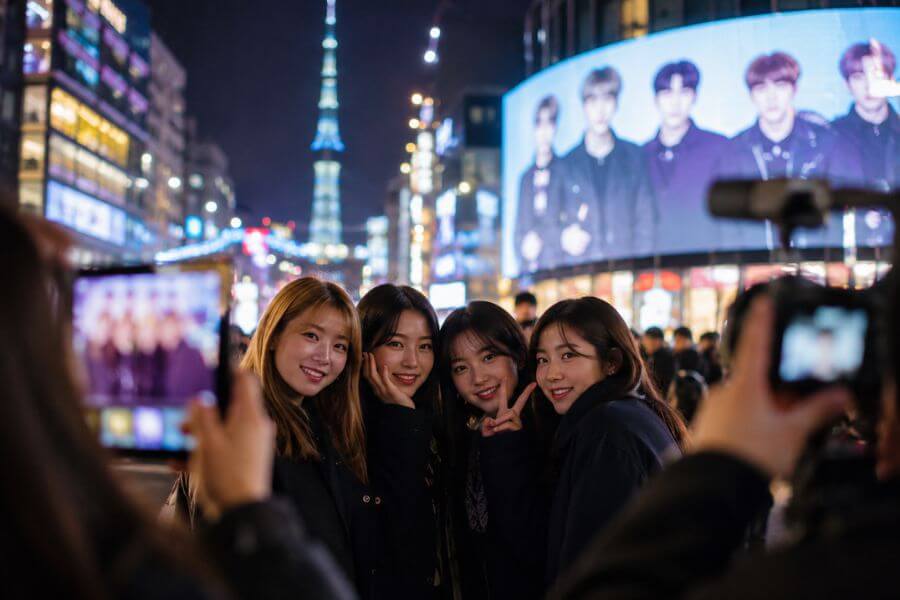
Key Takeaway: The World Is Riding the Korean Wave
The global rise of South Korean culture is not a passing trend or a stroke of luck. It is a highly successful, decades-long story of creativity, smart technology use, and massive passion. Known as Hallyu, this movement has transformed South Korea from a country recovering from war into one of the biggest cultural leaders on earth. Whether you sing along to catchy music pop songs, watch gripping dramas on your phone, or cook spicy rice cakes in your kitchen, you are part of a global community that finds deep joy, comfort, and excitement in Korean creativity.
Welcome to the Wave: Your Introduction to a Global Phenomenon
Have you ever found yourself humining a song tune in a language you do not fully speak? Or perhaps you stayed up until three in the morning just to see if two fictional characters on your laptop screen would finally hold hands? If you have ever felt a sudden craving for crispy fried chicken coated in sweet and spicy sauce after watching a television show, you are not alone. You are floating right in the middle of a massive global ocean known as Hallyu, or the Korean Wave.
For the past few decades, a spectacular cultural shift has been taking place across the planet. Without warning, a small peninsula in East Asia has become the heartbeat of global pop culture. This is not just about a few catchy music videos or a single famous movie that won major awards. It is a complete takeover of music, television, film, fashion, skincare, food, and language.
The word Hallyu itself comes from two Chinese characters that translate directly to “Korean Wave.” It is a beautiful way to describe how this culture spreads. It started as a gentle ripple in neighboring Asian countries during the late 1990s. Today, it has grown into a towering tidal wave that crashes onto the shores of every continent, from the Americas to Europe and Africa.
What makes this wave so special is how it touches your daily life. You do not just watch Hallyu; you live it. You talk about it with your friends online, you change your morning skincare routine because of it, and you learn new words to express your feelings. It feels personal, warm, and endlessly welcoming.
To truly understand how this happened, you have to look past the bright neon lights of modern music stages and delve into the heart of South Korea itself. This is a story about how a nation turned its deepest passions, traditions, and struggles into a universal language that the whole world wants to speak.
The Birth of Hallyu: From Local Roots to Early Asian Ripples
To understand how the Korean Wave grew so big, you need to step back in time to the late 1990s. At that point, South Korea was facing a massive financial crisis that hit many Asian countries very hard. Businesses were struggling, and the country needed to find a new way to grow and build its future. The government made a bold and unique choice. Instead of just focusing on traditional factories, heavy machinery, or cars, they decided to invest heavily in their people’s creativity and culture.
They realized that movies, music, and television shows could be powerful products that people around the world would want to buy. They began to support young artists, directors, and musicians, providing them with the tools and freedom to create high-quality entertainment.
At the exact same time, neighboring countries like China, Taiwan, and Vietnam were looking for fresh, modern television content. When Korean television dramas first crossed the borders, they became an instant hit. Audiences in these countries fell in love with the high production values, the emotional depth of the acting, and the respectful, family-oriented values shown on screen.
The Early Hits That Started It All
The true spark that lit the fire of the Korean Wave across Asia was a romantic television drama called Winter Sonata, which aired in 2003. This show became an absolute sensation, especially in Japan. The main actor became a massive celebrity overnight, and thousands of international fans began traveling to South Korea just to visit the beautiful snowy locations where the show was filmed.
Shortly after, a historical drama named Jewel in the Palace took the world by storm. It told the inspiring story of a young, hard-working woman who became the first female royal physician during a past kingdom era. This show did something amazing. It did not just entertain people; it introduced global audiences to traditional Korean medicine, clothing, and royal cuisine. Suddenly, people all over Asia wanted to try authentic Korean dishes and learn more about the nation’s rich history.
These early successes proved that South Korean stories had a magical quality. They could make people from entirely different backgrounds cry, laugh, and feel deeply connected. The first ripples of the wave were strong, stable, and ready to expand into deeper waters.
The Auditory Revolution: How K-Pop Conquered the Music Charts
If television dramas built the foundation of the Korean Wave, it was Korean popular music, or K-Pop, that turned it into a loud, energetic global party. You have probably seen the colorful music videos, the perfectly timed dance moves, and the massive stadiums packed with thousands of fans waving glowing plastic batons. K-Pop is not just a genre of music; it is a complete sensory experience designed to capture your attention and never let it go.
The rise of K-Pop to global dominance did not happen by accident. It is the result of a highly organized system that blends Western musical styles like pop, hip-hop, R&B, and electronic dance music with uniquely Korean storytelling and visual flair.
One of the most important moments in this musical journey happened in 2012, when a solo artist named Psy released a song called Gangnam Style. The music video, featuring a funny horse-riding dance, became the very first video in history to hit one billion views on a major video-sharing website. It was an eye-opening moment for the global music industry. It proved that a song sung almost entirely in the Korean language could become the biggest hit on the planet.
The Rise of the Supergroups
Following that massive breakthrough, K-Pop groups began to change the music world forever. Groups like BTS and Blackpink became household names globally. They did not just top the music charts in South Korea; they filled stadiums in New York, London, Tokyo, and Rio de Janeiro. They performed at major global music festivals and spoke at important global meetings like the United Nations.
To understand why these groups are so successful, you have to look at the unique elements that make up the K-Pop universe:
- The Concept of Training: Before an artist ever steps onto a stage, they spend years as a trainee at an entertainment company. They take intense daily classes in singing, dancing, rapping, media communication, and foreign languages. This ensures that when they finally debut, their skills are absolutely flawless.
- Flawless Choreography: K-Pop dances are famous for being incredibly complex and perfectly synchronized. Groups spend hours practicing until every single hand movement and step matches perfectly. These dances are often designed with catchy, easy-to-copy movements that fans love to film and share on social media challenges.
- Deep Concept Universes: K-Pop albums are rarely just a collection of random songs. They often tell a continuous story that spans multiple years and music videos. Groups create complex fictional worlds, filled with hidden clues, literary references, and psychological themes, which turns every new release into an exciting puzzle for you to solve.
Beyond the Small Screen: The Global Triumph of Korean Cinema
For a long time, international audiences mostly experienced Hallyu through television or music. However, South Korea has always possessed a rich, daring, and deeply artistic film industry. In recent years, Korean movies have shattered the walls of international cinema, proving that subtitles are no barrier to brilliant storytelling.
The historic turning point came in 2019 with the release of Parasite, a dark comedy thriller directed by Bong Joon Ho. The movie tells a gripping story about two families from completely different social classes whose lives become tangled in unexpected and dangerous ways.
Parasite did something that many people thought was impossible for a foreign-language film. It won the highest prize at the Cannes Film Festival and went on to win four major Academy Awards, including Best Picture. It was a massive victory for film lovers everywhere, signaling to the world that South Korean filmmakers were creating some of the most innovative, thought-provoking art of our time.
The Power of Korean Storytelling Themes
What makes Korean films so captivating to watch is their willingness to mix genres and tackle difficult topics. They do not follow standard Hollywood formulas. A single movie can make you laugh hysterically, gasp in terror, and cry tears of sadness all within a two-hour span.
Korean cinema frequently focuses on deep human experiences and social issues that resonate with people everywhere:
- Social Inequality: Many films explore the vast gap between the wealthy and the poor, showing the struggles of everyday people trying to survive in a competitive modern world.
- Family and Loyalty: No matter how wild, scary, or futuristic a Korean movie might be, the emotional core almost always ties back to family bonds, friendship, and the sacrifices people make for those they love.
- Justice and Revenge: Korean filmmakers are masters of the thriller genre, creating intense stories about individuals fighting against corrupt systems or seeking personal justice when the law fails them.
This bold approach to filmmaking has earned South Korea a permanent place at the top of the global film industry, ensuring that movie lovers around the world are always eagerly waiting for the next cinematic masterpiece.
Binging the Wave: The Streaming Era and K-Dramas
Think about your favorite way to spend a rainy weekend. For millions of people around the world, the answer is simple: curling up on the couch and binging a Korean television drama, or K-Drama. The rise of global streaming websites has made these shows instantly available in every living room, changing the way the world consumes television.
In 2021, a survival thriller show called Squid Game premiered and shocked the entire entertainment landscape. It quickly became the most-watched show in the history of the streaming platform, reaching hundreds of millions of homes across the globe. The show’s bright pastel colors, giant childhood game props, and intense critique of modern society created a massive cultural conversation. People were buying the green tracksuits, baking the sugar candies shown in the episodes, and discussing the characters with intense passion online.
But Squid Game is just one side of a very diverse coin. K-Dramas cover an incredibly wide range of topics, ensuring that no matter what kind of stories you enjoy, there is a show made just for you.
Why K-Dramas Are So Addictive
If you have ever watched a K-Drama, you know how hard it is to watch just one episode. The writers are masters of suspense and emotional tension. Here is a quick look at the main types of K-Dramas you can explore:
- Romantic Comedies: These shows are famous for their slow-burning, deeply emotional love stories. They focus heavily on eye contact, small gestures, and emotional growth, creating a sense of innocence and sweet tension that is rare in Western television.
- Historical Dramas: Filled with gorgeous traditional silk clothing, massive palace sets, and intense political battles for the royal throne, these shows transport you into South Korea’s fascinating past.
- Fantasy and Supernatural: From handsome immortal beings and time-traveling doctors to terrifying modern zombie outbreaks, Korean writers love to blend magical elements with realistic human emotions.
- Slice-of-Life and Healing: These are gentle, quiet shows that focus on everyday life, friendships, small-town communities, and workplace struggles. They offer a sense of comfort and emotional healing after a long, stressful day.
The secret to their success lies in their structure. Most K-Dramas are designed to tell a complete story within sixteen to twenty episodes. This means the plot moves quickly, there is very little filler content, and you get a satisfying, meaningful conclusion without having to wait for multiple seasons.
The Philosophy of Beauty: The Global Explosion of K-Beauty
The influence of the Korean Wave does not stop when you turn off your television or close your music app. It follows you right into your bathroom mirror. Over the past decade, South Korea has become the undisputed capital of skincare and cosmetics, completely changing how people across the globe care for their skin.
For a long time, the global beauty industry focused heavily on hiding imperfections with heavy makeup. K-Beauty completely flipped this idea on its head. The core philosophy of Korean beauty is simple: focus on health, hydration, and nourishment first. The goal is to achieve radiant, glowing, and healthy skin from within, a look often described as “glass skin.”
This focus on skin health introduced the world to entirely new ways of thinking about self-care, most famously through the multi-step skincare routine. Instead of just washing your face and applying a simple lotion, you are invited to treat your skin to a thoughtful, layering process of hydration and protection.
Innovative Ingredients and Daily Routines
K-Beauty is world-famous for its incredible scientific innovation and its use of unique, natural ingredients that might have seemed unusual to Western consumers at first.
Let us compare the traditional Western approach to skincare with the innovative K-Beauty approach to see why so many people made the switch:
| Traditional Western Skincare | Innovative K-Beauty Skincare |
| Focuses on harsh treatments to fix existing problems | Focuses on gentle prevention and long-term skin health |
| Relies heavily on strong chemicals and acids | Utilizes natural, nourishing, and soothing ingredients |
| Uses a simple, quick three-step routine | Embraces a customized, multi-step layering process |
| Aims for a matte, heavily covered makeup look | Celebrates a natural, dewy, and hydrated glow |
Through this unique approach, products like sheet masks, BB creams, snail mucin essences, and gentle sunscreens have become permanent staples in vanity cabinets worldwide. Taking care of your skin is no longer viewed as a boring chore; it has been transformed into an enjoyable, relaxing ritual of self-love.
Savoring the Flavor: The Global Rise of K-Food
If you take a walk through almost any major city today, you will notice something delicious: the unmistakable aroma of grilled meats, toasted sesame oil, and spicy fermented cabbage drifting out of crowded restaurants. Korean food, or K-Food, has experienced a massive boom in global popularity, turning everyday food lovers into passionate fans of Korean culinary arts.
Food is a deeply important part of South Korean culture. In fact, a common greeting in the country is not just “How are you?” but rather “Have you eaten rice yet?” Food is seen as a way to show love, build friendships, and maintain physical health.
When you sit down at a Korean restaurant, you are not just getting a plate of food; you are participating in a communal, interactive experience. Whether you are grilling marinated beef right at your table or mixing a colorful bowl of rice and vegetables, it is a meal that brings people together.
The Stars of the Korean Table
The global journey of K-Food has introduced a whole new vocabulary of flavors to taste buds around the world. Here are some of the most beloved dishes that have taken over global menus:
- Kimchi: This traditional side dish of salted, fermented vegetables—most commonly napa cabbage or radishes—is the absolute heart of Korean cuisine. It is packed with healthy vitamins and probiotics, offering a complex sour, salty, and spicy flavor profile.
- Korean Fried Chicken: Famous for its incredibly crispy texture, achieved through a unique double-frying method, this chicken is tossed in delicious sauces ranging from sweet garlic soy to fiery chili glaze.
- Bibimbap: A beautiful, colorful bowl of warm rice topped with an array of perfectly seasoned vegetables, a fried egg, and a dollop of spicy red pepper paste, representing balance and harmony.
- Tteokbokki: A popular, comforting street food consisting of chewy, cylindrical rice cakes simmered in a rich, sweet, and spicy chili broth.
The rise of digital media has accelerated this food obsession. Creators film themselves enjoying giant, comforting meals or taking part in spicy noodle challenges, inspiring viewers to run to their nearest Asian grocery store to join in on the culinary fun.
Dressed in Hallyu: Streetwear, High Fashion, and K-Style
Walk down the street in Seoul, and you will quickly realize that the city itself is a living, breathing fashion runway. Korean style, or K-Style, has captured the imagination of fashion-forward youth and luxury designers alike, establishing South Korea as a major trendsetter in global style.
The world of K-Style is defined by its ability to blend contrasting ideas perfectly. It mixes comfortable, oversized casual streetwear with sharp, elegant tailoring. It takes classic, traditional elements and reinvents them for the modern world. It is a style that feels incredibly fresh, youthful, and full of confidence.
A massive driving force behind this fashion revolution is the undeniable power of K-Pop and K-Drama stars. When a famous singer wears an outfit in a music video or walks through an airport, that clothing item often sells out completely around the world within minutes.
The Elements of Modern K-Style
Major global fashion luxury brands have taken notice of this immense influence. They routinely fly to Seoul to host massive fashion shows, and they sign Korean celebrities to be the faces of their global campaigns. You can see the distinct fingerprints of K-Style in your own wardrobe through several key trends:
- Gender-Fluid Fashion: Korean style is famously open to breaking traditional gender rules. Men comfortably wear pastel colors, floral patterns, and delicate jewelry, while women rock oversized, structured suits and chunky sneakers.
- The Rebirth of Hanbok: Designers are taking the Hanbok, South Korea’s beautiful traditional dress characterized by vibrant colors and elegant lines, and modernizing it into everyday clothing like jackets, skirts, and shirts that can be worn anywhere.
- Comfortable Streetwear: Think high-waisted wide-leg trousers, cozy oversized hoodies, bucket hats, and clean graphic tees that look effortless yet perfectly put together.
K-Style encourages you to view fashion not as a strict set of rules to follow, but as a fun, creative sandbox where you can express exactly who you are without fear.
The Digital Architecture: How Technology Amplified the Wave
It is impossible to separate the incredible success of Hallyu from the rise of the internet, social media, and smartphone technology. While older cultural empires were built on traditional television networks, radio stations, and physical movie theaters, the Korean Wave traveled around the world along digital highways.
South Korea is one of the most technologically advanced and connected nations on earth. When the internet began to boom, Korean entertainment companies were among the very first to realize that geographical borders no longer mattered. They did not hide their music videos behind paid cable networks; they put them on free global video platforms for anyone to discover.
They understood that if you make great content easily accessible, the world will find it, fall in love with it, and share it with everyone they know.
Building Global Communities Online
Technology did something even more powerful than just distributing content: it allowed fans to connect directly with their favorite artists and with each other, forming massive, highly organized global communities.
Let us look at how technology transformed the fan experience from a passive activity into an interactive, global community:
- Direct Communication Apps: Specialized global apps allow artists to send text messages, share photos, and host casual live video streams directly from their dressing rooms or homes. It feels like getting a message from a friend, creating an incredibly deep bond of loyalty and affection.
- Instant Global Translation: When a Korean artist posts a message or releases a song, global fan communities work together instantly to translate the content into dozens of different languages, ensuring that no fan is left out due to a language barrier.
- Digital Streaming Power: Fans organize themselves across social media platforms to coordinate global music streams, vote in international award ceremonies, and create trending topics, turning independent individuals into a unified global force.
This digital ecosystem has democratized pop culture. You do not have to wait for your local radio station to play a Korean song or your local theater to show a Korean film. You have the entire vibrant world of Hallyu right in the palm of your hand, available at any second of the day.
Economic and Geopolitical Impact: Culture as Soft Power
While Hallyu brings endless entertainment, joy, and style into your life, it also serves a deeply serious purpose for South Korea itself. It is a stunning example of what political scientists call “soft power.” This is a country’s ability to influence global opinions, build strong international friendships, and boost its economy through cultural attraction rather than military force or economic pressure.
The South Korean government views the creative industries as a major pillar of national pride and economic survival. Every dollar invested in creating high-quality cultural content pays off massively by generating intense interest in other Korean products.
When you fall in love with a K-Drama or a K-Pop group, your curiosity naturally expands. You become much more likely to buy a Korean smartphone, drive a Korean car, use Korean kitchen appliances, or choose Korean beauty products.
The Tourism Boom and Language Renaissance
The cultural wave has also transformed South Korea into one of the most desired travel destinations on earth. Millions of travelers pack their bags every year to fly to Seoul, Busan, and Jeju Island. They want to walk down the streets they saw in their favorite dramas, eat the street food fresh from the market stalls, and experience the vibrant, high-tech energy of the country in person.
Even more surprising is the massive global explosion of interest in learning the Korean language. Across high schools, universities, and mobile language-learning apps, Korean has become one of the fastest-growing languages studied worldwide.
People are not just learning it for business or school requirements. They are learning it because they want to understand the lyrics of their favorite songs without help, watch shows without looking down at subtitles, and connect more deeply with a culture they have grown to love. Hallyu has turned a language spoken on one small peninsula into a beautiful bridge connecting millions of hearts across the globe.
Navigating the Challenges: The Future of the Korean Wave
No great success story is without its difficulties, and as Hallyu continues to grow, it faces important questions about its sustainability, ethics, and future direction. The intense global spotlight brings immense pressure, and both the industry and its fans are learning how to navigate these complex modern challenges.
One of the biggest concerns is the intense pressure placed on the creators themselves. The K-Pop and K-Drama industries are notoriously fast-paced and highly competitive. Artists work incredibly long hours, deal with a complete lack of personal privacy, and sometimes face harsh criticism from anonymous online voices.
There is a growing, vital conversation happening within the community about protecting the mental health and well-being of these young artists, ensuring they are treated with the kindness and respect they deserve.
Staying Fresh in a Changing World
Another fascinating challenge is how Hallyu will continue to evolve so it does not lose its unique identity or become repetitive. To remain a dominant global force, South Korean creators are constantly looking for ways to adapt, innovate, and collaborate with diverse cultures around the world.
As you look toward the future of the Korean Wave, you can expect to see several exciting shifts:
- True Global Collaborations: We are seeing more and more projects where South Korean directors, writers, and musicians work directly side-by-side with artists from America, Europe, Latin America, and Africa, blending different cultural styles to create entirely new forms of art.
- Diverse Training Grounds: Major entertainment companies are now holding auditions all over the world, forming global pop groups that feature members from completely different nationalities who sing in multiple languages while utilizing the high-quality Korean training system.
- Virtual and Tech Frontiers: South Korea is leading the charge in combining entertainment with cutting-edge technology, creating virtual artists, immersive augmented reality concerts, and digital fan spaces that break the boundaries of physical distance.
Hallyu has proven time and time again that it is resilient, adaptable, and endlessly creative. It is not a temporary trend that will fade away next year. It has successfully woven itself into the permanent fabric of global pop culture, and it is here to stay.
Riding the Continuous Wave: Your Spot in the Global Community
As we look back at the incredible journey of the Korean Wave, it becomes completely clear that Hallyu is much more than just a business success story or a collection of catchy songs. It is a powerful movement that has brought people together in a way that few other cultural phenomena ever have.
In a world that can often feel disconnected or divided, the Korean Wave offers a warm, welcoming space where anyone can belong. It does not matter where you were born, what language you grew up speaking, or how old you are. When you join a crowd of fans cheering at a concert, share a plate of spicy food with friends, or talk about a beautiful show finale online, you are part of a massive global family.
The rise of South Korea’s culture reminds us of a beautiful truth: that great stories, beautiful music, delicious food, and deep human emotions are universal. They can cross any ocean, climb over any wall, and touch any heart.
So, whether you are a long-time follower who remembers the early days of romantic dramas, or someone who just discovered a catchy new pop song this morning, enjoy the journey. Keep exploring the rich history, savoring the incredible flavors, and singing along to the beautiful melodies. The Korean Wave is still moving forward, and there is a perfect spot waiting for you right on top of the wave.
Frequently Asked Questions About Hallyu
What does the word Hallyu mean and where did it come from?
The word Hallyu is a Chinese term that translates directly to “Korean Wave.” It was first used by journalists in Beijing during the late 1990s to describe the sudden, massive popularity of South Korean television shows and music among Chinese youth. Since then, the term has been adopted worldwide to describe the global spread of all aspects of South Korean culture.
Why did the South Korean government invest so heavily in pop culture?
During the late 1990s, South Korea suffered a major economic crisis. The government realized that relying only on traditional industries like manufacturing was risky. They decided to treat national culture and creativity as a valuable export product. By supporting local artists, directors, and musicians, they created a powerful industry that boosted the economy and improved the country’s global reputation.
How do K-Pop groups achieve such perfect synchronization in their dances?
The secret behind K-Pop’s flawless dancing is the intensive training system. Before entering the stage, artists spend years as trainees at entertainment companies, practicing their choreography for many hours every single day. Groups often practice movements slowly, step by step, ensuring that every single hand placement, body angle, and footstep matches perfectly across every member.
What makes Korean dramas different from Western television shows?
K-Dramas are unique because they are usually designed to tell a complete story within a single season of sixteen to twenty episodes. This prevents the plot from dragging on for years. They are also famous for their intense emotional tension, high production values, creative genre-blending, and clean, slow-burning romance stories that focus deeply on character development.
Is Korean beauty skincare safe for all types of skin?
Yes, the core philosophy of K-Beauty is gentle prevention, hydration, and long-term skin nourishment. Instead of using harsh chemicals that can strip the skin, Korean products rely heavily on soothing, natural ingredients like green tea, centella, rice water, and snail mucin. This makes the products exceptionally gentle and suitable for a wide variety of skin types, including sensitive skin.
Why is Kimchi considered so important in Korean food culture?
Kimchi is a traditional fermented vegetable dish that forms the absolute foundation of every single Korean meal. It is a symbol of national identity and history, dating back to times when fermenting vegetables was necessary to survive long, cold winters. It is deeply celebrated for its rich, complex spicy flavor and its immense health benefits, as it is packed with vitamins and healthy probiotics.
How has technology helped the Korean Wave spread to countries far away from Asia?
Unlike older cultural movements that depended on local television networks or physical store distribution, Hallyu traveled globally via the internet. Korean companies put their content on free global video-sharing platforms and social media early on. This allowed international fans to discover the culture easily, translate content into their own languages instantly, and build massive online communities that support their favorite artists.
What is the concept of soft power in relation to South Korea?
Soft power is a country’s ability to get what it wants through cultural attraction and admiration rather than military strength or financial threats. Through Hallyu, South Korea has built immense global goodwill and friendship. When people fall in love with Korean music, films, and traditions, they naturally view the nation positively, which boosts international tourism, diplomacy, and the sale of other Korean goods globally.