Stepping into a Korean jimjilbang for the first time can feel like walking onto a completely different planet. You are surrounded by steam, unfamiliar smells of mugwort and charcoal, and a sea of locals who seem to know exactly what they are doing. Oh, and there is the minor detail that everyone in the bathhouse section is completely naked. It is easy to feel a sudden wave of panic and wonder if you should just turn around and run back to your hotel.
But missing out on a jimjilbang means missing out on one of the most deeply relaxing, culturally rich, and affordable experiences in South Korea. These twenty-four-hour wellness centers are places where communities gather to wash away the stress of the week, sweat out toxins in heated mineral rooms, and eat delicious comfort food. With a little bit of preparation, you can glide through the entire experience like a seasoned local. This guide will walk you through every single step of the process so you can leave the awkwardness at the door and fully embrace the bliss.
Understanding the Layout of a Modern Jimjilbang
Before you even pack your bag, it helps to understand how these massive complexes are organized. A typical jimjilbang is split into very distinct zones, and knowing which zone requires what clothing is the ultimate secret weapon against awkward mix-ups.
When you first arrive, you will encounter the lobby and reception area. This is a completely normal public space where you pay your entry fee, hand over your shoes, and get your gear. Once you pass this point, the layout splits by gender. Men and women go to completely separate locker rooms, which lead directly into the respective gender-segregated bathhouses.
The bathhouse is the zone where clothes are strictly forbidden. You will find various hot tubs, cold plunges, shower stations, and scrub tables here. Everyone in this area is of the same biological sex, and everyone is entirely nude.
Beyond the bathhouse lies the heart of the facility: the communal jimjilbang area. This is a massive, shared space where men, women, families, and friends hang out together. To enter this zone, you must wear the specific uniform provided by the front desk. This area houses the famous heated clay ovens, ice rooms, restaurants, sleeping zones, and entertainment lounges.
The Anatomy of a Bathhouse Building
To visualize how you will navigate the space, think of the building as a series of layers. You move from the outer public world into the private locker spaces, then into the ultra-private wet zones, and finally back out into a cozy communal living room.
- Layer One: The Reception. The public entryway where you buy your ticket, receive your keys, and trade your street shoes for a small locker slot.
- Layer Two: The Locker Rooms. Divided strictly into men’s and women’s sections. This is your home base where you store your clothes, bags, and electronics.
- Layer Three: The Wet Bathhouse. Accessed directly from the locker room. This contains the showers, pools, and steam rooms. No clothes allowed.
- Layer Four: The Communal Lounge. The co-ed space where everyone wears the matching pajamas. This is where you eat, sleep, and experience the dry saunas.
Step by Step from the Front Desk to the Locker Room
The journey begins at the front desk, which is usually called the counter. Walk up to the receptionist and pay the admission fee. Jimjilbang prices are incredibly reasonable, usually ranging from ten thousand to twenty-five thousand Korean won, depending on the time of day and how fancy the facility is. Nighttime entry is often slightly more expensive because people use the facility as an affordable hotel alternative.
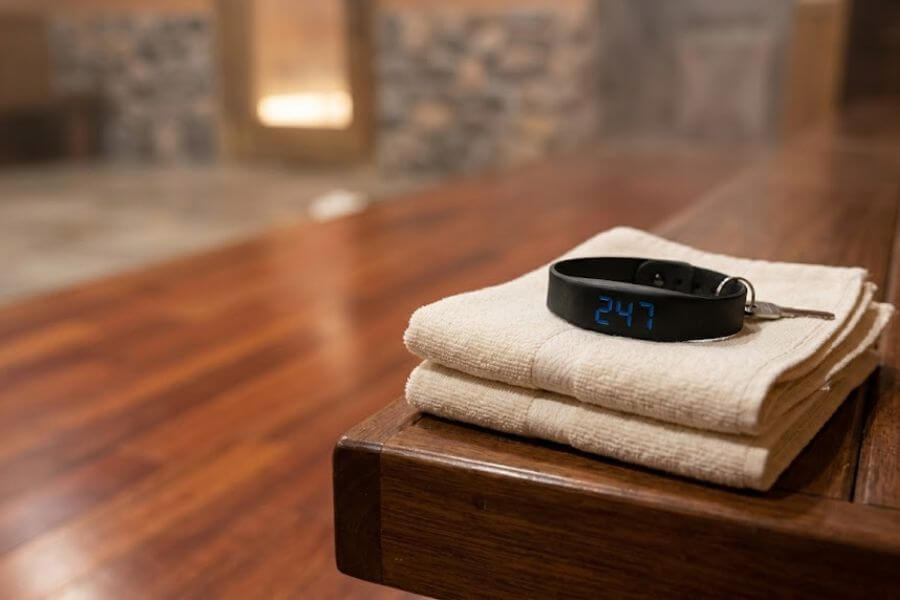
When you pay, the clerk will hand you a few specific items. You will get a wearable electronic wristband or a physical key with a number on it. You will also receive two small towels and a set of matching pajamas, which usually consist of an oversized cotton t-shirt and loose shorts. Take note of the color of your clothes, as they often distinguish men from women, though some modern places use neutral colors for everyone.
Your very first task is to take off your shoes immediately. Look around for a wall of tiny lockers specifically meant for footwear. Find the number that matches your key or wristband, open the tiny door, place your shoes inside, and lock it up. At many modern spots, this shoe locker key is the exact same one you will use for your clothes locker upstairs. Keep it strapped securely to your wrist or ankle so you do not lose it.
Next, follow the signs for your gender. Men will look for signs that say “Nam” or feature blue accents, while women will follow signs for “Yeo” or pink accents. Walk into your designated locker room and locate the tall clothing locker that matches your number. Strip down completely, place all your belongings inside, and lock the door.
What to Keep and What to Leave Behind
Deciding what to carry into the wet bathhouse area can be confusing. You want to make sure you have the essentials without dragging a giant pile of plastic bottles into the shower zone.
| Location | What to Leave in the Locker | What to Take with You |
| The Wet Bathhouse | Your uniform, street clothes, phone, wallet, large towels, socks, and underwear. | Your small modesty towels, a bar of soap, shampoo packets, and your wristband key. |
| The Communal Lounge | Your nakedness, dirty bath towels, toiletries, and outdoor footwear. | Your provided uniform, your wristband key, and maybe a book or phone. |
Mastering the Unspoken Rules of the Naked Wet Zone
This is the exact moment where most foreigners freeze up. You are standing in a locker room, completely naked, looking at a heavy glass door that leads to the showers and pools. Your brain might be telling you to hide, but the absolute best way to blend in is to walk with confidence. Locals do not stare, because nudity in this specific context is viewed purely as a matter of hygiene and relaxation, not sexuality.
As you step through the glass door into the wet zone, you will notice that the room is filled with mist and the sound of running water. The absolute most important rule of the entire jimjilbang experience is this: you must wash your body thoroughly before touching any of the communal pools. Do not just rinse off for three seconds. Sit down at one of the individual shower stations and scrub yourself from head to toe.
These individual stations usually feature a low plastic stool and a basin. Sit down on the stool, grab the hand-held shower head, and use soap and shampoo to clean every inch of your skin. If you brought hair ties, tie up long hair so it does not float in the shared water later. Once you are squeaky-clean, rinse your stool and basin for the next person as a sign of respect.
Now you are ready to enjoy the pools. Take a look at the digital temperature displays next to each tub. They range from lukewarm and pleasantly warm to intensely hot and freezing cold. Choose a warm pool to start, and slowly lower yourself into the water. Keep your head above the surface, do not splash, and never use the pools as a swimming lane.
The Art of the Small Modesty Towel
You might wonder why you were given two tiny hand towels instead of a giant bath towel. These little cloths serve a highly strategic purpose in the wet zone. Because giant towels would drag in the water and ruin the cleanliness of the pools, you are only allowed to bring these small towels into the bath area.
Locals use these tiny towels in creative ways to navigate the space without feeling exposed. While walking between pools, you can hold the towel vertically in front of your body as a shield. When you are sitting inside a hot tub, you absolutely cannot let the towel touch the water. Instead, fold it into a neat square and balance it directly on top of your head, or rest it on the edge of the stone pool. It keeps the towel dry and makes you look like an absolute pro.
The Intense World of the Korean Body Scrub
If you want the ultimate skin-softening experience, you need to sign up for a seshin, which is the traditional Korean body scrub. Somewhere inside the wet zone, you will spot a row of vinyl massage tables, often tucked behind a small privacy screen or in a corner. This is where the professional scrubbers, known affectionately as Ajumma for women and Ajousshi for men, perform their magic.
To get a scrub, you usually need to speak to the attendant working in that corner. You can choose a basic scrub, or upgrade to a package that includes a oil massage, a seaweed wrap, or a face mask. You will pay for this service either by tapping your electronic wristband or by paying cash directly to the scrubber, depending on the house rules.
Once you book your slot, the scrubber will tell you to go soak in a hot pool for at least fifteen to twenty minutes. This step is absolutely mandatory. The hot water softens your skin and loosens up the dead skin cells, making the scrubbing process much more effective. When your time is up, the scrubber will wave you over to the table.
Lay down on the vinyl table exactly as directed. The scrubber wears rough, sandpaper-like mitts made of viscose, usually in a bright green or yellow color. They will scrub your body with incredible speed, strength, and precision. They will flip you over like a pancake, moving your limbs around to reach every single angle.
What to Expect During a Body Scrub
While a seshin leaves your skin feeling incredibly soft, the actual process can be quite shocking if you are not prepared for the physical reality of it.
- The Friction: The mitts are rough, and the pressure is firm. It might feel like a mild sunburn at first, but your body quickly adjusts to the sensation.
- The Gray Rolls: As the scrubber works, you will see gray, noodle-like rolls of dead skin peeling off your body. Do not be embarrassed; this is exactly what is supposed to happen, and the scrubbers view a large amount of residue as a sign of a successful job.
- The Water Tosses: Every few minutes, the scrubber will dump buckets of warm water over your body to rinse away the dead skin. Just close your eyes and let them handle the logistics.
- The Professional Distance: The scrubbers do this all day, every day. To them, your body is simply a canvas that needs cleaning. There is zero judgment, zero awkwardness, and total efficiency.
Transitioning to the Co-ed Communal Lounges
After you have soaked, scrubbed, and rinsed off one final time, it is time to move to the social side of the jimjilbang. Head back into the locker room wet zone entryway, where you will find a stack of hair dryers, lotions, and cotton swabs. Dry yourself off thoroughly with your remaining dry towel before you step back onto the main locker room carpet.
Once your body is dry, open your locker and put on the cotton t-shirt and shorts uniform you were given at check-in. Underwear under the uniform is a matter of personal choice. Many locals choose to go commando because the cotton fabric is thick and heavy, while others prefer to wear clean underwear. If you feel nervous about modesty, wearing clean undergarments under your uniform shorts is a great way to feel more secure.
Now that you are fully clothed, look for the exit doors that lead to the shared, co-ed spaces. This area is usually called the jimjilbang zone. As soon as you walk through the doors, you will enter a massive floor-heated room filled with people of all ages. You will see teenagers chatting, grandparents napping, and couples watching television together.
The floor is usually made of polished wood or stone, and it is warmed by an underfloor heating system called ondol. Grab a couple of heavy foam floor mats and vinyl headrests from the communal storage stacks scattered around the room. Find an open patch of floor, lay down your mat, and make yourself at home. This is your home base for the next few hours.
Navigating the Heated Mineral Healing Rooms
The main attraction of the communal lounge is the collection of specialized thermal rooms. These rooms look like large stone igloos or beautifully tiled chambers built into the walls. Each room uses a different natural element to create a unique healing environment, and they run at wildly different temperatures.
Always check the temperature sign posted outside the door before you walk in. Some rooms are mild and cozy, while others are intensely hot ovens that require you to wrap yourself in a heavy burlap hemp sack to protect your skin. Walk into each room quietly, find a spot to sit or lie down on the straw mats, and let the heat do its work.
It is best to start with the lower-temperature rooms to give your heart and circulation time to adjust. Spend about ten to fifteen minutes inside a room, then step out into the cooler air of the main lounge to rest and drink water before trying a hotter chamber.
A Tour of Popular Specialized Thermal Chambers
Every jimjilbang has its own unique mix of rooms, but you will almost always encounter these classic variations during your visit.
- The Yellow Clay Room (Hwangto-bang): A beautifully warm room lined with traditional Korean clay. It emits far-infrared rays that soothe deep muscle aches and help calm your mind.
- The Salt Room (Sogeum-bang): The floor of this room is completely covered in smooth, heated crystals of natural rock salt. Lying down on these warm stones helps draw out impurities from the skin and relieves respiratory tightness.
- The Charcoal Room (Sut-bang): Lined with blocks of black charcoal, this room is designed to purify the air and release negative ions, making it a wonderful place to sit if you feel run-down or tired.
- The Fire Oven Room (Bul-gama): This is the hottest room in the facility, often reaching temperatures well above two hundred degrees Fahrenheit. You must leave your phone outside because the heat will melt internal electronics. Locals use this room for intense, deep sweating.
- The Ice Room (Eoreum-bang): A frosty chamber with frozen walls and cold air. This is the final step of the sauna rotation. Stepping into the ice room after a hot session instantly tightens your pores, lowers your heart rate, and boosts your circulation.
Food and Drink: The Essential Jimjilbang Menu
All that sweating and soaking will quickly work up a massive appetite. Fortunately, jimjilbang food culture is legendary, and eating is a major part of the overall experience. Most facilities feature a full-service cafeteria or restaurant, alongside a snack bar that sells drinks and light bites.
You do not need to carry cash or cards to buy food. Simply walk up to the counter, place your order, and let the cashier scan your electronic wristband. The cost will be tracked digitally and added to your final bill, which you will settle at the front counter when you leave the building at the end of the day.
The absolute classic beverage that every single person drinks at a jimjilbang is sikhye. This is a traditional, icy-cold Korean drink made from fermented malt and rice. It is sweet, incredibly refreshing, and contains tiny grains of cooked rice floating at the bottom. It usually comes served in a giant plastic container with a straw, perfect for sipping between sauna sessions to rehydrate your body.
For a substantial meal, head over to the main dining room. The food here is comforting, rustic, and designed to restore your energy levels after hours of heat exposure. You can sit on floor cushions at low tables and enjoy your meal at a leisurely pace while wearing your comfortable pajamas.
The Ultimate Bathhouse Comfort Foods
If you are not sure what to order from the menu, look at what the tables around you are eating. You will almost always see these popular dishes making an appearance.
| Dish Name | What It Is | Why It is Perfect for Saunas |
| Baked Eggs (Maekbanseok Gyeran) | Eggs that have been slow-baked inside the hot sauna ovens for hours until the whites turn brown and the yolks get dense. | They have a deeply savory, nutty flavor and provide a quick hit of protein and salt after heavy sweating. |
| Seaweed Soup (Miyeok-guk) | A rich, savory broth packed with tender sea greens and garlic, often served with a bowl of warm rice. | Packed with iodine and essential minerals, this soup is traditionally eaten to restore blood health and hydration. |
| Cold Buckwheat Noodles (Naengmyeon) | Chewy buckwheat noodles served in an icy, tangy beef broth topped with sliced cucumbers and radishes. | The freezing cold broth provides an instant, delicious contrast to the intense heat of the clay ovens. |
The Art of the Lamb Head Towel Wrap
While relaxing in the communal lounges, you will undoubtedly notice people walking around with adorable, bulky towel wraps on their heads that look exactly like sheep ears. This is called the yangmeori, or the lamb head wrap, and it is a beloved piece of jimjilbang pop culture.
While it looks cute in photographs, it actually serves a very practical purpose. The thick folds of the towel protect your ears, hair, and scalp from drying out or burning when you are sitting inside the highest-temperature stone ovens. It also keeps sweat from dripping down into your eyes while you rest.
Making your own lamb head wrap is incredibly simple, and doing it with your small towel is an instant way to show the locals that you know the customs.
How to Roll a Yangmeori (Lamb Head Towel)

Step 1: Lay your small jimjilbang towel completely flat on a clean floor or table.
Step 2: Fold the towel horizontally into three equal sections, rolling it lengthwise like a long scroll.
Step 3: Reach inside one open end of the rolled towel and roll the fabric outward, turning it over itself like a sock cuff.
Step 4: Repeat this outward rolling process three or four times until a tight, thick donut shape forms on that end.
Step 5: Move to the opposite end of the towel and repeat the exact same outward rolling process.
Step 6: Pull the center section of the towel open to create a cap, place it over your head, and secure the two side donuts over your ears.
Overnight Stays and the Etiquette of Sleeping
Because jimjilbangs are open twenty-four hours a day, they double as incredibly cheap overnight lodging. If you miss the last subway train home, or if you are a budget traveler looking to save money on a hotel room, you can sleep right on the floor of the communal lounge.
Many facilities have designated sleeping rooms that are separate from the main television lounge. These dark rooms are often split by gender to ensure extra comfort and privacy. The floors remain heated all night long, creating a cozy environment that feels like a giant electric blanket.
To set up your bed, grab two or three of the standard foam floor mats to create a thicker sleeping cushion. Grab a vinyl block pillow for your head. Some places also provide thin cotton blankets for a tiny extra fee, though many people simply sleep in their uniforms using their extra small towel as a face shield against the morning light.
Sleeping in a room with dozens of strangers requires a high level of consideration. Keep your phone on silent, turn off all alerts, and use headphones if you are watching a video or listening to music. If you know that you are a heavy snorer, try to find a spot in the main, larger lounge rather than a tiny, enclosed sleeping room so you do not keep the entire room awake all night.
Checking Out and Leaving Like a Pro
When you have thoroughly soaked, sweated, eaten, and rested, it is time to return to the real world. Head back to your designated gender-segregated locker room to prepare for checkout.
Take off your uniform pajamas and throw them into the large laundry bins scattered around the locker room. Collect all your personal belongings from your tall clothing locker, double checking that you have not left charging cords, keys, or wet toiletries behind. Get dressed in your regular street clothes.
Walk back down to the main reception counter in the lobby. Hand over your electronic wristband or locker key to the clerk at the desk. They will scan the chip to pull up your tab for the day, calculating everything you spent on body scrubs, baked eggs, sikhye, or meals.
Pay your final balance using cash or a credit card. Once your bill is completely clear, the system will release your shoe locker lock. Walk over to the shoe locker wall, open your slot using your key, slide your street shoes back on, and step outside into the fresh air, feeling completely refreshed, incredibly clean, and proud that you navigated the experience without a single drop of awkwardness.
Frequently Asked Questions
What should I do if I have large visible tattoos on my body?
While tattoos were traditionally frowned upon in older Korean culture, modern attitudes have changed significantly, especially in major cities like Seoul. Most large, modern jimjilbangs have zero issues with tattooed guests. However, a few traditional or rural bathhouses might still ask guests with extensive body art to cover up or avoid the pools. If you are nervous, you can opt for a larger, internationally friendly wellness center where tattoos are a common sight among travelers.
Can women visit a jimjilbang if they are on their menstrual cycle?
If you are currently on your period, you should skip the naked wet bathhouse zone and the public pools out of respect for general hygiene standards. However, you can absolutely still enjoy the co-ed communal lounges, the dry heated mineral rooms, and the restaurants. Simply wear your underwear and a hygienic pad or tampon securely beneath your provided uniform shorts, and stay on the dry side of the facility.
How do I handle prescription eyeglasses inside the steam rooms and hot pools?
If you rely on strong prescription glasses to see where you are going, you can definitely wear them while walking around the wet zone to avoid slipping on the wet tiles. However, keep in mind that the lenses will steam up instantly inside the saunas and hot pools. When you enter an intensely hot dry chamber, it is best to take your glasses off and leave them on a towel outside the door, as the metal or plastic frames can heat up quickly and burn your face.
Is there a strict time limit on how long I can stay inside the facility?
Most standard jimjilbang tickets allow you to stay inside the building for a continuous block of twelve to twenty-four hours. If you cross over that time limit, the front desk will simply charge an extra hourly fee when you try to check out at the counter. You are completely free to loop between the pools, saunas, restaurants, and sleeping mats as many times as you want during your designated stay.