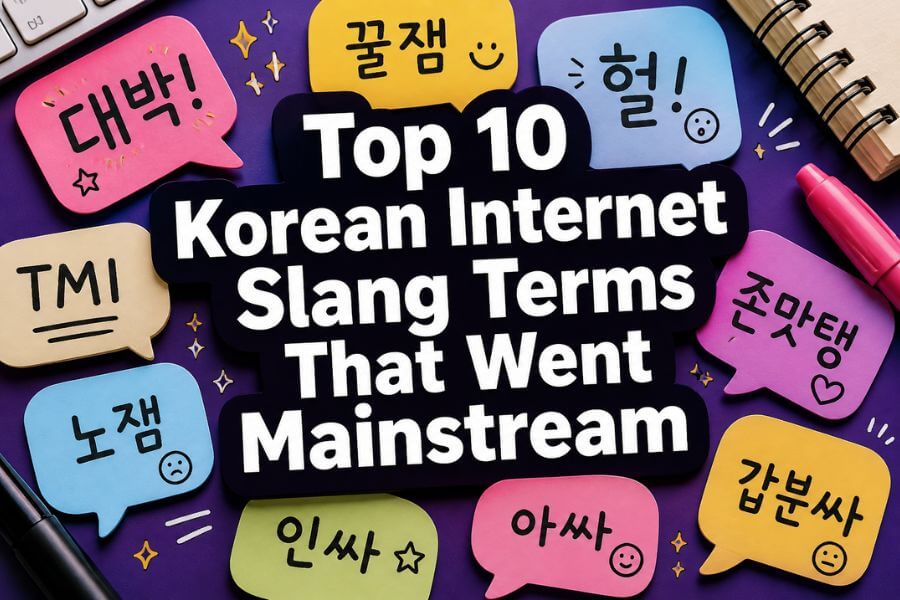
If you spend any time online in Korea, you quickly notice that the language feels fast, playful, and constantly evolving. Korean internet slang is not just a trend. It is a reflection of how people think, react, and connect in real time. What makes it even more interesting is how many of these slang terms move beyond online communities and become part of everyday speech.
As you explore Korean culture or learn the language, understanding internet slang gives you a deeper connection to how people actually communicate today. These words show humor, emotion, and social trends in a way that textbooks simply cannot capture.
In this guide, you will discover ten Korean internet slang terms that started online but are now used widely in daily conversations, media, and even workplaces. By the end, you will not only recognize them but also understand when and how to use them naturally.
Quick Summary Table 😎
| No. | Slang Term | Meaning | Why It Went Mainstream |
|---|---|---|---|
| 1 | 대박 (Daebak) | Awesome or amazing | Easy to use and expressive |
| 2 | 헐 (Heol) | Shock or disbelief | Quick reaction word |
| 3 | 꿀잼 (Kkuljaem) | Very fun | Popular in entertainment |
| 4 | 노잼 (Nojaem) | Not fun | Used in reviews and jokes |
| 5 | 갑분싸 | Mood suddenly awkward | Relatable social moment |
| 6 | 존맛탱 | Extremely delicious | Strong food expression |
| 7 | 인싸 | Popular insider | Reflects social identity |
| 8 | 아싸 | Outsider | Opposite of 인싸 |
| 9 | TMI | Too much information | Borrowed and localized |
| 10 | 먹방 | Eating broadcast | Became global trend |
How We Ranked These 🔍
To create this list, we focused on slang that truly crossed over from internet use into everyday Korean life. Here are the key factors we used:
- Popularity across different age groups
- Frequency in real life conversations
- Appearance in TV shows, social media, and news
- Ease of understanding for beginners
- Cultural relevance and long-term usage
- Versatility in different situations
These factors help you learn slang that is not just trendy for a moment but useful in real communication.
1. 대박 (Daebak) 😄
You will hear 대박 everywhere in Korea. Originally used online to express excitement, it now works as a general reaction to something impressive.
When something surprises you in a good way, you can say 대박. It could be a delicious meal, a great deal, or even someone’s achievement.
What makes this term powerful is its flexibility. You can use it in casual conversations, on social media, and even in light workplace settings. It replaces longer phrases like “that is amazing” with something quick and energetic.
Over time, 대박 became mainstream because it fits perfectly into fast communication. It is short, emotional, and easy to remember.
2. 헐 (Heol) 😲
헐 is the Korean version of a shocked reaction. It is similar to saying “what” or “no way” in English.
This slang started in online chats where people needed quick ways to react. Now, you will hear it spoken out loud in real conversations.
It works for both positive and negative surprises. For example, if you hear unexpected news, 헐 is often your first response.
Its rise to mainstream use comes from how natural it feels. Everyone experiences surprise, and 헐 captures that emotion instantly without needing a full sentence.
3. 꿀잼 (Kkuljaem) 🍯
꿀잼 literally combines the word for honey with fun, meaning something is extremely enjoyable.
You will see this word often when people talk about movies, shows, or games. If something is very entertaining, calling it 꿀잼 shows strong approval.
This term became popular because Korean entertainment culture is huge. As people constantly share opinions online, they needed quick ways to rate content. 꿀잼 became the perfect shorthand.
It also sounds playful, which makes it appealing in both writing and speaking.
4. 노잼 (Nojaem) 😑
노잼 is the opposite of 꿀잼. It means something is boring or not enjoyable.
This slang is widely used when reviewing content or joking about dull situations. If a friend tells a bad joke, you might casually say 노잼.
Its mainstream success comes from its simplicity. Just like 꿀잼, it is short and easy to understand. It also fits into modern communication where people prefer quick judgments.
Interestingly, 노잼 is often used humorously rather than seriously, which keeps conversations light.
5. 갑분싸 🤐
갑분싸 stands for “suddenly the atmosphere becomes awkward.” It describes those moments when a conversation or situation suddenly feels uncomfortable.
This term became popular because it captures a very specific social feeling. Almost everyone has experienced an awkward pause or unexpected tension.
Instead of explaining the situation in a long sentence, 갑분싸 expresses it instantly.
It moved into mainstream use because it reflects real-life interactions so well. People use it in conversations, memes, and even TV shows.
6. 존맛탱 🤤
존맛탱 is a strong way to say something is extremely delicious. It is more intense than just saying food is good.
You will often see it in food reviews, social media posts, and casual conversations among friends.
This slang gained popularity because food culture in Korea is very active online. People love sharing their dining experiences, and they need expressive words to match their excitement.
Although it started as informal slang, it is now widely understood, even if you might avoid using it in formal settings.
7. 인싸 (Inssa) 😎
인싸 refers to someone who is socially active, popular, and well-connected. It originally came from online communities discussing social groups.
Today, it is used everywhere to describe outgoing and trendy people.
This term became mainstream because it reflects modern social identity. People often compare being an 인싸 or not, especially in school or workplace settings.
It also appears frequently in the media, which helped spread it beyond internet culture.
8. 아싸 (Assa) 🙃
아싸 is the opposite of 인싸. It describes someone who prefers being alone or is less socially active.
Unlike negative labels, 아싸 can sometimes have a positive or humorous tone. Many people proudly describe themselves this way.
Its popularity comes from how relatable it is. Not everyone wants to be socially active all the time, and 아싸 gives a simple way to express that.
This balance between humor and identity helped it move into everyday language.
9. TMI 📢
TMI stands for “too much information,” and it was borrowed from English but adapted into Korean communication.
It is used when someone shares unnecessary or overly personal details.
While the term itself is not originally Korean, its usage style has become uniquely Korean. People use it playfully in conversations and online posts.
Its mainstream status comes from global influence combined with local adaptation. It shows how Korean slang evolves by mixing cultures.
10. 먹방 (Mukbang) 🍜
먹방 means “eating broadcast,” where someone films themselves eating large amounts of food.
What started as an online trend quickly became a major part of Korean entertainment. It even spread globally through streaming platforms.
The word 먹방 is now recognized not just in Korea but around the world.
Its transition to mainstream use is tied to media influence. As more people watched and enjoyed these videos, the term became part of everyday conversation.
Conclusion 🚀
Korean internet slang is more than just trendy language. It is a living reflection of culture, humor, and social behavior. When you understand these terms, you gain insight into how people communicate in real life, not just in textbooks.
What makes these slang words powerful is their ability to express complex emotions in simple ways. Whether it is excitement, boredom, or awkwardness, each term captures a feeling that people experience every day.
As you continue learning Korean, try using these expressions in the right context. You will sound more natural, connect better with native speakers, and understand conversations more easily.
Language evolves quickly, but these ten terms have already proven their staying power by moving from the internet into daily life.
Frequently Asked Questions ❓
What makes Korean internet slang different from regular Korean?
Korean internet slang is usually shorter, more playful, and focused on quick communication. It often combines words, abbreviations, or creative expressions that you will not find in formal language.
Is it okay to use Korean slang in daily conversations?
Yes, but you should be mindful of the situation. Slang works best in casual settings with friends or online. In formal situations, it is better to use standard Korean.
How often does Korean slang change?
Korean slang evolves very quickly. New terms appear all the time, especially on social media. However, some slang terms become stable and remain popular for years.
Can learning slang help improve Korean fluency?
Yes, learning slang helps you understand real conversations and cultural context. It also makes your speech sound more natural when used appropriately.
Are Korean slang terms used by all age groups?
Not always. Younger people tend to use slang more frequently. However, popular terms that go mainstream are often understood and used by a wider audience.