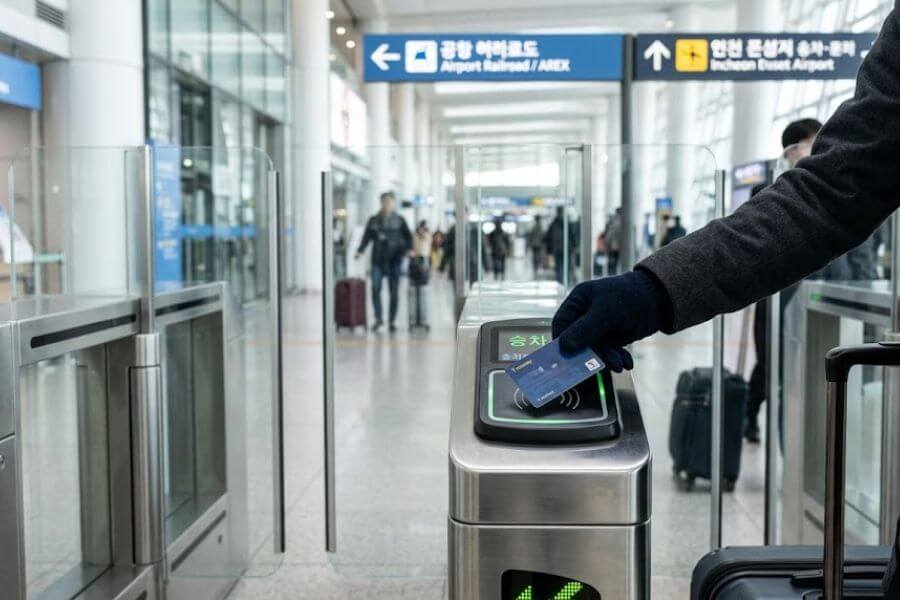
Landing at Incheon International Airport is a thrilling moment, but your ultimate goal is getting to the heart of the action in downtown Seoul as quickly and smoothly as possible. The Airport Railroad Express, universally known as the AREX, is your golden ticket to the city center. It cuts through traffic, outruns traditional city buses, and drops you off right at Seoul Station without a single delay.
This guide will show you how to navigate this modern train system from the moment you clear customs to the second you step out into the neon lights of the capital city.
Understanding Your Two Main Train Options
Before you buy a single ticket, you need to know that two completely different kinds of trains run on the exact same tracks. They look different, they cost different amounts, and they serve entirely different travel styles.
Choosing the correct one will shape your first day in South Korea.
The Premium Non-stop Express Train
The Express Train is a premium travel experience designed specifically for travelers who want to maximize comfort and minimize travel time. This bright orange-themed train is a direct shuttle that boards at the airport and does not make a single stop until it reaches the massive transit hub of Seoul Station.
If you are carrying heavy suitcases, traveling with younger children, or nursing a severe case of jet-lag after a long-haul flight, this is the ride you want. Every passenger gets a guaranteed, reserved seat in a quiet, air-conditioned cabin that feels very much like an airplane interior. There is ample dedicated space to store your large bags, meaning you will not have to hold onto your rolling luggage for dear life while the train is moving.
The Commuter All-stop Train
The All-stop Train is a regular commuter train wrapped in a blue color theme. Unlike its speedy orange sibling, this train stops at all fourteen stations along the route from the airport to downtown Seoul.
It functions exactly like a standard city subway. There are no reserved seats, meaning you stand or sit on long benches on a first-come, first-served basis. During morning and evening rush hours, these cars fill up with local workers and students, making it a bit tight if you have massive bags. However, because it stops at multiple neighborhoods along the way, it is incredibly useful if your final destination is not close to Seoul Station.
Quick Comparison of the Twin Rail Services
To help you visualize how these two options stack up against one another, look over this comprehensive breakdown of features, costs, and travel times.
| Feature | Express Train (Orange) | All-stop Train (Blue) |
| Total Travel Time from Terminal 1 | 43 minutes | 59 minutes |
| Total Travel Time from Terminal 2 | 51 minutes | 66 minutes |
| Total Number of Intermediate Stops | Zero stops | 14 intermediate stops |
| Adult Ticket Cost | 13,000 Korean Won | 4,750 Korean Won |
| Child Ticket Cost | 9,500 Korean Won | Based on distance traveled |
| Seating Style | Reserved individual seats | Public subway-style benches |
| Luggage Accommodations | Large dedicated indoor racks | Must hold bags in your open area |
| Onboard Amenities | Free Wi-Fi, power outlets, restroom | Standard public transit layout |
Step-by-step Guide to Buying Your Tickets
Now that you know which train fits your budget and itinerary, it is time to secure your passage. The ticketing process can look intimidating with all the flashing screens and foreign text, but breaking it down makes it incredibly straightforward.
Purchasing Express Train Tickets Online
Booking your Express Train ticket online before your flight or while waiting at the baggage carousel is the smartest way to save a little cash and secure the exact departure time you want. Several travel booking websites offer discount vouchers that drop the official 13,000 Won price down significantly.
Once you buy an online voucher, you will receive a digital confirmation containing a unique exchange code or a square QR code. You can then use the official AREX website to select your preferred departure time and choose your exact seat on the train map. If you do not want to choose your seat online ahead of time, you can simply take that digital voucher code to the automated ticketing kiosks at the airport station to print out a physical boarding pass.
Using the Automated Kiosks at the Airport
If you prefer to buy your tickets on arrival, look for the automated ticket vending machines located in the transportation center on the B1 basement floor of either airport terminal. These machines are massive and easy to spot because they are brightly color-coded in orange for the Express Train and blue for the All-stop Train.
The process at the kiosk takes less than two minutes:
- Walk up to a machine matching your chosen train type and tap the English button on the initial touch-screen interface.
- Select your destination station, which will be Seoul Station for the Express Train, or your specific neighborhood stop for the All-stop Train.
- Choose the total number of passengers traveling in your group, separating adults from children.
- Pick your departure time from the chronological list of upcoming trains displayed on the screen.
- Insert your credit card, international travel card, or local cash currency into the designated payment slots.
- Retrieve your single-use orange ticket token or paper QR code ticket, along with any cash change.
Navigating the All-stop Payment with Transit Cards
If you decide to take the blue All-stop Train, you do not actually need to interact with the ticket machines if you possess a local reloadable transportation card known as a T-money card. These handy plastic cards can be purchased at any airport convenience store on the arrivals floor for a small base fee.
Once you buy the card, tell the cashier to load it up with local cash currency. A starting balance of 10,000 to 20,000 Won is usually perfect for your first few days of riding around the capital. When you reach the blue commuter turnstiles, you simply tap your physical T-money card against the electronic sensor pad. The gate will pop open instantly, and the system will automatically calculate and deduct your exact fare when you tap out at your final city destination.
Finding the Train Station inside Incheon Airport
Incheon International Airport is consistently ranked as one of the best and largest airports on earth. Because of its massive scale, walking out of the baggage claim area can feel like stepping into a small city.
Finding the train tracks requires simply looking up and following the clear signage system.
Journeying from Terminal One Arrivals
Terminal One is the older, historical terminal building, but its navigation layout is excellent. After you pass through the glass sliding doors of the customs hall into the public arrivals area, look directly above your head for the bright blue overhead signs pointing toward the Transportation Center.
You will need to take an elevator or a rolling escalator down to the B1 basement level. Once downstairs, follow the wide, carpeted pedestrian walkways that lead across the underground bridge into the main transit building. You will pass several bakeries and convenience stores along the way, keeping straight until you see the massive, glowing electronic departure boards marking the distinct orange and blue train entrance gates.
Journeying from Terminal Two Arrivals
Terminal Two is the hyper-modern architectural masterpiece that serves major international sky alliances. The walk to the train station here is actually shorter and more integrated than in Terminal One.
Once you clear customs and enter the arrivals lobby, head straight for the central escalators that plunge down into the B1 basement floor. The entire B1 level of Terminal Two serves as a massive, unified transit complex. You will find a large, indoor bus terminal on one side and the grand railway station on the exact opposite side, complete with automated moving walkways to save your feet from carrying heavy bags.
The Onboard Experience and Essential Transit Etiquette
Stepping onto a South Korean train is an entry into a highly organized and deeply respectful social environment. Understanding what to expect inside the train cars ensures a peaceful ride for both you and the local commuters sharing the space.
Settling into Your Express Train Carriage
When your scheduled Express Train pulls up to the platform, check your paper or digital ticket for your assigned car number and seat number. The boarding doors are marked on the platform floor, so line up neatly behind the white safety lines.
Once inside, slide your oversized luggage into the open three-tier storage racks located right next to the entrance doors of each car. If your bag is a small carry-on or a backpack, carry it to your row and lift it onto the overhead shelf running above the wide passenger windows. Slide into your assigned reclining seat, where you will find a drop-down tray table, individual cup holders, and individual USB power ports hidden between the armrests to juice up your phone after a long day of flying.
Managing the Commuter Dynamics on the All-stop Train
The blue All-stop Train offers a much more localized, unfiltered glimpse into daily life around Seoul. Because these cars feature wide open spaces and bench seating that lines the walls, you must keep a firm physical grip on your rolling suitcases at all times to prevent them from sliding down the aisle when the train brakes or corners.
If the train gets packed, pull your backpack off your shoulders and place it down between your feet or hold it in front of your chest to avoid accidentally bumping into the people standing around you.
Adhering to Local Passenger Rules
South Korean public transportation relies heavily on shared social courtesies that keep the riding experience incredibly calm and clean. Following these simple community rules will help you blend right in:
- Keep your smartphone switched to silent or vibrate mode the entire time you are inside the train cars.
- Avoid taking voice calls on your phone while riding, or speak in a very low whisper if an emergency call arises.
- Use headphones for your music, videos, or mobile games, checking that the sound is not bleeding out to your neighbors.
- Never sit in the specially marked courtesy seats located at the very ends of the train cars, even if the train is completely packed, as these are strictly reserved for senior citizens, pregnant women, and passengers with physical injuries.
- Avoid eating pungent hot foods or drinking messy beverages while riding, though bottled water and closed coffees are perfectly acceptable.
Major Intermediate Stations on the All-stop Route
While the Express Train flies straight to the end of the line, the All-stop Train provides a wonderful opportunity to hop off early if your hotel or hostel is located in the western or northern districts of the city.
Knowing where these intermediate stations lead can save you a lot of backtracking later.
Gimpo International Airport Station
Gimpo Airport was the original primary airport of the capital city before Incheon opened its doors. Today, it handles a massive network of domestic flights out to beautiful locations like Jeju Island and historical Busan, alongside select short-haul international flights to neighboring Asian nations.
Hopping off the All-stop Train here lets you transfer seamlessly to Seoul Subway Line 5 or Line 9. Line 9 is particularly important because it features a super-fast express subway service that shoots straight into the upscale business and shopping districts of southern Gangnam.
Digital Media City Station
Commonly referred to by locals as DMC, this ultra-modern neighborhood is the beating heart of the nation’s digital media, broadcasting, and K-pop entertainment industries. Massive television networks and entertainment companies have their towering glass headquarters located right outside the exit turnstiles.
If you are a music fan heading to a live television studio recording or looking to explore the futuristic digital museums in the area, stepping off here is your best bet. This station also serves as a major intersection where you can transfer to Line 6 or the overland Gyeongui-Jungang rail line.
Hongik University Station
Affectionately nicknamed Hongdae by locals, this is arguably the most vibrant, energetic youth district in the entire country. The station sits directly beneath a bustling neighborhood packed with indie fashion boutiques, late-night dance clubs, neon-lit karaoke rooms, and endless rows of Korean barbecue restaurants.
The streets here are constantly filled with talented student buskers dancing and singing for large crowds. If you are a young budget traveler staying at a local guesthouse, booking a room in Hongdae and getting off at this specific station will save you a massive amount of transit time. This station also lets you jump right onto Subway Line 2, which is the massive green circular line that rings the entire center of the city.
Arriving at Seoul Station and Connecting to the Grid
Seoul Station is the grand grand central terminal of South Korea. It is a sprawling, multi-level wonderland of concrete, steel, and glass where regional bullet trains, local commuter subways, and international travelers all collide.
Arriving here can feel like a sensory overload, but finding your way out to your final destination is highly manageable.
Navigating the Underground Maze to the Street
When your AREX train finally comes to a smooth halt at the end of the tracks, you will find yourself deep underground on the B7 floor of the terminal structure. Do not panic at the depth, as a bank of massive, high-speed elevators and heavy-duty escalators are waiting to whisk you upward toward daylight.
As you ascend past the ticket barriers, look carefully for the exit signs pointing toward the main street-level concourse. If you plan to hail a licensed city taxi to your hotel, follow the signs for Exit 1 or Exit 15, which lead out directly to the designated passenger loading zones where lines of clean gray, orange, and black taxis wait in single file.
Transferring to Major City Subway Lines
If you want to continue saving money and avoid street traffic altogether, the absolute best way to leave Seoul Station is by transferring directly into the standard municipal subway network. The underground transit center connects seamlessly to Subway Line 1 and Subway Line 4.
Line 1 is the historical dark blue line that runs straight through the ancient cultural heart of the city, dropping you off near historic destinations like Dongdaemun Market, the City Hall plaza, and the traditional street food stalls of Jongno. Line 4 is the bright light-blue line that cuts vertically through the capital, leading directly to the massive shopping streets of Myeongdong and the towering base of Namsan Mountain. Follow the bright color-coded stripes painted right onto the station floors and walls to reach these transfer gates without losing your direction.
Accessing the Overland Bullet Trains
For those who are planning to head straight out out of the capital city to explore other parts of the beautiful country, Seoul Station is your launching pad for the KTX, the nation’s premier high-speed bullet train system. The KTX tracks are located on the main ground-floor overland concourse.
You can take the long escalators all the way up from the AREX basement levels, purchase a regional ticket from the human ticketing desks or English kiosks, grab a quick warm snack box from a station convenience store, and board a sleek silver train that reaches the southern coastal city of Busan in just under three hours.
Utilizing the Seoul Station City Airport Terminal
One of the absolute greatest hidden travel hacks in South Korea is the specialized City Airport Terminal tucked away on the B2 floor of the AREX section inside Seoul Station. This incredible facility allows you to complete your airline check-in and clear national passport control hours before your flight even leaves the ground.
It completely eliminates the need to haul heavy bags around the city on your very last day of vacation.
Who Can Use the Early Check-in Service
This premium service is completely free of charge, but it does come with a few specific entry requirements. First, it is strictly available to passengers who have already purchased a valid outbound ticket for the orange AREX Express Train departing later that same day.
Second, it currently serves a specific roster of major airlines, which typically includes national carriers like Korean Air and Asiana Airlines, along with popular regional low-cost carriers like Jeju Air, T’way Air, and Eastar Jet. It is always wise to double-check the current airline roster on the official AREX website a day before your departure to confirm your specific flight qualifies.
The Step-by-step Early Departure Process
To take advantage of this smooth transit shortcut on your final day in South Korea, follow this exact sequence of actions:
- Travel to Seoul Station early in the morning, ideally between the operating hours of 5:20 AM and 7:00 PM, making sure you arrive at least three full hours before your international flight is scheduled to take off.
- Purchase your physical or digital ticket for the orange AREX Express Train to Incheon Airport.
- Walk up to your specific airline check-in counter inside the B2 transit hall, present your passport, hand over your heavy rolling suitcases to be tagged, and receive your official airline boarding pass. Your bags are scanned right there and loaded directly onto a secure underground train car, meaning you will not see them again until you land at your home destination airport.
- Step immediately over to the adjacent on-site Immigration Office counter, where an official border officer will scan your passport and process your official departure check in a matter of seconds.
- Enjoy the rest of your day completely hands-free, exploring local city cafes, buying last-minute souvenirs, or visiting a nearby palace without dragging any luggage along.
- Take your scheduled Express Train out to the airport, head straight past the massive public departure lines to the designated VIP crew and diplomat side entrance gates on the main departures floor, and sail through airport security in a matter of minutes.
Pro Tips for a Flawless Airport Train Experience
To wrap up your complete masterclass on navigating the AREX network, store these insider travel strategies in your mind to avoid any unexpected bumps along your journey.
Watching the Clock and Timing Your Flight
While the AREX is incredibly punctual and completely immune to city gridlock, you must factor in the operating hours of the trains when planning a very early morning or late-night flight. The very first Express Train leaves the airport around 5:15 AM, while the absolute last train departs close to 10:50 PM.
If your flight lands at midnight, the trains will have stopped running for the evening. In that specific scenario, you will need to look into booking a late-night airport limousine bus, hiring an international taxi, or spending a relaxing night at one of the capsule hotels located directly inside the airport terminal buildings.
Handling Luggage Oversights and Lost Items
If you happen to accidentally leave a backpack, a camera, or a shopping bag behind on the train seats or in the storage racks, do not panic. The AREX system operates a highly efficient Lost and Found Center located at Central Geomam Station.
As soon as you realize something is missing, find a human station master at any ticket gate or call the official AREX customer service helpline. If you can provide them with your exact train number, your specific car number, your seat assignment, and the exact time you stepped off the train, the staff can often contact the onboard crew to locate and secure your lost belongings within an hour.
Frequently Asked Questions
Can I use my T-money transit card to ride the premium Express Train?
No, you cannot simply tap a standard T-money card at the orange turnstiles to board the Express Train. The Express Train requires a specialized premium ticket with a specific assigned seat number and a unique square QR code. If you want to ride the Express Train, you must purchase a dedicated ticket online or use the orange automated kiosks at the station using cash or a credit card. However, you can use your T-money card freely on the blue All-stop Train by tapping it directly at the turnstiles.
What should I do if I miss my scheduled Express Train departure time?
If you miss your train because your flight was delayed or you spent too much time wandering around the arrival hall, simply take your ticket to the human information counter or use the automated ticketing kiosk to modify your booking. You can easily exchange your ticket for the very next available departure slot. A small processing fee may sometimes apply depending on how close you are to the original departure time, but you will never be completely stranded at the station.
Is there a significant discount for buying round-trip AREX tickets in advance?
The official AREX ticket booths do not offer a standard round-trip discount price. However, major international travel booking websites and mobile applications frequently offer special promotional packages and discounted round-trip digital vouchers. Buying a round-trip voucher online before you leave your home country is highly recommended because it locks in a lower rate and allows you to instantly generate your return boarding pass on your smartphone when it is time to go home.
Do the AREX trains provide reliable internet access and phone charging options?
Yes, the premium orange Express Train comes fully equipped with complimentary high-speed Wi-Fi access for all passengers inside the cars. To connect, you simply select the official AREX network on your laptop or smartphone settings and accept the terms of service on the pop-up browser page. The Express Train cars also feature standard USB power charging outlets located between the passenger seats. The blue All-stop Train does not feature reliable dedicated Wi-Fi networks or power outlets, as it is designed for short-distance local commuting.
Can a child under the age of six ride the train service for free?
Yes, children under the age of six can ride both the Express Train and the All-stop Train completely free of charge, provided they are accompanied by a paying adult guardian. On the premium Express Train, the free ride condition requires the young child to sit securely on the adult’s lap during the journey rather than occupying a separate, dedicated seat. If you want your young child to have their own individual seat to spread out, you will need to purchase a discounted child ticket at the kiosk.
How far in advance can I check my bags at the Seoul Station City Airport Terminal?
You can check your luggage and complete your airline check-in anytime between 5:20 AM and 7:00 PM on the exact day of your flight departure. However, the system requires you to complete the entire process at least three full hours before your international flight is scheduled to take off from Incheon International Airport. If your flight leaves at 2:00 PM, you must be completely done with your check-in at Seoul Station before 11:00 AM. It is best to go early in the morning to avoid lines and maximize your bag-free sight-seeing time.
Is there an additional fee for bringing large surfboards or oversized sports equipment on board?
The AREX system does not charge an extra baggage fee for oversized sporting gear, golf clubs, or large suitcases, provided they can fit safely into the designated storage areas without blocking the pedestrian aisles or creating a safety hazard for other riders. If you are traveling with massive items like professional bicycles or large surfboards, you are generally required to ride the blue All-stop Train, where you must hold onto the equipment securely in the wide open standing areas near the center of the train cars.
What happens if I accidentally board the blue All-stop Train with an orange Express Train ticket?
The physical turnstiles and electronic barcode gates at the airport stations are strictly separated by color and train type to prevent this exact mistake from happening. Your orange Express Train QR code ticket will simply not scan or open the gates at the blue All-stop entrance lines. If you somehow manage to bypass the gates or get confused, look for a human transit employee immediately. Riding the wrong train can result in a fine or require you to pay a completely separate fare at your final destination city station.