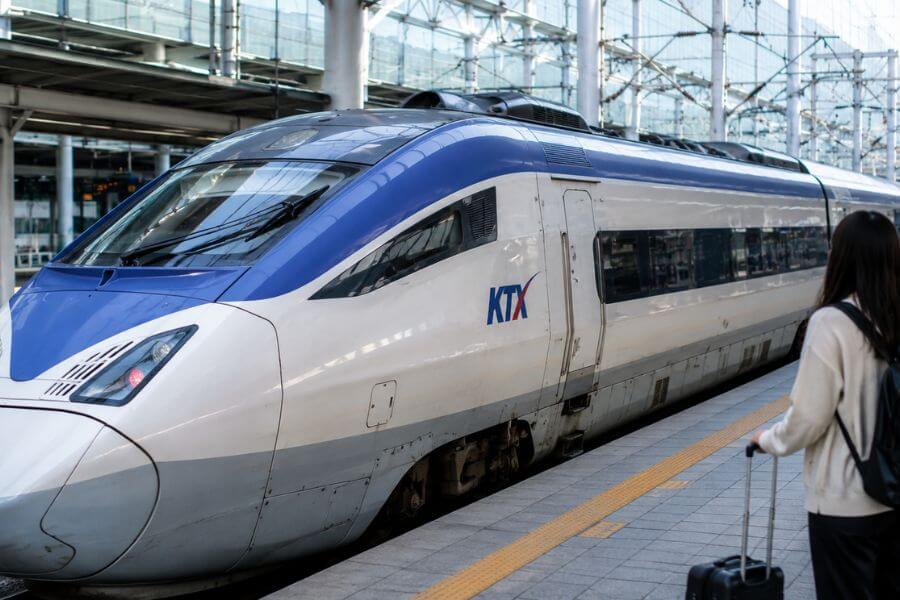
Imagine landing in a city where ancient palaces brush shoulders with glowing skyscrapers, and knowing that you can cross the entire peninsula before your coffee gets cold. Traveling around South Korea is an adventure that combines rich history with futuristic comfort. While domestic flights can be a hassle and driving in a new country might feel overwhelming, the nation offers a spectacular solution that connects major hubs in a flash. The Korea Train Express, widely known as the KTX, is the pride of the local transit system. This high speed rail network glides across mountains and valleys at speeds reaching over one hundred and ninety miles per hour. It turns long, tiring cross country journeys into short, relaxing trips.
Whether you want to sample fresh seafood in a bustling southern port city, explore royal tombs in an ancient capital, or watch the sun rise over the eastern coast, this bullet train is your golden ticket. Navigating a foreign transit system can feel intimidating if you do not speak the local language or understand how things work behind the scenes. This comprehensive guide will walk you through every single step of the journey. You will learn how the network is laid out, how to secure your seats without stress, what to expect when you step onto the platform, and how to maximize your comfort while on board. By the time you finish reading, you will be ready to ride these rails like a seasoned local.
Key Takeaways
- Book in Advance: Tickets open exactly one month before departure. Weekends and national holidays sell out rapidly, so securing your spot early is vital.
- Know Your Stations: Seoul has multiple train hubs. Make sure you check whether your specific journey departs from Seoul Station or Yongsan Station to avoid missing your trip.
- No Ticket Barriers: Korean train stations operate on an honor system without turnstiles, but conductors verify occupancy electronically, so always hold a valid booking.
- Pack Lightly: Heavy luggage space is limited to specific racks at the ends of each car, while smaller bags fit neatly on the overhead shelves above your seat.
- Embrace the Silence: Passenger cabins are highly quiet environments. Set your phone to vibrate, use headphones for all media, and step into the vestibule if you must speak.
Understanding the KTX Network and Train Types
Before you purchase a single ticket, it helps to understand what the Korea Train Express actually is and how it fits into the broader picture of national travel. Operated by the national railway company, Korail, this high speed network has spent decades transforming the way people move around the country. What used to be a five hour road trip from the capital to the southern coast is now a smooth ride that takes less than two and a half hours.
The system relies on dedicated tracks that bypass standard traffic entirely. When you ride this train, you are experiencing engineering that prioritizes punctuality above everything else. Trains depart exactly when the clock strikes the designated minute, and they arrive with a precision that lets you plan your vacation itinerary down to the second.
As you look into booking your travel, you will notice that not every bullet train looks identical. Over the years, the fleet has expanded to include different generations of models. Each model offers a slightly different internal layout, though they all move at similar, incredible speeds.
The Original KTX Classic
The first generation of high speed trains is the standard KTX. These models are long, sleek, and usually carry eighteen passenger cars. Because they were the first to hit the rails, they have a unique seating layout that catches some visitors off guard. In these standard cars, half of the seats face forward toward the direction of travel, while the other half face backward. They meet right in the middle of the carriage at a row of fixed seats.
If you are sensitive to motion sickness or simply prefer looking ahead as you travel, paying close attention during the booking process is necessary. The official reservation screens will clearly display which way the seats point. These trains are incredibly reliable workhorses, but because they are older, power outlets might not be available at every single seat. Instead, you will often find them installed on the walls between the windows.
The KTX Sancheon
The second major model you will encounter is called the KTX Sancheon. This train was designed and built locally, specifically addressing passenger feedback from the original models. You can easily spot a Sancheon train because it is shorter, usually featuring eight or ten cars, and boasts a clean, bright silver and blue exterior.
The greatest upgrade inside the Sancheon is that all seats rotate. This means you will never have to worry about traveling backward. Every single passenger faces the direction of travel. Furthermore, these carriages offer slightly more legroom and provide individual power outlets and dual USB ports beneath every seat, making it highly convenient to keep your phone and laptop fully charged as you zip between cities.
The KTX Eum
The newest addition to the high speed family is the KTX Eum. This model represents the future of rail travel on the peninsula, utilizing an advanced propulsion system where the motors are distributed under every car rather than relying on a heavy locomotive at the front. This design creates a much wider, more spacious cabin environment.
The Eum is highly sleek and features state of the art amenities. Every individual seat has its own dedicated window view, a wireless charging pad for your mobile phone, USB ports, and a standard power outlet. These trains currently service the central and eastern corridors of the country, turning trips to the mountainous regions into a luxurious, smooth experience.
| Train Model | Seat Direction | Power Availability | Best For |
| KTX Classic | Half forward, half backward | Wall outlets between windows | High capacity commuter routes |
| KTX Sancheon | All seats face forward | Under seat outlets for everyone | Premium comfort on major lines |
| KTX Eum | All seats face forward | Wireless pads, USB, and outlets | Modern tech and scenic eastern routes |
Major Lines and Strategic Destinations
The rail network spreads out across the country like a giant tree, with its main roots anchored firmly in the capital city of Seoul. Depending on where you want to go, you will need to choose the correct line. Each line snakes through different provinces, stopping at major cultural landmarks, industrial hubs, and coastal escapes.
The Gyeongbu Line
This is the busiest and most popular rail corridor in the country. It cuts diagonally from the northwest to the southeast, linking the capital directly to the second largest metropolis, Busan. If you are a first time visitor, this is likely the track you will ride.
Along the way, the train stops at major cities like Daejeon, which is a massive hub for science and technology, and Dongdaegu, the gateway to a vibrant fashion and shopping district. The line also offers access to Gyeongju, an open air museum filled with ancient Buddhist temples, stone pagodas, and royal burial mounds from the ancient Shilla Kingdom. The entire trip from start to finish is incredibly smooth and serves as the perfect introduction to the speed of local transit.
The Honam Line
If you want to experience incredible culinary traditions and beautiful agricultural landscapes, you will want to head southwest along the Honam Line. This track departs from the capital and heads toward the southwestern port city of Mokpo.
A primary stop along this route is Gwangju Songjeong Station, which positions you perfectly to explore Gwangju, a city famous for its contemporary art scene, rich democratic history, and legendary street food markets. The Honam Line passes through gorgeous rolling hills and wide plains, offering a scenic window view that contrasts beautifully with the industrial landscapes of the eastern lines.
The Jeolla Line
Branching off from the Honam Line is the Jeolla Line, a route that is highly popular among food lovers and nature enthusiasts. This track takes you deep into the cultural heart of the southwestern peninsula.
It stops at Jeonju, a city famous for its preserved historic village filled with hundreds of traditional wooden homes, where you can walk around wearing traditional clothing and sample authentic mixed rice dishes. The line terminates at Yeosu Expo Station on the southern coast, a gorgeous maritime city celebrated for its romantic ocean vistas, seafood markets, and beautiful coastal cable cars.
The Gangneung Line
For a completely different vibe, the Gangneung Line cuts directly east from Seoul, piercing straight through the rugged mountain ranges of Gangwon Province to reach the sparkling waters of the East Sea. This line was specifically built to handle crowds for the 2018 Winter Olympics, meaning the tracks and trains are modern and efficient.
The train stops at Pyeongchang, allowing you to see the famous ski resorts and mountain trails, before ending its journey at Gangneung. Once you arrive at the eastern coast, you can walk straight onto sandy beaches, explore a famous seaside coffee street, and enjoy fresh seafood while watching the waves crash against the shore.
Choosing the Right Hub in Seoul
A common mistake for visitors is assuming that every train leaves from the main building labeled Seoul Station. In reality, the capital splits its rail traffic between two primary hubs to prevent overcrowding. You must look closely at your reservation to ensure you show up at the correct location.
- Seoul Station: Located in the absolute center of the city, this massive terminal is the primary home for the Gyeongbu Line to Busan and the Gangneung Line to the east coast. It connects directly to multiple subway lines and the airport railroad link.
- Yongsan Station: Situated just a few subway stops south of Seoul Station, this modern hub serves as the main launching pad for the Honam Line to Mokpo and the Jeolla Line to Yeosu. If you are heading to the traditional villages or the southwestern foodie capitals, your journey will likely begin here.
How to Book Tickets as a Foreign Visitor
Securing your seats on the KTX is a simple task once you know where to look. Tickets become available for purchase exactly one month before the date of travel at seven in the morning local time. If you plan to travel on a Friday afternoon, a Sunday evening, or during major national holidays like the autumn harvest festival or the lunar new year, you must buy your tickets the moment they go on sale. Otherwise, you will find yourself staring at a screen of sold out notices.
Using the Official Website or Mobile App
The most direct and cost effective way to book your seats is through the official website operated by Korail, or by downloading their official mobile application called KorailTalk. Both platforms feature a dedicated English interface designed specifically for international travelers.
When using the website, you will navigate to the reservation page, input your departure city, your destination, and your preferred date and time. The system will display a clean table showing all available trains, their travel durations, and the pricing for both standard and first class cabins.
One major advantage of using the official app is that your ticket stays saved directly on your phone as a digital pass, complete with a unique square code. You do not need to print anything out. The system accepts major international credit cards, though you should ensure your bank has authorized international transactions before you begin the checkout process to avoid sudden card rejections.
Purchasing Tickets at the Station
If you prefer a more flexible approach or need to make a last minute journey, you can always purchase tickets directly at any railway station. Every major hub features a rows of automated ticketing kiosks alongside a staffed service counter.
The automated machines have an English language button that transforms the entire user interface instantly. You simply tap your choices on the screen, insert your credit card or cash, and a physical paper ticket prints out within seconds.
If you have a complex request, such as booking a multi city journey or traveling with a large family group that wants to sit together, walking up to the staffed counter is your best option. The ticket agents at major stations in big cities speak English well and will gladly help you find the best available routes.
Understanding Seat Classes and Amenities
When making your booking, you will have to choose between two primary cabin tiers: First Class and Economy Class. Understanding what each tier offers will help you decide if the upgrade is worth the extra cost for your specific journey.
Economy Class Comfort
Do not let the name fool you into thinking you will be cramped. Economy class on a high speed train is incredibly clean, comfortable, and offers far more space than a standard airplane seat. The seats are arranged in a four abreast layout, with two seats on either side of a central aisle.
You will enjoy generous legroom that allows you to stretch your legs fully, adjustable footrests, and seats that recline comfortably without invading the space of the passenger behind you. Big windows line the sides of the car, and overhead luggage shelves run the entire length of the cabin to hold your smaller personal bags.
First Class Luxury
If you want to treat yourself or are embarking on a longer cross country trip, upgrading to First Class provides a highly elevated experience. The layout changes to a spacious three abreast configuration, with a single row of seats on one side of the aisle and a double row on the other. This setup is perfect if you are traveling alone and value absolute privacy.
The seats themselves are larger, heavily cushioned, and recline electronically at the touch of a button. In addition to the extra physical space, First Class passengers receive a small complimentary welcome box containing light snacks, a premium cookie, a refreshing wet wipe, and a small bottle of bottled drinking water. You also gain access to a dedicated rack of books and magazines located in the vestibule between cars.
| Amenity or Feature | Economy Class | First Class |
| Seating Layout | Four seats per row (2×2) | Three seats per row (1×2) |
| Legroom and Width | Standard generous space | Enhanced width and electronic recline |
| Free Snacks and Water | Not included | Included via a welcome box and vending machine |
| Atmosphere | Lively, mixed travelers | Highly quiet, peaceful, and business oriented |
The Korail Pass (KR Pass) Explained
For international tourists who plan to do extensive traveling across South Korea within a short window of time, buying individual tickets can add up. That is where the Korail Pass, universally referred to as the KR Pass, becomes an incredible tool. This special travel pass is exclusive to foreign visitors, allowing unlimited rides on all Korail operated trains, including the KTX, for a fixed number of days.
Types of KR Passes Available
The pass comes in two distinct styles designed to match different styles of vacation planning: Consecutive Passes and Flexible Selection Passes.
- The Consecutive Pass: This pass runs non stop for either three or five days in a row from the date of activation. It is ideal if you are on a fast paced tour, moving to a brand new city every single morning.
- The Flexible Selection Pass: This option gives you either two or four days of unlimited travel that you can use at any point within a ten day window. For instance, you could ride the train from Seoul to Busan on day one, spend four days exploring the beaches, use your second travel day to head to Gyeongju, stay there for a few days, and use your third day to return to the capital. It offers ultimate freedom without forcing you to travel every single day.
How to Buy and Activate the Pass
You can easily purchase a KR Pass online before you even pack your bags, through major international travel booking platforms or the official Korail global website. Once you complete the purchase, you will receive an electronic voucher via email.
To use it, you must log back into the official Korail website to register your passport details and select your specific travel dates. Once activated, you can use the online portal to reserve your specific seats on individual trains for free. You can book up to two specific seat reservations per day per pass. If you run out of seat reservations, you can still board any train using the pass, but you will need to stand in the designated non reserved cars.
Navigating the Train Station Like a Professional
The day of your trip has finally arrived. Stepping into a massive transport hub like Seoul Station during the morning rush hour can feel like walking into a beehive of activity. Thousands of people are moving in every direction, digital signs are flashing, and the aroma of fresh pastries and savory stews fills the air. However, Korean infrastructure is designed with extreme logical thought, meaning you can find your way around easily if you follow a few basic principles.
Arriving with Time to Spare
You do not need to show up hours early like you would for an international flight, because there are no lengthy customs checks or intensive security lines to clear. However, showing up at least twenty to thirty minutes before your train is scheduled to depart is highly recommended.
If you are transferring to the train station directly from the city subway system, remember that walking from the underground subway platforms up to the main high speed rail concourse can take a solid ten minutes of walking through large crowds. Arriving early gives you plenty of time to purchase a coffee, pick up some snacks for the road, and locate your departure track without needing to sprint through the terminal.
The Missing Ticket Barriers Explained
As you walk toward the train platforms, you will notice something that shocks almost every international visitor: there are no turnstiles, no electronic ticket gates, and no staff members standing at a barrier to check your ticket. You can walk directly from the main public shopping concourse right onto the train platform and step onto the train without showing your pass to a single soul.
This open boarding system is based entirely on trust and honor, but do not make the mistake of assuming you can ride for free. Every train conductor carries a specialized handheld computer that displays a real time digital map of every single seat in the carriage. The screen highlights exactly which seats have been legally purchased and which ones should be completely empty. If you sit in a seat that shows up as vacant on the conductor’s screen, they will approach you immediately to verify your ticket. Riding without a valid booking results in heavy financial penalties that can equal up to ten times the original price of the ticket.
Decoding the Departure Boards
To find out where your train is hiding, look up at the massive digital display screens hanging across the central concourse. The information flashes back and forth between Korean and English every few seconds. You will want to look for your specific train number, which matches the number printed clearly on your ticket. The board will display the train type, its final destination, the exact departure time, and a column labeled Platform.
Once the platform number appears on the screen, usually about fifteen minutes before the train is set to leave, you will follow the large overhead signs directing you toward that specific track number. Escalers and elevators are always available to help you glide down to the track level with your luggage.
Stepping on Board: Finding Your Car and Seat
Once you step down onto the concrete platform, you are only a few feet away from starting your journey. The platforms can be long, but the railway system uses a highly effective layout to ensure passengers do not clump together in a chaotic line.
Locating Your Carriage Number
Look at your ticket and identify the number listed next to the word Car. High speed trains can have anywhere from eight to eighteen cars, so walking down the length of the train to find your car after you board is highly inefficient.
Instead, look down at the surface of the platform or look at the glass barriers along the track edge. You will see large numbers painted on the ground or glowing on small digital screens overhead. These indicators tell you exactly where the door for each specific car will stop when the train halts. If your ticket says Car Number Five, simply walk along the platform until you stand next to the number five marker on the floor, and wait for the doors to glide open.
Storing Your Large Luggage
As soon as you step through the automatic doors into the train vestibule, you must make a quick decision about your luggage. If you are traveling with a massive, heavy suitcase that you cannot easily lift over your head, you should leave it in the dedicated luggage racks located in the entryway of each car. These multi tiered metal racks are designed specifically to hold large bags securely so they do not roll around during high speed travel.
If you are worried about security, rest assured that train travel in South Korea is incredibly safe, and luggage theft is practically unheard of. However, for absolute peace of mind, try to secure a seat that faces the luggage rack or keep your essential valuables, passports, and wallets in a smaller personal bag that stays with you at your seat. If your bag is a standard carry on size or smaller, you can walk straight down the aisle and lift it onto the wide overhead shelves that run above the seating rows.
Finding and Adjusting Your Seat
The interior of the cabin features clear signs. The rows are numbered sequentially from the front of the car to the back, and each individual seat is assigned a letter, typically ranging from A to D. Window seats are usually designated by the letters A and D, while aisle seats take the letters B and C.
Once you slide into your place, you can adjust your environment to maximize your comfort. The seats feature a smooth recline mechanism controlled by buttons on your armrest. Always take a quick glance behind you before you push your seat back, ensuring you do not accidentally bump into a passenger who might be working on a laptop or enjoying a hot beverage.
The Onboard Experience: Amenities and Rail Etiquette
Riding the KTX is a remarkably peaceful experience, designed to let passengers rest, work, or contemplate the changing landscapes outside the wide windows. To maintain this high level of comfort, everyone on board is expected to follow a set of unwritten social rules.
Mastering Train Etiquette
The most important thing to remember when you step into a Korean passenger car is that silence is gold. The cabins are kept quiet so that commuters can sleep or study.
- Phone Manners: The moment you take your seat, flip your mobile phone to completely silent or vibrate mode. If you receive an urgent phone call that you absolutely must answer, keep your voice to a whisper and say that you will call back, or immediately walk out of the cabin into the connecting vestibule between cars to hold your conversation.
- Audio Devices: Never play videos, mobile games, or music out loud through your phone’s speakers. Always plug in a pair of headphones and keep the volume at a level that does not leak out to your neighbors.
- In Car Voices: If you are traveling with a companion or family group, keep your conversation soft and muted. Loud laughing or boisterous chatting will draw subtle, disapproving glances from those around you.
Snacking and Dining Strategy
Long gone are the days of full scale dining cars rolling down the center of high speed trains. Instead, modern train travel focuses on simple efficiency. You are completely permitted to bring light snacks, pastries, and bottled drinks on board to enjoy at your seat. Each chair features a sturdy fold down tray table stored in the back of the seat ahead of you, creating the perfect little surface for a sandwich or a bottle of green tea.
However, you should avoid bringing foods that possess a highly pungent, strong aroma, such as hot fried chicken, heavily seasoned meats, or strong garlic dishes, out of respect for the people sitting in your immediate vicinity. If you get hungry mid journey and did not have time to buy food at the station, you can step out into the vestibules between cars, where you will find automated vending machines stocked with cold waters, soda cans, chocolates, and light cookies.
Staying Connected with Free Wi-Fi
Every train comes equipped with a complimentary public wireless internet network, making it highly simple to stay connected with friends, check maps, or stream a favorite show as you travel. To connect, you simply open your device’s network settings, select the public train network, and click the large connect button on the browser page that pops up.
The connection is stable enough for checking emails and browsing web pages, though it can occasionally drop for a few seconds when the train cuts through long mountain tunnels deep in the countryside. Keep in mind that the public network caps data usage per session to ensure everyone gets a fair share of bandwidth, so if your connection suddenly stops, you just need to re-open your browser and click the connect button again to start a fresh session.
Restrooms and Additional Conveniences
Clean restrooms are located in the vestibules between every couple of cars. They are well maintained and feature modern flush toilets, running water sinks, liquid soap, and mirrors. Many trains also feature dedicated nursing rooms and diaper changing stations for travelers moving with infants. If you look closely at the walls in the entryway zones, you will also spot small charging hubs and recycling bins where you can discard your empty plastic bottles, paper cups, and general wrappers before you arrive at your final destination.
Arriving at Your Destination and Stepping Off
As your train nears its final stop, the onboard systems make it incredibly clear so that you never have to worry about missing your cue. The journey concludes with the same mechanical precision with which it began.
Watching for Arrival Signals
A few minutes before the train pulls into any station, a gentle chime plays over the public address speakers, followed by clear announcements broadcast in Korean, English, Mandarin, and Japanese. At the exact same time, the overhead digital screens hanging in the center of the aisle will display the name of the upcoming station in clear block letters, alongside a helpful map showing which side of the train the exit doors will open on.
Because high speed trains only stop at intermediate stations for a very brief window of time, often just two to three minutes, you should not wait until the train comes to a complete halt to start gathering your things. The moment you hear the English announcement for your stop, stand up, grab your personal belongings, pull your large suitcases from the entryway racks, and wait in the vestibule area near the exit doors so you can step off the train quickly and safely.
Exiting the Station and Beyond
Once you step off the train and onto the station platform, your rail journey is officially complete. Just like when you entered, there are no physical ticket gates or turnstiles to navigate. You simply follow the bright overhead exit signs written in English that point toward the main station lobby or lead directly down into the local city subway lines.
Major stations are perfectly integrated into the local urban transit grids, meaning you can easily step off a bullet train and immediately hop onto a local subway car, hail a clean city taxi from the organized ranks right outside the front doors, or walk straight to a nearby city bus stop to reach your hotel within minutes.
Frequently Asked Questions
Do I need to buy a separate ticket for my young child?
Infants and toddlers under the age of six can travel completely for free if they sit securely on an adult’s lap throughout the entire duration of the trip. However, if you are embarking on a long journey and want your child to have their own individual seat so you can stretch out, you can purchase a child’s ticket at a heavily discounted rate, which usually saves you fifty percent off the standard adult fare. Children between the ages of six and twelve must always hold a child’s ticket.
What should I do if I accidentally miss my scheduled train?
If you run into an unexpected delay and realize you are not going to make it to the station before your train departs, do not panic. If your train has not left yet, you can easily cancel or change your ticket directly within the mobile app for a microscopic cancellation fee. If the train has already pulled out of the station, you must walk up to a staffed service counter inside the terminal as fast as possible. The ticket agents can cancel your missed ticket and issue you a brand new seat on the next available train, though a small fee will apply depending on how much time has passed since the original departure.
Are there any restrictions on the size or weight of luggage I can bring?
Unlike international airlines that enforce rigid size dimensions and strict weight limits, the rail system does not require you to weigh your bags or pay extra for heavy items. The general rule of thumb is that you should only bring what you can comfortably lift and carry by yourself. As long as your bags can fit securely inside the entryway luggage racks or sit safely on the overhead shelves without blocking the central passenger aisle, you are free to bring your vacation suitcases along without any extra fees.
Can I buy food and drinks directly on the train during the ride?
While trains no longer feature a staffed kitchen car or a rolling food cart pushed down the aisle by an attendant, you will never have to go hungry. Every high speed train features automated vending machines located in the vestibule spaces between passenger carriages. These machines accept local coins, cash bills, and modern credit cards, offering quick access to bottled water, soda cans, and simple sweets. For a full meal, your best strategy is to explore the massive food courts inside major departure stations, where you can buy beautiful lunch boxes packed with rice, proteins, and side dishes to bring on board.
Is smoking permitted anywhere on the train or inside the stations?
Smoking is completely prohibited by law inside every single square inch of a train, including the passenger cabins, the restrooms, and the connecting vestibule areas. This strict ban applies to traditional cigarettes as well as all modern electronic vape devices. If you are caught smoking on board, you will face immediate removal from the train at the very next stop and be subject to heavy law enforcement fines. Most train stations are also completely smoke free zones, though some larger hubs provide small, enclosed glass smoking booths outside the main terminal entrance doors.
How far in advance should I arrive at the station if I already have a digital ticket?
If you have already secured your seat online and hold a valid digital ticket on your mobile phone, you do not need to stand in any lines when you arrive. Showing up roughly twenty to thirty minutes before your scheduled departure time is the perfect sweet spot. This window gives you more than enough time to walk through the main terminal building, check the digital departure screens to confirm your track number, buy a quick drink, and walk down to your specific platform to board the train comfortably before the doors close.
Is there a special quiet car option for passengers who want absolute peace?
Yes, certain trains feature specific carriages designated as quiet cars during the booking process. Inside these specific cars, the social rules regarding silence are enforced even more strictly. Passengers are expected to keep all conversation to an absolute minimum, keep devices completely silent, and avoid any activity that could generate repetitive noise. If you want to sleep peacefully or get some serious work done during your journey, look for the special quiet car indicator icon when choosing your carriage number on the online booking screen.