Stepping off the plane at Incheon International Airport is an incredible feeling. You are finally in South Korea, a land of bright neon lights, delicious street food, and pop music. But before you can explore the ancient palaces or shop in trendy neighborhoods, you have a major hurdle to clear. You need to leave the airport and get into the heart of the capital city. Your best friend for this adventure is not a taxi or a tour bus. It is the Seoul subway system. To a newcomer, the massive web of colorful lines on the transit map looks terrifying. It looks like a giant bowl of multicolored noodles spilled across a page. Do not panic. This survival guide will transform you from a confused tourist into a confident subway master in no time.
Finding Your Way in the Underground World
The first thing you will notice about the Seoul subway is that it is massive. It is one of the largest and most efficient transit networks in the whole world. It has over twenty different lines that stretch across the city and deep into the surrounding countryside. Because it is so big, it can feel overwhelming when you first look down at your map.
Every single subway line has its own dedicated color. Line One is a deep navy blue. Line Two is a bright grass green. Line Three is a warm orange. These colors are your primary guideposts. They appear on the trains, on the station walls, on the floor tiles, and on the hanging signs. If you know the color of the line you need, you are already halfway to your destination.
Beyond the colors, every station has a unique three-digit number. This number is a secret weapon for travelers who do not speak Korean. The first digit or two usually tells you which line you are on, while the last two digits show the specific station. For example, if you are looking for a station numbered two-hundred-and-thirty-nine, you know instantly that it sits on Line Two. This numbering system makes it incredibly simple to check if you are heading in the correct direction. You just look at the numbers of the upcoming stations on the wall signs to see if they are counting up or counting down.
The signage inside the stations is exceptionally friendly to international visitors. Almost every sign features clear text in English, Simplified Chinese, and Japanese alongside the Korean characters. You will never have to guess what a sign says. Announcements inside the train cars are also broadcast in multiple languages before every single stop. A cheerful chime will sound, followed by a voice explaining which station is next, which side the doors will open on, and how you can transfer to other intersecting lines.
Meeting Your New Best Friend the Transit Card
You cannot just hop onto a train for free. You need a ticket, and the absolute best way to pay for your rides is with a rechargeable transit card. The most popular and widely accepted card is called the T-money card. You can purchase these handy plastic cards at almost any convenience store in the city, such as GS25, CU, or 7-Eleven. They are also available at automated vending machines located inside the subway stations. The card itself costs a small fee, usually around three to four thousand won, which is roughly three American dollars.
Once you buy the physical card, it is completely empty. You must load it with cash before you can use it to pass through the turnstiles. This loading process is called topping off or charging your card. It is important to know that the automated machines inside the stations only accept physical paper cash for this process. You cannot use a foreign credit card to charge your T-money card at the station machines. Always make sure you carry some Korean currency bills in your wallet for this exact reason.
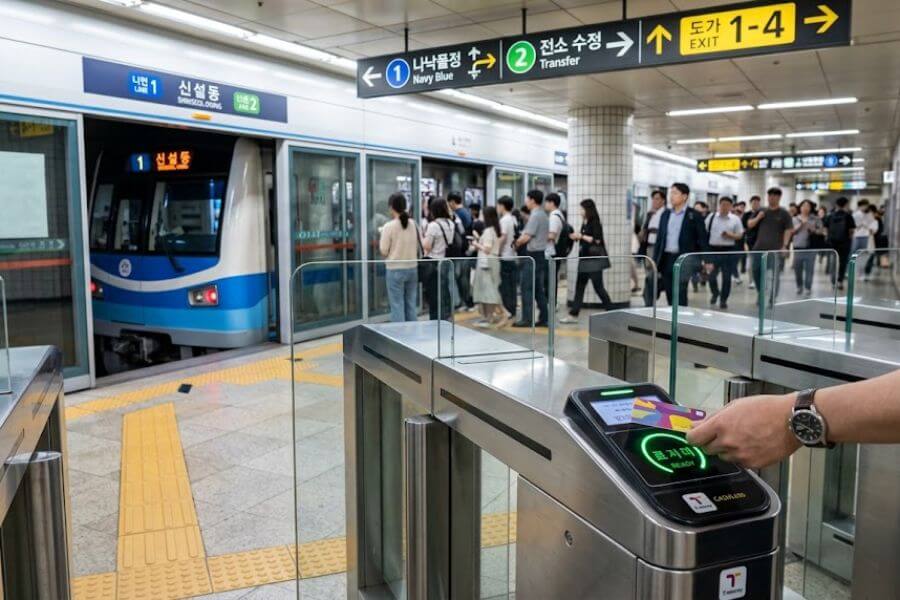
Using the card is a total breeze. When you walk up to the subway turnstiles, you will see a prominent digital scanner pad. You simply tap your card against the pad. The machine will emit a short beep and display two numbers on its small screen. The top number shows the amount of money that was just deducted for your ride. The bottom number shows the remaining cash balance left on your card. When you reach your final destination and exit the system, you must tap your card a second time at the exit turnstile.
+-------------------+--------------------+--------------------+
| Card Type         | Where to Buy       | Best Used For      |
+-------------------+--------------------+--------------------+
| Regular T-money   | Convenience Stores | General Tourists   |
| Climate Card      | Station Offices    | Heavy Commuters    |
| Single Use Ticket | Station Vending    | One-time Riders    |
+-------------------+--------------------+--------------------+
The system calculates your total fare based on the overall distance you traveled. If you only go a few stops, you pay the base fare. If you travel all the way across the city, a small distance surcharge will apply. There is also a wonderful perk called the transfer discount. If you exit a subway station and tap into a city bus within thirty minutes, the system treats it as a single continuous journey. You will not have to pay a whole new base fare for the bus ride.
Navigating the Station Platforms Like a Pro
Once you pass through the ticket gates, you need to find the actual train platform. This is where many first-timers make a wrong turn. Because trains run in two opposite directions on every line, you must choose the correct platform side. If you accidentally enter the platform going west when you wanted to go east, you might end up stranded on the wrong side of the tracks.
To avoid this mistake, always check the destination signs hanging from the ceiling before you walk down the stairs. These signs show the final destination station of the train, as well as the immediate next stop. If you know the name of the next station in your direction, look for that name on the sign. If you do make a mistake and pass through the wrong gate, do not cry. At many older stations, you can simply walk across a bridge or use an underpass to reach the opposite platform without paying again. At some newer stations, however, the platforms are completely separated by walls. If you get stuck on the wrong side there, look for a special gate with a silver helper button. You can press this button to speak with a station worker who will unlock the gate so you can switch sides.
When you successfully reach the platform, look down at your feet. You will see lines of yellow bumps on the floor tiles. These are tactile paving paths to help visually impaired passengers navigate safely. You will also see painted numbers and arrows directly on the concrete or glass screen doors. These markings show you exactly where the train doors will line up when the vehicle comes to a complete stop.
Every station in Seoul features thick glass safety walls called platform screen doors. These doors remain tightly closed until the train arrives and parks perfectly. This brilliant design prevents accidental falls onto the tracks and keeps the platforms much quieter and cleaner. When the train arrives, the glass doors and the train doors will slide open at the exact same moment.
Riding the Train with Good Manners
Korean society places a massive emphasis on public politeness and respect for others. The subway cars are treated like quiet shared spaces. When the train doors open, you should never rush forward to grab a seat. The absolute number-one rule of Seoul subway etiquette is to let the arriving passengers step off the train completely before you attempt to step inside. Stand to the left or right of the open doors, leave a clear path down the middle, and wait patiently for the exiting crowd to pass you.
Once you are inside the moving car, look closely at the seating arrangements. At the very ends of every single carriage, you will spot small rows of seats that are usually covered in a distinct pink or burgundy fabric. These seats are strictly reserved for the elderly, injured individuals, pregnant women, and people traveling with very small babies. Even if the train is completely packed and these seats are totally empty, local commuters will leave them open. As a visitor, you should avoid sitting in these designated areas entirely. It is a sign of deep respect to leave them clear for those who truly need them.
+------------------------+------------------------+
| What to Do             | What to Avoid          |
+------------------------+------------------------+
| Stand in a neat line   | Block the train doors  |
| Keep your voice low    | Eat hot street food    |
| Sit in regular seats   | Use the reserved rows  |
| Wear your backpack low | Spread your legs wide  |
+------------------------+------------------------+
You should also keep your voice down while riding the rails. Loud chatting, shouting across the aisle, or playing music out loud without headphones is considered rude behavior. Most passengers will spend their commute silently scrolling through their smartphones or reading books. If you are traveling with a group of friends, speak in soft whispers so you do not disturb the peaceful atmosphere.
If you are carrying a large backpack or a bulky piece of luggage, be mindful of the space around you. A giant backpack sticking out from your shoulders can accidentally hit people when the train turns or gets crowded. It is a smart habit to slide your backpack off your shoulders and hold it down by your feet or place it on the metal overhead racks above the seats. This simple gesture frees up valuable standing room for your fellow passengers.
Master the Art of the Complex Transfer
Because the Seoul subway network is so interconnected, you will often need to switch from one line to another to reach your final destination. These transfer hubs are massive underground intersections where multiple lines cross paths. Some of the biggest transfer stations, like Hongik University Station or Express Bus Terminal Station, feel like giant underground maze complexes filled with shops, restaurants, and thousands of walking people.
The secret to surviving a transfer without getting lost is to look up and follow the color-coded arrows on the ceiling. When you step off your first train, ignore the exit signs for a moment. Look for signs that say Transfer or show the specific number and color of the next line you need. The transit authorities have painted bright, colored guide lines directly onto the floors of many busy transfer walkways. If you need to switch to Line Two, simply look down and follow the green line painted on the ground like a yellow-brick road.
Some transfers require a lot of walking. You might have to walk down long hallways, ride multiple escalators, and cross over giant pedestrian bridges to reach your next platform. Do not feel rushed. The crowd moves at a very fast pace, but you can take your time. Walk on the right side of the hallways to keep the traffic flowing smoothly.
During a transfer, you might encounter a set of internal transfer turnstiles. These look exactly like the exit gates, but they are just there to count passengers moving between different railway operators. When you see these internal gates, simply tap your T-money card against the scanner pad again. Do not worry about being charged double. The system recognizes that you are in the middle of a continuous transfer and will not deduct a new base fare. It is just keeping track of your route to calculate the correct final distance fee when you eventually exit the system for good.
Finding the Perfect Station Exit
When you finally arrive at your destination station, the adventure is not quite over yet. Large stations in Seoul do not just have one or two doors to the street level. They often have ten, twelve, or even twenty different numbered exits spread out over several city blocks. If you walk out of Exit One when your hotel is located right next to Exit Eight, you might find yourself stuck on the wrong side of a massive twelve-lane highway with no crosswalk in sight.
Before you tap your card to exit through the final turnstiles, pause and look at the large neighborhood maps mounted on the station walls. These maps are usually titled Information for Exits. They provide a highly detailed bird-eye view of the streets surrounding the station. Every major building, hotel, school, and tourist attraction is clearly marked, along with the closest numbered exit.
+---------------------+---------------------------------+
| Station Feature     | Purpose                         |
+---------------------+---------------------------------+
| Neighborhood Map    | Shows local buildings and exits |
| Digital Kiosk       | Interactive route planning      |
| Storage Lockers     | Keeps heavy bags safe and dry   |
| Yellow Floor Paths  | Guides visually impaired riders |
+---------------------+---------------------------------+
Many popular travel apps and blogs will tell you exactly which exit number to use for a specific restaurant or palace. Make a note of this number before you arrive. Once you pass through the exit turnstiles, follow the overhead yellow signs that display numbers inside yellow circles. These numbers correspond directly to the street exits. Follow the arrows carefully until you climb the final staircase out into the fresh air.
If you accidentally walk out of the wrong exit, do not panic. You can usually walk back down into the station basement and find the correct pathway, or simply use a nearby pedestrian crosswalk on the street level. Many exits also feature elevators or escalators, which is a massive lifesaver if you are hauling heavy suitcases or traveling with young children who are tired from a long day of walking.
Essential Smartphone Apps for Your Journey
Trying to navigate the Seoul subway using a paper map is a recipe for a headache. The city is incredibly tech-forward, and locals rely heavily on smartphone applications to plan their daily commutes. Because global mapping apps do not always work perfectly in South Korea due to local data privacy laws, you need to download specific local transit apps before you begin your vacation.
The absolute best app for subway riders is Kakao Subway or Subway Korea. These apps are completely free and offer comprehensive English language support. When you open the app, you will see a digital version of the giant subway map. You can tap on your starting station and select Set as Start, then tap on your destination station and select Set as End. The app will instantly calculate the fastest route for you.
These apps provide an incredible amount of detailed data. They will tell you exactly how many minutes your journey will take, how many stations you will pass through, and the precise time the next train will arrive. They also tell you which specific train car door number is closest to the transfer stairs at your next stop. If the app says that car four, door three is the optimal spot, you can stand on that exact number on the platform. When the train stops, the stairs will be right in front of you when you step off, saving you from walking down a long platform.
Another essential app to download is Naver Maps or KakaoMaps. These are the Korean equivalents of popular global map apps. They are perfect for walking directions once you climb out of the subway exit. They will show you exactly which exit to use and give you a step-by-step walking path to your final destination, complete with real-time tracking so you never get turned around in the narrow city alleys.
Surviving the Intense Rush Hour Crowds
Like any major global metropolis, Seoul experiences massive waves of commuters during the morning and evening rush hours. The morning rush usually takes place between seven in the morning and nine in the morning, while the evening rush happens between six in the evening and eight at night. During these peak hours, millions of workers and students flood into the subway system at the exact same time.
If you can avoid traveling during these hours, you absolutely should. The trains become incredibly crowded, and passengers are packed together tightly like sardines in a tin can. The busy stations turn into fast-moving rivers of people, and it can be difficult to find your bearings if you are moving slowly or trying to look at your phone for directions.
If you do find yourself caught in the middle of the rush hour madness, the key to survival is to simply go with the flow. Do not stop suddenly in the middle of a busy hallway or staircase to check your map, as people behind you might accidentally bump into you. Instead, pull off to the side against a wall or near a pillar where you are out of the way of the walking traffic.
When you are inside a packed train car and your stop is approaching, start making your way toward the exit doors early. Do not wait until the train comes to a complete stop to push through the crowd. As the train slows down, gently move toward the doors and say Excuse me in English or Jamsimanyoman in Korean. Local passengers are very used to this dance and will gladly step out onto the platform for a brief second to let you slip past them.
Hidden Treasures Inside the Subway Stations
Seoul subway stations are much more than just concrete tunnels to catch a train. Many of them are massive underground communities that host a surprising variety of shops, services, and conveniences. You could easily spend an entire afternoon exploring the retail spaces hidden right below the street level without ever stepping outside into the sun or rain.
One of the coolest features you will find is the underground shopping malls. Stations like Gangnam, Goto Mall at Express Bus Terminal, and Bupyeong are famous for their endless rows of small clothing boutiques, cosmetics shops, accessory stores, and shoe stalls. These underground shops offer incredibly trendy items at prices that are often much cheaper than the traditional stores above ground. It is an amazing place to hunt for bargains on local fashion and popular skincare brands.
You will also find plenty of delicious food options inside the larger stations. From tiny bakeries selling warm, walnut-shaped cakes filled with sweet red bean paste to modern convenience stores stocked with spicy instant ramen and sweet banana milk, you will never go hungry on your commute. Some stations even feature sit-down restaurants, juice bars, and cozy coffee shops where you can take a quick break and rest your feet.
+--------------------+------------------------------------------+
| Station Name       | Unique Hidden Feature                    |
+--------------------+------------------------------------------+
| Gangnam Station    | Massive underground fashion shopping mall|
| Anguk Station      | Beautiful traditional architecture themes|
| Seongsu Station    | Local history displays and shoe exhibits |
| Gyeongbokgung      | Underground stone archway art gallery    |
+--------------------+------------------------------------------+
Other practical amenities include automated digital storage lockers. These metal lockers are perfect if you check out of your hotel early but do not want to drag your heavy suitcases around the city all day. You can rent a locker for a small fee using your T-money card or cash, lock your bags away safely, and explore the city completely hands-free. The stations also feature clean, free public restrooms that are well-maintained and open to everyone, which is a wonderful comfort when you are out exploring for long hours.
Safety and Accessibility Features for Everyone
The Seoul subway is widely celebrated for being incredibly safe and highly accessible to all types of travelers. Crime is extremely rare inside the transit system, thanks to bright lighting, an abundance of security cameras, and a dedicated transit police force that patrols the lines. You can feel completely safe riding the trains late at night, even if you are traveling completely alone.
If an unexpected emergency does occur while you are on the platform or inside a train, help is always close at hand. Every platform features prominent red emergency telephone boxes and clear fire extinguisher stations. Inside the train cars, you will spot emergency intercom buttons located right next to the doors. If you press this button, you can speak directly with the train driver to report an issue or ask for medical assistance. There are also emergency handles that can manually open the doors if the train stops in a tunnel during a crisis, though you should never touch these handles during a normal ride.
Accessibility is another area where the system truly shines. Almost every single station features modern elevators that connect the street level directly to the ticket gates and train platforms. This makes the subway incredibly friendly for travelers using wheelchairs, parents pushing baby strollers, or anyone who struggles with climbing long flights of steep concrete stairs.
The platforms also feature yellow warning strips with raised bumps along the edges of the tracks. These bumps alert visually impaired passengers that they are getting close to the platform edge. The automated glass screen doors add a massive extra layer of safety, ensuring that no one can accidentally step onto the tracks. Whether you are young, old, traveling with a disability, or carrying tons of bags, the system is engineered to make your journey as smooth and safe as possible.
Traveling Beyond the City Center
Once you have mastered the inner lines of the city, you can use the subway system to embark on incredible day trips out into the surrounding Gyeonggi province and neighboring cities like Incheon or Chuncheon. The transit network extends far beyond the borders of the capital, allowing you to see beautiful mountains, historic fortresses, and coastal beaches for the exact same low cost as a standard subway fare.
For example, you can hop onto Line One and ride it all the way south to the historic city of Suwon. There, you can spend the day hiking along the massive stone walls of the Hwaseong Fortress, an ancient UNESCO World Heritage site. The train ride takes about an hour from central Seoul, and it lands you right in the middle of a completely different city without ever requiring you to buy a special intercity train ticket.
If you are a fan of nature and beautiful landscapes, you can take the Gyeongchun Line all the way out to Gapyeong or Chuncheon. This scenic route takes you past rolling green hills, wide rivers, and quiet countryside towns. From these far-flung stations, you can easily catch a quick local shuttle bus to famous tourist attractions like Nami Island, a beautiful tree-lined island, or the Garden of Morning Calm, a stunning botanical paradise.
When you take these longer journeys, the trains might look a little bit different. Some suburban lines feature faster express trains that skip smaller stations to save time, while others have comfortable, cushioned seats that face forward like an airplane instead of the traditional bench seats that line the walls of the city trains. Just make sure you check your transit app to ensure you are boarding the correct train car, and enjoy the beautiful views out the window as the city skyscrapers melt away into rolling mountains.
Frequently Asked Questions
What should I do if my T-money card runs out of money while I am inside the subway system?
If you try to exit through the turnstiles and your card does not have enough cash balance to cover the distance fee, the gate will flash a red light and emit a loud warning beep. Do not worry, you are not trapped forever. Right next to every single row of exit turnstiles, you will find an automated machine called a Fare Adjustment Machine or Card Reload Machine.
These machines feature a clear English language button on the main touch screen. You simply place your empty T-money card onto the designated reading tray, select the language, and the machine will show you exactly how much money you owe to complete your journey. You insert the required paper cash bills or coins into the slots, wait for the machine to update your card, and then you can smoothly tap your card through the exit gates without any issues.
Are the subways open all night long if I want to stay out late exploring the city?
No, the Seoul subway system does not operate twenty-four hours a day. Most trains start running around five-thirty in the morning and stop operating around midnight or one in the morning on weekdays. The exact closing time varies slightly depending on the specific line and the individual station, so it is always a smart idea to check your transit app if you plan on staying out late.
If you miss the final train of the night, your best alternatives are to catch a local taxi or ride one of the special late-night buses called Owl Buses. These night buses are marked with an N before the route number and travel along the major city corridors throughout the dark hours. You can use your regular T-money card to pay for the Owl Bus just like a normal transit ride.
Can I bring food and drinks onto the subway trains to eat during my ride?
While there is no strict legal ban or fine for carrying snacks onto the trains, it is generally frowned upon to eat messy, loud, or strong-smelling foods inside the crowded subway cars. Drinking a bottle of water, a sealed soda, or a coffee with a secure lid is perfectly acceptable and very common, especially during hot summer days.
However, you should avoid eating hot street food, greasy snacks, or anything that could accidentally spill onto your fellow passengers if the train sudden brakes or encounters a bumpy track. If you purchase delicious pastries or hot snacks from a station bakery, it is best to enjoy them on the platform benches or wait until you arrive at a park or hotel before opening the package.
What happens if I accidentally leave an item like my wallet or umbrella on a train?
If you realize you left a personal item behind on a train car, do not lose hope. The Seoul transit system features a highly organized and successful Lost and Found department. As soon as you realize your item is missing, try to note down the exact time, the direction the train was traveling, the station you just exited, and if possible, the specific train car number which is painted on the floor or doors.
You can take this valuable information to a station office right away. The helpful station workers can contact the train drivers or the final terminus station to search the carriages. If your item is found later in the day, it will be sent to one of the central Lost and Found centers located at major hubs like City Hall Station or Wangsimni Station, where you can safely retrieve it by showing your passport.
Do young children need to pay the exact same fare as adults for a subway ride?
No, the Seoul subway offers wonderful discounted rates for younger travelers to make family vacations much more affordable. Children under the age of six can ride the entire subway system completely free of charge, as long as they are accompanied by a paying adult guardian.
For children between the ages of six and twelve, there is a special Child fare that is roughly half the price of a standard adult ticket. Teenagers between the ages of thirteen and eighteen also receive a nice Youth discount. When you purchase a T-money card for a child or teenager at a convenience store, make sure to show the store clerk the child passport. The clerk can register the birth date onto the card right there, ensuring the correct discounted fare is deducted automatically every time they tap a gate.
Is it safe to use the subway during extreme weather conditions like heavy typhoons or deep winter blizzards?
Yes, the system is engineered to be incredibly resilient against all kinds of harsh weather conditions. Because the vast majority of the subway lines run deep underground, they are completely shielded from the howling winds, heavy rains, and thick snowstorms that can occasionally hit the Korean peninsula.
During days of torrential rain or freezing blizzards, the subway is actually the absolute safest and most reliable way to travel around the city, as above-ground road traffic can slow down significantly due to slippery conditions. Some outer lines do emerge above ground onto elevated tracks, but the operators monitor weather reports constantly and will only slow down the trains slightly to ensure maximum safety for everyone on board.
Can I use my mobile phone and access the internet while riding deep underground?
You will have access to phenomenal cellular service throughout your entire transit journey. South Korea features some of the fastest and most advanced telecommunications infrastructure on the planet. Every single subway tunnel, underground station, and deep escalator shaft is fully equipped with powerful cellular antennas.
You can smoothly stream high-definition videos, text your family back home, or browse social media while your train is speeding through the dark underground tunnels. Additionally, the major local telecom companies provide widespread wireless internet connections inside the cars. If you purchase a local tourist SIM card or rent a pocket wireless device at the airport, you can connect to these transit networks for a strong connection.
How do I know which side of the train the doors will open on when we arrive?
You can easily find out which side the doors will open on by looking at the digital screens hanging from the ceiling inside the train cars or listening closely to the automated voice announcements. As the train approaches a stop, the digital monitor will display the name of the upcoming station along with an arrow pointing to the left or right side.
The multilingual audio announcements will also state clearly that the doors are on your left or the doors are on your right. If you are standing near the doors during a busy commute, look at the glass windows. You will see a small glowing indicator light or arrow near the top of the door frame that lights up to show which side is about to open, allowing you to step aside safely if a crowd is trying to get out.
Can I buy a single ticket if I do not want to purchase a reusable T-money card?
Yes, if you are only planning to ride the subway one or two times during your entire vacation, you can purchase a Single Use Transport Card at the automated vending machines located inside every station. These single-use tickets require you to select your specific destination station on a digital touch screen and pay the exact fare in cash.
When you purchase a single-use ticket, the machine will add a mandatory five-hundred-won deposit fee to the total price. This card looks like a regular slick piece of cardboard with a magnetic strip. When you reach your final destination and pass through the exit gate, look for a special machine labeled Deposit Refund Device nearby. You slide your used ticket into the slot, and the machine will instantly spit out a five-hundred-won coin to return your deposit.
Are there any stations that are particularly interesting or beautiful for tourists to see?
Several subway stations in Seoul are tourist attractions in their own right due to their unique designs and beautiful architecture. For example, Gyeongbokgung Station on Line Three features a stunning underground stone archway and beautiful traditional artwork displays that make you feel like you are walking through a historic palace museum before you even step up onto the street level.
Anguk Station, which sits right near the famous Bukchon Hanok Village, is beautifully decorated with traditional Korean roof tile patterns and historic photography exhibits. On the modern side, Seongsu Station features cool industrial design murals and shoe manufacturing displays that celebrate the neighborhood history as a historic leather crafting district, making it a wonderful spot for a quick photo session during your daily travels.