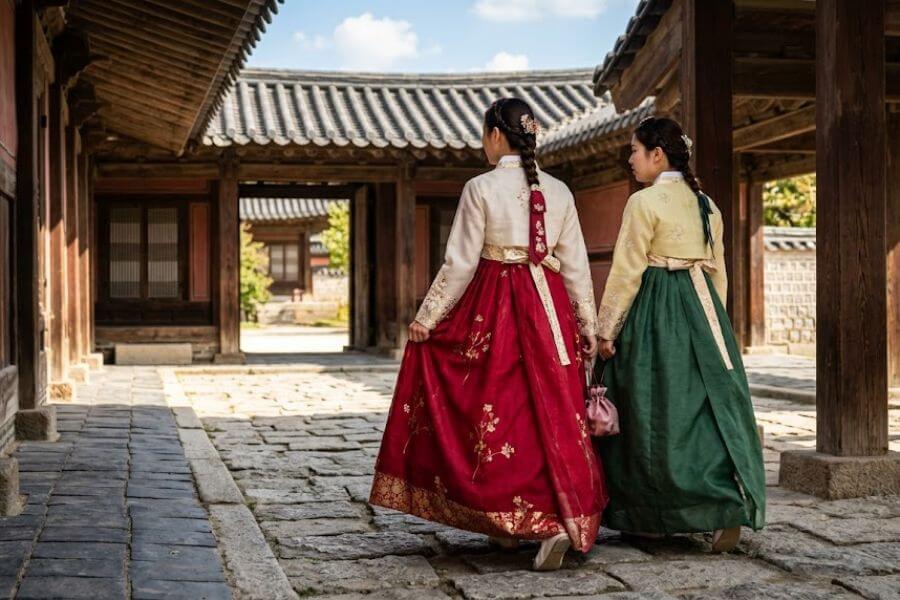
When you visit Seoul, South Korea, renting a Hanbok, the country’s traditional dress, is the ultimate way to experience its rich culture. Even better, when you wear one, you get to walk right past the ticket booths and enter the city’s grand royal palaces completely for free. This guide will show you exactly how to pick the perfect outfit, navigate the palace gates, and feel like royalty for a day.
Why Wearing a Hanbok Changes Your Whole Experience
Stepping into a royal palace in regular clothes is fun, but stepping into one while wearing a Hanbok is pure magic. It is not just about taking amazing pictures for your social media feed, though you will definitely get plenty of those. It is about how the experience makes you feel.
When you put on the flowing layers of a Hanbok, your posture changes. You naturally slow down your pace. You notice the way the wind catches the wide sleeves and how the long skirt rustles against the stone pathways.
Becoming Part of the Living History
The staff at the palaces and the local people love seeing visitors appreciate the traditional clothing. Instead of feeling like an outsider looking in, you become part of the scenery. You help bring the historic architecture back to life.
For a few hours, you are not just a tourist looking at old buildings. You are a living part of the palace ecosystem, walking the same paths that kings, queens, scholars, and guards walked hundreds of years ago.
The Special Cultural Connection
Koreans view the Hanbok with immense pride. It represents their heritage, artistry, and identity. When tourists participate in this tradition respectfully, it shows a deep appreciation for the local culture.
The city of Seoul actually encourages this by giving you free admission to the historic sites. It is their way of saying thank you for keeping the traditional spirit alive in the modern age.
The Big Four Palaces You Can Enter For Free
Seoul has five major palaces from the Joseon Dynasty, but four of them sit right in the heart of the main tourist zones and offer free admission to anyone wearing a proper Hanbok. Each palace has its own unique vibe, layout, and hidden corners. Knowing what makes each one special helps you plan your day perfectly.
Gyeongbokgung Palace
This is the main event. Gyeongbokgung is the largest, grandest, and most famous palace in Seoul. Built in 1395, it serves as the ultimate backdrop for your Hanbok adventure. The palace features massive courtyards, stone bridges, and a spectacular pavilion that sits right in the middle of a peaceful, glass-like lake.
Because it is so large, you can easily spend two or three hours wandering around here. It is also the best place to watch the Royal Guard Changing Ceremony, which happens right outside the main gate. The colorful uniforms of the guards match the energy of your Hanbok perfectly.
Changdeokgung Palace
If Gyeongbokgung is known for its grand scale, Changdeokgung is loved for its beauty and nature. This palace was designed to blend in seamlessly with the surrounding hills and forests rather than cutting through them. It feels much more intimate and peaceful.
The architecture feels softer, and there are many winding paths through groves of ancient trees. It is highly famous for its Secret Garden, a hidden oasis used by the royal family for relaxation. While the main palace area is free with a Hanbok, keep in mind that the Secret Garden requires a separate, paid guided tour ticket because they limit the number of daily visitors to protect the nature.
Changgyeonggung Palace
Located right next to Changdeokgung, this palace is a bit smaller and usually much less crowded. It has a beautiful, tragic history and a very serene atmosphere. One of the most unique features of Changgyeonggung is its large greenhouse, built in the early twentieth century, which blends traditional Korean landscaping with Western-style glass architecture.
If you want to take your time, avoid the massive crowds of tourists, and enjoy a quiet walk through historic structures, this is the perfect spot. The wide open spaces give you plenty of room to let your skirt flow without bumping into other people.
Deoksugung Palace
Deoksugung is unique because it sits right next to a busy, modern intersection in downtown Seoul. It is the only palace that features a mix of traditional Korean wooden buildings and Western-style stone architecture with fountains.
It is also highly famous for its beautiful stone-wall walkway that runs along the outside of the property, which is a favorite spot for couples and photographers. Deoksugung stays open later into the evening than the other palaces, making it the best choice if you want to experience the romance of a palace illuminated by golden lights under the night sky.
Understanding the Hanbok Style Rules for Free Entry
To get your free ticket, you cannot just wear anything that looks vaguely traditional. The cultural heritage administrators have specific guidelines to ensure that the dress code respects historical accuracy. The rules are straightforward, but it helps to know them before you pick out your outfit at the rental shop.
The Basic Anatomy of a Hanbok
Before diving into the rules, it helps to know what the pieces are called. For women, the outfit consists of two main parts: the Jeogori, which is the short, long-sleeved jacket that covers the upper body, and the Chima, which is the full, high-waisted skirt.
For men, the outfit includes the Jeogori jacket paired with Baji, which are loose, comfortable trousers that tie at the ankles. Sometimes men also wear a long, flowing vest or overcoat called a Baeja or Durumagi.
The Official Dress Code Guidelines
The rules state that you must wear both the upper and lower traditional garments correctly.
- For Women: The Chima skirt must be worn around the chest or waist, and it must reach down to your ankles. It should not be pulled up too high or cut short like a modern dress. The Jeogori jacket must be worn on top and fastened properly with the traditional fabric bow, called a Goreum.
- For Men: You must wear the Baji trousers properly, meaning they should be fastened at the waist and secured at the ankles. You cannot wear regular jeans or shorts under a loose jacket and call it a Hanbok.
- Gender and Expression: The palace guidelines are progressive and inclusive. You are allowed to choose whichever style you prefer. If a woman wants to wear the male scholar outfit, or if a man wants to wear the flowing skirt, that is completely fine, as long as the outfit itself is a complete, traditional set worn properly.
What to Avoid
Make sure your outfit does not feature crude modifications. Some cheap, non-traditional outfits sold online have velcro closures instead of ties, or they feature zippers right down the front.
Rental shops near the palaces know the rules inside and out, so if you rent from a local shop, they will make sure your outfit is perfectly compliant. Just avoid trying to create a makeshift costume using modern everyday clothes.
How to Choose the Right Rental Shop
The neighborhoods surrounding Gyeongbokgung and Changdeokgung are packed with dozens of Hanbok rental shops. Walking down the street, you will see mannequins lining the sidewalks and signs in multiple languages. With so many options, finding the right shop comes down to a few key factors.
Location is Everything
You want to pick a shop that is close to the palace you plan to visit first. Walking around in a Hanbok is fun, but the shoes can sometimes be uncomfortable, and the layers can get warm.
Choosing a shop that is just a two-minute to five-minute walk from a palace gate saves your energy for exploring the actual grounds. Look for shops near Anguk Station, Gyeongbokgung Station, or inside the historic Bukchon Hanok Village.
Traditional Versus Theme Hanboks
Most shops divide their inventory into two categories: Traditional and Theme.
- Traditional Hanboks: These feature authentic designs, solid colors, or simple, classic patterns. They mirror what regular citizens or royalty wore in the past. The fabrics are usually light, elegant, and understated.
- Theme Hanboks: These are modern variations. They use bright, shiny fabrics, gold or silver foil embroidery, and built-in petticoats that make the skirts puff out like a ballroom gown.
Both styles qualify for free palace entry, so the choice depends entirely on your personal taste. Traditional looks timeless and elegant, while Theme looks flashy, royal, and highly cinematic.
Comparing Package Deals and Pricing
Rental prices are usually based on time. Standard rental blocks are two hours, four hours, or a full day. A two-hour rental is usually enough if you just want to visit one palace and take a few photos. A four-hour rental gives you enough time to explore two palaces or stop for tea in between.
Make sure to ask what is included in the base price. Good shops include the basic hair styling, an inner skirt skirt-liner to give the dress volume, and a small traditional purse for free. Some shops charge extra for every single accessory, which can cause the price to add up quickly.
Step-by-Step Guide to the Rental Process
If you have never rented a Hanbok before, the process might seem a bit intimidating. Walking into a busy shop filled with hundreds of colorful garments can feel overwhelming. Following a simple step-by-step method makes the whole experience smooth, relaxing, and incredibly fun.
1. Check In and Store Your Stuff: Arrive Early.
When you walk into the shop, show your booking reservation or tell the staff you want a walk-in rental. They will give you a large bag or a locker to store your backpack, jacket, and daily clothes. You only carry your phone, wallet, and essentials with you.
2. Select Your Skirt or Trousers First: The Base of Your Look.
The staff will guide you to the racks based on your height. Always pick your bottom piece first because it dominates your look. Browse through the rows of colors and patterns until you find a Chima skirt or Baji trousers that catch your eye.
3. Match Your Jacket: Completing the Set.
Once you have your bottom piece, find a matching Jeogori jacket. The staff are experts at color coordination, so ask them for suggestions. You can choose a jacket that matches the skirt accent colors or go for a bold contrast.
4. Get Dressed with Staff Help: Fitting Room Time.
Take your items to the fitting rooms. The staff will help you put on the inner skirt and slide the Hanbok over your undergarments. They will securely tie the fabric knots and ensure everything sits perfectly on your shoulders.
5. Style Your Hair and Accessories: The Finishing Touches.
Sit at the vanity station. The staff will braid or pull up your hair into traditional styles, using beautiful ribbons, pins, and floral accessories. Pick a small matching pouch to carry your modern essentials like your phone and lipstick.
Master the Art of Color Coordination
Picking out your Hanbok colors is the most exciting part of the process, but it requires a little bit of strategy. The colors you choose will interact with the red, green, and gold painted wood of the palaces, as well as the bright blue sky or seasonal foliage.
Matching Your Personal Vibe
Think about what kind of character you want to be for the day. If you want to feel like a powerful queen or king, look for deep crimson reds, royal blues, and dark purples accented with gold embroidery.
If you want a soft, romantic, fairy-tale look, look for pastel colors like mint green, soft lavender, baby pink, and creamy white. If you want a bold, high-energy look, vibrant sunshine yellow, electric orange, or deep emerald green look incredible against the historic stone backdrops.
Considering the Season
The time of year you visit Seoul should influence your color choices.
| Season | Best Hanbok Colors | Why It Works |
| Spring | Pastels, soft pink, light yellow, mint | Complements the cherry blossoms and new green leaves |
| Summer | Crisp white, sky blue, cool lavender | Looks fresh, clean, and refreshing under the bright sun |
| Autumn | Deep red, burnt orange, mustard, olive | Blends beautifully with the dramatic red and gold fall leaves |
| Winter | Royal blue, emerald, deep plum, crimson | Stands out boldly against gray stones and white snow |
Co-ordinating as a Group or Couple
If you are traveling with friends, family, or a partner, try to coordinate your outfits without looking identical. For couples, a classic option is for one person to wear a color that matches the other person’s jacket or skirt trim.
For groups of friends, picking a unified theme, like everyone wearing different pastel shades, creates a gorgeous, cohesive look in group photos without making everyone look like they are wearing uniforms.
Getting to the Palaces and Claiming Your Free Entry
Once you are fully dressed and feeling confident, it is time to head to the palaces. Navigating the streets of Seoul in a Hanbok is incredibly common, so do not feel shy. You will see dozens of other people walking around in traditional clothing right alongside you.
Walking from the Shop
Most shops are clustered in the historic neighborhoods of Samcheong-dong, Insa-dong, and Bukchon. From these areas, you can easily walk straight to the side gates or main entrances of Gyeongbokgung or Changdeokgung. Keep an eye on your skirt as you walk up and down curbs, and hold it up slightly so it does not drag on the sidewalk.
Using Public Transportation
If your chosen shop is a little further away, or if you want to hop from Gyeongbokgung over to Deoksugung, do not hesitate to ride the subway or take a taxi while wearing your Hanbok.
It is a completely normal sight for locals, and the wide subway turnstiles accommodate the flowing skirts easily. Just sit carefully on the train seats, gathering your skirt fabric into your lap so it does not get caught in the sliding doors.
Navigating the Ticket Booth
When you arrive at the palace entrance, you will see long lines of tourists waiting at the ticket windows or automated kiosks. You can completely skip these lines.
Walk straight past the ticket booths and head directly toward the gate security guards standing at the main entrance turnstiles. They will look at your outfit, smile, nod, and wave you through the gate. You do not need a paper ticket, a special pass, or a wristband. Your Hanbok is your golden ticket.
Photography Tips for Stunning Hanbok Portraits
You are wearing an exquisite outfit in one of the most beautiful locations in Asia, so you definitely want to capture the moment perfectly. You do not need an expensive camera to get professional-looking portraits; a modern smartphone and a few classic composition techniques are all it takes.
Finding the Best Light
Avoid taking your photos during the middle of the day when the sun is directly overhead. Harsh midday sunlight creates dark shadows under your eyes and nose, and it makes the vibrant colors of your Hanbok look washed out.
Instead, aim for the morning hours right after the palaces open, or the late afternoon during the golden hour just before sunset. The soft, warm light makes the silk fabrics glow and adds a magical feel to your photos.
Posing Naturally with Flowing Fabric
Standing stiffly in front of a building can look awkward. The beauty of a Hanbok lies in its movement and volume.
- The Walking Shot: Have your photographer hold the camera low and walk slowly away from them or across their field of view. Let your skirt swing naturally.
- The Look-Back: Walk away from the camera, then gently turn your head back over your shoulder with a soft smile. This highlights the beautiful lines of the back of your jacket and hair accessories.
- Utilizing Your Hands: Use your hands to gently lift the sides of your skirt, or hold your traditional pouch in front of your waist. This gives your arms a natural position and highlights the wide, elegant sleeves of the jacket.
Best Photo Spots Inside Gyeongbokgung
While the main throne hall is impressive, it is always crowded with people. Walk deeper into the palace complex to find quieter spots.
The Gyeonghoeiru Pavilion, which sits over a beautiful lake, provides a classic reflection shot. The long, covered wooden corridors with repeating pillars create incredible depth and framing for portraits. Look for quiet side gates with brightly painted patterns to frame your face close up.
Practical Comfort Tips for a Flawless Day
Wearing a Hanbok is an incredible experience, but it is still an outfit from a different era. To ensure your day is filled with joy rather than blisters or overheating, keep a few highly practical tips in mind.
What to Wear Underneath
The Hanbok fabric can sometimes be slightly sheer or scratchy against bare skin.
- In the Summer: Wear light, breathable clothes underneath, like a thin white t-shirt and lightweight shorts. Avoid dark colors or heavy patterns, as they might show through white or pastel jackets.
- In the Winter: Seoul winters get incredibly cold. Wear tight thermal layers, like a long-sleeve heat-tech top and warm leggings under your skirt or trousers. You can also slip heat-packs into your traditional pouch or pockets.
The Shoe Dilemma
Some rental shops offer traditional embroidered shoes to match your outfit. While they look adorable in photos, they often lack arch support and can become painful after an hour of walking on stone pathways.
Since the female Chima skirt is long enough to cover your feet when you stand normally, you can easily wear your most comfortable white sneakers or walking flats underneath. No one will notice, and your feet will thank you after walking thousands of steps.
Managing Your Belongings
The traditional pouch you receive at the shop is perfect for holding a phone, a wallet, and a tube of lip balm. It will not hold a water bottle, a heavy camera lens, or a jacket.
Leave your heavy bags in the shop lockers. Traveling light allows you to move freely, pose effortlessly, and enjoy the day without feeling weighed down by modern gear.
Etiquette and Respect While Wearing Traditional Dress
When you put on a Hanbok, you are stepping into a symbol of Korean national pride. Behaving respectfully while wearing it ensures that locals continue to welcome international visitors with open arms and that the free palace entry program remains active for years to come.
Respecting the Historic Space
The royal palaces are not amusement parks. They are treasured historic sites, and some areas are considered sacred or monumental.
Avoid sitting directly on the stone steps of historical halls, climbing on the ancient walls, or running through the quiet corridors. Walk gracefully, speak in respectful tones, and treat the architecture with care.
Interacting with Other Visitors
You will likely attract a lot of attention, especially if your outfit is particularly striking or if you are traveling with children. Other tourists might ask to take a photo with you.
You are never obligated to say yes if you feel uncomfortable, but if you are willing, it can be a wonderful way to connect with people from all over the world. Always maintain a polite and friendly attitude.
Returning the Outfit in Good Condition
Be mindful of where you walk and sit. Avoid dragging your skirt through muddy patches or sitting down on dirty, dusty stone surfaces without checking them first.
Be careful when eating or drinking while wearing your Hanbok, especially if you are enjoying street food or colorful teas at a traditional cafe. Staining the delicate fabric can result in cleaning fees when you return to the shop.
Exploring Beyond the Palaces
Your Hanbok journey does not have to end at the palace gates. Your rental time usually leaves plenty of room to explore the historic neighborhoods that surround the royal grounds, giving you an even deeper look into old Seoul.
Bukchon Hanok Village
Located right between Gyeongbokgung and Changdeokgung, this historic neighborhood is filled with hundreds of traditional Korean homes, called Hanoks, dating back to the Joseon Dynasty. The narrow, winding uphill alleys lined with stone walls and tiled roofs look spectacular.
Walking through this village in a Hanbok feels like stepping straight back in time. However, remember that this is a real residential neighborhood where people actually live. Keep your voice down, respect private property signs, and do not peer into open windows.
Insa-dong Traditional Culture Street
Insa-dong is a bustling neighborhood famous for its antique shops, art galleries, traditional stationery stores, and cozy tea houses. It is the perfect place to head after your palace visit.
Walking into a wooden tea house, sitting on the floor, and sipping hot plum or ginger tea while dressed in your Hanbok is an experience you will never forget. Many shops in this area also feature signs written entirely in the Korean alphabet, Hangeul, adding to the historic atmosphere.
Samcheong-dong Cafes and Galleries
If you want a mix of old and new, head over to Samcheong-dong. This trendy neighborhood features traditional Hanok buildings that have been converted into modern cafes, fashion boutiques, and contemporary art galleries.
The contrast between your historic outfit and the modern, artistic window displays makes for highly creative, editorial-style photographs. It is a fantastic spot to grab a gourmet ice cream or a refreshing iced coffee while taking a break from walking.
Frequently Asked Questions
Can non-Koreans wear a Hanbok?
Yes, absolutely. The people of South Korea are incredibly proud of their traditional dress and love sharing it with international visitors. Renting and wearing a Hanbok is viewed as a wonderful sign of respect, appreciation, and interest in Korean culture. The free admission policy at the palaces applies equally to everyone, regardless of nationality, as long as the traditional clothing is worn properly according to the guidelines.
Do I need to book my Hanbok rental in advance?
While walk-ins are welcome at almost every rental shop in Seoul, booking in advance online is highly recommended, especially during the peak travel seasons of spring and autumn. Booking ahead often secures you a significant discount, guarantees that the shop will have your size available, and allows you to skip the morning lines inside the shop so you can get out to the palaces much faster.
What happens if it rains during my rental day?
If it starts to rain lightly, your Hanbok adventure can still be incredibly beautiful. The wet stone pathways and misty palace grounds create a very romantic, cinematic atmosphere. You can buy a clear plastic umbrella at any convenience store so your outfit remains fully visible in your photos. If it rains heavily, contact your rental shop, as many shops will allow you to reschedule your reservation for a clearer day for free.
Is there a time limit for the free entry at the palaces?
No, there is no time limit for the free entry itself. As long as you enter the palace gates during regular operating hours while wearing your Hanbok, you get in for free. You can stay inside the palace grounds for as long as you like until closing time. Your only real time limit is the rental agreement you made with your specific Hanbok shop.
Are there size options for everyone at the rental shops?
Yes, modern rental shops in Seoul cater to a very diverse international audience. They carry a wide range of sizes, from small children’s outfits to plus-sizes for adults. Most shops organize their racks clearly by height and size, making it easy to find an outfit that fits you comfortably. If you are unsure, the helpful shop assistants are excellent at finding the perfect size for your frame.
Can I wear a Hanbok at night?
Yes, you can. Deoksugung Palace and Changgyeonggung Palace are famous for staying open into the evening, and Gyeongbokgung frequently runs special night-viewing opening periods during certain months of the year. Wearing a Hanbok at night under the golden glowing lanterns is a breathtaking experience. Just make sure to check the operating hours of your chosen palace and ensure your rental shop allows late-night returns.
Can I wear modern accessories like sunglasses with my Hanbok?
While you are allowed to wear sunglasses, modern watches, and everyday backpacks into the palaces, removing them for your photos creates a much more authentic, timeless look. Use the traditional pouch provided by the rental shop to carry your modern accessories when you are not using them. This keeps your look clean and beautifully integrated with the historic surroundings.
How much does it typically cost to rent a Hanbok?
Prices vary depending on the shop and the quality of the outfit you choose. On average, a standard two-hour rental for a traditional Hanbok costs between ten thousand and fifteen thousand Korean Won, which is roughly eight to twelve US dollars. A themed or royal outfit for four hours usually costs between twenty thousand and thirty-five thousand Korean Won. This makes it an incredibly affordable activity, especially when you factor in the money you save on palace admission tickets.
Summary of the Best Palace Experiences
Choosing the right palace depends on what you want to experience during your day out. Use this simple overview to help plan your ultimate itinerary.
- Best for Grand Scale and Royalty: Gyeongbokgung Palace. This is where you go for the classic, massive courtyards, the changing of the guard, and the ultimate iconic Seoul vacation photos.
- Best for Nature and Romance: Changdeokgung Palace. Head here if you love ancient trees, harmonious architecture, and a softer, more organic aesthetic.
- Best for Peace and Quiet: Changgyeonggung Palace. The perfect escape from tourist crowds, offering wide open spaces and a beautiful historic greenhouse.
- Best for Evening Vibes: Deoksugung Palace. Ideal for a late-afternoon stroll that extends into the night, showcasing a unique blend of Eastern and Western history.