In South Korea, tipping is simply not a part of daily life. In fact, if you try to hand out extra cash, you might actually cause an awkward situation or accidentally offend someone.
When you travel through the bustling streets of Seoul or take a peaceful trip to the beaches of Busan, you need to understand exactly how the service industry operates. This comprehensive guide will walk you through the absolute realities of dining out, taking rides, and staying in accommodations across the country. You will learn the exact cultural reasons behind these rules and how to show your gratitude perfectly without reaching for extra banknotes.
The Cultural Philosophy Behind the Bill
To truly understand why money works differently here, you have to look at how people view work and hospitality. In many Western countries, service workers rely heavily on the generosity of customers to make a livable wage. The system is set up so that the customer directly evaluates and rewards the worker.
South Korea functions on a completely different core mindset. Here, a high standard of service is considered a basic requirement of the job. When you walk into an establishment, the business owners pay their staff a stable, fair wage that does not depend on the whims of diners or guests. Excellent hospitality is a matter of pride and a standard expectation, not a premium feature that you need to purchase extra.
The Concept of Pride and Prideful Work
When you offer a tip to a server or a driver, you might think you are saying a kind thank-you. However, a local person might look at that extra cash and feel like you are offering them charity. It can imply that you think their employer does not pay them well enough, or that you look down on their position.
Maintaining mutual respect is an essential part of every single daily interaction. By paying exactly what is on the bill, you show that you respect the established prices of the business and the dignity of the person helping you.
The Rule of the Total Price
What you see on a menu or a receipt is exactly what you are expected to pay. The government mandates that the listed prices in restaurants, stores, and service shops must include all taxes. There are no hidden fees that get tacked on at the very last second. This upfront pricing makes managing your vacation budget incredibly simple and stress-free.
| Western Tipping Custom | South Korean Custom |
| Base price excludes tax and service fees | Total price includes tax and all service costs |
| Workers rely on tips for basic income | Workers receive fixed, reliable wages |
| Extra rewards encourage better service | High-quality service is the baseline standard |
| Leaving no tip signals bad service | Leaving a tip signals confusion or charity |
Navigating the Dining Scene Without Leaving Coins
Eating your way through South Korea is a highlight of any trip. You will find yourself grilling savory pork belly at a barbecue joint, slurping hot noodles in a bustling market, or sipping artfully crafted lattes in a multi-story cafe. As you enjoy these incredible flavors, you need to drop your usual habits of leaving cash on the table.
Traditional Korean Restaurants and Barbecue Joints
When you sit down at a traditional restaurant, you will notice that the dynamic between you and the staff is highly efficient. In many places, you will find a small plastic button installed directly on the side of your table. When you need water, more side dishes, or the final bill, you simply press that button. A chime will ring, and a server will arrive at your side within seconds.
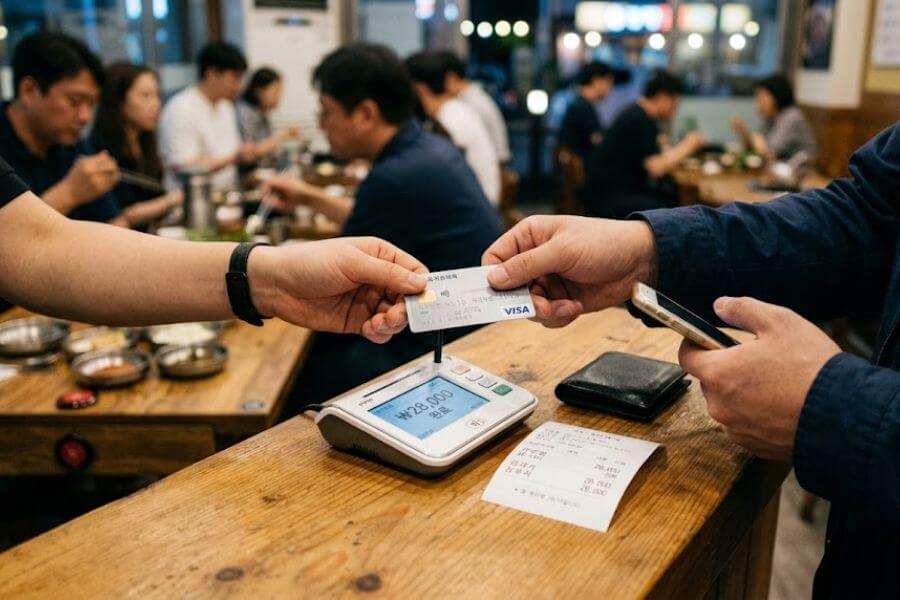
This system is built for speed and efficiency, not for long, lingering table chats with your server. Because of this setup, the concept of a personal waiter who takes care of your table for an hour does not really exist. When you finish your meal, you do not leave your money or credit card on the table. Instead, you pick up your paper bill slot and walk directly to the cash register located near the front exit. You pay the cashier, grab your receipt, and walk out.
If you leave cash on the table, one of two things will happen. The server will think you accidentally forgot your change and will literally run down the street to hand it back to you. Or, the staff will be confused about why extra money was left behind and feel uncomfortable cleaning up the table. Save yourself the stress and just pay the exact amount at the front register.
Modern Cafes and Trendy Dessert Shops
The cafe culture in South Korea is legendary. From minimalist concrete spaces to cozy rooms filled with plants, you will find a spot to rest on almost every block. The ordering process at these places is almost always fully automated or counter-based.
Many modern cafes utilize electronic kiosks where you select your drinks, pay with your card, and receive a paper ticket with a number. When your drink is ready, your number lights up on a screen. Since you are doing the ordering yourself and picking up your own tray, there is zero reason to even think about a tip. Even if you order from a human barista at the counter, you simply pay the exact price of your iced Americano or strawberry milk.
Western Style Establishments and Tourist Hotspots
As international travel increases, a tiny handful of high-end Western restaurants or trendy fusion spots in tourist heavy neighborhoods like Itaewon or Hongdae have experimented with adding tip jars near the register. This is a very new trend and is aimed exclusively at foreign tourists who are used to giving extra money.
Local residents almost universally ignore these jars, and you should feel free to ignore them too. You are under no obligation to put money in them. The prices at these tourist-centric spots are already set high enough to cover their operational costs.
High-End Dining and Luxury Hotel Restaurants
If you decide to splurge on a fine-dining meal or a multi-course traditional banquet, your bill might look a little bit different. In luxury hotel dining rooms or top-tier restaurants, a ten percent service charge is frequently built directly into the final receipt.
This service charge goes straight to the establishment to cover the costs of managing an upscale environment. You do not need to calculate an additional tip on top of that percentage. The staff are already compensated at a premium rate to match the luxurious setting.
Quick Guide for Restaurant Payments
- Look for the table button: Press the call button on your table when you need service.
- Take the bill to the front: Do not leave your wallet on the dining table. Pay at the exit door.
- Do not leave loose coins: Leaving small change on the table is viewed as messy or careless.
- Check for service charges: Only upscale or luxury hotel restaurants add a service line to the bill.
Taxis and Public Transportation Rules
Getting around South Korean cities is incredibly easy thanks to the clean, high-tech transit systems. Taxis are everywhere, affordable, and highly regulated. Whether you hail a cab on the street or use a mobile app, the payment rules remain beautifully straightforward.
Regular Street-Hailed Taxis
When you jump into a standard silver, white, or orange taxi, the driver will instantly turn on the digital meter attached to the dashboard. The fare starts at a low base price and ticks up based on the distance traveled and the time spent idling in traffic.
When you arrive at your destination, the meter will display the final cost down to the single won. You can slide your international credit card or local transit card into the payment terminal between the front seats. The machine charges you the exact amount, and you are ready to step out. The driver does not expect a single extra cent.
The Cash Change Exception
If you choose to pay your taxi fare using physical cash banknotes, you might encounter the only real exception to the strict no-tipping rule. Let us say your final taxi fare comes out to nine thousand two hundred won. If you hand the driver a ten thousand won banknote, the driver will naturally start reaching for their coin pouch to give you eight hundred won back in change.
If you are in a rush, or if you simply do not want a pocket full of heavy coins, you can politely say a phrase that means “keep the change.” In Korean, this sounds like “jan-don-eun gajyeo-gaseyo.” This is a completely acceptable gesture of convenience. It saves the driver from counting out coins and allows you to exit the vehicle quickly. However, you must remember that this is done for mutual speed and convenience, not because the driver requires a tip. If the fare is an even amount, you simply step out after paying.
Premium Black Taxis and Jumbo Cabs
You will also notice larger, black luxury taxis cruising the streets, often called Deluxe Taxis. These vehicles have highly experienced drivers who often speak some English and offer a smoother, quieter ride. The base fare for these luxury rides is higher than standard cabs.
Because you are already paying a premium rate for this upgraded transport experience, no additional tip is required or expected. The driver is fully compensated by the higher meter rate.
Ride-Hailing Mobile Apps
Most travelers use popular mobile apps like Kakao T or international apps like Uber to summon rides. These apps link directly to your credit card and handle the payment automatically once the wheels stop moving.
Unlike ride apps in North America that pop up a stressful screen asking you to select a tip percentage after your journey, South Korean ride apps simply process the metered fare. You get out of the car, receive a digital receipt, and your transaction is complete.
| Transportation Type | Expected Action | Payment Method |
| Standard Taxi | Pay exact meter fare | Credit card, transit card, or cash |
| Deluxe Black Taxi | Pay exact premium meter fare | Credit card or cash |
| Ride-Hailing App | Pay automated app fare | Pre-linked credit card |
| Cash Payment | Optional to let driver keep small coin change | Cash banknotes |
Hotel Stays and Accommodations Etiquette
Your accommodation will serve as your home base during your travels, and the level of service in South Korean hotels is world-class. From budget guesthouses to towering five-star skyscrapers, the hospitality professionals work hard to ensure you have a comfortable stay.
Budget Hotels, Hostels, and Guesthouses
If you are staying in a trendy boutique hotel or a friendly local guesthouse, the staff will help you check in, hand over your digital room key, and direct you to the elevator. In these everyday accommodations, tipping is non-existent.
You do not need to leave money on the bed for the cleaning staff when you leave for the day, and you do not need to hand money to the front desk clerk who helps you book a restaurant reservation. A polite smile and a respectful bow of your head are the absolute best ways to show you appreciate their assistance.
Luxury Five-Star Hotels
When you step into a luxury property, you will encounter dedicated bellhops, concierges, and doormen. This is the one environment where Western customs have slightly blended with local traditions due to the high volume of international business travelers.
Handling Luggage Assistance
If a bellhop helps you carry three heavy suitcases up to your room, they will show you how to operate the room lights and temperature controls before turning to leave. In a typical Western hotel, this is the exact moment you would slip them a few dollar bills.
In South Korea, the bellhop will usually bow politely and exit without lingering or looking at your hands. They do not expect cash. However, if you are staying at an ultra-luxury international brand where the staff are highly accustomed to global travelers, they will not be offended if you hand them a small bill as a thank-you for heavy lifting. A banknote of five thousand or ten thousand won is considered incredibly generous but is still completely optional.
Housekeeping Services
The team members who refresh your linens and restock your complimentary bottled water work incredibly hard behind the scenes. In South Korea, you do not need to leave a daily cash tip on the bedside table. If you leave loose banknotes lying around on the furniture, the housekeeping staff will actually leave them completely untouched because they do not want to be accused of stealing your personal money.
If you truly want to reward exceptional cleanliness during a long stay, you should place the money inside a sealed envelope. Write a clear note on the front that says “thank you” so they know the cash is intentionally left for them.
Concierge Services
A hotel concierge can turn a good vacation into an unforgettable one by securing tickets to sold-out shows or finding hidden local restaurants. Their expert advice is part of the premium amenity package of your hotel. You do not need to slide them cash across the desk after they help you. If you want to show your deepest appreciation for an employee who spent an hour planning your weekend itinerary, writing a glowing review online that mentions their specific name is far more valuable to their career than a cash tip.
Other Common Travel Scenarios
As you explore beyond your hotel and restaurants, you will encounter other situations where service is provided. Knowing the ground rules for these unique scenarios will keep you feeling confident.
Hair Salons, Spas, and Skin Clinics
South Korea is a global hub for beauty, skincare, and trendy haircuts. When you visit a high-tech skin clinic or a stylish salon, the service is incredibly personalized. You might have one person wash your hair, another cut it, and a third person bring you a complimentary green tea.
When you walk to the front counter to settle the bill, the total price will reflect the exact menu cost of your treatment. You do not add a percentage for the stylist or the assistants. The price listed on the wall covers the expert labor, the specialized products, and the facility costs.
Guided Tours and Day Trips
If you book a guided bus tour to the Demilitarized Zone or a walking food tour through an ancient village, your guide will spend hours entertaining and educating your group.
For standard group tours booked through major travel websites, the guides do not expect tips. They are paid professional daily rates by the tour company. However, if you book a private, customized multi-day tour where a single guide and driver cater exclusively to your family for a week, a collective tip at the very end of the trip is a wonderful gesture. You can present the guide and driver with an envelope containing twenty thousand to fifty thousand won per day as a group gift for their dedicated companionship.
Food Delivery Apps
If you spend a rainy evening in your accommodation, you might want to try ordering fried chicken or savory black bean noodles through a local delivery app. The delivery driver will arrive on a scooter, hand you your insulated bag, and head right back out to their bike.
The delivery fee is already calculated and paid through the app when you place your food order. There is no cash exchange at your door, and you do not need to hand the driver any extra paper money.
The Art of Showing Gratitude Politely
Since you will not be using your wallet to say thank-you, you need to learn the local ways to express your authentic appreciation. The culture values respect, politeness, and clear body language far more than extra financial rewards.
Master the Polite Bow
A slight bend of your upper body is the universal language of respect in South Korea. You do not need to perform a dramatic, deep bow from the waist for everyday interactions. A gentle fifteen-degree tilt of your head and shoulders while making eye contact and smiling is the perfect way to greet or thank a service worker.
When you exit a taxi or finish a meal, a quick nod of appreciation shows that you recognize the worker’s effort and respect their time.
Use the Proper Language
Learning just a couple of basic words in the local language will instantly bring a smile to any worker’s face. The most important phrase to memorize is the standard, polite form of “thank you.”
Gam-sa-ham-ni-da (감사합니다): This is the ultimate phrase to use when your food arrives, when you pay your bill, or when you exit a vehicle. Say it clearly with a slight nod of your head.
The Two-Handed Gesture
Whenever you exchange physical items with someone in South Korea, you should use both of your hands. This applies to handing over your credit card to a cashier, receiving your receipt, passing a passport to a hotel clerk, or giving cash to a driver.
You can either hold the item with both hands, or place your left hand gently under your right forearm as a sign of respect. This small physical gesture shows that you are fully present in the interaction and treats the other person with high regard.
Frequently Asked Questions
What should I do if a server runs after me to return a tip?
If you accidentally leave cash on a restaurant table and the server runs down the street to return it to you, you should smile, bow your head slightly, and accept the money back with both hands. Do not try to push the money back into their hands or insist that they keep it. Pushing back will only increase their confusion and make the situation feel highly awkward for everyone on the street. Simply say “Gam-sa-ham-ni-da” and pocket your cash.
Do I need to tip delivery drivers when ordering food to my hotel or Airbnb?
No, you do not need to tip food delivery drivers. The delivery fee is completely covered within the total price you pay on the mobile app when you hit the order button. When the driver arrives at your accommodation door, they will simply hand you the food container and leave immediately to complete their next delivery.
Is it acceptable to tip with foreign currency like US dollars?
You should never attempt to tip or pay with foreign currency in South Korea. If you encounter a rare situation in a luxury international hotel where you choose to offer a tip, you must use the local currency, which is the South Korean won. Handing someone foreign banknotes means they have to take a personal trip to a bank and pay high conversion fees to actually use the money, which turns your kind gesture into an inconvenient chore.
What happens if I accidentally leave loose coins on a bar counter?
If you leave small coins behind on a bar counter or a counter-service register, the staff will assume that you simply forgot your change by accident. They will either shout to get your attention before you walk out the door, or they will place the coins into a lost-and-found bin. Leaving loose coins behind intentionally can look like you are treating your change like trash, so it is always best to keep your coins in your pocket.
Should I tip the specialist who performs a facial or cosmetic treatment at a skin clinic?
No, tipping is not practiced at beauty clinics, medical spas, or hair salons. The prices for cosmetic treatments and styling are fully comprehensive. The professional technicians and doctors are paid high salaries for their medical and aesthetic expertise, and the price you pay at the front checkout desk completely covers the entirety of your specialized treatment.
Do public bathhouses or traditional saunas require tipping for body scrubs?
When you visit a traditional public bathhouse, known as a jjimjilbang, you can pay extra for an intense, skin-exfoliating body scrub from a professional staff member. You pay for this specialized service ahead of time at the main front counter or directly inside the locker room using your electronic wristband. You do not hand any cash to the person performing the scrub, and no extra tip is expected after the treatment is done.
Is a service charge automatically included in every single restaurant bill?
A service charge is not included in standard, everyday restaurant bills. It is only found in high-end, luxury dining rooms or international hotel restaurants. For your typical meals at barbecue spots, noodle shops, and neighborhood cafes, the price listed on the menu is the exact final price, covering the food, the tax, and the service with zero extra additions.
How can I show a tour guide that I loved their trip without giving cash?
The absolute best way to reward a fantastic tour guide is to write a detailed, positive review on the travel platform where you originally booked the excursion. Mentioning the guide’s specific name and sharing photos of your great experience helps their employer see their value, which can lead to promotions and more bookings for their business. You can also write a small thank-you note or offer a small, wrapped snack from your home country as a friendly token of appreciation.
What should I do if a cafe has a physical tip jar on the counter?
If you spot a tip jar sitting on a counter in a heavily touristy area, you can safely choose to ignore it completely. These jars are put out to capture loose change from foreign travelers who feel anxious about not tipping. Local citizens do not use them, and the staff will never judge you or think poorly of you for paying the exact amount of your order.