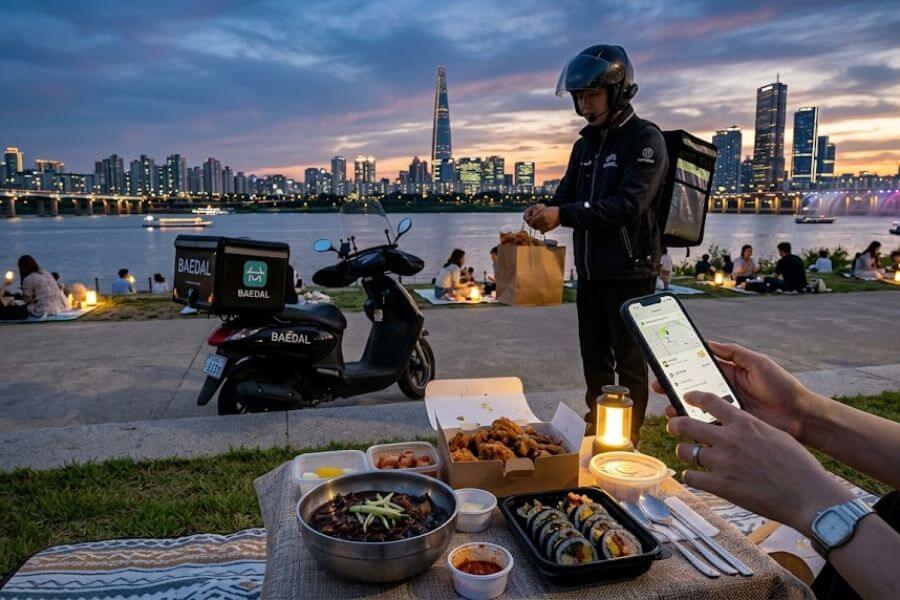
Imagine sitting on a picnic blanket at the Han River park. The sun is setting, casting a warm golden glow over the water, and the cool breeze is just right. Your stomach rumbles. You look around and see people eating crispy fried chicken, steaming bowls of instant ramen, and fresh pizzas. You want to join the feast, but there is a catch. You are a tourist, or maybe you just moved to Korea, and you do not know how to get food delivered to a wide-open park or a secure hotel lobby.
Ordering food delivery in South Korea is a legendary experience, but it can feel intimidating if you do not speak the language or know the local systems. Do not worry. This guide will show you exactly how to navigate Korean delivery apps like a pro in 2026, so you can get delicious meals delivered straight to your picnic spot or hotel room without any stress.
Why Food Delivery in Korea Is a Must-Try Experience
Food delivery in South Korea is not just a convenience. It is a massive part of the local culture. In many countries, delivery means lukewarm pizza arriving an hour late in a crumpled paper bag. In Korea, it is a high-tech, lightning-fast art form. Drivers on motorbikes zoom through city streets to bring you boiling hot soups, ice-cold desserts, and perfectly crispy chicken.
The speed is mind-blowing. Because of Korea’s dense urban layout and advanced logistics networks, your food often arrives faster than it would take you to walk to a restaurant and sit down. This hyper-efficient system means you can think of a craving, tap a few buttons, and eat within thirty minutes.
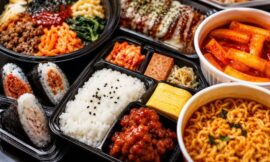
Another reason to love it is the sheer variety. You are not limited to fast food. You can order high-end traditional Korean barbecue, fresh sashimi, Italian pasta, or even a single iced latte with a slice of cake. Restaurants pack everything beautifully, often including little side dishes called banchan, extra sauces, and wet wipes.
Finally, the delivery culture allows you to claim almost any space as your dining room. Parks, riverbanks, and hotel lounges are all fair game. It creates a sense of freedom and fun that defines the modern Korean lifestyle. If you visit Korea and skip ordering delivery to a scenic spot, you are missing out on a quintessential local tradition.
Meeting Your Delivery Apps: The Big Three in 2026
To start your food adventure, you need the right tools on your smartphone. The Korean delivery market relies heavily on three main apps. Each one has its own strengths, and having all three downloaded gives you the best chance of finding exactly what you want.
Baedal Minjok (Baemin)
Baedal Minjok, which translates to the Delivery Nation, is the undisputed king of food delivery in Korea. Most locals simply call it Baemin. It has the largest selection of restaurants, from tiny neighborhood joints to major international chains. If a restaurant delivers food, it is almost certainly on Baemin.
The app uses a cute mint-colored theme and features a cartoon mascot riding a scooter. In recent years, Baemin has improved its accessibility for international users, offering better support for foreign credit cards and simpler registration paths. Its search engine is incredibly smart, meaning you can type in misspelled words or English phonetics of Korean food names, and it will usually figure out what you mean.
Coupang Eats
Coupang Eats is the main competitor to Baemin and is backed by Coupang, the Amazon of South Korea. The biggest selling point for Coupang Eats is speed and tracking. They popularized the single-delivery system, which guarantees that a driver only picks up your order and brings it straight to you, rather than stopping at three other houses along the way.
For global travelers, Coupang Eats is often the easiest app to start with because its English interface is highly intuitive. The map tracking feature is incredibly accurate. You can watch the little motorcycle icon move through the streets in real-time, which helps you know exactly when to walk down to your hotel lobby or delivery zone.
Yogiyo
Yogiyo is the third major player and is known for its incredible discount programs. If you love saving a few thousand won on your meal, Yogiyo frequently runs promotional events, daily roulette games for coupons, and partnerships with specific food brands.
While its English language support has traditionally lagged slightly behind Coupang Eats, the interface is straightforward and icon-heavy. It is a fantastic backup app to check when you want to compare prices or look for exclusive restaurant listings that might be sold out on other platforms.
App Breakdown Comparison
| Feature | Baedal Minjok (Baemin) | Coupang Eats | Yogiyo |
| Language Support | Moderate (Improving) | Excellent English | Basic English |
| Restaurant Variety | Massive (Best overall) | Very High | High |
| Delivery Speed | Fast | Ultra-fast (Single-drop) | Fast |
| Payment Flexibility | High | High | Moderate |
| Best For | Finding hidden local gems | Tracking and English use | Discounts and deals |
What You Need Before You Start Tapping
You cannot just download the app and order immediately. Korean digital systems are highly secure and interconnected, which means you need to set up a few things beforehand. Preparing these items while you are still at your hotel will save you from frustration later.
A Working Phone Number
To create an account on any Korean app, you generally need a phone number that can receive text messages for verification. You have two main options here. You can use your domestic phone number if your home carrier allows international roaming texts, or you can purchase a local Korean SIM card.
If you buy a tourist SIM card at the airport, make sure it includes text-reception capabilities. Some data-only SIM cards do not give you a phone number, which will lock you out of account creation. A local number makes communication with the delivery driver much smoother if they need to call you.
Digital Identity Verification (The Real Name System)
South Korea uses a strict real-name verification system for many online services. For deep app integration, locals use their national identity cards. As a visitor, you can bypass the strictest checks on certain apps by signing up via alternative methods like your Apple ID, Google account, or a simplified email registration.
Coupang Eats is particularly friendly for foreigners because it allows you to set up an account and link a foreign credit card without forcing you to go through the intense identity verification process that standard Korean citizens use.
Payment Methods
This is often the biggest hurdle for international travelers. Korean apps prefer local payment methods like Kakao Pay, Toss Pay, or domestic credit cards. However, the systems have adapted to accommodate global tourists.
Make sure you have a Visa or Mastercard that does not charge high foreign-transaction fees. When you pay inside the app, look for the option labeled Foreign Card or Global Card. If the app rejects your card online, look for an option that says Pay to Driver Direct, which allows you to hand your card or cash to the courier upon arrival. Keep in mind that many fast-delivery options disable the pay-in-person feature, so setting up an in-app card is always best.
Master Step-by-Step Guide for Park Delivery
Ordering food to a public park sounds impossible. There are no street addresses, no front doors, and thousands of people are sitting around. Yet, in places like the Han River parks, this is a daily routine. The system works because of designated delivery zones.
Step One: Locate the Nearest Delivery Zone
You cannot tell a driver to find you next to the third tree from the water. Instead, Seoul city officials have built specific meeting points called Delivery Zones, or Baedal Zone in Korean.
When you arrive at a Han River park, such as Yeouido or Ttukseom, look for large, colorful signs with numbers on them. They look like bus stops but say Delivery Zone 1 or Delivery Zone 2. Walk up to the closest one and take a note of the number. This zone is your official address for the night.
Step Two: Set Your Location in the App
Open your preferred app and look for the location bar at the top of the screen. Instead of typing a standard address, type the name of the park followed by the zone number. For example, you can type Yeouido Han River Park Delivery Zone 2.
The app will usually autocomplete the precise GPS coordinate for that exact spot. Look at the map pin inside the app to double-check that it matches your physical location.
Step Three: Choose Your Food and Check Options
Browse through the categories. For a true park experience, look for fried chicken, pizza, or tteokbokki (spicy rice cakes). When checking out, look for the restaurant notes section. Some restaurants throw in free picnic items like disposable plastic gloves, extra napkins, or wet wipes if you write a short request.
Make sure to select disposable utensils in the app options. There is usually a small checkbox that asks if you need plastic forks or chopsticks. If you do not check this, the restaurant will assume you are at home and omit them to save plastic.
Step Four: Write Clear Delivery Instructions
The delivery note field is your secret weapon. Since the driver knows the delivery zones well, your note should be short and specific. You can use simple English, but simple Korean phrases pasted into the app work even better.
Write something like: I am wearing a bright red hoodie and sitting right next to the Delivery Zone 2 sign. This saves the driver from yelling your name into a crowd of hundreds of hungry picnickers.
Step Five: The Waiting Game and Tracking
Once you pay and the restaurant accepts the order, stay near your phone. If you are using Coupang Eats, watch the map closely. When the driver is about two minutes away, stand up and walk over to the edge of the delivery zone.
Do not make the driver park their scooter and search for you. The delivery culture relies on a quick hand-off. When you see a scooter pull up, look at the delivery box on the back. It often features the app logo. Make eye contact, give a polite nod, and verify your order number or name.
Step Six: Clean Up and Leave No Trace
After you enjoy your feast, you must clean up. Korean parks have strict waste-sorting rules. Near the delivery zones, you will find large trash stations with separate bins for general waste, food waste, plastics, and aluminum cans. Pour any leftover liquids down the designated drains, bag up your trash, and sort it properly to keep the beautiful riverside clean for everyone.
Master Step-by-Step Guide for Hotel Delivery
Ordering food to a hotel is much simpler than a park, but it still requires etiquette and an understanding of building security systems. Most upscale hotels do not allow delivery drivers to ride the elevator up to your room for safety reasons. Here is how to handle a hotel order smoothly.
Step One: Confirm the Exact Hotel Address
Do not rely on the name of the hotel alone, as many chains have multiple locations in the same city. Look at your room key envelope or search your hotel on a map to find the exact street address, including the postal code.
Type this address into your delivery app. Once the address is locked in, add your hotel name and your room number in the secondary address line. Even if the driver cannot come up, having the room number helps the front desk identify you if there is a mix-up.
Step Two: Select the Correct Drop-Off Preference
Modern delivery apps offer contactless options. You will see a dropdown menu for delivery preferences. For a hotel, select the option that says Meet me outside or Leave at the lobby front desk.
If your hotel has a strict no-delivery-in-the-lobby policy, you must select Meet me outside. The app will notify you when the driver arrives, and you will walk out to the main driveway to grab your food.
Step Three: Inform the Front Desk
Before your food arrives, walk past the front desk and let the staff know you ordered delivery. Ask them politely: Where should I meet the delivery driver?
Some hotels have a designated table in the lobby specifically for delivery drop-offs. Others prefer that you wait outside the glass doors. Following the hotel rules keeps the staff happy and ensures your food does not get misplaced or cold while sitting on a random counter.
Step Four: Track and Collect
Keep your phone in your hand. If the driver arrives and cannot find you, they will call your number. If you do not speak Korean, simply say your hotel name and lobby. They will understand immediately.
Walk down to the lobby a few minutes before the estimated arrival time. When you spot the courier, confirm your name or order details, take your food, and head back upstairs to enjoy your meal in the comfort of your room.
Decoding the Menu: Key Korean Food Terms
Most delivery apps show pictures of the dishes, but text descriptions can still be confusing. Knowing a few basic terms will help you avoid ordering something accidentally spicy or missing out on the perfect side dish.
Chicken Choices
Fried chicken is the king of Korean delivery. When you open a chicken menu, you will see several options.
- Fried: This means classic, crispy, golden fried chicken with no sauce. It usually comes with a small packet of seasoned salt and radish cubes.
- Yangnyeom: This is the famous sweet, savory, and slightly spicy red glaze. It is sticky, messy, and absolutely delicious.
- Bboneless (Sunsal): If you are eating at a park, choose sunsal. It means boneless chicken pieces, which are much easier to eat with chopsticks while sitting on the ground.
- Ban-Ban: This translates to half-half. It allows you to get half a box of regular fried chicken and half a box of yangnyeom chicken, giving you the best of both worlds.
Noodle Varieties
Noodles are incredibly popular for quick comfort food deliveries. They hold up surprisingly well during transit.
- Jjajangmyeon: Thick wheat noodles smothered in a dark, rich, savory black bean sauce with pieces of pork and onions. It is a legendary delivery food that locals always order when moving houses or celebrating.
- Jjambbong: A fiery, red, seafood-based noodle soup. It is spicy, smoky, and packed with mussels, squid, and vegetables.
- Naengmyeon: Cold buckwheat noodles served in a tangy, icy broth. This is a lifesaver during hot summer days at the park.
Rice and Street Food
If you want a filling meal with plenty of texture, look into the snack and rice categories.
- Tteokbokki: Chewy cylindrical rice cakes cooked in a sweet and spicy red pepper sauce. It often comes with fish cakes and boiled eggs.
- Gimbap: Seaweed rice rolls filled with vegetables, egg, and meats like beef or tuna. They are bite-sized and perfect for picnics.
- Dosirak: A traditional Korean lunch box that includes rice, a main meat dish, and several small side dishes in a neat plastic container.
Navigating the Checkout Screen and Common Phrases
The final hurdle is the checkout screen, which is often filled with checkboxes, terms of service, and drop-down menus. Even with English interfaces, a few buttons might remain in Korean due to system updates.
Essential App Checkboxes
When you reach the final screen, look for these common visual cues:
- Checkboxes at the very bottom: These are usually the terms and conditions. Ticking the top box typically checks all the required boxes at once.
- Spoons and Chopsticks: Look for an icon of a spoon. If the switch next to it is turned off, toggle it on to make sure you get utensils.
- Receipt Request: There might be a box asking if you need a cash receipt for tax purposes. If you are a tourist, you can leave this blank or unchecked.
Useful Text Phrases to Copy and Paste
If you need to text your driver through the app chat feature or write instructions, you can copy these simple, direct phrases:
- 공원 배달존 2번에 있습니다: I am at park delivery zone number two.
- 호텔 로비에서 기다리겠습니다: I will wait in the hotel lobby.
- 문 앞에 두고 벨을 눌러주세요: Please leave it at the door and ring the bell.
- 감사합니다: Thank you.
Troubleshooting Common Delivery Problems
Sometimes, things do not go perfectly according to plan. A driver might get lost, your card might get declined, or your order might show up with a missing item. Knowing how to react calmly will save your dinner.
What to Do If Your Card Is Declined
If your international credit card fails at checkout, do not panic. This is a frequent issue caused by overseas fraud-protection systems.
First, try switching your payment method to PayPal if the app supports it. If that fails, look for the payment option called Meet and Pay or Pay On Delivery. This allows you to choose to pay the driver directly with your physical card or cash when they hand over the food. If that option is grayed out, your best bet is to use Coupang Eats, which has the most robust international card processing system among all the apps.
Handling a Phone Call from a Lost Driver
If your phone rings and a frantic voice speaks rapid Korean, stay calm. The driver is likely just trying to confirm your exact location.
Do not try to speak long sentences in English. Instead, use clear nouns. Say the name of your hotel loudly and clearly, or say the number of your delivery zone multiple times, such as Zone two, zone two! If you are at a hotel, you can say Lobby, lobby! The driver will realize you are a foreigner and will look for the nearest prominent landmark or head straight to the main desk.
Dealing with Missing Items
If your food arrives and you notice your drink or a side dish is missing, it is difficult to call the restaurant without speaking Korean.
The easiest solution is to use the help center within the app. Both Baemin and Coupang Eats have live chat customer support. You can type in English, and their automated translation systems or English-speaking agents will assist you. They will usually issue a partial refund for the missing item directly back to your credit card within a few days.
Etiquette Tips for Ordering Food in Korea
To have the best experience, it helps to understand the unwritten rules of the local culture. Being a polite customer ensures that drivers treat your orders with care and respect.
Be On Time for the Hand-Off
Delivery drivers in Korea work on incredibly tight schedules. They are paid per delivery, so every minute they spend waiting for you to ride the elevator down or walk across a field costs them money.
Always head to your meeting point a few minutes before the app says the driver will arrive. Standing there waiting for them is considered highly polite and keeps the entire system moving efficiently.
Acknowledge Your Driver
When you receive your food, a simple gesture goes a long way. You do not need to tip. In fact, tipping is not practiced in South Korea, and leaving extra cash might confuse the driver.
Instead, give a slight bow with your head and say: Kamsahamnida, which means thank you. Using both hands to accept the food bag is also a sign of respect in Korean culture that drivers appreciate.
Be Mindful of Smells in Hotels
If you are staying in a boutique hotel with limited ventilation, think twice before ordering incredibly pungent foods like cheonggukjang (fermented soybean soup) or heavy seafood boils. Stick to fried chicken, burgers, or grilled meats that do not leave a lingering aroma that might disturb the next guest or bother the cleaning staff.
Creative Food Combinations to Elevate Your Meal
Now that you know how to order, let us talk about how to eat like a true local. Koreans love mixing different delivery foods together to create unique flavor profiles.
The Han River Holy Trinity: Chicken, Beer, and Ramen
If you are at the Han River, do not just order chicken. Walk over to the park convenience store and buy a cold can of domestic beer and a packet of instant ramen. Use the store’s automated cooking machines to prepare the noodles.
Take your hot ramen back to your picnic mat just as your delivery chicken arrives. Alternating between a bite of crunchy, sweet fried chicken and a slurp of spicy, hot noodle broth is a legendary flavor combination known as chimaek-ramen.
Tteokbokki and Fried Snacks
When ordering spicy rice cakes, look at the side menu for things called twigim, which are assorted fried snacks. This usually includes fried squid, sweet potato slices, and seaweed noodle rolls.
When the food arrives, do not eat the fried snacks plain. Dip them deep into the thick, red tteokbokki sauce. The crispy batter absorbs the spicy, sweet glaze, transforming a simple fried snack into an absolute flavor bomb.
Frequently Asked Questions
Do I need to speak Korean to use these delivery apps?
No, you do not need to speak fluent Korean. Coupang Eats offers full English menus and interfaces, making it highly accessible for travelers. While Baemin and Yogiyo rely more heavily on Korean text, their layout is highly visual with large photos for almost every dish. You can easily navigate them by using simple screen-translation apps or by recognizing key food icons.
Can I order food delivery at any time of the night?
Yes, South Korea is famous for its late-night food culture, often called yasik. Many fried chicken joints, pizza places, and Korean stew restaurants operate twenty-four hours a day, especially in major cities like Seoul and Busan. Delivery drivers work through the night, so you can easily order a full meal at three in the morning straight to your hotel.
Is it necessary to tip the delivery driver in Korea?
No, you should never tip delivery drivers in South Korea. Tipping is not part of the culture, and it can create awkward situations where the driver thinks you handed them too much money by mistake. The delivery fee is already calculated and included in your app total when you check out, which covers the driver’s service fully.
What should I do with the plastic containers when I am finished eating at a hotel?
When you finish eating in a hotel room, empty any leftover food into a single container to prevent leaks. Place all the plastic containers back into the large delivery bag your food arrived in and tie it tightly. You can leave the bag next to the small trash can in your room, or carry it down to the lobby trash bins if you want to keep your room smelling completely fresh.
Can I order alcohol through Korean delivery apps?
You can order alcohol through delivery apps, but there is a major catch for international tourists. Korean law requires strict age verification via a local mobile phone carrier identity check to purchase adult beverages online. If you do not have a standard residency ID linked to your phone card, the app will block the alcohol purchase. It is much easier to buy your drinks at a nearby convenience store and order just the food through the app.
What happens if it starts raining while I am waiting for my park delivery?
If a sudden rainstorm hits while you are at the park, the delivery zones still remain active. Drivers will slide your food bags into waterproof covers on their scooters. However, it is best to text the driver through the app to let them know you are moving under a nearby bridge or pavilion roof close to the delivery zone so they know exactly where to spot your umbrella.
Can I use cash to pay for my food delivery?
You can use cash, but only if you select the Pay to Driver option at checkout. Keep in mind that many modern, high-speed delivery options require pre-payment inside the app to allow for contactless drop-offs. If you plan to pay with cash, make sure you have the exact amount or small bills ready, as delivery drivers do not carry large amounts of change on their motorbikes.
Are delivery fees expensive in Korea?
Delivery fees in South Korea are remarkably affordable compared to many Western countries. They typically range from two thousand won to five thousand won, which is roughly two to four US dollars. Some apps offer free delivery promotions if you order above a certain dollar amount or if you choose a slower, bundled delivery option where the driver drops off multiple orders along a shared route.
How do I know if a restaurant delivers to my exact location?
The app handles this automatically. The moment you set your location pin at the top of the screen, the app filters out any restaurants that are too far away. Every restaurant you see listed on your screen is guaranteed to deliver to your exact spot, so you can browse with confidence knowing that whatever you choose can reach you.
Can I place an order before the restaurant opens and schedule it for later?
Some apps allow for scheduled deliveries, but the feature depends heavily on the individual restaurant. For park and hotel deliveries, it is always best to order in real-time when you are physically ready to receive the food. Korean kitchens cook incredibly fast, and scheduling can sometimes lead to food arriving earlier than expected while you are still stuck in transit.
What should I do if my food arrives cold?
Because of the highly competitive nature of Korean delivery networks, food rarely arrives cold. However, if your meal is unacceptably cold due to a major traffic delay, you can photograph the food and contact the app customer service chat. They will investigate the driver’s route history and often provide a discount coupon or a partial refund if the delay caused a drop in food quality.
Can I order from two different restaurants at the same time?
Yes, you can place multiple orders simultaneously, but you must check them out as separate transactions inside the app. Each order will be assigned to a different driver and will arrive at slightly different times. If you are ordering to a park delivery zone, this means you might need to walk over to the meeting sign twice to collect your different food items.