Imagine a place where massive volcanic craters overlook turquoise oceans, crashing waterfalls hide inside deep forests, and orange trees line quiet country roads. That is Jeju Island, South Korea’s favorite tropical getaway. For a long time, people believed you absolutely needed a car to see this amazing island. They said the buses were too slow, the maps were too confusing, and the distances were too far. But that is simply not true anymore.
You can easily explore this paradise using only your feet and the excellent public transportation system. Leaving the steering wheel behind lets you look out the window at the beautiful scenery instead of staring at traffic. It saves you money, cuts down on travel stress, and turns your vacation into a true adventure. This guide will show you exactly how to navigate the island like a pro, step-by-step.
Understanding the Jeju Bus Network
Before you pack your bags and head out, you need to understand how the island moves. Jeju actually has a highly organized, modern bus system that connects almost every major attraction. The buses are color-coded, clean, and equipped with free Wi-Fi. They also feature electronic screens that show upcoming stops in English, Korean, Chinese, and Japanese.
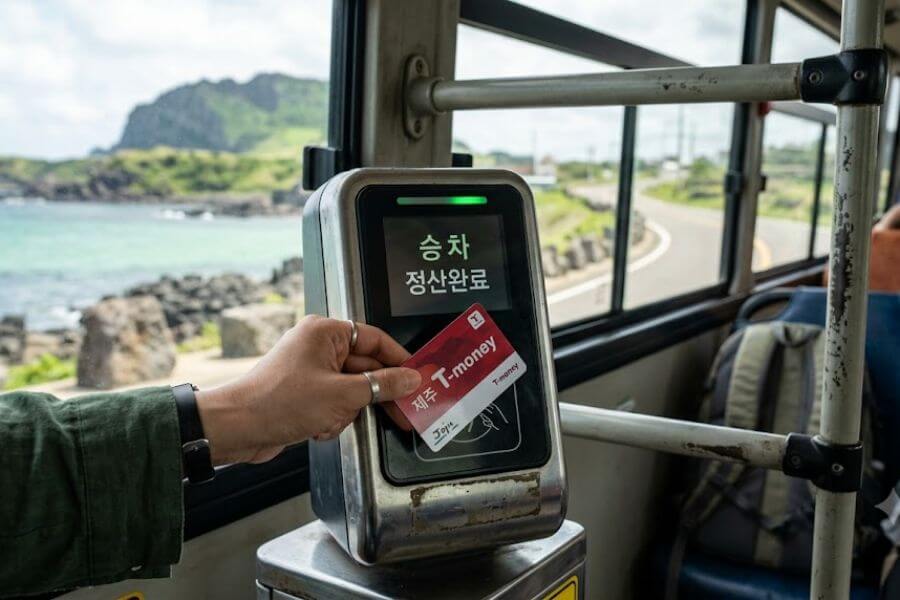
To ride these buses, you just need a transit card called a T-money card. You can buy this card at any convenience store when you arrive at the airport. You load money onto it with cash, and then you simply tap the card on a scanner when you get on the bus and tap it again right before you get off. Tapping off is incredibly important because it calculates your correct fare and gives you a free transfer if you hop onto another bus within forty minutes.
Express Buses (Red)
The red buses are your best friends for traveling long distances quickly. These are the 100-series buses, and they start at the main airport terminal. They travel on the major highways across the island and only stop at the biggest transit hubs and most popular tourist spots.
- Speed: They skip the tiny village stops, saving you hours of travel time.
- Comfort: These buses look like coach buses with large, comfortable seats and room underneath for your heavy luggage.
- Cost: They cost slightly more than regular city buses, but the time saved is worth every single penny.
Main Trunk Buses (Blue)
The blue buses are the 200-series and 300-series lines. These vehicles connect the two main cities, Jeju City in the north and Seogwipo City in the south, while passing through smaller towns along the way.
- Frequency: They run much more frequently than the red express buses.
- Purpose: You will use these to get from your hotel to local trailheads, beaches, and museums.
- Route Styles: The 200-series buses usually travel along the beautiful coastal roads, while the 300-series buses cut directly through the mountainous center of the island.
Local Feeder Buses (Green)
The green buses are the 400-series and 500-series vehicles. They are smaller than the blue and red buses because they are designed to navigate narrow village streets and quiet countryside lanes.
- Access: Use these when you want to visit a hidden cafe, a small local farm, or a specific hiking trail off the beaten path.
- Patience Needed: They do not run as often as the blue buses, so you must check the schedule ahead of time so you do not end up waiting on a quiet road for an hour.
Tourist Shuttle Buses (Yellow)
Jeju operates two special tourist shuttle bus routes, numbered 810 and 820. These are fantastic for travelers who do not want to drive.
- Route 810: This loop runs through the eastern part of the island, stopping at beautiful volcanic cones and unique museums.
- Route 820: This loop explores the western side, taking you to tea fields, art parks, and historic sites.
- Bonus Feature: These buses actually have local guides on board who can help you figure out where to get off and what to see.
Essential Navigation Apps for Car-Free Travelers
You cannot rely on standard global map apps while traveling in South Korea because local map laws prevent them from working properly. If you try to use them, you will get incorrect walking paths and outdated bus schedules. Instead, you need to download a few specific Korean apps before your flight. Set these apps to English in the settings menu, and you will never get lost.
KakaoMap
This is arguably the single most important app for your car-free journey. It provides real-time tracking for every single bus on the island.
- Live Tracking: You can actually see a little bus icon moving across a map in real time, so you know exactly how many minutes away your ride is.
- Walking Paths: It gives highly detailed walking directions, showing you every sidewalk, crosswalk, and pedestrian shortcut.
- Station Names: It lists bus stops by their exact names, making it easy to match the text on your phone screen with the signs outside your window.
Naver Map
This is another incredible mapping application that serves as an excellent alternative or companion to KakaoMap.
- Visual Search: It features amazing street-view photos so you can see exactly what a bus stop looks like before you arrive.
- Review System: It lists thousands of local restaurants and cafes with ratings and photos from local residents.
- Search Flexibility: You can type in phone numbers of places instead of their addresses, which is incredibly helpful if you do not know how to spell a Korean name.
Where to Stay for Easy Transit Access
Choosing the right base camp will make or break your car-free vacation. If you stay in a remote villa deep in the countryside, you will spend your entire trip waiting for rare feeder buses. Instead, you should choose accommodation near the island’s primary transportation hubs.
Jeju City Downtown (The Northern Hub)
Staying near the Jeju City Bus Terminal or in the lively neighborhood of Shin-Jeju is perfect for shorter trips or your first visit.
- Proximity to Airport: You can jump on a bus at the airport and arrive at your hotel room in less than twenty minutes.
- Direct Connections: The central bus terminal has direct routes pointing toward the east coast, west coast, and southern coast.
- Nightlife and Food: After a long day of exploring, you can easily walk to hundreds of restaurants, night markets, and clothing shops without needing a ride.
Seogwipo City Downtown (The Southern Hub)
If you prefer a slower, more artistic vibe with stunning ocean views, head to the southern side of the island.
- Walking Paradise: Many of Jeju’s most famous waterfalls, cliffs, and traditional markets are located directly within walking distance of downtown Seogwipo.
- Nature Focus: It feels less like a busy metropolis and more like a cozy coastal town surrounded by lush green hills.
- Transit Links: The Seogwipo Central Rotary serves as a major meeting point for blue and red buses, making travel along the southern coast incredibly simple.
Day One: Exploring the Historic North and Vibrant Jeju City
Your adventure begins the moment you touch down at Jeju International Airport. Once you grab your luggage and buy your T-money transit card, your car-free journey officially kicks into gear. Today is all about getting comfortable with the local transit system while exploring the fascinating history and food culture of the island’s northern capital.
Morning: Mysterious Rocks and Coastal Views
Walk right outside the airport arrival gates and hop onto Bus 431 or 453. Your first destination is Yongduam Rock, which translates to Dragon Head Rock. This is a spectacular volcanic formation shaped by centuries of crashing ocean waves and strong winds. As you stand on the coastal viewing platform, the rock looks exactly like a giant dragon roaring out of the dark blue sea.
According to local legend, this dragon tried to steal a precious jade stone from the mountain god but was shot down and frozen into stone right at the water’s edge. Spend some time walking along the black volcanic paths, breathing in the salty ocean air, and watching planes fly directly overhead as they land at the nearby airport.
Lunch: A Warm Bowl of Traditional Pork Noodles
After taking plenty of photos, take a short fifteen-minute walk eastward along the ocean path until you hit the famous Jeju Noodle Street. This area is packed with traditional restaurants that serve a legendary local dish called Gogi Guksu, or pork noodles.
This comforting meal features thick, chewy wheat noodles swimming in a rich, milky broth made from simmering pork bones for hours. The bowl is topped with thick, tender slices of local boiled pork, fresh green onions, and toasted sesame seeds. It is the ultimate fuel for an active traveler, and it gives you a true taste of local culinary traditions.
Afternoon: Ancient Trees and Royal History
From Noodle Street, walk to the nearby bus stop and board Blue Bus 311 or 312 for a short ride to Samseonghyeol Shrine. Tucked away inside a dense forest of ancient pine and camphor trees right in the middle of the busy city, this peaceful sanctuary is considered the birthplace of the island’s unique history.
In the center of the grounds, you will see three large depressions in the earth. Local lore says that thousands of years ago, three divine gods emerged from these three holes to found the ancient kingdom of Tamna, which was Jeju’s original name. The way the ancient tree branches lean inwards toward the three holes is truly mesmerizing, creating a quiet, magical atmosphere where you can escape the city sounds.
Evening: Street Food Extravaganza at Dongmun Market
As the sun begins to set, take a leisurely ten-minute walk north toward Dongmun Traditional Market. This massive indoor market has been running since 1945 and comes alive at night with bright neon lights, upbeat music, and talented food stall vendors.
This is your chance to sample a wide variety of affordable local snacks without needing a sit-down restaurant. You can try grilled black pork rolls stuffed with crunchy vegetables, sweet pastries shaped like tiny octopuses, and fresh seafood caught by local fishermen earlier that day. Wash it all down with a bottle of sweet, freshly squeezed juice made from Jeju mandarins.
Day Two: The Dramatic Wonders of the West Coast
Today you will travel down the beautiful western side of the island, where deep green tea fields meet massive white sand beaches and volcanic cliffs. You will see how the landscape changes dramatically from the bustling city into wide-open nature.
Morning: Walking Through Endless Green Tea Fields
Head to the Jeju City Bus Terminal early in the morning and climb aboard Express Bus 151. This comfortable ride cuts directly across the island’s interior hills, dropping you off right at the entrance to the O’sulloc Tea Museum in about forty-five minutes.
The moment you step off the bus, you will smell the clean, sweet scent of tea leaves floating on the breeze. Walk out into the sprawling, manicured green tea fields that stretch across the rolling hills as far as your eyes can see. The neat rows of bright green bushes make for incredible photos, especially in the soft morning light.
Inside the museum building, you can learn how volcanic soil creates the perfect environment for growing high-quality tea. Do not leave without visiting the cafe to order a green tea soft-serve ice cream or a hot matcha latte. The rich, creamy flavor is unmatched because the ingredients are harvested just steps away from your table.
Lunch: Modern Fusion Delights near the Coast
From the tea fields, hop onto Green Feeder Bus 784-1 or grab a quick local taxi for a brief ride down to the Handam Coastal Walk area. For lunch, explore the trendy cafes that overlook the ocean.
Many of these spots offer creative fusion dishes that blend traditional local ingredients with international styles. You can enjoy a plate of pasta tossed with fresh local garlic and ocean-caught abalone, or a massive burger featuring a juicy patty made from the island’s famous black pork. Sitting by a large window looking out at the rolling waves makes the meal taste even better.
Afternoon: Strolling Along a Volcanic Coastline
After your meal, step right outside onto the Handam Coastal Walkway. This is a beautifully paved pedestrian path that winds along the edge of the blue ocean for about one and a half kilometers. As you walk, you will be surrounded by jagged black lava rocks on one side and crystal-clear turquoise water on the other.
The contrast between the dark volcanic stone and the bright water is absolutely breathtaking. The path is completely flat and easy to navigate, making it a peaceful way to digest your lunch. It leads you directly to Gwakji Beach, a wide crescent of fine white sand famous for its cold, refreshing freshwater springs that bubble up naturally from the sea floor.
Evening: A Majestic Sunset Over the Ocean
As the afternoon turns to evening, stay on Gwakji Beach or take Blue Bus 202 to nearby Hyeopjae Beach. The west coast of Jeju is world-famous for its spectacular sunsets.
As the sun dips below the horizon, the sky lights up in brilliant shades of fiery orange, deep pink, and soft purple. From the shore, you can see the distinct silhouette of Biyangdo Island, a tiny volcanic cone rising out of the water just off the coast. It is a peaceful, unforgettable sight that will make you completely forget about cars and traffic.
Day Three: Waterfalls and Artists in Seogwipo
It is time to head south to Seogwipo, the island’s second-largest city. This region is warmer and more tropical than the north, featuring massive rock walls, hidden valleys, and a thriving community of local painters, crafters, and musicians.
Morning: A Waterfall That Tumbles into the Sea
Catch Express Bus 181 or 182 from Jeju City, which glides over the eastern shoulders of Mount Hallasan and brings you down to Seogwipo in just over an hour. Once you check into your southern hotel, take a local blue bus down to Jeongbang Waterfall.
This geographic wonder is highly unique because it is one of the only waterfalls in all of Asia that falls completely and directly into the ocean. As you walk down the wooden stairs toward the beach, you will hear a thunderous roar. The water plunges from a towering twenty-three-meter cliff straight into a black boulder-lined pool that connects directly to the sea. Standing near the base allows the cool, refreshing mist to coat your face, which feels incredible on a warm day.
Lunch: Fresh Seafood Stew at the Port
Walk ten minutes westward along the coast toward the Seogwipo Port area. Here, you will find rows of traditional seafood restaurants overlooking the fishing boats. Order a bowl of Haemul Ttukbaegi, which is a traditional seafood stew served bubbling hot inside a heavy earthenware bowl.
The broth is seasoned with local soybean paste and packed with fresh treasures from the surrounding waters, including crabs, shrimp, clams, and sea snails. The intense, savory ocean flavor is incredibly satisfying and pairs perfectly with a side of steamed rice and spicy kimchi.
Afternoon: Walking the Path of a Legendary Artist
From the port, walk up the hill to Lee Jung-seop Street. This creative pedestrian avenue is named after one of Korea’s most famous modern painters, who lived in a tiny room on this street during the hardships of the Korean War.
The street is paved with artistic bricks and lined with independent craft shops, art galleries, indie bookstores, and beautiful flower gardens. You can view the historic thatched-roof house where the artist lived and worked, then visit the modern art museum dedicated to his life. Every weekend, local artists set up outdoor tables to sell handmade jewelry, painted postcards, and unique clay souvenirs.
Evening: Cultural Discoveries at Olle Market
As night approaches, walk straight into the Seogwipo Olle Market, which connects directly to the art street. This indoor market is beautifully designed, featuring a long freshwater stream running right down the middle of the central aisle where shoppers can sit on wooden benches to rest their feet.
The market specializes in foods made with local citrus fruits, sweet red beans, and black pork.
- Must-Try Snack: Look for Kkulppang, which are sweet, crunchy breadballs coated in local honey and roasted nuts.
- Unique Gift: Grab a bag of Omaegi-tteok, a traditional chewy rice cake coated in mashed red beans and fragrant mugwort powder.
Day Four: The Majestic Volcanoes of the East Coast
Today you will travel to the wild eastern tip of the island to explore its most iconic volcanic landscapes. This area features massive green fields, dramatic ocean cliffs, and deep cultural connections to the island’s famous sea women.
Morning: Climbing the Fortress of the Sun
From Seogwipo, catch Blue Bus 201 early in the morning for a beautiful scenic ride along the eastern coast to Seongsan Ilchulbong, also known as Sunrise Peak. This breathtaking site is a giant archetypal tuff cone that erupted directly out of the shallow ocean bed thousands of years ago.
It looks like a colossal green fortress rising proudly out of the blue waves, featuring a massive, bowl-shaped crater at the top. A well-maintained wooden staircase leads you up the side of the volcano. The climb takes about twenty-five to thirty minutes of steady stepping.
As you reach the wooden viewing platforms at the summit, you are rewarded with an incredible panoramic view of the entire eastern coastline, the deep volcanic crater below, and the distant blue horizon.
Lunch: Hand-Cut Noodles with Fresh Sea Snails
After descending the volcanic staircase, walk down to the small village at the base of the peak. Stop at a local diner to try Kalguksu, which are comforting, hand-cut wheat noodles served in a rich, savory broth.
The absolute best local variation here features generous amounts of sliced abalone or small green sea snails called Bomal. The broth is thick, nourishing, and deeply satisfying after a challenging morning climb.
Afternoon: Meeting the Legendary Sea Women of Jeju
At half past one or three in the afternoon, walk down to the black sand cove located directly at the foot of Sunrise Peak. Here, you can witness a truly incredible live performance and cultural demonstration by the legendary Jeju Haenyeo, or sea women.
These inspiring women, many of whom are in their seventies and eighties, dive deep into the freezing ocean waters without any oxygen tanks or modern breathing equipment to harvest fresh sea cucumbers, octopuses, and shellfish by hand. You will hear them make a unique, high-pitched whistling sound called Sumbisori as they surface for air, which clears their lungs after a deep dive. It is a powerful, deeply moving cultural experience that you can only see on this specific island.
Evening: A Gentle Stroll to a Maritime Landmark
To finish your eastern adventure, catch Blue Bus 211 or 212 or take a short five-minute taxi ride to Seopjikoji Cape. This is a stunning, windswept coastal strip lined with dark red volcanic rocks and bright yellow fields of wildflowers.
A flat, easy dirt path guides you past grazing local horses, a historic white brick lighthouse perched on a steep hill, and a beautiful, modern glass building designed by famous architects. As the evening waves crash violently against the red rocks below, you will see why this dramatic landscape has been featured in so many popular romantic movies and television dramas.
Day Five: Mystical Forests and Hidden Trails
On your final full day, you will escape the coastal plains and head into the cool, misty, high-altitude forests that surround the base of Mount Hallasan. This is your chance to experience the island’s unique inland ecosystems and enjoy total peace away from any city sounds.
Morning: Walking Through an Ancient Volcanic Woodland
Take Blue Bus 212 or 232 from Jeju City or Seogwipo to the entrance of the Saryeoni Forest Trail. This is widely considered one of the most beautiful and healing walking paths in all of South Korea. The trail is completely flat, well-maintained, and covered in a soft layer of natural volcanic gravel and shredded wood chips that cushion your steps.
As you walk deep into the sanctuary, you will be surrounded by thousands of straight, towering cedar trees that block out the sun, creating a cool, emerald-green wonderland. The air here is incredibly crisp, rich in phytoncides, and filled with the gentle songs of wild mountain birds. It feels like stepping straight into a fantasy fairy tale.
Lunch: Hearty Mountain Comfort Food
After completing a peaceful section of the forest trail, take a short bus ride to a nearby village junction like Gyorae-ri. This specific area is famous for its traditional mountain restaurants that specialize in local chicken and hand-cut noodles.
Enjoy a steaming hot pot of chicken soup simmered with local forest mushrooms, fresh mountain herbs, ginseng, and sweet garlic. This hearty, rustic style of cooking is completely different from the seafood dishes found along the coast, offering a wonderful taste of interior mountain life.
Afternoon: Climbing a Gentle Volcanic Cone
After a filling lunch, look for a nearby Oreum. “Oreum” is the local Jeju dialect word for the hundreds of small, parasitic volcanic cones scattered across the island. One of the best and most accessible options by public transit is Abu Oreum or Darangshi Oreum.
A gentle ten-fifteen minute walk up a grassy hill brings you to the rim of a circular crater. The insides of these smaller craters are often filled with dense rings of cedar trees or rolling green pastures where local cows graze peacefully. Walking along the circular ridges provides wide-open, unblocked views of the surrounding countryside, showing you a side of the island that most car-driving tourists zoom right past without ever noticing.
Evening: A Final Farewell Dinner in the City
Catch an express bus back to your main hotel hub for your final evening dinner. To celebrate the end of a successful car-free vacation, treat yourself to a formal Korean barbecue dinner featuring authentic Jeju Black Pork.
The meat is thickly sliced and grilled right at your table over hot charcoal briquettes until the skin becomes incredibly crispy and the meat stays perfectly juicy. Wrap a piece of the grilled pork inside a fresh, crisp perilla leaf, add a dollop of savory soybean paste, and top it with a splash of Meljeot, which is a traditional hot, salted anchovy dipping sauce that locals love. It is the perfect, delicious exclamation point to end your amazing transit-friendly vacation.
Transportation Options Comparison
To help you plan your travel budget and understand your options, look over this summary table detailing the primary methods of getting around the island without a rental car.
| Transportation Method | Average Cost per Ride | Best Used For | Major Advantage | Main Disadvantage |
| Express Bus (Red) | 2,000 to 3,000 Korean Won | Long trips between major cities and the airport | Very fast, few stops, large luggage storage | Runs less often than city buses |
| Main Trunk Bus (Blue) | 1,200 Korean Won | Moving between coastal towns and major tourist sites | Runs very frequently, highly reliable | Can get crowded during morning rush hours |
| Tourist Shuttle (Yellow) | 1,200 Korean Won | Exploring the specific rural attractions of the East and West | Has helpful onboard guides, stops at multiple sites | Only operates on one specific circular loop |
| Local Taxi | 4,000 to 15,000 Korean Won | Short connections between bus stops and hidden trails | Direct door-to-door service, saves time | Much more expensive than public transit |
| Walking / Foot | Completely Free | Exploring beaches, coastal walkways, and markets | Best way to see hidden details, eco-friendly | Limited by your physical energy and stamina |
Smart Packing Tips for a Car-Free Trip
When you do not have a car trunk to store your heavy gear, everything you choose to bring along must fit comfortably on your back or inside a small daypack. Packing smart will save you from sore shoulders and make hopping on and off buses an absolute breeze.
- Footwear is Everything: Leave your high heels and stiff shoes at home. You will easily walk over ten thousand steps a day on volcanic gravel, sandy beaches, and wooden steps. Bring broken-in sneakers or sturdy hiking shoes with excellent grip.
- A Lightweight Daypack: Carry a small, water-resistant backpack to hold your daily essentials. You will need room for a reusable water bottle, your smartphone, a portable battery bank, and a light jacket.
- Layered Clothing: Jeju’s weather can change in a flash due to the giant mountain in the center of the island. It might be sunny on the beach but windy and misty up in the mountain forests. Pack a light windbreaker or a foldable rain poncho that you can quickly stuff into your bag.
- The Golden Transit Card: Always keep your T-money card in an easily accessible outer pocket or a lanyard wallet around your neck. You need to tap it within seconds of boarding the bus so you do not hold up the line of passengers behind you.
Helpful Korean Phrases for Public Transit
While the electronic signs on the buses are clearly displayed in English, knowing a few simple local phrases will help you communicate with friendly bus drivers and helpful local residents if you ever need assistance.
- “An-nyeong-ha-se-yo” — This means “Hello.” Always say this with a gentle nod of your head when you walk through the front door of a bus to greet your driver.
- “Ghal-a-ta-da” — This means “Transfer.” Use this if you want to confirm with a driver that your bus connects to another line.
- “Jeo-gi-yo” — This means “Excuse me.” Use this politely if you need to squeeze past a crowd of passengers to reach the exit doors when your stop arrives.
- “Gham-sa-ham-ni-da” — This means “Thank you.” Call this out to the driver as you tap your card and exit through the back doors of the vehicle.
Frequently Asked Questions
Can I really see the best parts of Jeju Island if I do not rent a car?
Yes, you absolutely can see all the major iconic highlights of the island using public transit. The modern bus system is specifically mapped out to connect the airport and major city centers with all the top-tier natural wonders, including Sunrise Peak, the O’sulloc green tea fields, major waterfalls, and popular white sand beaches. In fact, traveling by bus often drops you off closer to the main entrances of these parks than the massive car parking lots do, saving you from extra walking before your tour even begins.
How do I pay for my bus rides if I do not speak any Korean?
You do not need to speak any Korean to pay for your transit rides. All you need to do is buy a plastic T-money card at any convenience store inside the main airport arrival terminal. You can hand the store cashier cash to load money onto the card. Once loaded, you simply tap the card against a digital scanner located right next to the driver when you enter the bus, and tap it once more on the scanner by the rear exit doors when you step off the vehicle. The digital machines calculate the correct amount automatically without any conversation required.
What should I do if I accidentally miss my local feeder bus connection?
If you miss a rare green feeder bus while exploring the countryside, do not panic or worry about being stranded. Open up your KakaoMap or Naver Map app to check if there is an alternative blue bus stop within a short walking distance. If no other buses are nearby, you can use a local taxi app like Kakao T to call a nearby car directly to your exact location. Taxis on the island are highly affordable for short distances and accept standard T-money cards or major international credit cards for payment.
Is it safe for a solo traveler to walk along the coastal paths at night?
Jeju Island is incredibly safe and features one of the lowest crime rates anywhere in the world. The major coastal walking paths, such as the Handam Coastal Walk, are well-lit with beautiful street lamps and frequently used by local families, joggers, and travelers well into the evening hours. However, for the absolute best experience, it is always recommended to finish your nature hikes and forest trail walks before the sun goes down completely, as rural mountain forests do not have artificial street lights and can become dark very quickly.
Can I bring my large suitcases onto the local city buses?
If you are riding the red express buses, you can easily store your large suitcases and heavy bags inside the massive luggage compartments located underneath the bus body before you climb aboard. However, the regular blue and green city buses do not have these lower storage compartments. If you must travel with heavy luggage on a blue bus, try to plan your movements during the middle of the day between eleven in the morning and three in the afternoon when the buses are mostly empty, so your bags do not block the narrow aisles for local commuters.