Planning a two-week adventure from the United States to South Korea in 2026 is an incredible decision that will bring you face-to-face with futuristic cityscapes, peaceful ancient palaces, jaw-dropping street food, and gorgeous mountain landscapes. South Korea is one of the safest, most efficient, and culturally vibrant places you can visit, but going across the globe requires serious financial planning to ensure you do not run out of funds mid-vacation.
This comprehensive guide breaks down every single cost category for a fourteen-day trip, helping you build a realistic budget whether you are a young backpacker traveling on a shoestring or someone looking for a comfortable mid-range vacation experience. By understanding the 2026 economic landscape, exchange rates, and local pricing trends, you can plan an unforgettable journey without any stressful financial surprises.
Understanding the 2026 Financial Landscape and Currency Exchange
Before diving into flights and hotels, you need to understand how money works in South Korea right now in 2026. The official currency is the South Korean Won, which is abbreviated as KRW and uses the ₩ symbol. For the past several months, the exchange rate has hovered around 1 USD to 1,450 or 1,500 KRW, giving American travelers excellent buying power.
South Korea is an incredibly digital, card-friendly society. You can pay for almost everything, from a luxury dinner to a tiny convenience store snack, using your US debit or credit card, provided your bank does not charge foreign transaction fees. However, cash is still absolutely essential for two specific reasons: topping up your physical public transportation cards and buying mouth-watering snacks at local traditional markets.
When mapping out your funds, think of your budget in three distinct tiers. The budget tier relies on hostels, convenience stores, and free sights. The mid-range tier allows for private hotel rooms, casual sit-down dining, and regional train travel. The luxury tier includes top-notch accommodations, high-end barbecue dinners, and private tours.
South Korea Travel Budget Tiers for 2026
| Expense Category | Budget Tier (Per Day) | Mid-Range Tier (Per Day) | Luxury Tier (Per Day) |
| Accommodation | $15 to $30 | $60 to $120 | $200 to $400 |
| Food and Drinks | $15 to $25 | $35 to $60 | $90 to $180 |
| Local Public Transport | $4 to $7 | $8 to $15 | $25 to $50 |
| Activities and Entry Fees | $3 to $8 | $15 to $40 | $60 to $120 |
| Miscellaneous and Sim Cards | $2 to $5 | $5 to $10 | $15 to $30 |
| Total Daily Cost (No Flights) | $39 to $75 | $123 to $245 | $390 to $780 |
Master the Skies with 2026 Airfare Budgets
Your plane ticket from the United States to Incheon International Airport will likely be your single largest upfront expense. Prices fluctuate wildly based on your departure city, how early you secure your ticket, and the exact season you decide to fly.
If you are flying out of major West Coast hubs like Los Angeles or San Francisco, you will generally find cheaper rates and shorter flight times, which take around twelve to thirteen hours non-stop. East Coast hubs like New York or Atlanta, as well as Midwest cities like Chicago, feature flight times closer to fourteen or fifteen hours, resulting in slightly higher base prices.
High Season versus Low Season Fares
Timing your trip can save you hundreds of dollars. The peak travel windows in South Korea are spring, from late March through April for the cherry blossoms, and autumn, from October through early November for the brilliant red foliage. Flying during these times means economy tickets will cost between $1,200 and $1,800 round-trip.
If you are looking to save massive chunks of cash, target the shoulder or low seasons. Late winter, specifically February, and late summer or early fall, like September, offer deep discounts. During these colder or rainy months, airlines slash prices to fill seats, allowing you to grab economy round-trip tickets for anywhere from $650 to $950.
Choosing the Right Airline Category
You can pick between premium national carriers like Korean Air and Asiana Airlines, which offer top-tier meals, massive entertainment selections, and maximum comfort, or American carriers like Delta and United. For those focused entirely on saving money, watch out for multi-stop flights on Asian low-cost or regional carriers, which often add a layover in Tokyo, Taipei, or Shanghai but can cut your ticket price down significantly.
Strategic Booking Deadlines
In 2026, the sweet spot for purchasing tickets to South Korea is three to five months before your departure date. Set up price alerts on flight tracking apps during the winter months to catch flash sales. If you have credit card points or airline miles, this trip is the perfect opportunity to cash them in, as international flights provide fantastic point-to-penny value.
Where to Sleep for Fourteen Nights
South Korea offers an incredibly diverse range of places to sleep, matching every type of traveler. From ultra-modern capsule hotels to historic homes, your accommodation choice will define your daily spending. When planning a two-week itinerary, you will most likely spend around seven to eight nights in Seoul, three to four nights in the coastal city of Busan, and a couple of nights in cultural hubs like Gyeongju, Jeonju, or Jeju Island.
The Budget Experience: Hostels and Guesthouses
If you are a solo traveler or a student trying to keep costs down, the local hostel scene is fantastic. Neighborhoods like Hongdae and Itaewon in Seoul are packed with clean, modern, and highly social hostels.
A single bed in a shared dormitory room costs between $15 and $25 per night. Many of these properties offer free continental breakfasts, shared kitchens where you can cook basic meals, and common lounges where you can meet walking buddies.
The Mid-Range Choice: Business Hotels and Officetels
For couples or travelers who need their own private bathroom and space, mid-range business hotels are the gold standard in South Korea. Local brands like Shilla Stay, L7 by Lotte, and Hotel PJ offer incredibly clean, high-tech rooms with heated toilet seats, lightning-fast internet, and excellent central locations.
Expect to pay between $70 and $130 per night for a double room. Another popular option is booking an “officetel” style apartment on rental platforms, which gives you a fully functional kitchen and a washing machine for around $60 to $90 a night, saving you cash on laundry services.
The Luxury Option: Five-Star Skyscraper Suites
If you want to treat yourself to world-class luxury, South Korea boasts some of the most impressive five-star properties on Earth. Staying at the iconic Signiel Seoul, located inside the towering Lotte World Tower, or the ultra-chic Park Hyatt in Gangnam will cost between $350 and $650 per night. These hotels offer breathtaking views of the urban landscape, Michelin-starred dining options, and indoor infinity pools.
The Cultural Splurge: Traditional Hanok Stays
You cannot visit South Korea without spending at least one night in a traditional Korean home, known as a Hanok. These beautiful wooden structures feature tiled roofs, courtyard gardens, and “ondol” which is the traditional underfloor heating system.
You sleep on thick, comfortable cotton futon mattresses placed directly on the clean floor. A stay in a historic Hanok village like Bukchon in Seoul or the historic quarters of Jeonju ranges from $50 for a basic room to $180 per night for an entire private courtyard house.
Fourteen-Night Accommodation Cost Projections
| Accommodation Type | Cost Per Night | Total Cost for 14 Nights |
| Budget Dorm Bed | $18 | $252 |
| Private Budget Double Room | $45 | $630 |
| Mid-Range Business Hotel | $95 | $1,330 |
| Luxury Five-Star Hotel | $350 | $4,900 |
Feast Across South Korea on a Budget
Food is arguably the best part of traveling to South Korea, and the culinary scene is surprisingly affordable compared to major American cities. You can eat incredibly well without breaking the bank because tipping is completely non-existent and water, along with small side dishes called banchan, is always entirely free.
The Convenience Store Phenomenon
South Korean convenience stores, like GS25, CU, and 7-Eleven, are cultural icons and a lifesaver for budget-conscious travelers. They are nothing like gas station stores in the United States. They feature massive walls of gourmet instant noodles, pre-made rice triangles packed with spicy pork or tuna called samgak-gimbap, fresh fruit, boiled eggs, and hot fried chicken.
You can walk into any convenience store, heat your food in the provided microwaves, add hot water to your noodles, and eat a filling, delicious lunch at an indoor or outdoor counter for just $3 to $5. They also feature signature plastic cups filled with ice paired with delicious pouched drinks like peach iced tea or hazelnut coffee for less than $2.
Traditional Market Street Food
To experience authentic food culture while protecting your wallet, head straight to traditional markets like Gwangjang Market or Mangwon Market in Seoul, or Gukje Market in Busan. Here, you can hop between small stalls and gorge on street snacks.
A massive, crispy mung bean pancake costs around $4. A plate of chewy, spicy rice cakes cooked in a rich chili sauce runs $3. Skewers of fish cakes served with unlimited hot savory broth cost $1 each. A full dinner of various street foods will leave you absolutely stuffed for under $10.
Casual Sit-Down Restaurants
Casual neighborhood spots, often specializing in a single type of dish like stews, dumplings, or noodles, offer massive portions at great prices. Ordering a boiling stone bowl of bibimbap, a rich pork backbone stew, or a comforting bowl of cold buckwheat noodles costs between $7 and $12 per person. The price you see on the menu is exactly what you pay, making it incredibly easy to track your spending.
The Famous Korean Barbecue Splurge
You will definitely want to experience authentic Korean barbecue during your fourteen days. Restaurants charge per portion of meat, and you usually have to order at least two portions to start the table grill.
A meal of thick, juicy pork belly pieces, grilled right in front of you and wrapped in fresh lettuce leaves with garlic, costs around $15 to $25 per person. If you decide to upgrade to premium local beef, known as Hanwoo, the price will easily jump to $50 or $80 per person. Plan to budget for at least two or three barbecue nights during your two-week stay.
Cafe Culture Spending
South Korea has more cafes per capita than almost anywhere else, and the designs are wildly creative. From multi-story minimalist spaces to cafes filled with live sheep or vintage cameras, you will find yourself stopping for a drink multiple times a day. A standard iced americano or a trendy sweet cream latte generally costs between $3.50 and $6.00. If you hit up cafes every single day, this habit can quietly add $10 to $15 to your daily budget.
Navigating the Public Transit System
Getting around South Korea is an absolute dream. The country boasts one of the cleanest, fastest, and most punctual transportation networks in the world. You do not need to rent a car unless you plan on doing a deep dive into the rural countryside of Jeju Island.
The Magic of the T-Money Card
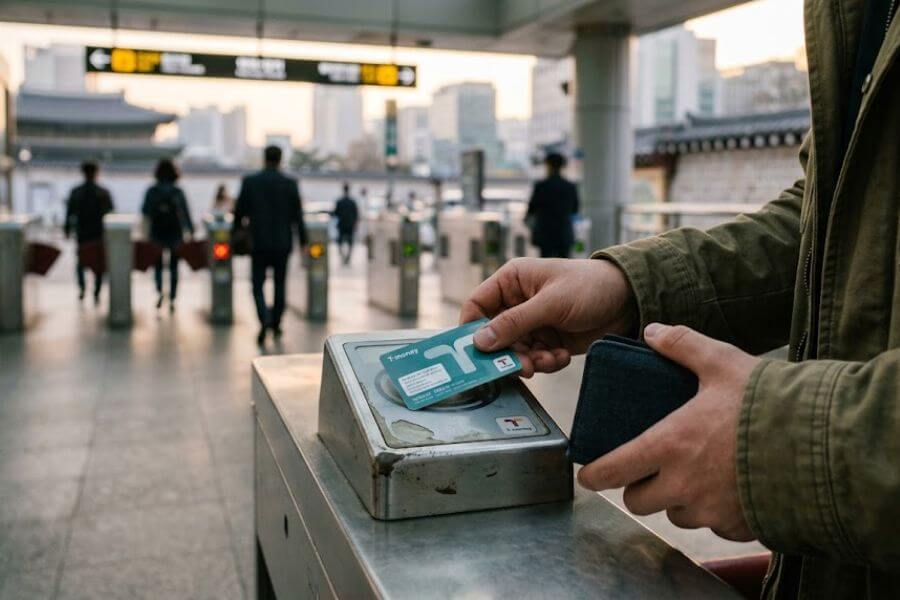
The very first thing you must do after clearing customs at Incheon Airport is buy a physical T-money card at a convenience store or an automated station kiosk. The card costs about $3 to $4 to purchase. You then load it up with cash at any subway station ticket machine.
This single card works seamlessly on all subways and city buses across the entire country, including Seoul, Busan, and Daegu. A standard one-way subway or bus ride costs roughly $1.00 to $1.20, depending on the distance traveled. You simply tap the card when you enter and tap it again right before you exit. For a two-week trip, loading $40 onto your T-money card will easily cover all your inner-city commuting needs.
High-Speed Regional Trains
To travel between major cities like Seoul and Busan, you will ride the KTX, which is South Korea’s iconic bullet train. The train whisks you across the entire country in just under two and a half hours, traveling at speeds over 180 miles per hour.
A standard one-way ticket from Seoul Station to Busan Station costs approximately $43 to $45. If you plan to hop around to multiple cities like Gyeongju, Daegu, and Jeonju within a short timeframe, look into purchasing a Korail Pass, which is an exclusive multi-day transit pass available only to foreign tourists.
Estimating Intercity and City Transit Fares
| Route or Transit Mode | Ticket Type | Approximate Cost (USD) |
| Incheon Airport to Seoul Station | AREX Express Train (One-Way) | $8.00 |
| Standard Seoul Subway Ride | Base Fare (T-Money Card) | $1.10 |
| Standard City Bus Ride | Base Fare (T-Money Card) | $1.05 |
| Seoul to Busan | KTX Bullet Train (One-Way) | $44.00 |
| Seoul to Jeonju | Standard Express Bus (One-Way) | $16.00 |
| Inner-City Taxi Ride | 15-Minute Urban Trip | $8.00 to $12.00 |
Utilizing Local Taxis and Ride Hailing
Taxis are incredibly clean, safe, and highly affordable compared to the United States. The base fare for a standard silver, white, or orange taxi starts around $3.50.
To navigate like a local, download the Kakao T app on your phone before arriving. It functions exactly like American ride-sharing apps, allowing you to hail official metered taxis, input your destination in English, and see an estimated price upfront, completely eliminating any potential language barriers with your driver.
Sights, Culture, and Entertainment
The fantastic thing about sightseeing in South Korea is that many of the very best cultural experiences are either completely free or cost less than a cup of specialty coffee. You can immerse yourself in history without draining your bank account.
Historic Palaces and Temples
Seoul features five grand royal palaces from the Joseon Dynasty, with Gyeongbokgung being the largest and most famous. The entry fee for these massive, beautifully preserved complexes is a mere 3,000 KRW, which is roughly $2.00.
Here is an insider tip that saves you cash: if you rent a traditional Korean dress, known as a Hanbok, from a nearby rental shop, your entry into all royal palaces is one hundred percent free. Renting a beautiful Hanbok for four hours costs around $15 to $25, making for an unforgettable photo opportunity while supporting local businesses.
Free Urban Attractions and Nature Trails
Many of South Korea’s iconic landmarks do not cost a single cent to explore. You can wander through the winding alleys of Bukchon Hanok Village, explore the colorful hillside houses of Gamcheon Culture Village in Busan, or hike up to the ancient city stone walls of Hanyangdoseong.
If you love nature, the country is covered in gorgeous mountains. Hiking through Bukhansan National Park on the edge of Seoul or strolling along the breathtaking coastal walking trails of Busan provides world-class views completely free of charge.
Theme Parks, Observation Decks, and Day Trips
If you want to experience modern entertainment hubs, you will need to allocate a bit more cash. Going up to the observation decks of N Seoul Tower or the sky-high Seoul Sky at the top of Lotte World Tower costs between $16 and $24.
A day pass to major immersive theme parks like Lotte World or Everland costs around $45 to $60, though you can often find deep tourist discounts online. Taking a structured, guided day trip to the Demilitarized Zone, which is the heavily fortified border shared with North Korea, is a highly recommended historical experience that runs between $45 and $65 per person.
Smart Tech and Essential Daily Extras
To keep your trip running smoothly, you need to budget for a few vital technical and administrative items before you even step foot outside your home airport.
Staying Connected with eSIM Cards
You will absolutely need mobile data to navigate using local map apps, translate restaurant menus, and check train timetables on the go. Avoid expensive international roaming plans from your US carrier.
Instead, purchase a digital eSIM online before you land. Brands like AmigoSim or local networks like KT and SK Telecom offer unlimited data eSIMs for a fourteen-day trip ranging from $25 to $35. They install directly onto your smartphone via a QR code, giving you instant connectivity the moment your plane touches down.
Emergency Medical Insurance
Never travel abroad without basic medical insurance. While South Korea has an exceptional, ultra-modern healthcare system, a sudden accident or illness could result in high out-of-pocket bills if you are uninsured. A comprehensive two-week travel insurance policy that covers medical emergencies, trip cancellations, and lost luggage costs around $20 to $30, giving you complete peace of mind.
Souvenirs and K-Beauty Shopping
South Korea is a paradise for shoppers, especially if you love skincare, cosmetics, fashion, or pop music. The Myeongdong shopping district in Seoul is lined with endless beauty stores where you can purchase high-quality face masks, serums, and sunscreens.
The great news is that many stores offer immediate tax refunds at the cash register for foreign tourists if you present your passport. Depending on how much K-beauty makeup, cute character socks, or local snacks you want to bring home for your friends, you should budget at least $50 to $150 for shopping.
Comprehensive Two-Week Total Estimates
Now that we have analyzed every single category in deep detail, let us put everything together. These total estimates assume you are traveling for exactly fourteen days and thirteen nights, coming from the United States, and maintaining a balanced itinerary across multiple cities.
Budget Backpacker Profile: Total Cost Around $1,500 to $1,800
This profile is perfect for students or young solo travelers. You fly during the low season, grab a bed in a highly rated hostel dorm, utilize the subway and bus systems exclusively, eat predominantly at convenience stores and traditional night markets, and focus almost entirely on free or low-cost cultural attractions.
Comfort Mid-Range Profile: Total Cost Around $3,200 to $3,800
This is the most common way to experience the country. You stay in clean, centrally located business hotels, eat a mix of casual local diners and nice sit-down meals, enjoy multiple nights of Korean barbecue, take the high-speed KTX train between cities, visit observation decks, take a guided tour of the border zone, and do plenty of cosmetic shopping.
Premium Luxury Profile: Total Cost Around $8,500+
For travelers who want ultimate comfort and style. You fly non-stop on premium carriers, book luxury skyscraper hotel suites, take private taxis instead of public transit, dine at high-end beef barbecue joints and fine-dining restaurants, and book private, curated cultural tours.
Frequently Asked Questions
Is South Korea an expensive country to visit compared to Japan or the United States?
South Korea is significantly cheaper to visit than the United States and is generally comparable to or slightly less expensive than Japan. While high-end tech goods and certain imported fruits can be pricey, everyday tourist expenses like clean public transportation, casual sit-down dining, and entry fees to major attractions are remarkably affordable, offering incredible value for American travelers using US dollars.
How much cash should I physically carry for a two-week trip?
Since South Korea is largely a cashless society, you do not need to carry massive wads of physical paper bills. Budgeting around $100 to $150 worth of cash per person for the entire two weeks is usually more than enough. This cash will be used exclusively to load money onto your physical T-money transit card at station kiosks and to buy cheap, delicious street food at local neighborhood markets.
Should I exchange my US dollars for Korean Won before I leave the USA?
No, exchanging your currency at American banks or US airport kiosks usually results in terrible exchange rates and high service fees. The smartest strategy is to bring a debit card that offers fee-free global ATM withdrawals. Once you land at Incheon Airport, simply walk up to a bank ATM inside the arrivals hall to withdraw local Korean Won directly at the current real-time exchange rate.
How much money can I save by avoiding taxis and using the subways?
You can save a massive amount of money over a two-week period. While local taxis are cheaper than those in the United States, costs can add up quickly in heavy city traffic. A cross-town taxi ride in Seoul might cost $15 to $25, whereas taking the incredibly clean, efficient subway costs just over $1.00, keeping your daily transit costs to a bare fraction of your overall budget.
Do restaurants in South Korea include hidden service fees or require tips?
No, tipping is absolutely not practiced anywhere in South Korea. There are no hidden service fees, sales taxes added at the end of the meal, or expectations to leave extra cash on the table. The exact price you see printed on the menu is precisely what you will pay at the register, making it incredibly simple to manage your food fund down to the exact penny.