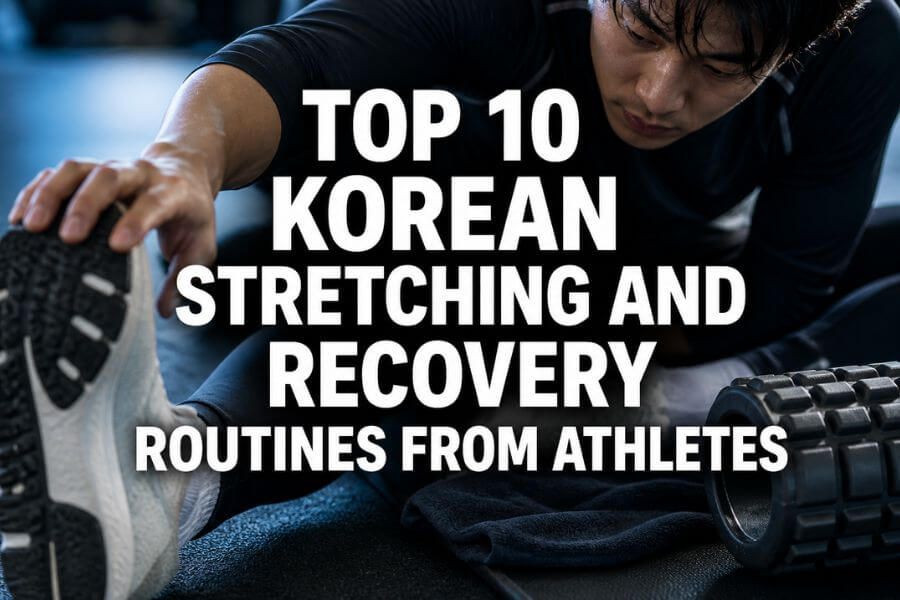
If you want to move better, feel less pain, and recover faster, stretching and recovery routines are just as important as your workouts. Korean athletes are known for their discipline, consistency, and smart recovery habits. Instead of pushing through pain, they focus on balance, flexibility, and long-term performance.
In this guide, you will discover the top Korean stretching and recovery routines used by athletes across sports like soccer, taekwondo, baseball, and track. These routines are simple, effective, and easy to follow, even if you are not a professional athlete. By adding them to your daily life, you can improve mobility, reduce soreness, and stay active without injury.
Quick Summary Table 📊
| # | Routine | Best For | Key Benefit |
|---|---|---|---|
| 1 | Dynamic Morning Stretch | Daily mobility | Wakes up muscles |
| 2 | Taekwondo Flexibility Flow | Lower body flexibility | Improves kicks and range |
| 3 | Foam Rolling Routine | Muscle recovery | Reduces soreness |
| 4 | Static Stretch Cooldown | Post workout | Prevents stiffness |
| 5 | Resistance Band Stretching | Joint health | Improves strength and flexibility |
| 6 | Yoga Inspired Recovery | Full body balance | Reduces stress |
| 7 | Breathing and Mobility Routine | Core and posture | Enhances control |
| 8 | Partner Assisted Stretching | Deep flexibility | Increases range safely |
| 9 | Ice and Heat Recovery Method | Injury recovery | Speeds healing |
| 10 | Nighttime Relaxation Stretch | Better sleep | Relaxes body |
How We Ranked These ⭐
To make this list useful and practical for you, we used the following key factors:
- Effectiveness in improving flexibility and recovery
- Ease of doing the routine at home or the gym
- Popularity among Korean athletes
- Safety for beginners and experienced individuals
- Long-term benefits for injury prevention
- Time efficiency for busy schedules
Each routine on this list is widely used and trusted, making it easy for you to choose what fits your lifestyle.
1. Dynamic Morning Stretch Routine 🌅
Starting your day with a dynamic stretch routine is one of the most common habits among Korean athletes. Instead of staying stiff in the morning, they gently wake up their bodies with movement.
This routine includes movements like arm circles, leg swings, torso twists, and light lunges. The goal is not to hold stretches for a long time but to keep your body moving in a controlled way.
When you follow this routine, you improve blood flow and activate your muscles. It helps you feel more awake and ready for physical activity. Athletes often use it before training sessions to prepare their bodies.
You can start with just five to ten minutes each morning. Focus on smooth movements and avoid pushing too hard. Over time, you will notice better flexibility and less stiffness throughout the day.
2. Taekwondo Flexibility Flow 🥋
Taekwondo athletes in Korea are known for their incredible flexibility. Their stretching routines focus heavily on the hips, hamstrings, and lower back.
This flow usually includes deep lunges, side splits progression, and controlled kicks. Unlike basic stretching, this routine combines flexibility with strength.
You are not just stretching your muscles. You are training them to stay strong at extended ranges. This is why taekwondo athletes can perform high kicks with control.
If you want to try this, start with basic stretches like seated forward folds and side lunges. Gradually work your way toward deeper stretches. Consistency is more important than intensity.
Doing this routine regularly will improve your range of motion and reduce the risk of injuries in your lower body.
3. Foam Rolling Recovery Routine 🌀
Foam rolling is widely used by Korean athletes to release muscle tension after workouts. It is simple but very effective.
You use a foam roller to apply pressure to tight areas like your calves, thighs, back, and shoulders. This helps break down muscle knots and improves circulation.
After a hard workout, your muscles can feel tight and sore. Foam rolling helps reduce that discomfort and speeds up recovery.
To get started, spend about ten to fifteen minutes rolling different muscle groups. Move slowly and pause on tender spots for a few seconds.
With regular use, you will feel less soreness and improved mobility. It also prepares your muscles for the next workout.
4. Static Stretch Cooldown 🧊
After training, Korean athletes always include a static stretching session. This is when you hold each stretch for about twenty to thirty seconds.
This routine targets muscles that were used during the workout. For example, if you did a leg workout, you focus on hamstrings, quads, and calves.
Static stretching helps your muscles relax and return to their normal length. It also reduces stiffness the next day.
Many people skip cooldowns, but this is a mistake. Without proper stretching, your muscles can stay tight, which increases the risk of injury.
You should take your time with each stretch. Breathe slowly and avoid bouncing. This routine is simple but powerful when done consistently.
5. Resistance Band Stretching 💪
Resistance bands are commonly used in Korean training programs. They add gentle tension to your stretches, making them more effective.
For example, you can use a band to stretch your hamstrings by pulling your leg upward while lying down. You can also use it for shoulder mobility exercises.
The advantage of resistance bands is control. You can adjust the intensity easily, making it safe for beginners.
This routine improves both flexibility and strength. Your muscles learn to handle tension while staying flexible.
You only need a few minutes to include this in your routine. Over time, you will notice better joint stability and improved movement quality.
6. Yoga-Inspired Recovery Routine 🧘♂️
Many Korean athletes include yoga-based stretches in their recovery routines. These movements focus on balance, breathing, and flexibility.
Common poses include downward dog, child’s pose, and cobra stretch. These poses help stretch multiple muscle groups at once.
This routine is especially useful after intense training sessions. It helps calm your body and mind while improving flexibility.
You do not need to be an expert to try this. Start with basic poses and hold them for short periods.
The combination of stretching and breathing makes this routine very effective for recovery and stress relief.
7. Breathing and Mobility Routine 🌬️
Recovery is not just about muscles. Korean athletes also focus on breathing and mobility.
This routine combines slow breathing exercises with gentle movements like spinal rotations and hip circles.
Proper breathing helps your body relax and improves oxygen flow. When combined with mobility exercises, it enhances overall movement.
You can do this routine in the morning or before bed. It takes only a few minutes but has a big impact.
Over time, you will notice better posture, improved control, and reduced tension in your body.
8. Partner Assisted Stretching 🤝
In many Korean sports teams, athletes stretch with partners. This allows deeper stretches that are hard to achieve alone.
For example, a partner can help you stretch your hamstrings by gently pushing your leg higher. They can also assist with shoulder and back stretches.
The key is communication. Your partner should apply gentle pressure and never force the stretch.
This method is very effective for increasing flexibility. However, it should be done carefully to avoid injury.
If you train with a friend or teammate, this routine can help you reach new levels of flexibility safely.
9. Ice and Heat Recovery Method ❄️
Recovery is not only about stretching. Korean athletes often use ice and heat therapy to support muscle healing.
Ice is used after intense workouts to reduce inflammation. Heat is used later to relax muscles and improve blood flow.
You can apply ice packs for about ten to fifteen minutes on sore areas. Heat therapy can be used before stretching or at night.
This combination helps reduce pain and speeds up recovery. It is especially useful after heavy training sessions.
Using this method regularly can help you stay consistent with your workouts without feeling overly sore.
10. Nighttime Relaxation Stretch Routine 🌙
Ending your day with a gentle stretch routine is another habit used by Korean athletes. It helps your body recover while you sleep.
This routine includes light stretches like neck rolls, seated forward bends, and gentle twists.
The goal is relaxation, not intensity. You want to release tension built up during the day.
Stretching before bed also improves sleep quality. When your muscles are relaxed, your body can recover more effectively.
Spend five to ten minutes on this routine each night. It is simple, but it can make a big difference in how you feel the next day.
Conclusion 🎯
Korean athletes do not rely on training alone. They understand that recovery and flexibility are key to long-term success. By adding these stretching and recovery routines to your daily life, you can improve your performance and reduce the risk of injury.
You do not need to follow all ten routines at once. Start with a few that fit your schedule and build from there. Consistency is what matters most.
When you take care of your body, you will move better, feel stronger, and enjoy your workouts more. These routines are simple, proven, and effective, making them perfect for anyone who wants to stay active and healthy.
Frequently Asked Questions ❓
How often should you do stretching and recovery routines?
You should aim to stretch daily, even if it is just for a few minutes. Recovery routines like foam rolling or yoga can be done three to five times per week, depending on your activity level.
Can beginners follow these routines safely?
Yes, all of these routines can be adjusted for beginners. Start slowly, avoid pushing too hard, and focus on proper form. Over time, you can increase intensity.
What is the best time to stretch during the day?
Dynamic stretches are best in the morning or before workouts. Static stretches are ideal after workouts or before bed when your muscles are warm.
Do you need special equipment for these routines?
Most routines require little to no equipment. A yoga mat, foam roller, and resistance band can help, but they are not always necessary.
How long does it take to see results from stretching?
You may start to feel improvements within a few weeks if you stay consistent. Increased flexibility and reduced soreness become more noticeable over time with regular practice.