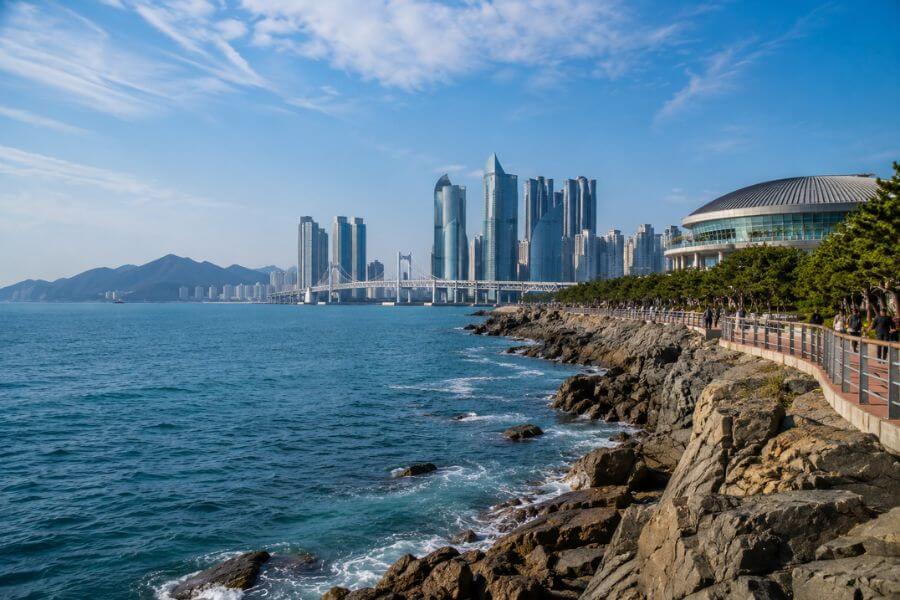
You stand on the edge of a massive cliff. Below you, the deep blue waves of the Pacific Ocean crash against ancient grey rocks. The salty breeze carries the faint scent of grilled seafood and ocean air. If you turn around, you see a sprawling modern skyline rising up against lush green mountains. This is Busan, the second largest city in South Korea. It is a place where nature and city life live together in perfect balance.
Many travelers spend all their time in Seoul, but they miss out on the true heartbeat of the South Korean coast. Busan offers a completely different rhythm. It is laid back but full of energy. It is historic but ultra modern. It gives you the chance to explore hidden temples on rocky cliffs, walk through colorful mountain villages, and eat fresh seafood straight from the morning catch.
This guide will help you navigate this massive coastal city. Over four days, you will experience everything that makes this city special. You will explore the busy alleyways of old markets, relax on wide sandy beaches, and watch the city light up at night. Get ready to experience the perfect coastal getaway.
Key Takeaway
The Ultimate Busan Travel Strategy: To get the absolute most out of your four days, group your sightseeing by geographic zones. Busan is an incredibly long city stretched out along the coast. It takes a lot of time to travel from the far west side to the far east side. By focusing on one specific area each day, you spend less time sitting on trains or buses and more time enjoying the beautiful ocean views, ancient temples, and amazing local food.
Day 1: The Historic Heart and Local Culture
You start your journey in the southern and western parts of the city. This area is the historic core of Busan. It holds the memories of the city’s past, especially from the mid-twentieth century when millions of people moved here during difficult times. Today, these neighborhoods are vibrant, colorful, and packed with unique cultural experiences.
Morning: The Colorful Streets of Gamcheon Culture Village
Your first morning begins high up in the hills. Gamcheon Culture Village is often called the machinery of dreams or the Machu Picchu of Busan. As you walk up the steep roads, you see rows of pastel-colored houses stacked like Lego blocks on the mountainside.
In the 1950s, this village was a poor neighborhood built by refugees. Over the years, local artists and residents came together to transform the entire area into an open-air art gallery. Every alleyway features bright murals, quirky sculptures, and hidden art installations.
As you wander through the narrow, twisting stairs, keep your eyes open for the famous statue of the Little Prince and his fox friend. They sit on a ledge looking out over the entire village and the distant harbor. The view from this spot is spectacular. You can see the colorful roofs contrast against the deep blue water of the port below.
Make sure to wear supportive shoes this morning. The hills are very steep and the stairs can be uneven. It is smart to buy a small paper map at the tourist information center near the village entrance. This map lets you collect stamps at different art checkpoints, which helps guide you through the maze of paths without getting lost.
Lunch: Street Food Discoveries at Gukje Market and BIFF Square
After descending from the hills, you head down to the bustling center of Nampo-dong. Here you find Gukje Market, one of the largest traditional markets in the entire country. This market started during the wartime era as a place for people to trade goods, and it still retains its old-world charm today.
As you walk through the covered market lanes, you find everything from clothing and household goods to rare vintage items. The real highlight here is the food alley. You will see local vendors sitting on low stools right in the middle of the street, cooking up fresh treats on hot grills.
Just a short walk from Gukje Market is BIFF Square, named after the Busan International Film Festival. The ground here is stamped with the handprints of famous movie directors and actors from all over the world. But most people come here today for the incredible street food stalls.
You must try the signature snack of Busan: Ssiat Hotteok. This is a sweet, chewy pancake made from rice flour. The cook fries it in oil until the outside is crispy and golden brown. Then, they cut it open and stuff it with a sweet mix of brown sugar, cinnamon, sunflower seeds, pumpkin seeds, and black sesame seeds. It is warm, sweet, crunchy, and savory all at the same time.
Afternoon: Cinematic Views from Jagalchi Fish Market and Yongdusan Park
Next, you cross the main road to reach Jagalchi Fish Market. This is the largest seafood market in South Korea, and it is a complete sensory experience. The ground floor of the massive building is filled with hundreds of stalls run by friendly older women, affectionately known as Jagalchi Ajumma.
You will see open tanks filled with every marine creature imaginable. There are giant crabs, strange looking sea squirts, wriggling octopuses, and rows of fresh fish on ice. The ground can be wet and slick, so watch your step as you explore. If you are adventurous, you can buy raw seafood on the first floor and take it upstairs to the second floor, where restaurant staff will cook it fresh for you right on the spot.
Once you finish your market exploration, walk back toward Nampo-dong and take the outdoor escalator up to Yongdusan Park. This peaceful green park sits on a small mountain right in the middle of the busy shopping district. It offers a quiet escape from the loud streets below.
In the center of the park stands the Busan Diamond Tower. You can ride the elevator up to the observation deck to get a full view of the city. From the top, you can see the entire harbor, the massive container ships out at sea, the colorful hills of Gamcheon, and the modern bridges that connect the different sides of the city. It is the perfect place to understand the layout of Busan.
Evening: Shopping and Neon Lights along Gwangbok-ro Street
As the sun begins to set, walk back down the mountain to Gwangbok-ro Fashion Street. This area turns into a river of neon lights as night falls. It is a paradise for shoppers and people watchers.
You will find a mix of global brands, famous Korean cosmetics shops, and tiny independent clothing boutiques. The street is closed to cars, making it wide and comfortable for walking. Often, you will encounter local musicians or dance crews performing right on the sidewalk.
For dinner, explore the side streets to find a traditional Korean barbecue restaurant. Busan is famous for its pork dishes, so look for a place serving Samgyeopsal (grilled pork belly) or Dwaeji Gukbap (a rich, savory pork soup served with rice). The soup is a true local comfort food. It comes hot and bubbling in an earthenware bowl, and you can season it yourself using salted shrimp, chives, and spicy pepper paste.
Day 2: Dynamic Beaches and Coastal Trails
On your second day, you move east toward the more modern and famous coastal areas of Busan. This day is all about sandy shores, dramatic coastal walks, and spectacular modern architecture. You will see how the city transforms from traditional markets into a glittering beachfront wonderland.
Morning: Walking Across the Sea at Songdo Beach and Skywalk
Start your morning at Songdo Beach, which was the very first public beach established in Korea back in 1913. Today, it is famous for its incredible Cloud Trails skywalk. This is a long pedestrian bridge that curves out into the ocean, raised high above the water.
Sections of the walkway feature thick glass floors. As you walk over them, you can look straight down between your feet to see the ocean waves churning below. It feels like you are walking directly on top of the sea. Along the bridge, you will pass cool stone statues that tell local legends about fishermen and dragons.
After walking the trail, head to the Songdo Bay Station to ride the Busan Air Cruise. This is a marine cable car system that takes you across the open water to Amnam Park on the opposite cliff.
The cabins have large windows, and some even have transparent glass floors. The ride offers stunning views of the cliffs, the red bridge in the distance, and the deep blue ocean below. Once you land at Amnam Park, you can take a short walk along the forested coastal trails to enjoy the peaceful forest air mixed with ocean breezes.
Lunch: Cold Noodles at a Local Hotspot
For lunch, head back toward the central transit areas to try another classic dish of the city: Milmyeon. These are wheat noodles served in a cold broth, which became popular during the war when buckwheat was hard to find.
The dish comes in two main styles. Mul Milmyeon serves the noodles in an icy cold broth made from meat bones and medicinal herbs, topped with slices of pork, cucumbers, and a hard-boiled egg. Bibim Milmyeon uses the same noodles but drops the broth in favor of a thick, sweet, and spicy red pepper sauce.
It is a refreshing meal that cools you down instantly, especially after a morning of walking in the sun. Local people like to use kitchen shears to cut the long noodles into smaller pieces before eating, making them much easier to enjoy with chopsticks.
Afternoon: The Scenic Coastal Paths of Taejongdae Resort Park
After lunch, take a bus or taxi down to the southern tip of Yeongdo Island to visit Taejongdae Resort Park. This park is famous for its magnificent evergreen forests and towering rock cliffs that drop dramatically into the ocean. The park is named after a king from ancient Korean history who loved to come here to shoot arrows and admire the views.
Because the park is massive, the best way to get around is by riding the colorful Danubi Train. This small tram hops between the main observation points inside the park. Your first major stop should be the Yeongdo Lighthouse.
To get the best views, you must walk down a long series of wooden stairs that lead to the edge of the cliffs below the lighthouse. Here, you will find giant rock platforms where you can stand and look out at the endless horizon. On clear days, you can even see the faint outline of Tsushima Island in Japan.
Right at the bottom of the cliffs, you will notice small tents where local women sell fresh, raw seafood. They slice up sea clams, sea urchins, and octopuses right on the rocks, serving them with spicy sauce to brave diners sitting on small plastic stools right next to the crashing waves.
Evening: Sunset and Modern Vibes at Gwangalli Beach
As late afternoon turns into evening, head over to Gwangalli Beach. This crescent-shaped beach is famous for its fine, soft sand and its front-row view of the Gwangan Bridge, also known as the Diamond Bridge.
This massive two-tier bridge stretches right across the ocean bay. As night falls, the entire bridge lights up with thousands of computer-controlled LED lights. The colors and patterns change constantly in time with different seasons and holidays.
The street running parallel to the beach is packed with trendy coffee shops, lively bars, craft beer breweries, and fine dining restaurants. Grab a seat by a window or right out on the patio so you can watch the light show over the water.
For dinner, you can try fresh raw fish at one of the massive raw fish centers at the end of the beach. You choose your fish on the ground floor, and then head up to a restaurant upstairs to eat it while looking out through giant glass windows at the illuminated bridge.
Day 3: Modern Luxuries and Golden Sands
Your third day takes you deeper into the wealthy and hyper-modern eastern side of Busan. This is the area of luxury skyscrapers, high-end shopping, world-famous beaches, and beautiful ocean walkways. You will experience the modern, international side of South Korean city life.
Morning: Haeundae Beach and the Green Escape of Dongbaek Island
Start your day early at Haeundae Beach, the most famous and popular beach in South Korea. In the peak of summer, this wide stretch of white sand is completely covered in a sea of red and yellow sun umbrellas. In the quiet morning hours, however, it is peaceful and serene. The sand is clean, and the water is calm.
Walk along the shoreline toward the west end of the beach to reach Dongbaek Island. This area used to be a true island, but over time, sand accumulation connected it directly to the mainland. Today, it is a beautiful public park covered in thick pine trees and red camellia flowers.
A smooth wooden boardwalk traces the edge of the rocky coastline here. As you walk along the path, you will hear the ocean waves below and smell the pine needles above. The trail leads you directly to the Nurimaru APEC House.
This is a modern, glass-walled building constructed to host the APEC summit meeting in 2005. The design mimics the shape of a traditional Korean pavilion mixed with modern architectural lines. You can enter the building for free to see the grand conference hall and look out at the beautiful views of the ocean and the Gwangan Bridge from a new angle.
Lunch: Comforting Beef Soup at Haeundae Market
After your morning walk, step off the beach and walk a few blocks inland to Haeundae Traditional Market. This long, narrow market street is lined with clean stalls selling fresh fruits, souvenirs, clothing, and lots of prepared foods.
For lunch, look for a restaurant serving Haeundae Amso Galbi (marinated beef short ribs) or a warm bowl of Gukbap. Another highly popular local choice here is pork stir-fry served with rice, or spicy rice cakes known as Tteokbokki.
The market stalls display their foods out front, so you can point to exactly what looks good to you. Many stalls specialize in fried seafood and vegetables. You pick out a tray of raw items, and the cook dips them in batter and fries them a second time so they are piping hot and extra crispy when you sit down to eat.
Afternoon: Sky Capsules and Coastal Walks at Haeundae Blueline Park
Following lunch, make your way to Mipo Station, which is the starting point for the Haeundae Blueline Park. This is a brilliant modern reuse of an old, abandoned coastal railway line that was turned into a scenic tourist attraction.
You have two choices for rides here. On the ground level, the Beach Train runs along the tracks from Mipo to Songjeong Beach. But the real star attraction is the Sky Capsule. These are tiny, colorful, four-person cabins that travel slowly along an elevated track high above the walking path.
As your little capsule glides along at a slow, relaxing pace, you get a bird’s-eye view of the rocky cliffs, green pine trees, and the vast blue sea. The ride takes about thirty minutes to travel from Mipo to Cheongsapo Station.
When you arrive in Cheongsapo, a quaint fishing village, walk out onto the Daritdol Skywalk. This modern lookout stretches seventy-two meters out over the ocean and has a transparent glass floor at the very tip. It gives you a thrill as you watch the green ocean currents swirl directly beneath your shoes.
Evening: Luxury Shopping and Futuristic Views at Centum City and Marine City
As evening approaches, take the subway to Centum City Station. Here you will find Shinsegae Centum City, which is officially recognized as the largest department store in the world. This massive complex is a city within a city. It contains countless floors of luxury shopping, an indoor ice-skating rink, a giant movie theater, and Spaland, an enormous, luxury traditional Korean bathhouse.
If you have time, spending two hours at Spaland is a fantastic experience. It features dozens of different hot tubs, saunas built with ancient yellow earth or salt crystals, and relaxing open-air foot baths. It is the ultimate way to rest your muscles after days of heavy walking.
For your final evening destination, head to Marine City, which sits right next to the ocean bay. This neighborhood is famous for its concentration of hyper-tall luxury residential skyscrapers, including the iconic Haeundae Doosan We’ve the Zenith towers.
Walk along the coastal promenade known as Cinema Street. As you look up, the giant glass towers look like something out of a futuristic movie. The absolute best part of this walk is looking across the water to see the Gwangan Bridge fully lit up. The reflection of the skyscraper lights and the bridge lights dancing on the dark ocean water is one of the most iconic views in Asia.
Day 4: Spiritual Escapes and Hidden Gems
On your final day in Busan, you will escape the modern city center to discover the spiritual side of Korea and explore some of the more relaxed, hidden gems along the northern and eastern coasts. It is a day filled with ancient traditions and natural beauty.
Morning: The Cliffside Wonder of Haedong Yonggungsa Temple
You must wake up early on this morning to catch the sunrise at Haedong Yonggungsa Temple. Unlike most Korean Buddhist temples, which are nestled deep inside quiet mountain forests, this stunning fourteenth-century temple sits directly on a rocky cliff overlooking the open ocean.
As you enter the temple grounds, you pass a row of tall stone statues representing the twelve zodiac signs. Then, you descend one hundred and eight stone stairs, which represent the one hundred and eight worldly anxieties in Buddhist teaching. The stairs are lined with old stone lanterns and shaded by bamboo trees.
As you turn the final corner, the temple opens up before you. The main halls, painted in bright reds, greens, and golds, sit perched precariously on the black volcanic rocks. Below them, the massive ocean waves crash violently, sending white sea foam into the air.
Walk across the stone bridge to the main courtyard. You will find giant golden statues, peaceful shrines, and people praying quietly. The best spot is the large stone viewing platform located to the left of the main complex. Standing here, listening to the deep chanting of the monks mix with the natural roar of the ocean waves, is an unforgettable spiritual experience.
Lunch: Fresh Bamboo Shoots and Duck BBQ in Gijang
After exploring the temple, travel a little further north into the quiet district of Gijang. This area is famous for its clean environment, agricultural products, and fresh seafood.
For lunch, look for a traditional countryside restaurant that specializes in Ori Bulgogi, which is spicy marinated duck barbecue. The meat is cooked on a large hot plate right at your table, mixed with fresh chives, onions, mushrooms, and local garlic.
The duck meat is tender, rich, and flavorful without being overly greasy. It is traditionally eaten by wrapping the grilled meat inside fresh lettuce or perilla leaves, along with a dab of savory bean paste. At the end of the meal, the server will take your leftover sauce and mix it with hot rice, seaweed flakes, and toasted sesame oil to create a crispy fried rice right on the grill plate.
Afternoon: The Surfing Vibes and Café Culture of Songjeong Beach
After a heavy lunch, head down to Songjeong Beach. This beach is much quieter and less crowded than Haeundae or Gwangalli, making it a favorite hideout for local residents. It is also known as the surfing capital of Busan because the shallow waters and consistent wind create excellent waves for water sports.
You can spend your afternoon walking along the soft sand, watching surfers catch waves, or relaxing in one of the many modern architectural cafés that line the coast. The café culture in this area is world-class.
Many of these buildings are multi-story glass structures designed by award-winning architects. They feature wide outdoor terraces, minimalist furniture, and giant windows that frame the ocean like a living painting. Grab a hot pour-over coffee or a cold matcha latte, find a comfortable seat facing the water, and take some time to write in your travel journal or sort through your trip photos.
Evening: A Peaceful Walk at Jukdo Park and Your Farewell Dinner
To conclude your final afternoon, walk to the end of Songjeong Beach to find Jukdo Park. This is a small, forested hill that juts out into the ocean. It gets its name from the wild bamboo trees that grow abundantly across the island.
A well-maintained path leads you up through the trees to a beautiful traditional wooden pavilion called Songiljeong. This pavilion sits at the very edge of the cliffs. It is a peaceful, uncrowded spot where you can sit quietly and watch the sun dip below the mountains behind the city, casting a deep orange and purple glow across the sky.
For your final dinner in Busan, head back into town to try an incredible local seafood hot pot known as Haemul Tang. This dish features a giant metal pot filled to the brim with fresh crabs, prawns, clams, squid, and seasonal shellfish, all swimming in a spicy, aromatic broth packed with green onions and bean sprouts.
As the soup boils, the seafood infuses the broth with a deep, rich ocean flavor that is incredibly satisfying. It is a celebratory, communal meal that perfectly encapsulates the coastal spirit of Busan. It is the perfect way to toast to the completion of an amazing four-day adventure.
Neighborhood Transit Comparison
To help you understand the vast layout of Busan, this table compares the main characteristics, transit options, and primary vibes of the major neighborhoods you will visit during your four-day itinerary.
| Neighborhood | Main Attractions | Primary Vibe | Best Transit Options |
| Nampo-dong & Yeongdo | Gamcheon Village, Jagalchi Market, Taejongdae Park | Historic, cultural, busy traditional markets | Subway Line 1, Local public buses for hills |
| Gwangalli | Gwangalli Beach, Gwangan Diamond Bridge | Youthful, artistic, vibrant nightlife scene | Subway Line 2, Beachfront walking paths |
| Haeundae & Marine City | Haeundae Beach, Dongbaek Island, Luxury Skyscrapers | Modern, upscale, high-end international luxury | Subway Line 2, Coastal boardwalks |
| Gijang & Osiria | Haedong Yonggungsa Temple, Scenic Cafés | Peaceful, spiritual, wide open coastal landscapes | Donghae Train Line, Taxis from Haeundae |
Four-Day Itinerary Summary
This table provides a quick, structured look at your complete four-day schedule, showing you exactly where to go for each segment of the day to maximize your time.
| Day | Morning Activity | Lunch Spot | Afternoon Activity | Evening Destination |
| Day 1 | Gamcheon Culture Village | Gukje Market & BIFF Square | Jagalchi Fish Market & Yongdusan Park | Gwangbok-ro Fashion Street BBQ |
| Day 2 | Songdo Beach Skywalk & Cable Car | Central Milmyeon Restaurant | Taejongdae Resort Cliffs & Lighthouse | Gwangalli Beach Light Show Dinner |
| Day 3 | Haeundae Beach & Dongbaek Park | Haeundae Traditional Market | Blueline Park Sky Capsules | Centum City & Marine City Night Walk |
| Day 4 | Haedong Yonggungsa Temple | Gijang Duck Barbecue Spot | Songjeong Beach Surfing & Cafés | Jukdo Park Pavilion Farewell Hot Pot |
Frequently Asked Questions
What is the best way to get around the city during this tour?
The public transportation network in Busan is highly developed, clean, and efficient. The backbone of the system is the urban subway network, which features four main lines that connect the major tourist hubs like Nampo-dong, Gwangalli, and Haeundae. To travel to locations built on steep hills or further out along the coast, such as Gamcheon Village or Taejongdae Park, you can easily use the extensive network of city buses.
You should purchase a rechargeable transportation card, known as a T-Money or Cashbee card, at any convenience store or subway station when you first arrive. You simply tap this card when entering and exiting trains or buses. It automatically calculates your fares and applies free transfer discounts between systems, saving you from having to buy individual paper tickets every time you travel.
Is language a major barrier for English-speaking travelers?
You will find that navigating Busan as an English speaker is highly manageable. All major public transit systems, including subway announcements, ticket machines, and street signs, feature clear English translations alongside Korean characters. Most popular restaurants in tourist heavy zones like Haeundae or Gwangalli offer menus with English descriptions or clear color photographs that make ordering very straightforward.
While older shopkeepers in traditional markets like Jagalchi or Gukje may not speak fluent English, they are incredibly friendly and expert at communicating through hand gestures, smiles, and digital calculators to show prices. Downloading a translation application on your mobile phone before your trip can help you translate written text on local signs or product labels instantly.
When is the ideal season to plan a visit to Busan?
The absolute best times of year to visit this coastal city are during the spring months of April through May, and the autumn months of October through November. During these transitional seasons, the weather is generally dry, sunny, and pleasantly warm, making it comfortable to spend long hours walking along the coastal trails and exploring mountain villages. Spring brings beautiful pink cherry blossoms across the city, while autumn offers stunning red and gold foliage in the mountain parks.
Summer, from July through August, is the busiest season because crowds from all over the country rush to Haeundae and Gwangalli beaches. However, summers are also hot, highly humid, and prone to heavy monsoon rains. Winter, from December through February, is cold and windy due to ocean currents, though it remains significantly milder and less snowy than winter in Seoul.
How does the food culture in Busan differ from Seoul?
Because Busan is a major port city wrapped around mountains and the ocean, its food culture is deeply shaped by its geography and its unique history. While Seoul focuses heavily on royal palace traditions and modern global food trends, Busan food is hearty, rustic, and heavily focused on fresh marine ingredients and pork.
Dishes like cold wheat noodles and savory pork soup were born out of necessity during wartime resource shortages, using ingredients that were accessible at the time. The seafood here is also exceptionally fresh and local. Instead of eating heavily processed dishes, dining in Busan often means enjoying whole fish, crabs, and shellfish cooked simply over open flames or boiled in spicy broths right after being harvested from the sea.