Key Takeaways
Planning a trip to see the cherry blossoms in South Korea requires patience and a bit of flexibility. The season is short, typically lasting only a week or two, and the dates change every year based on the winter weather. You should start your planning by looking at the southern coast first, as the blossoms appear there before moving north toward Seoul. You will find that the best way to enjoy the season is to remain mobile, moving with the flowers as they bloom. Popular spots like the Yeouido area in Seoul or the Jinhae Gunhangje Festival attract massive crowds, so if you prefer a quieter experience, you should look for palace grounds or university campuses outside of the main tourist hubs. Remember to pack layers because spring weather in Korea can shift from warm afternoons to chilly evenings very quickly.
Introduction to the Spring Transformation
There is something truly magical about the way South Korea changes when spring arrives. For most of the year, the landscape is shades of green, brown, or grey. Then, almost overnight, the world turns soft pink and white. This is the cherry blossom season, a time when the entire country seems to hold its breath to watch the flowers open. For a local, this season means the end of a long, cold winter and the promise of warmth. For you, as a visitor, it is an opportunity to see the country in a way that feels like walking through a painting.
When you arrive, you might notice the energy of the people change. Streets that were once just paths for commuting become lively walkways filled with families, couples, and friends. Everyone is out with their cameras, looking for the perfect shot of a branch heavy with delicate blooms. The air feels different, too. It is crisp but carries a hint of something floral and fresh. You do not just see the cherry blossoms in Korea; you experience them. They frame the historic palaces, they line the rivers, and they even create tunnels of light over the city streets. This guide will help you understand where to go, when to be there, and how to make the most of your time chasing the petals.
Understanding the Cherry Blossom Forecast
If you want to catch the blooms at their peak, you need to understand how the season works. It is not a fixed date. The flowers follow the temperature. Because South Korea is a peninsula, the southern tip warms up first. The blossoms usually start on the southern island of Jeju, then spread to the coastal cities like Busan and Jinhae, and eventually work their way up to the capital, Seoul.
The forecast is usually released by meteorologists in early spring, sometimes even in late winter. You should keep an eye on these updates starting in February. However, you should also know that nature is unpredictable. A late cold snap can delay the bloom, and a warm week can push it forward. Flexibility is your best tool. If you plan a rigid schedule months in advance, you might arrive just as the petals are falling or before they have opened. Try to leave a few days of buffer time in your travel plan so you can adjust your itinerary if the flowers are running behind or ahead of the predicted schedule.
The bloom cycle typically lasts about one to two weeks in any given location. The first few days are the budding phase. Then comes the peak, which is when the trees are fully white and pink. Finally, there is the “blossom blizzard” phase, where the petals start to fall. While many people only want to see the peak, the falling phase is arguably just as beautiful. Walking through a street where the ground is covered in a carpet of pink petals is a memory you will keep forever.
The Best Regions for Viewing
To help you decide where to go, we can break down the country by its distinct character. Each region offers a different backdrop for your photos and your memories.
Seoul: The Urban Bloom
Seoul is where you will find the contrast between history and modernity. You can walk through ancient royal palaces like Gyeongbokgung and see the pink trees framed against traditional wooden architecture. It creates a stunning juxtaposition that you cannot find anywhere else. The Yeouido neighborhood is the most famous spot in the city. It is a large island in the middle of the Han River, and it hosts a famous street lined with over 1,000 cherry trees. When they bloom, it looks like a tunnel of flowers.
Jinhae: The Festival Capital
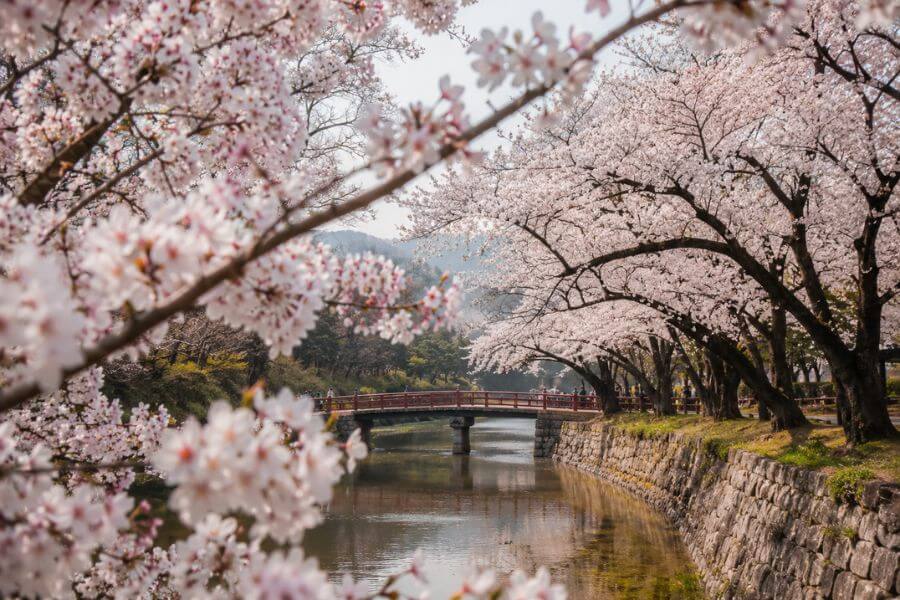
If you are serious about cherry blossoms, you must consider Jinhae. This city hosts the Jinhae Gunhangje Festival, which is the largest cherry blossom festival in the country. The city is essentially turned into a massive garden. The most iconic spot is the Romance Bridge, which crosses a stream lined with trees that meet in the middle to create a canopy. Because this place is so famous, it gets incredibly busy. You should try to arrive as early in the morning as possible to avoid the worst of the crowds.
Busan: Blossoms by the Sea
Busan offers a different vibe. You get the cherry blossoms combined with the salty air of the ocean. The Dalmaji-gil Road is a famous scenic drive that turns into a pink path during the spring. You can combine a trip here with a visit to the beach or a walk through the colorful hillside villages like Gamcheon Culture Village. The cherry blossoms here tend to bloom earlier than in Seoul, making it a great place to start your journey.
Gyeongju: Blossoms and History
Gyeongju is often called a museum without walls. It is an ancient capital, and the entire city feels like a step back in time. You will find cherry blossoms surrounding ancient burial mounds, which are massive, grass-covered hills that look like small mountains. Walking through the city feels peaceful. It is less frantic than Seoul and offers a more contemplative experience.
Jeju Island: Where Spring Starts
Jeju is the warmest part of Korea, so it is usually the first place to see the color. The island is beautiful in its own right, with volcanic landscapes and coastline roads. In spring, you will often see cherry blossoms alongside yellow canola flowers. This contrast of bright yellow and soft pink is a unique sight that you will not want to miss.
Planning Your Trip
You should start your planning by looking at the southern regions first. If you arrive in late March, start in Jeju or Busan. If you are arriving in early April, Seoul is your best bet. Because this is a very popular time to travel, you should book your flights and trains well in advance. Trains in Korea are very efficient, and you can get from the south to the north in a few hours.
Accommodation
During the peak blossom weeks, hotels and guesthouses fill up quickly, especially in Jinhae during the festival. You should look for accommodation that is near a subway station or a bus terminal. This gives you the freedom to move around easily. If you are on a budget, consider staying in a “gositel” or a guesthouse, which are very common and affordable. If you want a more luxurious experience, the large hotels in Seoul offer beautiful views, though they will cost a premium during the blossom season.
Transportation
The KTX high-speed train is the best way to travel between cities. It is fast, clean, and comfortable. Within cities, the subway system is extensive and easy to navigate. Most signs are in both Korean and English, and the transit cards work for buses and subways. You should buy a rechargeable transit card as soon as you arrive.
Clothing
Spring weather is tricky. You might start the day with a light jacket, only to find yourself sweating by noon and shivering by sunset. The best strategy is to wear layers. Bring a comfortable pair of walking shoes because you will be on your feet all day. The streets can be uneven, especially in the palace areas or near mountain trails, so leave the fancy heels at home.
Etiquette and Cultural Tips
When you visit these spots, remember that you are sharing the space with thousands of locals who are also celebrating the season. It is common for people to set up picnic mats under the trees to eat and drink. This is a big part of the culture. If you want to join in, visit a local convenience store, buy some snacks and drinks, and find a spare patch of grass.
However, you should always be mindful of your surroundings. Do not climb the trees to get a better photo. This is strictly forbidden and hurts the trees. Also, be careful with your trash. Korea is very good about recycling and keeping public spaces clean. There are usually trash bins available, but if you do not see one, hold onto your trash until you find one.
If you are taking photos, be patient. You will often see lines of people waiting to take a picture in front of a specific tree or at a popular landmark. Do not jump in front of them or try to shove your way to the front. Respect the “queue” that locals have informally formed.
Comparing the Viewing Locations
To help you choose where to focus your time, consider the different atmosphere of each major spot.
The Urban Experience in Seoul:
- Best for: Seeing city life mixed with nature.
- Pros: Easy to access, great food, lots of history.
- Cons: Can be very crowded, especially on weekends.
The Festival Atmosphere in Jinhae:
- Best for: The absolute most cherry blossoms in one place.
- Pros: Incredible photo opportunities, festive spirit.
- Cons: Very far from Seoul, travel takes time, extreme crowds.
The Coastal View in Busan:
- Best for: Combining beach time with cherry blossom viewing.
- Pros: Relaxed pace, beautiful ocean views, unique geography.
- Cons: Spread out, so you will need to use taxis or buses a lot.
The Historical Vibe in Gyeongju:
- Best for: A slower, more peaceful pace.
- Pros: Less hectic, beautiful ancient architecture.
- Cons: Sights are spread out across the city, need transport to get between them.
The Early Bloom in Jeju:
- Best for: Starting your season early or extending it.
- Pros: Beautiful island scenery, canola flowers included.
- Cons: Requires a flight or ferry to reach from the mainland.
Frequently Asked Questions
When does the cherry blossom season usually start?
The season typically begins in late March in the southern parts of the country and moves north toward Seoul by early April. The exact dates change every year based on the temperatures from the previous winter. If the winter is colder than usual, the blooms might be delayed. If it is a mild winter, they might arrive early. You should check the official forecasts starting in February to get a more accurate idea of when to book your tickets.
How do I track the forecast once I am in Korea?
There are several apps and websites that provide real-time updates. Local news outlets also broadcast the “blossom front” forecast daily. Once you arrive, you can ask hotel staff or locals for their advice, as they often know which specific streets or parks are hitting their peak. Social media platforms like Instagram are also very helpful. Search for location tags in Korea, and you will see real-time photos of what the trees look like that very day.
Are the crowds always this bad?
If you go to the most famous spots on a weekend, yes, it will be crowded. The cherry blossoms are a massive cultural event, and everyone wants to see them. If you want to avoid the worst of the crowds, try to visit during the weekdays. Early mornings, right at sunrise, are also a fantastic time to explore. The light is soft and beautiful for photography, and the parks are often mostly empty before the lunch rush begins.
What is the best way to travel between cities?
The KTX high-speed train is the gold standard for travel in South Korea. It connects the major cities like Seoul, Busan, Gyeongju, and others efficiently. You can book tickets online in advance. For shorter distances or regions not connected by the KTX, express buses are a great alternative. They are comfortable, frequent, and affordable. You should avoid driving a rental car if you can, as parking in major cities during the blossom season is difficult and expensive.
Can I visit multiple cities in one trip?
Yes, absolutely. Since the blossoms move from south to north, you can essentially follow the spring. Start in Busan or Jeju, spend a few days there, and then take the train north to Gyeongju or Seoul as the temperatures rise. This way, you can “chase” the peak bloom for a longer period. Just be sure to keep your luggage light, as moving between cities frequently can be tiring if you have heavy bags.
What should I wear during the blossom season?
Think about comfort and layers. You will likely walk a lot, so bring your most comfortable sneakers. Weather-wise, it is unpredictable. A light t-shirt might be fine in the afternoon sun, but you will want a sweater or a windbreaker for the evening. If you want to participate in the local culture, you might notice many people wearing light-colored, pastel clothing to match the pink flowers, but there is no specific dress code. Just be prepared for both warm and cool temperatures.
Are there other flowers to see besides cherry blossoms?
Yes, spring in Korea is a riot of color. In addition to cherry blossoms, you will see forsythia, which are bright yellow bushes, and azaleas, which come in vibrant pinks and purples. On Jeju Island, you will also see massive fields of yellow canola flowers. So, even if you arrive slightly before or after the cherry blossom peak, you will still find plenty of beautiful flowers to enjoy throughout the country.
Is it expensive to visit during this time?
The cherry blossom season is considered high season for domestic and international tourism. Flight prices and hotel rates in popular areas often increase during these few weeks. To manage your budget, try to stay slightly outside of the main tourist hubs, use public transportation instead of taxis, and enjoy the local street food. The experience of seeing the blossoms is free, so you can enjoy the main attraction without spending a dime.
Do I need to speak Korean to get around?
You do not need to be fluent. While learning a few basic phrases like “hello,” “thank you,” and “excuse me” is polite and helpful, many signs in public transport areas and tourist attractions are written in English. Most younger people in the cities have a working knowledge of English, and navigation apps work well. As long as you have a phone with maps and a transit card, you will have no trouble getting to the best viewing spots.
Is the cherry blossom season a good time for food?
It is a fantastic time for food. During the festivals, vendors line the streets selling everything from traditional Korean snacks to modern treats. You will find grilled meats, spicy rice cakes, fried snacks, and sweet pancakes. Picnicking under the trees is a core part of the experience, so you should stop by a local market, pick up some fresh fruit or traditional pastries, and enjoy them while sitting on a mat beneath the falling petals. It is one of the most relaxing things you can do during your entire trip.