South Korea is often known for K-pop, technology, beauty products, and fast internet. But in recent years, the country has also become one of the world’s most ambitious players in renewable energy. From giant offshore wind farms to hydrogen innovation, South Korea is investing heavily in cleaner and smarter energy systems.
If you look closely, you can see how the country is trying to reduce pollution, improve energy security, and create future industries at the same time. While some larger countries produce more renewable energy overall, South Korea stands out because of how quickly it is adapting advanced technology and building long-term clean energy strategies.
In this article, you will discover the top 10 ways South Korea is leading the world in renewable energy and why these efforts matter for the future of global energy.
Quick Summary Table ⚡
| Rank | Renewable Energy Leadership Area | Why It Matters |
|---|---|---|
| 1 | Offshore Wind Development | Massive clean electricity generation |
| 2 | Hydrogen Economy Investments | Future fuel for transport and industry |
| 3 | Smart Grid Technology | More efficient energy management |
| 4 | Solar Panel Innovation | Better efficiency and urban use |
| 5 | Green Hydrogen Shipping | Cleaner global logistics |
| 6 | EV Battery Leadership | Supports renewable transportation |
| 7 | Renewable Energy Storage | Solves energy reliability issues |
| 8 | Floating Solar Farms | Maximizes land use efficiency |
| 9 | Eco Friendly Industrial Zones | Reduces emissions from manufacturing |
| 10 | Government Green New Deal | Accelerates national clean energy goals |
How We Ranked These 🌱
We used several important factors to determine how South Korea is leading the renewable energy industry worldwide:
- Global influence and innovation
- Investment size and long-term plans
- Technological advancement
- Real-world environmental impact
- International partnerships and exports
- Scalability for future growth
- Contribution to carbon reduction
- Public and private sector involvement
1. Offshore Wind Development 🌊
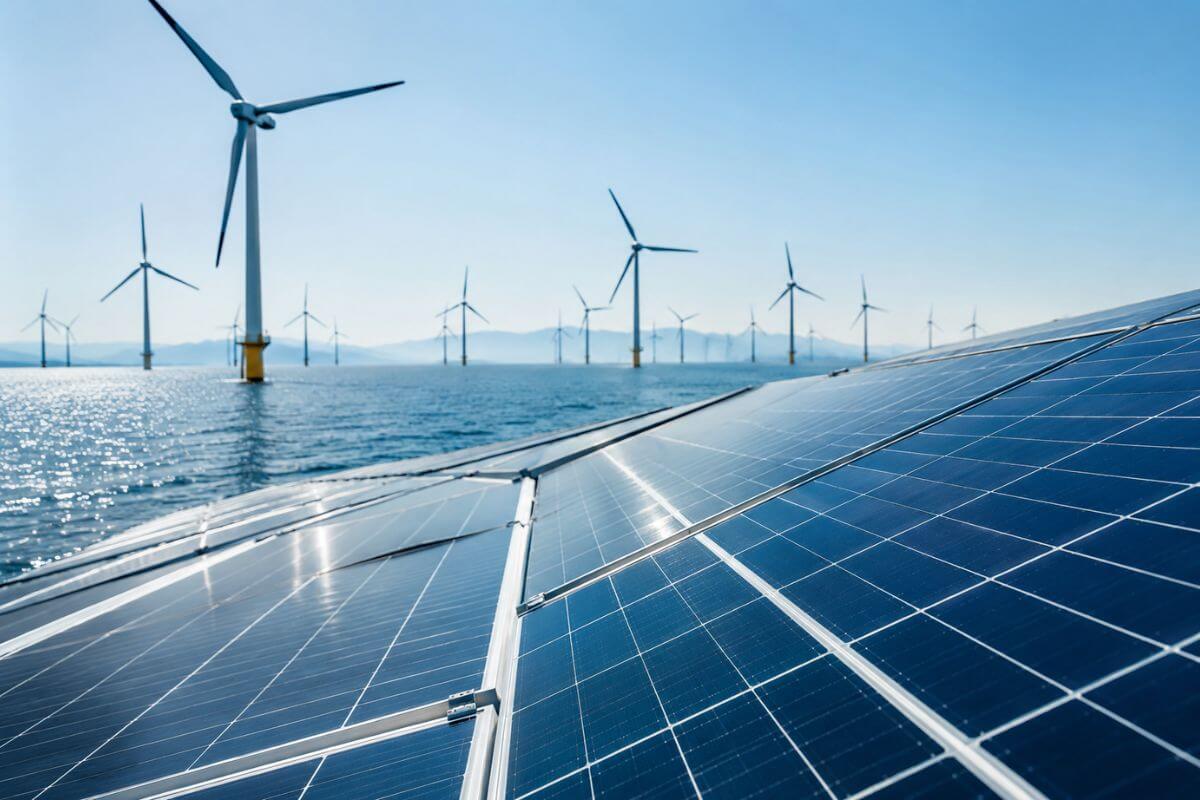
South Korea is rapidly becoming a major force in offshore wind energy. The country is building some of the largest offshore wind projects in Asia, especially along its southern and western coastlines.
Unlike traditional wind farms on land, offshore wind turbines can generate more electricity because ocean winds are stronger and more consistent. South Korea has recognized this advantage and is heavily investing in large-scale projects.
One major reason this matters is geography. South Korea has limited land space, so offshore energy allows the country to produce clean power without using valuable urban or farming areas.
These projects are also creating thousands of jobs in engineering, shipbuilding, maintenance, and manufacturing. South Korea’s experience in heavy industries gives it a strong advantage in constructing massive offshore platforms and turbines.
As more countries look for large-scale renewable energy solutions, South Korea’s offshore wind expertise could become a major export industry.
2. Hydrogen Economy Investments 🔋
South Korea is one of the world’s biggest supporters of hydrogen energy. The government and major companies are investing billions into hydrogen production, transportation, and storage systems.
Hydrogen is important because it can power vehicles, factories, and even entire cities while producing fewer emissions. Many experts believe hydrogen could become one of the most important clean fuels in the future.
South Korea is already building hydrogen fueling stations and supporting hydrogen-powered buses, trucks, and passenger vehicles. Companies are also working on hydrogen-powered ships and industrial systems.
The country’s long-term goal is to create a complete hydrogen economy where clean hydrogen becomes part of daily life. This includes using renewable electricity to create green hydrogen, which is considered one of the cleanest energy sources available.
Few countries are moving as aggressively in this space, which places South Korea near the front of the global hydrogen race.
3. Smart Grid Technology 🧠
South Korea is one of the global leaders in smart grid technology. A smart grid is an advanced electricity network that uses digital systems to improve efficiency and reduce waste.
Traditional power systems are often inefficient because electricity production and usage are harder to balance. Smart grids solve this problem by collecting real-time data and adjusting energy flow automatically.
This technology becomes even more important when renewable energy is involved. Solar and wind power can change depending on weather conditions, so smart systems help stabilize the grid.
South Korea has invested heavily in intelligent energy infrastructure, especially on Jeju Island, which has become a testing ground for future smart energy systems.
These systems help consumers monitor energy usage, lower electricity bills, and reduce overall energy waste. Businesses also benefit because smart grids improve reliability and reduce downtime.
By combining renewable energy with advanced digital systems, South Korea is helping shape the future of efficient energy management.
4. Solar Panel Innovation ☀️
Even though South Korea does not have huge deserts or endless open land, it has become highly innovative in solar technology.
South Korean companies are producing high-efficiency solar panels that can generate more power in smaller spaces. This is extremely important in crowded urban environments where space is limited.
You can now see solar panels integrated into apartment buildings, factories, parking areas, and public infrastructure across the country. The government has also encouraged rooftop solar installations to increase local energy production.
Another major advantage is manufacturing quality. South Korean companies are known for advanced engineering and durable products, which helps their solar technology compete globally.
The country is also exploring next-generation solar materials and flexible solar systems that can be used in more creative ways.
This focus on efficiency and urban adaptability makes South Korea stand out in the global solar energy market.
5. Green Hydrogen Shipping 🚢
South Korea is home to some of the world’s largest shipbuilding companies, and now those companies are helping lead the shift toward greener shipping.
Shipping is one of the world’s biggest pollution sources because cargo ships use massive amounts of fuel. South Korea is developing ships powered by cleaner fuels like hydrogen and ammonia.
This is especially important because global trade depends heavily on ocean transportation. Cleaner shipping technology could significantly reduce worldwide carbon emissions.
South Korean shipbuilders are designing smarter and more energy-efficient vessels that meet stricter environmental standards.
Because the country already dominates much of the global shipbuilding industry, its clean shipping innovations could influence international logistics for decades.
This gives South Korea a unique position where renewable energy development also strengthens its export economy.
6. EV Battery Leadership 🔌
Electric vehicles rely heavily on advanced battery technology, and South Korea is one of the global leaders in this field.
Major Korean companies produce batteries for electric cars used around the world. These batteries help reduce dependence on fossil fuels and support cleaner transportation systems.
Renewable energy and electric vehicles work together closely. As countries increase solar and wind energy production, electric vehicles become even cleaner because they can charge using renewable electricity.
South Korean battery companies are constantly improving battery safety, charging speed, and energy density. This makes electric vehicles more practical and affordable for everyday users.
The country’s strong battery industry also supports energy storage systems that help stabilize renewable power grids.
By leading the battery industry, South Korea is helping accelerate the global shift away from gasoline-powered transportation.
7. Renewable Energy Storage 🏭
One of the biggest challenges with renewable energy is storage. Solar panels do not generate electricity at night, and wind turbines depend on weather conditions.
South Korea is investing heavily in advanced energy storage systems to solve this problem.
Large battery systems can store extra electricity during peak production times and release it later when demand increases. This improves grid reliability and reduces energy waste.
South Korean companies are among the world leaders in battery manufacturing, which gives the country a strong advantage in energy storage technology.
The government is also supporting research into safer and longer-lasting storage systems for homes, factories, and utility companies.
Strong storage infrastructure is critical for any country that wants to rely more heavily on renewable energy, and South Korea understands this very well.
8. Floating Solar Farms 🌅
South Korea has become famous for its floating solar farms, which place solar panels on lakes, reservoirs, and other water surfaces.
This approach solves a major problem faced by densely populated countries: limited land availability.
Floating solar systems also offer additional benefits. Water helps cool the solar panels, which can improve efficiency and energy production. At the same time, the panels reduce water evaporation in some areas.
South Korea has developed several large floating solar projects that attract international attention for both engineering and environmental innovation.
These projects show how creative thinking can overcome geographic limitations while expanding renewable energy production.
Many countries are now studying South Korea’s floating solar systems as possible models for their own clean energy development.
9. Eco Friendly Industrial Zones 🏙️
South Korea is transforming many industrial areas into cleaner and more sustainable production centers.
Factories traditionally consume huge amounts of energy and produce significant pollution. South Korea is working to reduce this impact by integrating renewable energy into industrial operations.
Some industrial zones now use solar panels, energy-efficient systems, hydrogen technology, and advanced recycling methods.
The government is also encouraging companies to reduce emissions and adopt greener manufacturing practices.
This transition is especially important because South Korea has a strong manufacturing economy. Cleaner factories can reduce environmental damage while helping companies remain competitive in a global market that increasingly values sustainability.
The country’s industrial transformation demonstrates that economic growth and renewable energy development can work together.
10. Government Green New Deal 📈
South Korea’s Green New Deal is one of the country’s most ambitious renewable energy programs.
The initiative focuses on expanding renewable power, improving energy efficiency, supporting electric vehicles, and reducing carbon emissions across the economy.
Large government investments are helping fund clean infrastructure projects, research programs, and green job creation.
The Green New Deal also encourages businesses and local governments to participate in environmental improvements.
One major strength of this strategy is long-term planning. Instead of focusing only on short-term projects, South Korea is building a broader vision for a low-carbon future.
This national-level commitment sends a strong message that renewable energy is not just a trend in South Korea. It is becoming a core part of the country’s future economy and identity.
Conclusion 🌏
South Korea is proving that a country does not need massive land size or huge natural resources to become a renewable energy leader. Through innovation, advanced technology, and long-term planning, the country is building a cleaner and smarter energy future.
From offshore wind farms and hydrogen technology to floating solar systems and advanced batteries, South Korea continues to push renewable energy in creative and practical ways.
These efforts are not only helping the environment. They are also creating jobs, supporting global industries, and positioning South Korea as a major force in the future energy economy.
As renewable energy becomes more important worldwide, South Korea’s strategies may influence how many other countries approach sustainability and clean power development.
Frequently Asked Questions ❓
Is South Korea fully powered by renewable energy?
No, South Korea still uses fossil fuels and nuclear energy for a large portion of its electricity. However, the country is rapidly increasing its investments in renewable energy to reduce carbon emissions over time.
Why is hydrogen energy important to South Korea?
Hydrogen offers a cleaner alternative for transportation, shipping, and industrial use. South Korea sees hydrogen as a major future industry that can improve energy security and reduce pollution.
What makes South Korea good at renewable energy technology?
South Korea has strong technology companies, advanced manufacturing capabilities, and heavy investment in research and development. These strengths help the country innovate quickly in the clean energy sectors.
Are floating solar farms effective?
Yes, floating solar farms can be highly effective. They save land space, improve panel efficiency through water cooling, and support renewable energy growth in densely populated regions.
How does South Korea compare to other renewable energy leaders?
Countries like China, Germany, and the United States produce larger amounts of renewable energy overall. However, South Korea stands out for advanced technology, smart energy systems, hydrogen development, and rapid innovation.