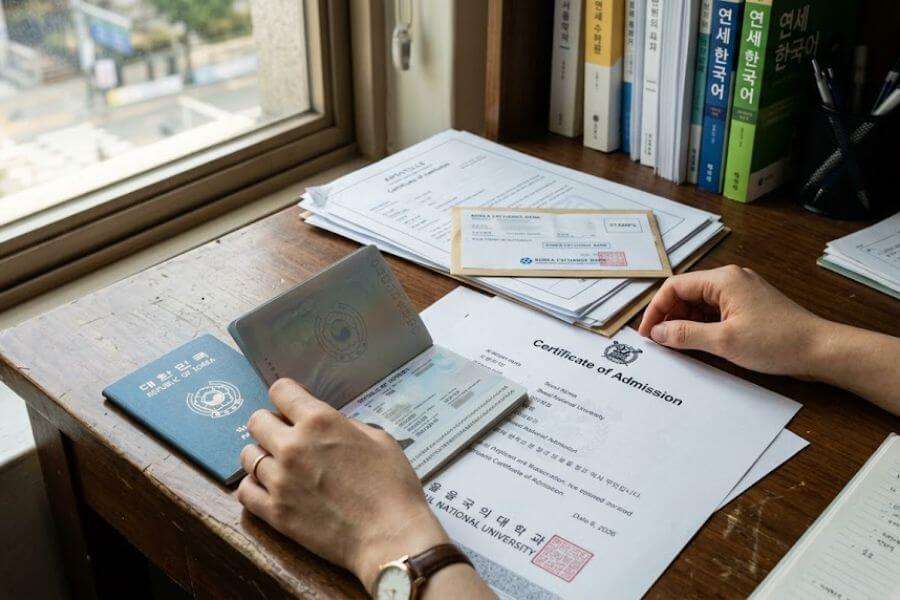
You landed in South Korea with a backpack, a camera, and a ninety-day tourist entry stamp. You planned to eat street food in Seoul, visit temples in Gyeongju, and wander the beaches of Busan. But then something shifted. You fell in love with the fast-paced life, the kind people, the deep culture, and the beautiful language. Now, ninety days do not feel like enough. You want to stay, learn, and build a life here. Instead of packing your bags to go home, you can turn your holiday into a grand academic adventure. Transforming your temporary tourist status into a long-term student visa right from inside the country is a clear path forward if you know the exact steps to follow.
Understanding Your Current Tourist Status
Before you can change your legal status, you must know exactly what your current status is. Most people who arrive in South Korea for travel do not hold a physical visa glued inside their passport. Instead, they enter under specific short-term categories that determine what they can and cannot do while living in the country.
The Visa-Waiver Entry
If you come from a country that has a special travel agreement with South Korea, you likely entered using the K-ETA system. This is often called a visa-waiver entry or a B-2 status. It grants you thirty, sixty, or ninety days of exploration time depending on your passport country. While this status is perfect for checking out cafes and attending K-pop concerts, it comes with strict limitations. You are a guest who is visiting, not a resident who is staying. Understanding that this status is a temporary authorization is the first step toward transforming your stay into something permanent.
The Short-Term Tourist Visa
Travelers from nations without a visa-waiver agreement must apply for a physical tourist visa at a Korean embassy before they board their flight. This is usually called a C-3 visa. It allows you to stay in the country for up to ninety days for sightseeing, visiting family, or participating in short-term events. Just like the visa-waiver entry, this short-term visa does not automatically give you the right to sign long-term apartment contracts, open local bank accounts, or register for multi-year university programs. It is a ticking clock that requires your full attention if you wish to stay.
Why Timing Matters for Your Stay
The most critical factor when planning a transition from a traveler to a student is the number of days left on your current stamp. The Korean immigration service looks closely at your remaining days when you submit an application to change your status. If you try to submit your papers when you only have two days left on your tourist stay, you will run into massive trouble.
Immigration officers need time to process your file, and they generally prefer that you submit your application at least three to four weeks before your current tourist period ends. If your time runs out while they are reviewing your file, you could find yourself in a stressful legal gray area. Keeping a close eye on your calendar is your most important job during this initial phase.
Finding the Right School and Program
You cannot get a student visa without a school that is willing to sponsor you. South Korea takes education very seriously, and the government only grants long-term student status to individuals who enroll in recognized, certified educational institutions.
University-Run Language Institutes
If your primary goal is to master the Korean language, your target will be a university-run language institute. Almost every major university in Seoul and the surrounding provinces has an intensive language program designed specifically for international students. These programs are structured around four distinct terms per year, matching the seasons of spring, summer, fall, and winter.
To qualify for a long-term student visa, which is known as the D-4 visa, you must enroll in at least two consecutive terms of language study. This means you are committing to at least six months of classes. Enrolling in just one term will not give you enough hours to satisfy the immigration department’s visa requirements.
Regular Degree Programs
If you already speak fluent Korean or want to pursue a full degree taught in English, you will look at undergraduate or graduate programs. Enrolling as a full-time university student unlocks the D-2 visa. This path is different from the language institute path because it follows the standard academic calendar, with semesters starting in March and September.
Applying for a bachelor’s, master’s, or doctoral degree involves a much more competitive admissions process. You will need to submit personal essays, recommendation letters, and proof of language proficiency, such as a TOPIK score or an IELTS score, depending on the language of instruction.
Getting Your Acceptance Letter
Once you select your school and submit your application, the university will review your background. If they accept you, and after you pay your tuition fees, they will issue two vital documents. The first is the Certificate of Admission, often called the CoA. The second is the business registration certificate of the university. These documents serve as official proof that a authorized institution is sponsoring your stay in South Korea. Without these specific papers, your dream of switching your status will stop before it even starts.
The Core Documents You Must Prepare
Gathering your paperwork is the most time-consuming part of the entire visa journey. You will need to act like a professional researcher to collect every single item on the immigration checklist. Missing even one signature can delay your application by weeks.
Academic Proof and Diplomas
To study at a higher level in South Korea, you must prove that you completed your previous education. If you are applying for a language program or an undergraduate degree, you need to show your high school diploma or graduation certificate. If you are aiming for a graduate school program, you must provide your bachelor’s degree certificate.
The immigration office will not accept a simple photocopy of your diploma. They require official, verified proof that your school is real and that your graduation is legitimate. This means your academic documents must undergo a specific verification process before they can be used in Korea.
The Financial Requirements
Living and studying in South Korea requires money, and the government wants to be absolutely sure that you can support yourself without working illegally. For a language institute student on a D-4 visa, you must demonstrate that you have a specific amount of money in a bank account. This amount usually ranges from ten thousand to thirteen thousand American dollars, depending on the current guidelines and the location of your school.
For a regular degree student on a D-2 visa, the financial requirement is higher, often requiring around twenty thousand American dollars. You will need to obtain an official bank balance certificate. If the money is in a Korean bank account under your name, the process is much smoother. If the money is in your parents’ account back home, you must provide birth certificates and relationship proofs to show that you have legal access to those funds.
Passport and Photos
Your passport is your identity, and it must be in pristine condition. The immigration department requires your passport to have a long validity period remaining, usually at least six months beyond your intended stay in Korea, though a year or more is highly recommended.
You will also need to provide fresh passport-style photographs. South Korea has strict rules for these photos. They must feature a plain white background, your face must be completely visible without hair blocking your eyebrows or ears, and the size must be exactly three and a half centimeters by four and a half centimeters. You can find photo booths inside major subway stations across Seoul that print these exact sizes.
The Background Check
In recent years, immigration authorities have increased their focus on safety and security. Depending on your nationality and the specific program you are entering, you might be required to submit a clean criminal history record from your home country. This document proves that you have no major legal issues back home. Obtaining this document from inside South Korea can be tough, which is why many smart travelers order it before they leave their home country or use specialized global agencies to handle it remotely.
The Magic of Document Legalization
Simply having your diplomas and background checks printed out is not enough. A piece of paper from a school in another country means very little to a Korean immigration officer unless it has been properly legalized for international use.
What is an Apostille
If your home country is a member of the Hague Convention, you will need to get an Apostille stamp on your academic documents and criminal background check. An Apostille is an official international certificate attached to your documents by a designated authority in your home country, such as a department of state or a ministry of foreign affairs. This stamp tells the Korean government that your document is completely genuine. You must secure this stamp before you submit your visa application.
Consular Confirmation for Non-Apostille Countries
If your home country does not participate in the Hague Convention, you must follow a different path called consular confirmation. This requires a double layer of approval. First, your documents must be certified by the relevant government office in your home country. Second, you must take those certified documents to the South Korean embassy or consulate located in your home country to receive a final stamp of verification. This process requires patience and clear communication with diplomatic offices.
Getting Certified Translations
Korean immigration officers work in the Korean language. If your original documents, such as birth certificates, bank statements, or graduation letters, are written in a language other than English or Korean, you must have them translated.
The translations cannot be done by you or a friend. They must be completed by a professional translator who provides a certificate of translation accuracy. In some cases, the immigration office might even require these translations to be notarized by a public notary in South Korea to ensure complete accuracy.
Navigating the Korean Immigration System
Once your school accepts you and your documents are perfectly organized, you must enter the official world of Korean immigration. This requires using their digital systems and understanding how physical offices are organized.
Setting Up Your HiKorea Account
The central hub for all visa affairs in South Korea is a portal known as HiKorea. This website is where you will manage your legal stay, check your visa status, and communicate with immigration authorities.
Your first task is to visit this website and create a user account. The portal operates in multiple languages, which helps you fill out forms and navigate options. You will need to become familiar with this digital space because it will track your entire journey from a tourist to a resident.
Booking Your Immigration Appointment
You cannot simply walk into an immigration office in South Korea and ask to change your visa. The system relies entirely on a strict reservation model. Through the HiKorea portal, you must use the reservation management system to book a specific date and time for your visit.
Slots fill up incredibly fast, especially during the peak months of January, February, July, and August, when thousands of international students arrive for upcoming school semesters. It is common to find that the next open appointment is four or five weeks away. This is why booking your slot the moment you receive your university acceptance letter is essential.
Choosing the Right Immigration Office
South Korea divides its immigration offices by jurisdiction. You cannot just pick the office with the prettiest building or the shortest wait time. You must visit the specific office that handles the district where you are currently living.
Your jurisdiction is determined by your current address, which could be a university dormitory, a shared house, or a short-term studio apartment. If you show up at the Seoul Immigration Office but your apartment is located in an area managed by the Seoul Southern Immigration Office, the officers will refuse to take your paperwork, and you will lose your appointment.
+-----------------------------------+-----------------------------------+
| Office Name                       | Major Districts Covered           |
+-----------------------------------+-----------------------------------+
| Seoul Immigration Office          | Jongno, Jung, Eunpyeong,          |
|                                   | Seongbuk, Gangbuk                 |
+-----------------------------------+-----------------------------------+
| Seoul Southern Office             | Mapo, Seodaemun, Yeongdeungpo,    |
|                                   | Gangseo, Gwanak                   |
+-----------------------------------+-----------------------------------+
| Incheon Immigration Office        | Incheon Metropolitan Area,        |
|                                   | Bucheon                           |
+-----------------------------------+-----------------------------------+
| Busan Immigration Office          | Busan Metropolitan Area,          |
|                                   | Gimhae, Yangsan                   |
+-----------------------------------+-----------------------------------+
The Day of Your Appointment
The morning of your immigration appointment can feel intimidating, but being thoroughly organized will give you immense confidence. Treat this day like an interview for a dream job.
What to Wear and Bring
When you walk into the immigration center, you want to project an appearance of respect and seriousness. Wearing neat, professional, or smart-casual clothing can set a positive tone for your interaction with the officer.
Bring a sturdy folder containing all your original documents, along with a complete set of clear photocopies for each one. Officers appreciate it when you can immediately hand over a copy without making them leave their desk to scan your originals. Do not forget to bring your physical passport, your current K-ETA or tourist visa paperwork, and a blue or black pen for last-minute corrections.
Filling Out the Application Form
When you arrive at the office, look for the document stands containing paper forms. You need to locate Form Number One, which is the Integrated Application Form. This single document handles extensions, changes of status, and card issuances.
You must check the box that says “Change of Status” and fill out every section with completely accurate information. Write your name exactly as it appears in your passport, write your current Korean phone number clearly, and provide your full Korean address down to the specific room number.
Paying the Processing Fees
Changing your visa status inside South Korea is not free. You will need to pay a fee for the status change itself, which is typically around one hundred thousand Korean Won. You will also need to pay an additional thirty thousand Won for the creation of your physical residency card.
Most immigration offices require you to pay these fees using specialized ATM machines located right inside the building or by purchasing revenue stamps at an on-site bank teller window. Make sure you carry enough physical cash with you, as these specific fee payment machines often do not accept international credit cards.
The Waiting Game
When your appointment time arrives, your assigned number will appear on a digital screen above one of the service counters. Walk up, greet the officer politely, and hand over your organized stack of documents. The officer will flip through your papers, verify your university enrollment, examine your bank certificates, and check your passport stamps.
If everything is perfect, they will accept your file and hand you a paper receipt known as a Certificate of Application for Permit. This receipt acts as your temporary legal identification while your passport information is updated in the state database. The review process usually takes anywhere from two to six weeks.
Comparing Your Options: In-Country Switch vs. Border Run
While changing your visa status while staying inside South Korea is highly convenient, it is not the only way to move from a tourist to a student. Some individuals choose or are forced to do what is called a border run. Understanding how these two methods compare will help you make the best choice for your personal situation.
The Benefits of Staying in Korea
The greatest advantage of switching your status without leaving South Korea is the lack of travel stress. You do not have to buy expensive, last-minute plane tickets to neighboring countries like Japan or Taiwan. You do not have to pack up your luggage, leave your current room, or worry about flight delays.
Furthermore, you keep your current lifestyle moving forward without interruption. You can explore your local neighborhood, practice your language skills with friends, and prepare for your upcoming classes while the government processes your file in the background.
When a Quick Trip Abroad is Better
There are specific situations where staying inside South Korea to change your visa is either impossible or highly discouraged. Some nationalities are restricted by immigration guidelines and are required by law to apply for long-term student visas only at a Korean embassy outside of South Korea.
Additionally, if your tourist stay has only a few days left and you cannot secure a HiKorea appointment in time, hopping on a short flight to a nearby foreign city to submit your application at a local Korean consulate is the smartest move to avoid overstaying your welcome.
Balancing Cost and Comfort
When deciding between an in-country switch and a border run, you must look at your total budget and your tolerance for paperwork. An in-country switch has clear, fixed costs for fees and requires an intense amount of local document preparation.
A border run might seem faster if a foreign consulate offers quick processing times, but you must add up the costs of round-trip flights, hotel stays for several nights, meals in a foreign city, and the transportation fees to visit the consulate. Weighing these elements carefully ensures you do not run out of funds before your school year begins.
+-------------------+-----------------------------------+-----------------------------------+
| Feature           | In-Country Visa Switch            | Border Run (Trip Abroad)          |
+-------------------+-----------------------------------+-----------------------------------+
| Travel Required   | None. Entirely processed inside   | Requires a flight to another      |
|                   | South Korea.                      | country.                          |
+-------------------+-----------------------------------+-----------------------------------+
| Cost Profile      | Fixed government application fees | Higher total cost due to flights, |
|                   | only.                             | hotels, and meals.                |
+-------------------+-----------------------------------+-----------------------------------+
| Accommodation     | Stay in your current Korean       | Must pay for temporary lodging    |
|                   | residence.                        | abroad.                           |
+-------------------+-----------------------------------+-----------------------------------+
| Processing Time   | Can take two to six weeks to      | Consulates abroad often process   |
|                   | complete fully.                   | files in five to ten days.        |
+-------------------+-----------------------------------+-----------------------------------+
| Eligibility       | Open to many nationalities with   | Mandatory for certain restricted  |
|                   | sufficient time left.             | nationalities.                    |
+-------------------+-----------------------------------+-----------------------------------+
Settling Into Your Student Life
Once your application is approved and your status shifts from a visiting tourist to a long-term student, a whole new world of official residency opens up to you. You are no longer just a traveler passing through; you are an official resident of South Korea.
Getting Your Alien Registration Card
The ultimate prize of the visa switch process is receiving your physical residency card, which is officially called the Alien Registration Card, or ARC. This plastic card contains your legal name, your unique resident registration number, your visa type, and your specific address.
It acts as your official domestic identification card. You can choose to pick it up at the immigration office when it is ready, or you can pay a small extra fee to have it mailed securely to your doorstep. Carrying this card with you at all times is a legal requirement while living in the country.
Finding Housing
With your long-term visa confirmed and your residency card in hand, finding stable housing becomes a much smoother process. While many language students start out in university dormitories or tiny private rooms called goshiwons, you might eventually want to rent your own apartment.
South Korea uses a unique rental system known as wolse, which requires a substantial cash deposit alongside monthly rent payments. Having an official student visa and an ARC makes local real estate agents take you seriously, allowing you to sign legal housing contracts and secure your deposit through local court registration offices.
Setting Up a Korean Phone Number and Bank Account
As a simple tourist, you are restricted to using prepaid SIM cards and international credit cards, which can limit your access to daily services. Once you possess your ARC, you can walk into any major telecommunications store and sign up for a post-paid monthly phone plan linked directly to your identity.
This phone number becomes your key to verifying your identity on local apps, ordering food delivery, and using maps. Furthermore, you can open a full-service account at major Korean banks, unlocking local debit cards, online banking applications, and seamless transfer services that make paying for your daily expenses incredibly simple.
Frequently Asked Questions
Can I travel outside of South Korea while my status change application is being processed?
You must not leave South Korea while your application for a change of status is under review by the immigration department. If you board a flight and exit the country before your student visa is officially granted and updated in the system, your pending application will be automatically canceled by the government. You would lose all your processing fees, and you would have to start the entire process over again from scratch at a Korean embassy abroad. Stay inside the country until you hold your approval or your new card.
Is it legal for me to work a part-time job after I switch to a student visa?
Holding a student visa does not give you an immediate right to work in South Korea. For both D-4 language students and D-2 degree students, there is a waiting period before you can apply for part-time work authorization. Language students must complete at least six months of study with excellent attendance before they can request permission. Once you meet the time requirement, you must obtain a signature from your school coordinator and apply for a specific part-time work permit at the immigration office before starting any job.
What happens if the immigration office rejects my application to change my visa status?
If your application is rejected, the immigration office will explain the specific reasons for the denial. If the issue is simply a missing signature or an incorrect document format, they will often give you a brief grace period to fix the error and submit the corrected paper. However, if your application is rejected because you do not meet the core financial requirements or because your tourist stay has completely run out, you will be required to leave South Korea before your tourist stamp expires and apply through an embassy abroad.
Can I change my tourist status to a student visa if I entered Korea on a K-ETA?
Yes, it is possible for citizens of many countries who entered South Korea via a K-ETA to apply for a change of status to a long-term student visa from within the country, provided they are enrolling in a fully certified university program. However, immigration policies can change based on your specific nationality and current government notices. You must always confirm with your chosen university’s international student office before you pay your tuition, as they maintain direct communication lines with immigration authorities regarding K-ETA eligibility.
How much money must be in my bank account to show I can support my studies?
The exact financial balance required varies depending on the type of school program you choose and its physical location. For intensive language programs under a D-4 visa, the target is usually between ten thousand and thirteen thousand American dollars. For full undergraduate or graduate degrees under a D-2 visa, the requirement typically increases to around twenty thousand American dollars. This money must be supported by an official bank balance certificate that is fresh, usually issued within thirty days of your actual immigration appointment date.
Do my original academic diplomas need to be translated if they are already written in English?
If your original academic diplomas, transcripts, and graduation certificates are already written clearly in English, the Korean immigration office generally accepts them without requiring a separate translation into the Korean language. However, the requirement for an international verification stamp remains completely mandatory. Even if your diploma is written in perfect English, it must still bear an official Apostille stamp or a consular confirmation sticker from your home country to prove its authenticity to the reviewing officer.
How long does it take to receive my physical residency card after my appointment?
After the immigration officer accepts your documents and approves your status change, it generally takes between three to six weeks for the government printing office to create and distribute your physical Alien Registration Card. During this waiting period, your passport remains with you, and your legal status is updated in the electronic system. If you urgently need to prove your new legal status to a bank or a landlord before your physical plastic card arrives, you can visit your local community center and request a temporary paper Certificate of Alien Registration.
Can I switch to a student visa if I am studying at a private language academy instead of a university?
To qualify for a long-term D-4 or D-2 student visa from within South Korea, you must register at an accredited higher education institution or a university-affiliated language institute that is fully approved by the Ministry of Education. Private, commercial language academies, often called hagwons, do not possess the legal authority to sponsor long-term student visas for international students. If you choose to study at a private academy, you will be restricted to staying within the time limits of your standard tourist entry or K-ETA framework.