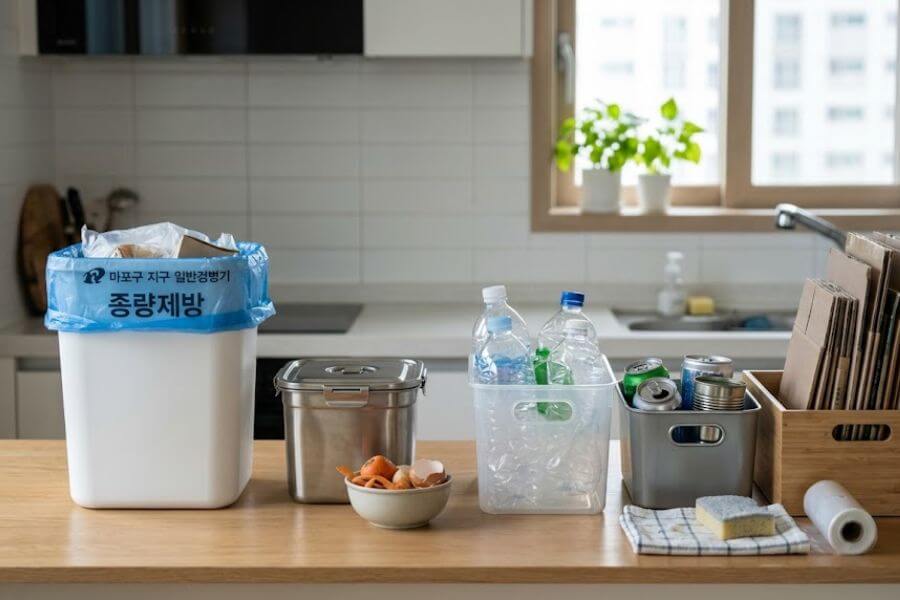
If you walk up to a trash station with a single bag mixed with food leftovers, plastic bottles, and paper wrappers, you will quickly find out that this is a major environmental error. South Korea operates one of the absolute strictest waste management systems on the planet, known as Jongryangje. This is a volume-based waste fee system where you pay exactly for the amount of trash you create by purchasing official, district-approved plastic bags. The entire country follows a deep philosophy of resource conservation, meaning almost everything is sorted, cleaned, and remade into something new. For your daily life, this means throwing things into the wrong bin can lead to a heavily rejected bag of trash or even a hefty fine that will completely ruin your week. This guide will walk you through every single rule, trick, and category so you can manage your household waste like a seasoned local resident.
Understanding the Foundation of the Korean Waste System
The fundamental rule of managing garbage in South Korea is that you cannot use just any plastic bag from a retail store to hold your general household waste. You must purchase official bags that are specific to your exact city district. If you live in the Mapo-gu district of Seoul, you must buy Mapo-gu bags. If you move across town to Gangnam-gu, your leftover Mapo-gu bags cannot be used there because the local sanitation workers will leave them sitting right on the curb.
These official bags are sold at almost every local convenience store, neighborhood supermarket, and discount retail shop. When you ask the cashier for these bags, you will need to choose the size that fits your household needs. General waste bags usually range from small 10-liter pouches to massive 100-liter sacks, though the 10-liter and 20-liter sizes are the absolute most common options for standard apartments. You will notice that the bags come in different colors depending on what they are meant to hold. Usually, general trash bags are white, yellow, or clear with distinct colored printing, while food waste bags often come in yellow or pink shades. Because these colors change depending on your neighborhood, you must always look closely at the printed text on the front of the plastic to confirm its designated use.
The system relies on absolute community participation. It is a shared neighborhood effort where everyone plays a role in keeping the local streets clean and functional. Depending on the type of building you call home, your daily routine for taking out the garbage will look very different.
Apartment Complexes and Managed Buildings
Living in a large apartment complex is arguably the most structured setup you will experience. These residential zones almost always feature a permanent, dedicated outdoor trash shelter or an underground disposal room. Inside these areas, you will find labeled bins for every single type of recyclable material imaginable, along with heavy-duty plastic bins for general waste.
Because these complexes employ dedicated maintenance staff and onsite security guards, everything is highly organized. The recycling area is usually open twenty-four hours a day, or it might have a strict schedule where residents can only drop off items on specific days of the week, such as from Sunday evening through Monday morning. You must follow these building rules carefully because security cameras monitor these stations constantly to ensure compliance.
Multi-Family Villas and Detached Private Houses
If you reside in a smaller villa building or a traditional single-family house, you will not have a grand shared waste room with a security guard keeping watch. Instead, your waste disposal follows a curbside pickup routine. You are responsible for keeping your trash inside your home until the designated disposal hours for your specific street arrive.
In most areas, you are only allowed to set your trash bags directly on the curb in front of your building entrance during the evening hours, usually between 8:00 PM and midnight. The collection crews drive through the narrow streets during the early hours of the morning to empty the curbside spots. You are strictly forbidden from putting trash out on Saturday nights because the crews do not work on Sundays, meaning bags left outside would bake in the sun all day and attract local pests.
The Great Secret of Food Waste Sorting
Separating your food waste is by far the biggest challenge you will face while adjusting to life in South Korea. The concept is completely different from many western countries where kitchen food scraps are simply thrown into the general garbage can or ground up inside a kitchen sink disposal unit. In South Korea, food waste is collected on a massive national scale and processed into high-quality fertilizer, rich compost, or dried animal feed for livestock.
Because of this unique recycling pipeline, the absolute golden rule for separating your kitchen scraps is simple to remember. If an animal can safely chew, digest, and eat the item, it is classified as official food waste. If the item is too tough, solid, toxic, or completely lacking in nutritional value for an animal, it must be thrown directly into your general waste bag. This distinction trips up thousands of people every year because we naturally think of anything from a kitchen as food waste, but the processing machines cannot handle hard materials.
The Strict Non-Food Waste Categories
To protect the mechanical processing blades and keep livestock safe from internal injuries, a huge list of common kitchen items must go straight into the general trash bag. You must memorize these specific categories to keep your kitchen running smoothly.
- Bones and hard animal parts: This includes chicken bones, pork ribs, beef bones, lamb racks, and any skeletal remains from meat dishes. The sharp shards can easily destroy industrial machinery and cause fatal internal bleeding in animals.
- Marine shells and crustacean armor: Hard shells from clams, oysters, mussels, crabs, lobsters, and shrimp are completely non-recyclable. They are essentially rocks in the eyes of the processing center.
- Eggshells: The outer shells of chicken eggs, quail eggs, duck eggs, and ostrich eggs must go into the general waste bag because they do not carry the right nutritional profile for livestock feed.
- Hard pits and large fruit seeds: The massive solid seeds found inside peaches, plums, apricots, mangoes, avocados, and cherries will instantly break mechanical sorting blades.
- Tough vegetable skins and fibrous roots: The dirty, fibrous roots and outer papery skins of onions, garlic, green onions, and leeks are completely inedible for animals and must be kept out of the food bins.
- Tea bags and coffee grounds: Used coffee grounds from your morning brew, loose tea leaves, and paper tea bags contain zero nutrition for animals and can upset their digestive systems, so they belong in the general trash.
Preparing Your Food Waste for Disposal
Before you take your food waste out to the street or the apartment bin, you must take a moment to prepare it properly. High water content makes the waste incredibly heavy, which increases collection costs and creates a messy, dripping liquid that causes terrible odors in your neighborhood.
First, you must drain every drop of excess liquid from your leftovers. Use a sink strainer to press out moisture from soup bases, stews, and wet cereal before bagging the solid remains. Second, you must remove any non-food items that accidentally slipped into your kitchen scrap bowl. Things like wooden toothpicks, plastic fruit labels, rubber bands, and twist ties will completely ruin a batch of animal feed. Once your food waste is dry and pure, you can place it inside your official district food waste bag or carry it out to your complex’s smart bin.
Navigating the Smart Radio-Frequency Identification Bins
If you live in a modern apartment complex or a newly developed residential district, you will likely encounter a high-tech way of handling food scraps known as the Radio-Frequency Identification waste system. These are sleek, metallic electronic bins stationed outside your building that open automatically when you scan a special key card or a digital key fob.
+-------------------------------------------------------+
|             HIGH-TECH FOOD WASTE SYSTEMS              |
+-------------------------------------------------------+
|  1. SCAN CARD      -> System identifies your unit    |
|  2. LID OPENS      -> Drop loose food scraps inside   |
|  3. LID CLOSES     -> Scale weighs the exact amount  |
|  4. FEE RECORDED   -> Cost added to monthly utility  |
+-------------------------------------------------------+
When you use an electronic bin, you do not need to buy individual district plastic food bags. Instead, you collect your bare food scraps inside a reusable container at home, carry the container down to the machine, and scan your resident card against the digital sensor pad. The heavy lid will swing open automatically. You dump the loose food scraps directly into the metal opening, and the machine closes itself. Inside the machine, a highly accurate digital scale weighs exactly how many grams of waste you just dropped off. The screen will instantly display your trash weight and calculate the exact cost in Korean Won. This micro-fee is automatically tagged to your apartment unit and shows up on your monthly household utility bill. This system is incredibly fair because it ensures that a person who cooks minimal meals and generates very little waste pays only a tiny fraction of the cost compared to a large family preparing massive feasts every day.
Sorting Recyclables by Material Type
Recycling in South Korea is not a single-stream process where you toss every bottle and box into one giant container. You must meticulously separate your items into clear, individual material groups. Every item you buy at a supermarket has a small triangular recycling symbol printed somewhere on its packaging, usually with Korean text inside or underneath the arrows indicating exactly where it belongs.
+------------------------------------------------------------------------+
|                      THE FOUR-STEP RECYCLING RULE                      |
+------------------------------------------------------------------------+
|  EMPTY    -> Empty out every single drop of remaining liquid.          |
|  RINSE    -> Wash out food residues, oils, and sticky syrups completely. |
|  REMOVE   -> Peel off plastic labels, tape, caps, and stickers.        |
|  SORT     -> Place the item into its correct material category bin.    |
+------------------------------------------------------------------------+
Plastic and Clear Polyethylene Terephthalate Bottles
Plastics are divided into two primary pathways that you must keep separate. The first pathway is for clear, uncolored beverage bottles, known scientifically as Polyethylene Terephthalate or PET bottles. These clear water and soda bottles are incredibly valuable to the recycling industry because they can be melted down and spun into clean polyester fabrics for clothing and blankets. To recycle these properly, you must empty the contents completely, rinse the inside with water, flatten the bottle flat by stepping on it to save space, and peel off the plastic outer label entirely. The label goes into the vinyl bin, while the clear bottle goes into the dedicated clear PET container.
The second pathway is for colored plastics and thick containers, such as shampoo bottles, laundry detergent jugs, yogurt cups, and takeout food trays. These items must be washed thoroughly until all oily food residue and soap streaks are gone. If a plastic food container is heavily stained with bright red spicy pepper oil that will not wash away with dish soap, it cannot be recycled and must be thrown directly into your general trash bag.
Paper and Cardboard Products
Cardboard boxes from online shopping deliveries must be prepared with care before they leave your home. You must pull off every single piece of clear packing tape, shipping labels, and metal staples from the cardboard sheets. Flatten the boxes completely flat and tie them together with a simple string if you are placing them on a windy curbside.
For office paper, school notebooks, and newspapers, make sure the pages are completely dry and free from heavy grease stains. You must remove plastic covers, spiral metal bindings, and glossy plastic laminations from notebooks before disposal.
A major exception to the paper category involves specialized paper milk cartons and disposable paper cups. These items are lined with a thin internal waterproof plastic or aluminum coating to keep liquids from leaking. Because of this coating, they cannot be processed with regular cardboard boxes. You must rinse them out, open them up flat, dry them completely, and place them into a separate bin specifically marked for paper packs.
Glass Bottles and Jars
Glass bottles from soft drinks, beer, soju, and traditional sauces are highly recyclable, but you must remove their metal caps or plastic lids before tossing them into the glass station. Rinse the interior out so that sweet syrups do not attract swarms of bugs.
You must never mix broken drinking glasses, window panes, ceramic coffee mugs, clay flowerpots, or heat-resistant glass cookware into the standard glass recycling bin. These materials melt at completely different temperatures than regular bottle glass and will ruin the entire structural integrity of the recycled glass batch. If you have broken ceramics or shattered windows, they must be disposed of in a special heavy-duty canvas sack known as a PP bag, which you can purchase at your local district office or supermarket service desk.
Metals and Aluminum Cans
This category covers aluminum beverage cans, steel food cans, food tins, and clean scrap metal pieces. You must compress beverage cans flat to conserve precious space in the collection trucks. For food cans, like canned tuna or corn, pull the metal lid off safely and rinse the interior thoroughly to remove oils.
When you are handling compressed aerosol spray cans, butane gas canisters for portable camping stoves, or insecticide sprays, you must take extreme safety precautions. You must take the canister outside to a well-ventilated open area and press the nozzle down completely to vent any remaining internal gas pressure. Many local guidelines recommend punching a tiny hole through the side of the empty can using a specialized tool or a nail to ensure it will not explode under intense pressure inside the compaction trucks.
Vinyl and Flexible Plastic Wrappings
Vinyl is a broad category in South Korea that refers to almost any form of thin, flexible plastic wrapping. This includes potato chip bags, instant noodle wrappers, clean plastic shopping bags, bubble wrap, bread bags, and the clear film used to seal takeout food containers.
As long as the vinyl is completely clean and dry, you can gather all your wrappers together and place them into a single clear bag for disposal. If a vinyl wrapper is covered in sticky residue, chocolate syrup, or greasy soup remnants that cannot be easily cleaned away, it transforms instantly into general waste and must be placed inside your official district trash bag.
Styrofoam and Expanded Polystyrene
White styrofoam boxes used to ship fresh groceries, seafood, and electronic appliances are highly recyclable because they can be compressed and turned into insulation materials. You must remove all tape, shipping barcodes, and internal plastic wrap from the styrofoam box before taking it outside.
If you have clean, plain white styrofoam, you can leave it at the recycling station. However, the disposable styrofoam bowls used for instant cup noodles are often stained deep orange by spicy soup broth. Once the plastic foam absorbs that color and grease, it can no longer be processed, meaning you must break it up and place it into your general trash bag.
Disposing of Household Waste Items Safely
Some common household items do not fit into any standard recycling bin or general trash bag because they contain hazardous materials, chemicals, or bulky components that require separate collection pipelines. Handling these items correctly keeps your local environment safe and prevents toxic substances from leaching into the soil.
| Waste Item | Correct Disposal Method | Drop-off Location |
| Alkaline Batteries | Drop into dedicated small collection boxes without bags | Convenience stores, community centers, apartment mailrooms |
| Fluorescent Tubes | Place carefully into long metal slots to prevent breakage | Dedicated neighborhood collection points, apartment entryways |
| Expired Medicines | Hand over loose pills and liquids directly to staff | Public health centers, participating neighborhood pharmacies |
| Small Electronics | Leave in small appliance bins or bundle together for free | Complex collection stations, district electronic pickup bins |
| Bulky Furniture | Purchase official printout stickers or mobile QR codes | Front curb of building, designated complex loading zone |
Used Batteries and Power Cells
You must never throw old AA, AAA, or lithium-ion batteries from electronics into your general trash bag. When buried in a traditional landfill, these batteries can degrade, rupture, and leak heavy metals like mercury, lead, and cadmium into the underground water supply. Every apartment complex mailroom, local community service center, and major convenience store features a small, dedicated collection box specifically for old batteries. Simply collect them in a small jar at home and drop them into these boxes when you go out for walks.
Fluorescent Light Bulbs and Tubes
Long fluorescent light tubes contain tiny amounts of toxic mercury vapor inside the glass. If you toss them into a regular trash bin, they will shatter instantly, releasing harmful vapors into the air and endangering the collection workers. Neighborhoods and apartment complexes provide long, specialized narrow storage slots designed to hold these fragile tubes safely. Keep them whole and slide them into the slots carefully. If a bulb does break inside your home, carefully sweep up the shards and place them into a special district canvas bag rather than standard recycling.
Expired and Unused Medicines
When you clean out your medicine cabinet, you might find old prescription pills, expired syrups, or leftover ointments. You must never flush these drugs down the toilet or throw them into your general garbage can because pharmaceuticals can pass right through water treatment plants and contaminate local rivers, harming aquatic wildlife. Instead, take your old medications out of their cardboard boxes and bring them directly to a local pharmacy or a public community health center. They feature a specialized hazardous medical waste bin where the drugs are gathered and safely incinerated at extremely high temperatures.
Small Appliances and Electronic Devices
If your kitchen toaster breaks, or if you need to discard an old hair dryer, a broken keyboard, or an ancient electric iron, you do not need to pay a fee to throw them away. The South Korean government encourages the recycling of small electronic waste to recover valuable precious metals from the internal circuit boards. Most neighborhoods have a dedicated bin for small electronics under a certain size. If you have a collection of five or more small appliances that you want to get rid of at the exact same time, you can even request a free government recycling truck to come directly to your building door to pick them up through a national electronics recycling website.
Bulky Waste and Large Furniture Items
When it is time to throw away a large mattress, an old wooden desk, an office chair, or a giant suitcase, these items will obviously not fit inside a standard plastic district bag. For these bulky items, you must purchase a specific waste disposal sticker. You can do this by visiting your local district website online, entering the exact type of furniture you want to discard, and paying a small processing fee via credit card.
The website will generate a unique sticker page with a registration number that you can print out at home and tape securely to the furniture item. If you do not have a printer, you can simply write the registration number clearly on a plain piece of paper and stick it to the object using strong tape. Once the sticker or number is attached, you carry the heavy item down to your building’s designated curbside collection spot on the approved day, and the district truck will come by to haul it away.
Creating an Organized Separation Station at Home
Trying to sort all these different materials at the very last second right before you head outside is a recipe for complete confusion and frustration. The most effective way to stay compliant with South Korea’s strict waste management laws is to set up a logical, highly organized sorting station directly inside your living space.
+--------------------------------------------------------+
|              IDEAL HOME SEPARATION LAYOUT              |
+--------------------------------------------------------+
|  [BIN 1] GENERAL   -> Official district bag on frame   |
|  [BIN 2] VINYL     -> Small bin for clean wrappers     |
|  [BIN 3] PLASTICS  -> Tall basket for bottles & jars   |
|  [BIN 4] PAPER     -> Flat shelf for flat cardboard     |
|  [JAR 5] FOOD      -> Airtight container on counter    |
+--------------------------------------------------------+
You can buy affordable, color-coded multi-compartment recycling bins at local household goods stores like Daiso. A great setup includes a small airtight container on your kitchen counter to hold food scraps temporarily so that odors cannot escape into your living room. Next to that, keep a tall frame to hold your official district general waste bag open so you can drop non-recyclable items inside instantly. Set up a separate basket for plastics and metals, a slim bin for clean vinyl wrappers, and a flat shelf or corner where you can stack flattened cardboard boxes as they arrive from online shopping deliveries.
By taking just a few seconds to rinse your containers and drop them into the correct household bin immediately after cooking or eating, you will eliminate all sorting stress. When your home bins are full, you can easily carry them out to your neighborhood station and empty them into the master bins in less than two minutes flat.
Frequently Asked Questions
Can I use a general waste bag from a neighboring city district if I run out of bags?
No, you cannot use a bag from a different city district under any circumstances. The waste management crews are funded directly by the bag sales within that specific local municipality. If a sanitation worker spots a bag from a different district on your curbside, they will place a bright red warning sticker on it and leave it behind. You will have to bring the heavy bag back inside your home, buy the correct local bag from a convenience store, and transfer all your trash into the new bag before you can put it out again.
What should I do with a plastic container that is permanently stained with red pepper oil?
If you have rinsed a plastic takeout container with dish soap and warm water multiple times, but the plastic remains deeply stained with bright red chili oil or dark grease, it can no longer be processed by standard plastic recycling facilities. This contaminated plastic must go directly into your official general waste bag. The recycling center requires clean, unblemished plastics to create high-quality recycled pellets, and heavy food oils ruin the entire industrial melting process.
Are wooden chopsticks and used paper napkins considered food waste or general waste?
Wooden chopsticks, wooden toothpicks, paper tissues, and used napkins belong completely in the general waste bag. Even if these items are covered in food scraps or sauce from your dinner, they are made of wood and paper fibers that animal processing machinery cannot digest. Placing these items into a food waste bin can break the mechanical filters at the recycling plant and cause massive blockages in the system.
How do I dispose of leftover cooking oil from deep frying at home?
You must never pour old cooking oil directly down your kitchen sink drain because it will quickly solidify inside the cold underground pipes, leading to massive clogs that can flood your building’s plumbing system. If you only have a very small amount of oil left in a pan, wipe it up completely with a thick paper towel and throw the greasy towel into your general waste bag. If you have a large amount of oil from deep frying, let it cool completely, pour it into an old plastic bottle, and look for a dedicated oil collection drum in your apartment complex or neighborhood alleyway.
Do I need to remove the metal ring left around a glass bottle neck after removing the cap?
While you must always remove the main metal twist-off cap from a glass bottle before recycling it, you do not need to stress about removing the tiny metal ring that stays attached to the glass neck. The industrial glass recycling facilities utilize powerful automated magnetic systems that easily separate these small metal rings from the shattered glass fragments during the initial crushing phase. Simply rinse the bottle, throw the cap in the metal bin, and toss the bottle into the glass bin.
Is pizza crust or stale hard bread counted as general waste or food waste?
Stale bread, pizza crusts, old cakes, and leftover pastries are fully classified as food waste. Even though they might feel completely dry, hard, and solid after sitting out on your counter for a few days, they are made of basic flour and grains that are highly nutritious and safe for animals to consume. If the bread has grown a small amount of green mold, it is still perfectly acceptable to place inside the food waste bin because the high-temperature processing centers sterilize the material completely during production.
What category do animal bones and seafood shells fall into?
Animal bones from chicken, pork, and beef, along with hard seafood shells from clams, crabs, and lobsters, must always go into your general waste bag. These items are completely inedible for livestock and can cause massive mechanical failures inside the recycling plant’s grinding blades. A simple trick to remember this rule is to think about whether you could easily chew and swallow the item yourself during a meal. If it is too hard for human teeth, it is far too hard for the animal feed processing machines.