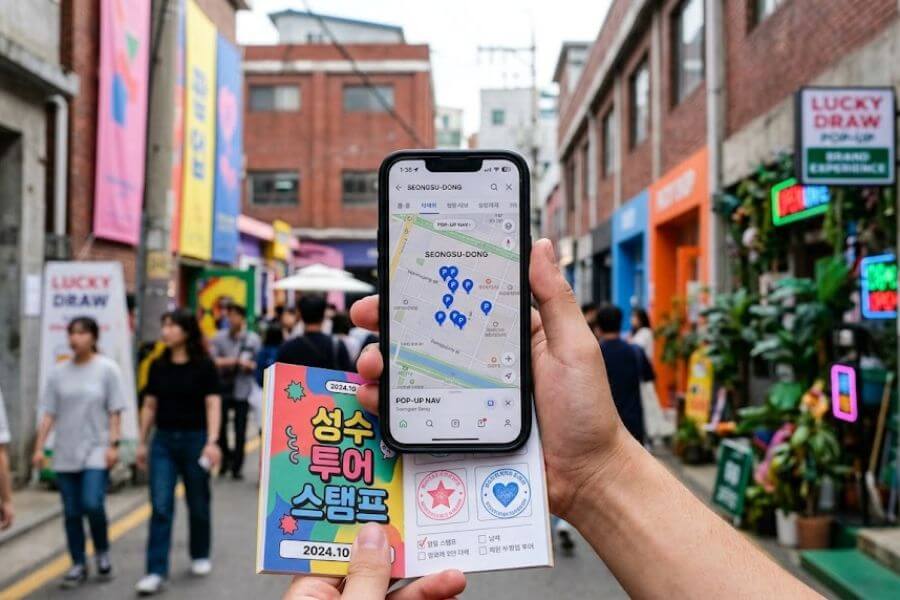
Step out of Seongsu Station exit three and look around. You will instantly feel a unique energy buzzing through the streets. Welcome to the industrial capital of cool where old red brick shoe factories stand next to hyper-modern glass buildings. Seongsu-dong is the absolute heart of the pop-up world in Seoul. Every single week dozens of temporary shops open and close their doors here. They offer exclusive items, interactive games, and gorgeous backdrops for your photos. If you want to know how to navigate this fast-changing concrete maze, track down hidden events, beat the crowds, and score rare items like a local, this guide is your ultimate map.
Decoding the Magic of the Seongsu Pop-Up Scene
To hunt for these short-term shops effectively, you need to understand what makes this neighborhood tick. Seongsu-dong does not follow the traditional rules of shopping districts like Myeongdong or Gangnam. Here, permanent storefronts are often less famous than the temporary ones that disappear after a single weekend.
Brands from every corner of the world come to this area to create immersive playgrounds. You might walk into a building that looks like an abandoned auto repair shop on the outside, but inside you will find a futuristic spaceship celebrating a K-pop idol group comeback. A few houses down, a luxury fashion house might build a giant neon structure inside a garden, while an independent stationery creator sets up a cozy cottage room inside a basement.
These events are highly interactive. Brands do not just want you to buy things; they want you to experience their world. When you walk inside, you will often receive a stamp mission card. By taking photos at specific zones, trying out new digital beauty devices, playing retro arcade games, or posting a story on social media, you can collect stamps. These stamps earn you amazing rewards, ranging from custom keyrings and sticker sheets to full-sized skincare products and limited-edition snacks.
Because these shops only stay open for a few days or a couple of weeks, the sense of urgency is real. The items sold here are usually exclusive, meaning you cannot buy them online or at regular stores later. This limited availability creates a thrilling treasure hunt environment that draws thousands of trendsetters to the neighborhood every single day.
The Digital Tools You Need to Find the Hottest Spots
You cannot just show up in Seongsu-dong and expect to see everything by luck. The best hunters do their homework before they even board the subway. Since these events pop up and vanish so quickly, the digital world is where the scheduling secrets live.
Master the Hashtags and Accounts on Social Media
Social media is your greatest asset when tracking down hidden venues. Platforms like Instagram and TikTok are where announcements drop first. You should start by following specialized curation accounts that do nothing but post weekly maps of active temporary shops in Seoul. Accounts like popupmate are famous for providing exact addresses, operational dates, and sneak peeks of the entry gifts.
Do not just rely on English accounts. You can find incredible hidden gems by searching specific Korean terms in the search bar. Copy and paste the Korean words for Seongsu Pop-up into your social media search fields. Look through the newest posts under these tags rather than just the top posts. The newest tab will show you real-time updates from people who are standing in line at that exact moment. They will post about how long the wait is, whether the free gifts are already sold out for the day, and which photo zones have the best lighting.
Check the Official Brand Channels
If you have a favorite fashion label, beauty brand, or character universe, follow their official accounts closely. Brands love to tease their upcoming events at least a week in advance. They will post details about how to secure early entry, what kinds of collaboration items will be on sale, and whether any celebrity brand ambassadors will be making an appearance. Checking these announcements directly lets you plan your trip around major drops.
Rely on Local Mapping and Navigation Apps
Once you have a list of places you want to visit, ditch your standard international mapping apps. They often lack updated data for the rapidly changing storefronts of Seoul. Download local navigation tools like Naver Maps before you arrive.
These local apps allow you to drop pins on all the locations you want to hit, creating a custom walking path. You can type the street addresses directly into the search bar using English or Korean. The app will show you exactly which alleyway to turn down, helping you avoid wandering in circles when a venue is hidden inside an old factory courtyard.
Understanding the Two Main Entry Systems
Once you find a shop you want to visit, you need to know how to get through the door. There are two primary ways these venues manage the massive crowds that flock to Seongsu-dong.
The Advance Reservation System
For massive global brands, high-end luxury labels, and major K-pop idol events, advance reservations are almost always mandatory. These booking windows usually open a few weeks before the store actually launches.
Local platforms like Naver Reservations or specialized event booking apps are commonly used. For major music group events, bookings might run through fan community platforms. These slots disappear within seconds of going live. If you manage to grab one, you will receive a digital ticket or a confirmation screen with a specific time slot. You simply show up ten minutes before your time, present your ticket, and walk straight past the massive crowds.
The On-Site Digital Waitlist System
If you miss out on an advance booking, do not panic. Most venues reserve a large portion of their daily capacity for walk-in visitors using an on-site digital queuing machine. When you arrive at the storefront, look for a small tablet computer standing on a tripod near the entrance, usually managed by a staff member in a branded jacket.
You will need to input information into this machine to reserve your spot in the virtual line. The system will then send you a real-time text message showing your exact waitlist number and an estimate of how many minutes are left before your turn. The beauty of this system is that you do not have to stand in a physical line under the hot sun or in the cold wind. Once you register your spot, you are completely free to walk away, grab a coffee, check out smaller shops nearby, and explore the neighborhood.
When your number is called, you will get another text message giving you around five to ten minutes to return to the entrance. If you do not show up within that window, your spot will be canceled, so keep a close eye on your phone while you wander.
Crucial Survival Tips for International Visitors
Navigating these digital entry systems can sometimes be a little tricky if you are traveling from another country. Here are the essential strategies to ensure you never get turned away at the door.
The Importance of a Local Mobile Number
Many of the digital waitlist tablets scattered around the neighborhood are hardwired to work with local messaging networks. They require a valid Korean phone number starting with the digits zero-one-zero to send you the waitlist updates.
If you are traveling from abroad, it is incredibly beneficial to purchase a temporary local subscriber identity module card or an electronic version of it that includes a working phone number for data and incoming texts. Having a local number makes registering at these tablets completely seamless.
How to Navigate Systems Without a Local Phone Number
If you only have an international data plan without a local phone number, do not let that discourage you. The staff members working these events are used to welcoming global tourists.
Walk directly up to the employee monitoring the tablet at the door. Politely explain that you are a tourist and do not have a local mobile number. In almost every case, the staff will manually register you using your email address, or they will write your name down on a separate clipboard list. They might give you a physical paper ticket with a return time, or they will tell you to wait in a short, dedicated manual line on the side.
Language Barriers and Communication Hacks
While major global brand events usually hire bilingual staff who speak great English, smaller indie brand setups might be staffed by local college students who are a bit shy.
Download a reliable translation app like Papago before your shopping excursion. This app is fantastic for reading signs written entirely in Korean script. If a sign explains the rules of a stamp mission or details the spending thresholds required to get a free gift, you can simply open the app, point your phone camera at the text, and read the instant translation. It takes all the guesswork out of the games and missions.
Mapping Out the Ultimate Hunting Zones in Seongsu
Seongsu-dong is quite large, and if you walk aimlessly, you will exhaust yourself before you see the best parts. The neighborhood is generally split into a few key areas, each offering a completely different vibe and types of temporary retail experiences.
The Heart of the Action on Yeonmujang-gil
If you only have a few hours to spend in the district, head straight to Yeonmujang-gil. This is the main street that stretches horizontally through the center of the neighborhood. It is the absolute ground zero for pop-up culture.
Walking down this bustling street is an experience for all five senses. Music blares from creative storefronts, giant digital screens flash bright animations, and beautiful exterior displays line the sidewalks. This is where you will find the multi-story flagship venues, major beauty lounges, and high-energy collaborations.
Because this street is so popular, it is home to the largest and most elaborate events. You can easily spot them by looking for the long, orderly lines snaking down the blocks. The side alleys splitting off from this main road are also packed with smaller fashion boutiques and shoe workshops that frequently transform their garage spaces into weekend micro-shops.
The Creative Warehouse District Near Seongsui-ro
If you cross over toward the eastern side of the neighborhood along Seongsui-ro, the scenery shifts a bit. This area feels more industrial, featuring massive, weathered brick warehouses with rusted iron doors and high corrugated roofs.
These giant industrial relics are highly sought after by luxury fashion houses, automobile companies, and tech firms. Because the interior spaces are so massive, brands can build huge, artistic installations here. You might find a full-scale art gallery exhibition, a indoor skate park, or a massive indoor garden complete with real trees and water fountains. The events here tend to feel less like a quick shop and more like a curated museum experience.
The Aesthetic and Trendy Seoul Forest Zone
On the western edge of the neighborhood, bordering the beautiful greenery of Seoul Forest, lies a third distinct zone. This area is characterized by charming, multi-story residential red brick houses that have been converted into trendy cafes, independent design studios, and dessert shops.
The temporary retail spaces here are generally smaller, intimate, and highly aesthetic. This zone is a paradise for fans of cute cartoon characters, indie illustration stationery, local jewelry designers, and eco-friendly lifestyle brands. The events here are often set up to look like cozy living rooms or mini art studios. It is a much more relaxed environment compared to the high-energy rush of Yeonmujang-gil, making it the perfect place to stroll with a iced latte in hand.
How to Plan Your Itinerary and Maximize Your Day
A successful day of hunting requires a smart strategy. If you handle your time correctly, you can easily visit five to seven incredible venues in a single afternoon without collapsing from exhaustion.
Choose the Perfect Day and Time
Timing is everything when trying to avoid crushing crowds. If your schedule allows it, completely avoid visiting Seongsu-dong on Saturdays and Sundays. The weekend crowds are immense, and the wait times for popular venues can easily stretch past three hours.
The absolute prime time to hunt is on a Tuesday, Wednesday, or Thursday morning. Aim to arrive in the neighborhood around ten-thirty in the morning. While most venues do not officially open their doors until eleven in the morning or noon, the digital waitlist tablets are often turned on early.
By arriving thirty minutes before the opening time, you can walk down the street and log your phone number into three or four different waitlist machines in a row. By the time the clock strikes noon, you will be at the front of the line for your top choices, allowing you to breeze through them back-to-back while everyone else is just arriving.
Group Your Targets Geographically
Do not bounce back and forth between Seoul Forest and the eastern warehouse district. That involves a lot of unnecessary walking that will quickly drain your battery and leave your feet covered in blisters.
Group your targets into tight geographic clusters using your navigation app. Spend your morning hitting the high-priority, fast-filling spots along Yeonmujang-gil. Once you have logged your waitlist spots there, you can spend the afternoon casually exploring the smaller indie setups near Seoul Forest while you wait for your text notifications.
The Art of Stacking Your Waitlists
Be smart about how you schedule your virtual lines. If you register for a major beauty event that has a two-hour wait, immediately walk down the street and look for smaller, lesser-known clothing or stationery setups that have no lines or short ten-minute waits.
You can easily explore two or three minor venues while your position drops in the virtual line for the major attraction. Just keep an eye on your navigation map so you do not wander too far away from your main target.
What to Wear and Pack for a Day on Your Feet
Hunting for temporary shops is essentially an urban sport. You will easily log over fifteen-thousand steps during a full day of exploring the alleyways of Seongsu-dong. Being properly prepared will keep you smiling all day long.
Footwear Is Your Most Important Choice
This is not the day to break in those brand-new, stiff leather boots or wear high-heeled fashion shoes, no matter how great they look in photos. The sidewalks in this historic district can be uneven, and you will be standing on hard concrete surfaces for hours at a time.
Wear your most comfortable, cushioned sneakers. If you want to stay stylish for your photos, lean into the popular local streetwear aesthetic by pairing trendy, bulky running shoes or comfortable lifestyle sneakers with your outfit. Your feet will thank you by hour four.
Dress in Easily Adaptable Layers
The weather in Seoul can shift quickly, and more importantly, the temperature contrast between the outdoors and the indoors can be drastic. In the summer, the outdoor humidity is high, but the interiors of these corporate venues are blasted with ice-cold air conditioning. In the winter, the biting Siberian winds will chill you outside, but the indoor heating will make you sweat within minutes.
Wear clothes that are easy to layer up or layer down. A lightweight jacket, a zip-up hoodie, or a stylish button-down shirt that you can easily tie around your waist or stuff into a tote bag is ideal.
Essential Items to Carry in your Day Bag
Keep your baggage light, but make sure you have the key essentials packed inside a comfortable backpack or tote bag.
- A High-Capacity Portable Power Bank: Your phone battery will drain incredibly fast. You will be constantly using your camera to take photos, checking your navigation app, running translation tools, and monitoring your waitlist status text messages. Bring a reliable external charger and a charging cable so your phone never dies in the middle of a waitlist window.
- A Lightweight, Foldable Tote Bag: While almost all venues will give you a shopping bag if you buy merchandise, collecting free sample bottles, stamp cards, stickers, and event brochures can quickly fill your hands. Having a spacious canvas tote bag allows you to drop all your freebies into one place, leaving your hands completely free to take more photos.
- Your Physical Passport: If you plan on purchasing exclusive merchandise or high-end items, keep your physical passport handy. Many of the larger setups offer instant tax-free shopping for international visitors, allowing you to save money directly at the cash register if your purchase meets the minimum spending limit.
Etiquette and Rules of the Hunt
To ensure that everyone has an amazing time, these temporary retail spaces maintain a few standard rules of conduct. Knowing these ahead of time will help you avoid any awkward moments with the staff.
Respect the Dedicated Photo Zones
These spaces are carefully designed to look stunning on social media feeds. Many venues feature elaborate, theatrical backdrops with professional lighting installations. Because everyone wants the perfect shot, lines will naturally form in front of these specific photo zones.
Be mindful of the people waiting behind you. It is totally fine to pose and try a couple of different angles, but avoid taking up a photo zone for ten minutes to shoot an entire outfit catalog. Grab your shots efficiently, step aside to review them on your screen, and let the next person have their turn. If a photo does not turn out perfectly, you can always jump back in line for another try.
Pay Close Attention to Sampling and Testing Rules
Beauty and skincare venues are incredibly generous with their product testers. You will often see beautiful vanity stations stocked with viral lip tints, facial creams, and luxury perfumes.
Always use the disposable applicators, small plastic spatulas, and cotton pads provided at the stations rather than double-dipping your fingers directly into the product jars. This keeps the testers clean and hygienic for the hundreds of visitors who will follow you. If you are unsure how to use a specific high-tech beauty device, simply catch the eye of a staff member. They will be absolutely delighted to demonstrate the proper technique for you.
Understand the Social Media Posting Requirements
To claim the best free tier of gifts or lottery prize wheels, venues will frequently ask you to upload a photo or a video story to your public social media account.
They will usually have a small sign display showing three or four specific tags and location markers that you must include in your caption. Make sure you type these tags out exactly as shown before you show your screen to the employee at the gift counter. If your account is set to completely private, the staff might not be able to verify your post, so you may need to temporarily switch your settings to public or show them a live video upload to claim your reward.
Summarizing the Top Pop-Up Layout Trends
As you explore the neighborhood, you will notice that the temporary retail setups generally fall into distinct categories based on their size and core focus. The following comparison table breaks down what you can expect from each style of store to help you prioritize your route.
| Type of Venue | Core Experience Focus | Average Wait Time | Best For Scoring |
| Mega Brand Flags | Immersive media art, massive photo zones, high-tech interactive games | One to three hours | Deluxe sample kits, corporate merchandise, viral photo prints |
| K-Beauty Lounges | Personalized skin analysis, customized color matching, makeup touch-ups | Thirty to ninety minutes | Full-sized skincare testers, custom lip products, beauty tools |
| K-Pop Fan Zones | Idol concept rooms, music video set recreations, capsule machines | One to four hours | Exclusive photo cards, limited album packages, artist merchandise |
| Indie Creator Spaces | Cozy studio rooms, artist meet-and-greets, custom illustration zones | Zero to twenty minutes | Unique sticker sheets, handmade keyrings, quirky stationery |
Frequently Asked Questions
Do I need to pay an admission fee to enter pop-up stores in Seongsu?
No, the vast majority of temporary brand stores and promotional exhibitions in Seongsu-dong are completely free to enter. Brands build these spaces primarily as marketing tools to increase their awareness and engagement on social media platforms. While entry is free and you are never forced to buy anything, some venues might require you to complete their social media follow missions or stamp cards to access certain interior experiential zones or to collect the complimentary gifts at the exit counter.
How long do pop-up stores usually stay open in this neighborhood?
The operational lifespan of a temporary storefront in Seongsu-dong varies significantly depending on the brand scale, but most run on a cycle of one to four weeks. Smaller independent brand collaborations, creative stationery markets, and indie fashion events might only open for a single long weekend from Thursday through Sunday. On the other hand, massive beauty flagships or large-scale corporate tech spaces might sign leases that last anywhere from one to three months. Because schedules shift constantly, it is critical to verify the exact closing dates on social media before you visit.
Can I enter these stores if I do not speak any Korean?
Yes, you can absolutely enjoy the entire experience without knowing how to speak the local language. Seongsu-dong is a highly international hub that welcomes thousands of global tourists every week. Major corporate venues almost always have at least one or two fluent English-speaking staff members stationed at key areas to guide guests through the games and checkout counters. For smaller indie shops, the staff can easily communicate using basic English words and hand gestures. Downloading a translation app on your phone will easily bridge any remaining communication gaps.
What should I do if a waitlist is completely closed for the day?
If you arrive at a highly popular venue in the afternoon and find a sign stating that the daily waitlist is closed, do not despair. This simply means the digital virtual queue has reached its maximum capacity for the day based on the store operating hours. If this happens, your best strategy is to pivot to the smaller side-alley venues, fashion boutiques, and indie stationery spaces nearby, which rarely close their doors to walk-ins. Then, adjust your itinerary to return to that specific high-priority target early the following morning before the virtual waitlist fills up.
Are the free gifts and samples guaranteed for all visitors?
While the entrance gifts and stamp mission rewards are complimentary, they are almost always distributed on a first-come, first-served basis each day. Brands prepare a specific daily quota of sample bottles, custom merchandise, and prize-wheel gifts. If a store is incredibly busy, these daily supplies can run out by the late afternoon, even if the store itself remains open until the evening. This is another major reason why starting your hunting route early in the morning is the best way to secure all the premium goodies.
Can I use my international credit card to buy things inside these shops?
Yes, international credit cards issued by major global payment networks are widely accepted at nearly every single retail venue in Seoul, including the smallest temporary market stalls. You do not need to carry large amounts of paper cash with you. Just ensure that your card issuer knows you are traveling abroad so your transactions do not get flagged by automated security filters. Additionally, remember to carry your physical passport with you, as many of the larger merchandise registers can apply an immediate tax reduction to your total bill if you hit their minimum purchase requirement.