Key Takeaways
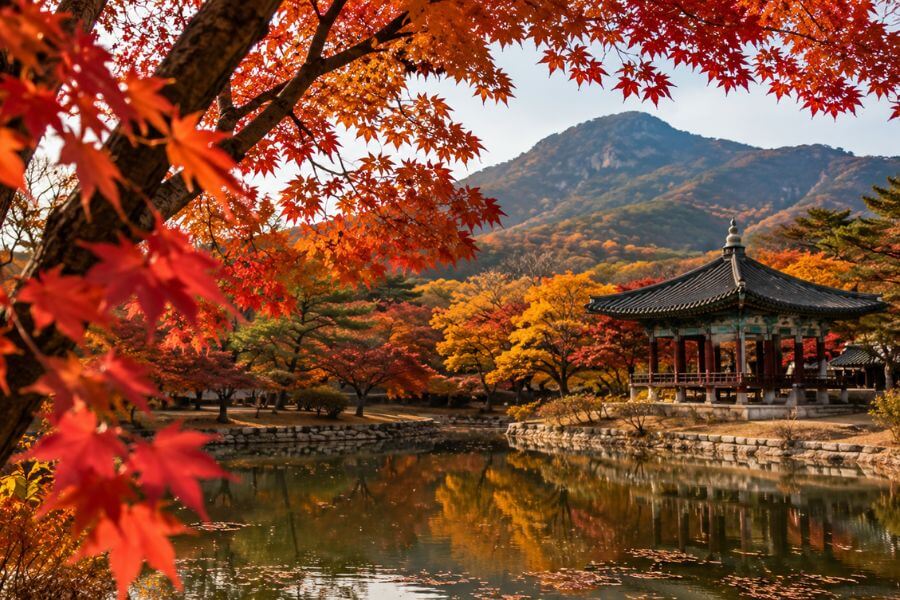
South Korea transforms into a stunning landscape of deep reds, bright oranges, and rich golds from late September through late November. The natural color wave begins in the northern mountains like Seoraksan and moves slowly down to the southern coast and Jeju Island. Planning your trip around this timing allows you to see the peak colors across different regions. Combining these scenic mountain views with historic palaces, traditional hanok villages, and lively city celebrations creates an incredible travel experience.
Introduction to Autumn in South Korea
As the hot and humid summer days fade away, a cool breeze sweeps across the Korean Peninsula. This change brings one of the most beautiful times of the year to visit South Korea. The entire country shifts from deep green forests into a magical canvas filled with warm tones. Locals call this seasonal change danpung, which refers to the turning of the leaves. It is a time when people step outside to walk through crisp air, climb tall mountains, and gather at cultural celebrations.
You will find that autumn in this country is not just a change in the weather. It is a full cultural experience that influences food, fashion, and daily life. Walking down any city street or mountain path brings you face to face with stunning trees. The golden leaves of the ginkgo trees shower the sidewalks with bright color. Meanwhile, the deep red maple leaves look like flames against the clear blue sky.
For any traveler, visiting during this time provides a deep look into the natural beauty and deep traditions of the country. You can explore grand royal palaces surrounded by ancient trees that have changed color for centuries. You can hike along rugged stone peaks where the valleys look like oceans of red and gold. You can also join local crowds at unique harvest celebrations and modern light displays. This guide will show you the finest places, hidden areas, and top events to help you build an unforgettable autumn trip.
Understanding the Autumn Foliage Timeline
To get the most out of your autumn journey, you need to know how the colors move across the land. The changing of the leaves depends heavily on temperature, sunlight, and height above sea level. Cold air from the north starts the process, meaning the northern areas transform first.
The Journey from North to South
The cool weather arrives in the northern mountainous regions around late September. The very first signs of color always appear on the high peaks of Gangwon Province. From there, the wave of color travels southward at a steady speed of about twenty to twenty-five kilometers each day.
By mid-October, the central areas of the country, including the capital city of Seoul, start to show their autumn colors. The trees in the city parks and surrounding mountains reach their most beautiful state around late October or early November. Finally, the southern coastal regions, cities like Busan, and the volcanic slopes of Jeju Island experience their peak colors in the middle of November. This steady movement means that if you plan your travel route carefully, you can follow the peak colors for several weeks.
Tree Species and Their Vibrant Colors
The diversity of tree species in South Korea creates a multi-layered display of colors. Each type of tree changes at its own pace and brings a unique shade to the scenery.
- Ginkgo Trees: These ancient trees are famous for their fan-shaped leaves. When autumn arrives, they turn a bright, solid golden-yellow. They grow all over major cities, lining wide avenues and temple courtyards. Walking under them feels like stepping into a golden tunnel, though you should watch out for the fallen seeds, which have a very strong smell.
- Maple Trees: Known locally as danpungnamu, these trees provide the intense, fiery reds and bright oranges that people love to photograph. They thrive in mountain valleys and traditional palace gardens, creating a sharp contrast against gray stone walls and green pine trees.
- Oak and Zelkova Trees: These species make up a large part of the mountain forests. They change into deep russet browns, warm copper tones, and rich oranges. They give the mountains a thick, layered appearance that looks wonderful from a distance.
- Persimmon Trees: In traditional villages and countryside backyards, persimmon trees lose their leaves but keep their bright orange fruits. These fruits hang from bare branches like small lanterns, creating a classic countryside view.
Weather Conditions and Peak Timing
The timing of the peak colors can change slightly from year to year based on the weather. If the late summer heat stays longer than usual, the colors might be delayed by a week or two. For the leaves to change into bright, vivid shades, they need clear sunny days and chilly night temperatures.
When you plan your days, look for the official forecast maps released by local weather services each September. These maps show two important dates for each region: the first appearance of color, which means about twenty percent of the trees have changed, and the peak period, which means eighty percent of the forest is glowing with color. Aiming for the peak period gives you the most spectacular views.
Top Fall Foliage Destinations in Seoul
You do not have to travel far into the countryside to experience the magic of autumn. The capital city of Seoul offers an amazing mix of modern design, historic architecture, and rich nature. The city preserves many green spaces where you can enjoy the autumn leaves right next to bustling neighborhoods.
Gyeongbokgung Palace and Secret Gardens
Gyeongbokgung is the largest of the five grand palaces built during the Joseon Dynasty. While it is beautiful at any time of year, autumn makes it truly special. The traditional wooden structures with their painted green and red rafters blend perfectly with the surrounding yellow and orange trees.
The best spot for photos inside the palace grounds is Hyangwonjeong Pavilion. This small, hexagonal wooden pavilion sits on an island in the middle of a peaceful pond. A wooden bridge connects it to the shore. In the fall, the surrounding maple trees reflect perfectly on the still water surface. The view looks like a traditional Korean ink painting brought to life.
Another wonderful area is the path leading to the National Folk Museum on the eastern side of the grounds. This path is lined with massive ginkgo trees that drop a thick carpet of yellow leaves on the floor. For a unique experience, you can rent a hanbok, which is traditional Korean clothing, from a nearby shop. Wearing a hanbok grants you free entry into the palace and makes your photographs look timeless.
Namsan Mountain and N Seoul Tower Paths
Sitting right in the center of the city, Namsan Mountain offers wide views of the metropolis surrounded by thick forests. The mountain paths are fully closed to private cars, making them clean and peaceful places to walk.
To enjoy the colors, avoid the cable car and choose to walk up the southern or northern circuit paths instead. These stone walkways are covered by a dense roof of cherry trees and maple trees that turn bright yellow and deep red. The walk takes around forty to fifty minutes and has a gentle slope that is comfortable for most walkers.
When you reach the top, you can rest near the base of the N Seoul Tower. The wooden viewing decks look out over the city skyline, showing how the ribbons of autumn color cut through the concrete neighborhoods and glass skyscrapers. The stone walls of the old fortress run along the ridges, framed by bright orange bushes and tall trees.
Bukhansan National Park
For those who want a more challenging outdoor adventure without leaving the city limits, Bukhansan National Park is the perfect choice. Located in the northern part of Seoul, this park features high granite peaks, clear mountain streams, and deep forested valleys.
The hike up to Baegundae Peak, the highest point in the park, takes you through dense woods that explode with color in late October. As you climb higher, the path shifts from dirt ground to solid rock. Steel railings help you navigate the steeper sections. From the top, you get a panoramic view of the entire city on one side and endless rolling hills of red and gold on the other.
If you prefer a gentler stroll, you can explore the Bukhansan Dulle-gil trails. These connected paths circle the base of the mountain. They take you through quiet neighborhoods, past small streams, and under canopy trees without requiring steep climbing.
Seoul Forest and Olympic Park
Seoul Forest was once a royal hunting ground, but today it serves as a massive eco-park in the eastern part of the city. One of its main highlights in the autumn is the Ginkgo Tree Forest. This specific section features hundreds of tall ginkgo trees planted close together in straight rows. The ground becomes a solid sheet of gold, and the filtered sunlight creates a dreamy atmosphere that is very popular for afternoon picnics.
Olympic Park, located in southeastern Seoul, offers a completely different landscape. This vast park has wide rolling hills, large lakeside trails, and modern outdoor sculptures. In the fall, the Wildflower Garden transforms into a sea of orange cosmos flowers.
Just a short walk from there, you will find the famous Alone Tree, a solitary tree standing in the middle of a massive green lawn that turns a warm golden-brown as the weather cools. The park also features a beautiful path lined with metasequoia trees, which turn a deep, rusty orange-red later in November.
Changdeokgung Palace Secret Garden
Changdeokgung Palace is a UNESCO World Heritage site known for the way its buildings blend naturally into the surrounding landscape. The absolute highlight of this location is the Huwon, commonly known as the Secret Garden. This garden was built behind the palace for the royal family as a place to rest, write poetry, and enjoy nature.
Access to the Secret Garden is limited and requires a guided tour ticket, which you should book well in advance. The garden contains multiple small ponds, hidden pavilions, and ancient trees, some of which are over three hundred years old.
During autumn, the reflection of the red maples in the Buyongji pond is spectacular. The guides walk you through narrow valleys and over small hills, explaining how the kings of the past used these spaces to connect with nature. The careful preservation means you experience the autumn landscape exactly as the royals did centuries ago.
Majestic Mountain Escapes Outside Seoul
While city parks are beautiful, the true heart of the autumn season lies in South Korea’s spectacular national parks. The rugged mountains provide the most dramatic backdrops for the changing leaves.
Seoraksan National Park
Located on the northeast coast in Gangwon Province, Seoraksan is the third highest mountain in the country and the very first place to welcome the autumn colors. The park is famous for its high granite cliffs, deep waterfalls, and clear rivers.
Because it peaks early, usually around mid-October, people travel from all over the country to see its sharp ridges covered in fiery red maples. If you want a classic view, head to the Sinhungsa Temple near the main entrance, where a massive bronze Buddha statue sits peacefully framed by colorful hills.
From there, you can take a cable car up to the Gwongeumseong Fortress ruins. This ride takes you high above the forest floor, offering a bird’s-eye view of the multi-colored valleys below. For serious hikers, the trail to Ulsanbawi Rock is a must. This challenging path features hundreds of steep steel steps built right into the side of a massive stone cliff. The view from the top looks out across the mountain ranges all the way to the East Sea.
Naejangsan National Park
If Seoraksan is famous for its grand stone peaks, Naejangsan is celebrated purely for having the most beautiful leaves in the entire nation. Located in the southwest, this park reaches its peak later in the season, usually around early to mid-November.
The name Naejang means “hidden secrets inside,” and the park lives up to its name. As soon as you enter the main gates, you step into the Maple Tree Tunnel. This path stretches for a full kilometer, with over a hundred maple trees planted on both sides. The branches meet overhead, creating a natural tunnel of glowing red and orange leaves.
Another iconic spot is Uhwajeong Pavilion. This small blue-roofed pavilion sits in the middle of a mountain lake. In the autumn, the surrounding hills turn intense shades of yellow and crimson, reflecting perfectly on the water. A stone walkway allows you to walk across the water to get closer to the pavilion.
Odaesan National Park
Odaesan is located just south of Seoraksan and offers a more peaceful, spiritual autumn experience. The park is home to Woljeongsa Temple, one of the oldest temples of Korean Buddhism.
The entrance to the temple features a famous Fir Tree Forest Path. While these massive evergreen trees stay green all year round, they provide a deep contrast to the bright maple and oak trees that line the nearby valley stream. Walking along this flat dirt path is smooth and relaxing.
Further up the mountain trail, you will find the Sangwonsa Temple. The hike between the two temples follows a gentle river path called the Seonjae-gil. This trail was historically used by monks traveling between shrines. Today, it serves as a wonderful walking route where you can cross wooden bridges, listen to the rushing water, and admire the golden canopy.
Jirisan National Park
Jirisan is the largest land-based national park in South Korea, stretching across three different provinces in the southern region. Because of its massive size and high peaks, the autumn colors last here for a long time, starting at the high elevations in mid-October and reaching the lower valleys by early November.
The Piagol Valley is the most famous autumn spot within Jirisan. Local legends say that the leaves here are so intensely red that they make the river water look red, and even the faces of the people walking through the valley seem to glow with a rosy tint.
The park features traditional villages along its lower slopes, where you can see locals harvesting mountain herbs and drying persimmons under the eaves of their roofs. The trails here can be long and demanding, but the sheer scale of the wilderness gives you a true sense of peaceful isolation.
Daedunsan Provincial Park
Daedunsan is a smaller park located in the central part of the country, but it offers some of the most thrilling views in South Korea. The mountain is defined by its strange, vertical rock formations that rise sharply out of the forest.
The main attraction here is the Geumgang Suspension Bridge. This narrow bridge hangs eighty-one meters above a deep ravine, connecting two jagged rock peaks. Walking across it can be scary, as the bridge sways gently in the wind, but the view of the autumn forest directly beneath your feet is unmatched.
Just past the bridge, you will encounter the Samseon Stairway. This is a nearly vertical steel ladder that climbs up the side of a sheer cliff face. It is a one-way path upwards, and as you climb, you look down into a canyon filled with blazing orange and red trees. It is an unforgettable experience for anyone who loves high adventures.
Historic and Cultural Fall Spots
Enjoying the autumn leaves becomes even better when you combine nature with the rich history of South Korea. Several ancient cities and historic landmarks offer a deep look into the past framed by the colors of fall.
Gyeongju Ancient Capital
Gyeongju was the capital of the ancient Silla Kingdom for nearly a thousand years. Today, it is known as an open-air museum because historic sites sit right in the middle of the modern town.
In the autumn, the massive grass burial tombs of ancient kings turn from green to a soft golden-brown. Walking among these giant earth mounds under a clear fall sky feels peaceful and mysterious. The paths around Daureungwon Tomb Complex are lined with old trees that drop colorful leaves onto the green grass.
Another essential stop is Donggung Palace and Wolji Pond. This royal villa was built as a place for banquets. In the evening, the traditional buildings and the illuminated autumn trees reflect perfectly on the surface of the artificial pond, creating a magical view that draws many night photographers.
Jeonju Hanok Village
Jeonju is a city famous for its traditional food and its beautifully preserved historic district, which contains over eight hundred traditional Korean houses called hanoks. These houses feature unique curved slate roofs, wooden frames, and clay walls.
Walking through the narrow cobblestone alleys of the village in autumn is a delightful experience. The dark grey tile roofs contrast beautifully with the bright yellow ginkgo trees that grow in the courtyards.
At the center of the village stands Gyeonggijeon Shrine, built to hold the portrait of the founder of the Joseon Dynasty. The shrine grounds contain massive, ancient trees and bamboo groves. The falling leaves cover the traditional stone courtyards in blankets of yellow and red, making it a favorite spot for visitors walking around in rented traditional clothes.
Baegyangsa Temple
Located within Naejangsan National Park but accessed from the southern side, Baegyangsa Temple is a peaceful sanctuary surrounded by flat-topped mountain ridges.
The most famous view here is found at the Ssanggyeru Pavilion, which sits before a small pond just outside the temple entrance. Behind the pavilion rises the white limestone cliff of Baegyghakdan Mountain. In late autumn, the small-leafed maples, which are unique to this area and show an incredibly bright red color, surround the pavilion. The reflection of the wooden structure, the colorful trees, and the white mountain peak on the still water creates an image that represents the peak of Korean autumn beauty.
Bulguksa Temple
Bulguksa is a premier historic temple in Gyeongju and a masterpiece of Buddhist architecture. Built in the eighth century, its stone terraces and wooden halls are designed to represent the land of Buddha on earth.
In the autumn, the approach to the temple takes you across stone bridges and through a large park filled with maple trees. The trees surrounding the Cheongungyo and Baegungyo stone bridges turn a deep, crimson red.
As you walk through the temple courtyards, you can look up to see the delicate red maple leaves hanging over the edges of ancient stone pagodas. The contrast between the weathered grey stone, the colorful painted wood of the temple buildings, and the natural brilliance of the autumn leaves is deeply moving.
Best Autumn Festivals in South Korea
Autumn is harvest season in Korea, which means it is a time of celebration, thanks, and community. Towns and cities across the country host unique festivals that highlight local nature, history, and food.
Seoul Silver Grass Festival
Every October, the rolling hills of Haneul Park, located within Seoul’s World Cup Park system, turn into a shimmering sea of silver grass, known locally as eoksae. This park sits on a high hill that was once a landfill, but it has been beautifully reclaimed by nature.
The festival celebrates the blooming of the tall, fluffy grass stalks. Walking trails cut through the fields, allowing you to walk among grass that grows taller than most people. In the afternoon, the setting sun hits the silver grass, making the entire hill glow with a brilliant golden light.
During the festival week, the park stays open late into the night. The silver grass fields are illuminated with colorful laser lights, and local musicians perform live acoustic music along the paths. The top of the hill also offers a great view of the Han River and the city lights illuminating the evening sky.
Jinju Namgang Yudeung Lantern Festival
Held in the southern city of Jinju every October, this festival is one of the most spectacular light displays in the country. It roots back to the late sixteenth century, when soldiers used floating lanterns on the river to send military signals and communicate with family members during a historical invasion.
Today, the festival features thousands of large, hand-made silk lanterns floating on the Namgang River and lining the historic fortress walls. These lanterns are shaped like traditional historical figures, animals, mythical dragons, and modern characters.
You can buy a small paper lantern, write your wishes on the side, and release it onto the river water. The sight of thousands of glowing wishes floating gently downstream under the autumn night sky is incredibly beautiful. The festival also features traditional food markets, street performances, and large fireworks displays over the water.
Busan International Film Festival
For lovers of culture and modern arts, the Busan International Film Festival is a massive event held every October in the southern port city. It is one of the most significant film festivals in all of Asia, drawing directors, actors, and cinema fans from around the globe.
The center of the event is the Busan Cinema Center in the Centum City district, a building famous for its massive, cantilevered roof covered in millions of LED lights. During the festival, you can watch screenings of independent films, attend open-air talks with famous actors, and explore the trendy coastal neighborhoods of Busan. The cool, crisp autumn weather is perfect for moving between film venues and relaxing at outdoor cafes along Haeundae Beach.
Yeouido Hangang Park Fireworks Festival
The Seoul International Fireworks Festival takes place in early October at Yeouido Hangang Park. Teams of fireworks experts from different countries gather to create massive musical light shows over the Han River.
Millions of people gather along both sides of the river hours before the event starts. They lay out picnic mats, order delivery food directly to the park, and enjoy the cool afternoon air.
When night falls, the sky explodes with color, lighting up the river and the city skyscrapers. It is a loud, joyful celebration that marks the true beginning of the colder autumn season in the capital city.
Essential Autumn Foods to Try
As the weather cools down, the local culinary scene changes to offer warm, comforting dishes and fresh harvests. Trying these seasonal foods is an essential part of traveling through the country in the fall.
Roasted Sweet Potatoes and Chestnuts
As you walk through city streets on chilly autumn evenings, you will often smell a rich, sweet aroma. This smell comes from street vendors roasting sweet potatoes, known as gun-goguma, and chestnuts, called gun-bam, in large metal drums.
The sweet potatoes are roasted until the skin becomes charred and the inside turns into a soft, sweet paste. They are served hot in paper bags, making them perfect for warming up your hands as you walk through chilly parks. The roasted chestnuts are sweet, slightly smoky, and make a wonderful, healthy snack while exploring.
Fresh Persimmons and Ginkgo Nuts
Persimmons, or gam, are the definitive fruit of Korean autumn. You will see them everywhere, hanging from trees in the countryside and stacked high in city markets. They are enjoyed in several ways.
- Hongsi: These are ripe, soft persimmons that have a jelly-like texture and an incredibly sweet taste. You eat them with a spoon.
- Gotgam: These are persimmons that have been peeled and hung to dry in the autumn breeze. They become chewy and covered in a natural sugar powder, tasting like a rich fruit candy.
- Ginkgo Nuts: Called eunhaeng, these small green-yellow nuts are harvested from ginkgo trees. They are roasted with a bit of salt and served on skewers. They have a slightly bitter, nutty flavor and are a popular snack to enjoy with a warm drink.
Seasonal Seafood Treats
Autumn is an excellent time for seafood lovers in South Korea, as the cooling ocean currents bring several prized species to the coastal waters.
- Blue Crabs: Known as kkotge, these crabs are caught in large numbers in the fall. The autumn crabs are famous for their sweet meat and rich roe. They are often boiled in spicy stews or preserved in a savory soy sauce to create a popular dish called ganjang-gejang.
- Jumbo Prawns: Called daeha, these massive prawns are sweet and firm in the autumn. A popular way to eat them is to roast them whole over a thick layer of coarse sea salt in a large pan.
- Gizzard Shad: This small fish, known as jeonor, is famous for its rich, oily flavor in the fall. A local proverb says that the smell of roasting gizzard shad will make a runaway family member return home. They are eaten raw as sashimi or grilled whole over an open flame.
Travel Planning and Preparation
A successful autumn trip requires some smart planning, especially since this is one of the most popular travel seasons for both international tourists and local residents.
What to Pack for the Changing Weather
Autumn weather in South Korea is generally beautiful, with clear skies and low humidity. However, the temperature can change significantly between the daytime and the evening.
In October, daytime temperatures are often warm and pleasant, reaching around twenty degrees Celsius. However, as soon as the sun sets, the temperature can drop quickly down to single digits.
You should pack multiple light layers that you can put on or take off as you move throughout the day. A windproof jacket, warm sweaters, and a light scarf are highly useful. If you plan to hike up into the mountains, you will need sturdy walking shoes with good grip, as the granite trails can be slick with fallen leaves.
Transportation Options and Tips
South Korea has a highly efficient public transit system that makes traveling between autumn spots straightforward and smooth.
To travel between major cities like Seoul, Gyeongju, and Busan, the KTX high-speed train is the best choice. These trains are clean, fast, and punctual. However, because everyone wants to travel to see the autumn leaves on weekends, train tickets can sell out weeks in advance. Make sure to book your train passes online as soon as the booking window opens.
For reaching deep mountain valleys like Naejangsan or Seoraksan, express buses are highly convenient. They run frequently from major city terminals directly to the mountain towns. Once you arrive at the park entrances, local shuttle buses can carry you to the main walking paths.
Avoiding Large Crowds
Because the peak autumn foliage lasts for only a short window, popular national parks and historic sites can become incredibly crowded, especially on October and November weekends.
To enjoy a more peaceful experience, try to schedule your mountain visits on weekday mornings. Arriving at the park gates by seven or eight in the morning allows you to walk the trails before the tour buses arrive.
If you must visit on a weekend, consider exploring lesser-known spots. For example, instead of heading to the crowded main valley of Seoraksan, you could explore the quieter sections of the nearby Odaesan mountain paths.
Regional Comparison of Autumn Spots
The following information summarizes the differences between the main autumn regions to help you decide where to focus your travel itinerary.
In the northern region, including Seoraksan and Odaesan, the peak colors arrive early, from mid to late October. The landscape features dramatic rocky cliffs, deep pine forests, and steep mountain paths. It is best for active travelers who love mountain hiking and dramatic natural views.
In the central region, which covers Seoul and Nami Island, the peak colors appear from late October to early November. The scenery mixes urban parks, historic palaces, and tree-lined avenues. The walking paths are generally flat and accessible, making this region perfect for city explorers, families, and photographers.
In the southern region, covering Naejangsan, Gyeongju, and Busan, the peak colors arrive later, from early to mid-November. The landscape combines dense maple forests, ancient historic temples, and coastal views. It is highly recommended for cultural travelers, history lovers, and anyone taking a late-season trip.
Frequently Asked Questions
What is the absolute best week to see fall foliage in South Korea?
The best overall week depends entirely on which part of the country you plan to visit. If your trip focuses on the northern mountains like Seoraksan, the finest week is usually around mid-October. If you are staying in the capital city of Seoul, the colors typically reach their absolute peak during the last week of October and the first week of November. For travelers heading to the southern regions like Naejangsan or Busan, the best time is the first two weeks of November.
Do I need to buy special tickets to visit the national parks in the fall?
No special entry tickets are required to enter the national parks themselves, as general entry to South Korea’s national parks is free. However, you will need to pay small fees if you want to use specific facilities inside the parks, such as the mountain cable cars or entry into certain historic temple grounds located inside the park borders. Keep in mind that cable car tickets are sold on a first-come, first-served basis on the day of the visit and cannot be reserved in advance, so arriving early is essential.
Is it necessary to speak Korean to travel to these remote autumn locations?
While knowing a few basic Korean phrases is always helpful and appreciated by the locals, you can travel to all the major autumn spots without speaking the language. Major transportation hubs, express train stations, and national park visitor centers have clear signs in English. Most smartphone navigation and translation apps work incredibly well throughout the country, making it simple to find bus routes, read menus, and interact with local vendors.
What should I do if I miss the peak foliage dates in Seoul?
If you arrive in Seoul and find that the leaves have already fallen or have not changed yet, you can easily adjust your plans by using the country’s fast train network. If you are too early for Seoul, you can take a quick bus ride north to the higher elevations of Gangwon Province where the colors start sooner. If you are too late and the trees in Seoul are bare, you can catch a train south to Gyeongju, Naejangsan, or Busan, where the warmer climate keeps the autumn colors vibrant for a few weeks longer.