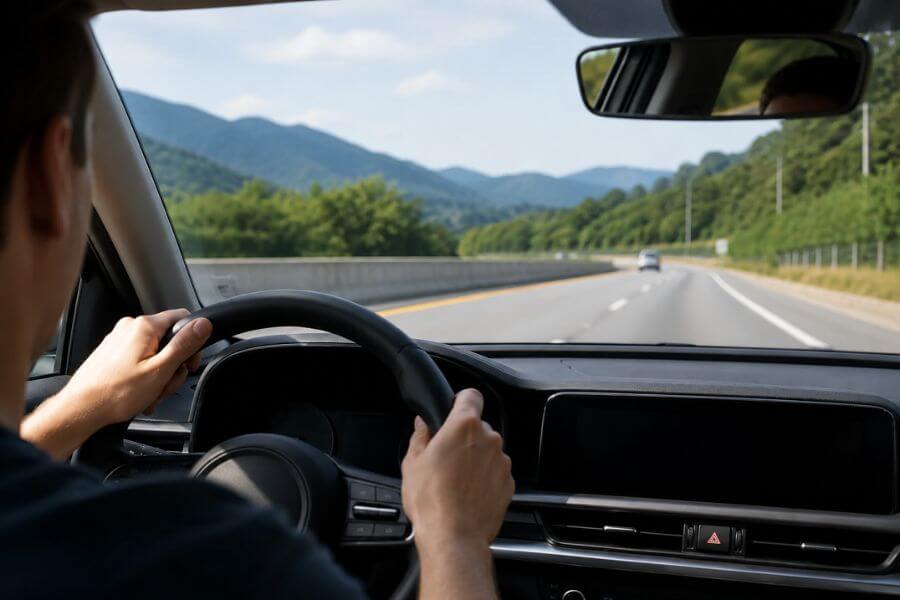
Renting a car and driving in South Korea as a United States citizen is one of the greatest ways to see this incredible country. While the public trains and buses are amazing, they cannot take you to every hidden beach, mountain temple, or quiet countryside cafe. Taking the wheel gives you absolute freedom.
Driving in a foreign country can feel a bit scary at first. You might worry about reading the street signs, understanding local laws, or navigating tight city streets. This guide will walk you through every single step of the process. You will learn exactly how to get your paperwork ready before you leave the United States, how to pick up your rental car, and how to stay safe on South Korean roads. Get ready to experience the ultimate road trip.
Why You Should Consider Driving in South Korea
Most travelers stick to the massive subway networks of Seoul or Busan. Those systems are fantastic for city travel, but South Korea has so much more to offer outside the major metropolitan areas.
When you drive, you get to see the beautiful countryside at your own pace. You can stop whenever you want to take a photo of a terraced green tea field in Boseong or grab a quick bite at a traditional village market. Having a car means you do not have to carry heavy bags across crowded train platforms or worry about missing the last bus of the night.
Driving is also the best way to explore Jeju Island. This famous volcanic island is a paradise for road trips, featuring coastal roads that wrap around the entire island and paths that lead deep into lush forests. If you want to visit historic sites in Gyeongju, surf the waves in Yangyang, or hike the peaks of Seoraksan National Park, a car turns a complicated journey into an unforgettable adventure.
The Paperwork You Must Get Before Leaving the United States
You cannot just show up at a South Korean rental counter with your standard American driver license. If you do, the clerks will kindly turn you away, and your road trip plans will disappear. You need to prepare two very specific documents before you board your flight.
The International Driving Permit Is Non-Negotiable
Your most important piece of paper is the International Driving Permit, which people usually call an IDP. This document translates your driving credentials into multiple languages, including Korean. South Korea strictly requires a valid IDP for foreign drivers.
You must obtain this permit in the United States before you travel. The American Automobile Association, widely known as AAA, is the official organization authorized to issue these permits. You do not need to be a member of AAA to get one. You can walk into any local AAA branch or mail in an application.
To get your IDP, you must fill out a brief application form, provide two original passport-style photos, present your valid United States driver license, and pay a small fee, which is usually around twenty dollars. The permit looks like a small grey booklet. It is valid for exactly one year from the date of issue. Keep in mind that you cannot get this permit once you arrive in South Korea, so plan ahead.
Check the Expiration of Your Home State License
Your IDP is not a standalone license. It is only valid when accompanied by your actual plastic driver license from your home state. Always check the expiration date on your state license before you travel. If your state license expires while you are traveling abroad, your IDP automatically becomes invalid too.
When you rent a car, the rental agency will demand to see both documents simultaneously. If the names or details do not match perfectly, they will refuse to hand over the keys. Make sure both pieces of identification are tucked safely in your carry-on bag.
Bring Your Physical United States Passport
Your passport is your primary form of identification in South Korea. The car rental company needs it to verify your legal entry into the country and to make sure you are the person listed on the rental contract. Ensure that your passport has at least six months of validity remaining from your date of arrival to avoid any issues at the border or the rental desk.
Understanding Age Limits and Vehicle Categories
Age rules for driving in South Korea can confuse travelers because the rental requirements differ from the minimum legal driving age. While local citizens can legally drive a car at age eighteen, rental companies have much stricter standards, especially for foreigners.
The General Rules for Twenty-One and Older
To rent a standard compact car or sedan in South Korea, most rental companies require you to be at least twenty-one years old. On top of that, you must have held your valid United States driver license for at least one full year. If you got your license just a few months ago, you will not be allowed to rent a vehicle, even if you are over twenty-one.
Rules for Larger Vehicles and Passenger Vans
If you are traveling with a large group of friends or family and need a larger SUV or a multi-passenger van, the age requirement usually jumps to twenty-five or twenty-six years old. For vehicles that hold more than nine passengers, South Korean law requires a different classification of driver license.
An average United States Class C license allows you to drive normal passenger cars. When you apply for your IDP at AAA, make sure the permit has a stamp next to the proper vehicle category. Standard cars fall under category B. If you plan to drive a large van, you might need a category D stamp, which requires a commercial license back home. Stick to standard cars and five-seat SUVs to keep things simple.
Choosing the Right Rental Car Company
South Korea has a highly developed car rental market with excellent options ranging from massive international brands to domestic giants. Booking your vehicle online a few weeks before your trip will guarantee you get the best price and the exact type of vehicle you need.
Large Domestic Korean Rental Agencies
The two largest car rental companies in South Korea are Lotte Rent-a-Car and SK Rent-a-Car. Both of these companies have massive fleets of well-maintained vehicles and excellent English websites. They have rental desks at all major airports, including Incheon International Airport near Seoul and Gimhae International Airport in Busan.
Renting from a major domestic company is often the smoothest path. Their customer service agents at the airport counters speak great English, and their online reservation systems are easy to navigate. They are highly accustomed to dealing with American tourists, so they know exactly how to process your United States license and IDP.
International Car Rental Brands
You will also see familiar global names like Avis, Hertz, and Enterprise in South Korea. In many cases, these international brands operate through partnerships with local companies. For example, Avis often operates in tandem with Lotte Rent-a-Car. Booking through a global brand can give you peace of mind and allow you to earn loyalty points, but always double-check the local pickup instructions.
Choosing Between Gasoline, Diesel, LPG, and Electric
When browsing for cars, you will notice different fuel options. South Korean cars run on gasoline, diesel, Liquefied Petroleum Gas, or pure electricity.
| Fuel Type | Availability | Good for | Things to Know |
| Gasoline | Everywhere | General driving | Quiet, standard fueling process |
| Diesel | Very Common | Long distances | Great fuel economy, louder engine |
| LPG | Common | Budget travelers | Cheaper fuel, smaller trunk space due to tank |
| Electric (EV) | High in Jeju, Growing on Mainland | Tech-savvy eco-travelers | Requires charging app, amazing infrastructure |
If you choose an LPG car, remember that the fuel tank sits inside the trunk, which reduces your space for luggage. If you choose an Electric Vehicle, or EV, you will enjoy incredibly cheap travel, especially on Jeju Island where charging stations sit in almost every parking lot. For a hassle-free mainland trip, a standard gasoline compact car or small SUV is usually your best bet.
Picking Up Your Rental Car at the Airport
When you land at Incheon International Airport or another major hub, clear customs and collect your luggage. Look for the car rental signs in the main arrivals hall. Most rental desks sit clearly on the ground floor.
The Essential Checklist for the Counter
When you approach the desk, place the following items on the counter to keep the process fast and efficient:
- Your physical United States passport
- Your valid United States driver license
- Your International Driving Permit booklet
- A major credit card under your legal name
Many rental companies will refuse debit cards or cash for the security deposit, so a credit card is essential. Make sure your credit card has a high enough limit to cover the rental cost and the temporary hold fee.
Inspecting the Vehicle for Pre-Existing Damage
Once the paperwork is signed, a staff member will lead you to the parking garage to hand over the vehicle. Do not just hop in and drive away. Take out your smartphone and take a detailed video of the entire exterior and interior of the car.
Point out any small scratches, dents, or bumper scuffs to the employee. Ensure they mark these defects on the digital or paper inspection form. Take close-up photos of the wheels, as rental companies check rims carefully for curb damage when you return the vehicle. Check the fuel gauge and make sure it matches the level written on your contract.
Navigating the South Korean Road System
South Korea has some of the finest road infrastructure in the world. The highways are smooth, well-lit, and clearly marked. However, the driving environment can feel fast and dense, so understanding the layout will keep you stress-free.
The Highway Network and Expressways
The country is connected by a massive web of expressways. The most famous is the Gyeongbu Expressway, which links Seoul to Busan. Highways are designated by numbers and color-coded signs. Expressway signs are bright green with white text, making them very easy to spot from a distance.
These highways usually feature multiple lanes. The far-left lane is often reserved as a carpool lane or an express bus lane, marked with blue lines. Do not drive in this blue-marked lane unless you have a specific number of passengers in your vehicle, usually six or more people in a large van. Stick to the middle and right lanes to stay safe.
Navigating Narrow City Streets and Rural Paths
While the highways are wide and modern, city streets can shrink rapidly. In older neighborhoods of cities like Seoul, Busan, or Daegu, alleys can become incredibly narrow, often with cars parked on both sides of a single lane.
When driving in these dense areas, go slow and fold in your side mirrors if space gets tight. In the countryside, look out for slow-moving farm equipment and one-lane bridges. South Korean drivers in rural areas are generally patient, but they expect you to move efficiently when it is your turn to cross a narrow path.
The Absolute Rules of the Road
South Korea drives on the right side of the road, just like the United States. This makes the physical act of driving feel instantly familiar. However, several specific traffic laws differ significantly from American rules.
Turning Right on a Red Light
In the United States, turning right on a red light after a complete stop is a standard practice in most places. In South Korea, the rules have become much stricter to protect pedestrians.
When you approach an intersection and want to turn right, you must come to a full, complete stop if the traffic light is red. Look carefully for pedestrians crossing the street you are entering. If the pedestrian walk signal is green, you must wait until it turns red and the crosswalk is completely clear before you can make your turn. If there is a specific right-turn arrow signal, you must follow that light exactly. When in doubt, just wait until the main light turns green.
Understanding Traffic Light Colors
South Korean traffic lights use the standard red, yellow, and green colors, but they often feature a fourth light: a green arrow pointing left. Unlike many parts of America where you can yield and turn left on a solid green light, in South Korea, you generally can only turn left when the glowing green arrow appears.
[ RED ]    --> Stop completely
[ YELLOW ] --> Prepare to stop, do not speed through
[ GREEN ]  --> Go straight only
[ ARROW ]  --> Safe to turn left
If you see a sign above the intersection that says “Bi-bo-ho” next to a left-turn lane, it means “unprotected left turn.” In this specific spot, you can turn left on a regular green light when there is an opening in oncoming traffic. If that sign is not present, sit tight until the arrow lights up.
Zero Tolerance for Drinking and Driving
South Korea has incredibly strict laws regarding driving under the influence of alcohol. The legal blood alcohol concentration limit is exceptionally low, practically sitting at zero tolerance. Even a single small beer or a shot of traditional Korean soju can put you over the legal limit.
Police frequently set up random roadblocks, especially on weekend nights and near popular restaurant districts. They block the entire road and test every single driver using breathalyzer devices. If you plan to drink even a tiny amount of alcohol, leave your rental car at the hotel and use public transit or a taxi. The penalties for foreign drivers include massive fines, immediate license cancellation, deportation, or jail time.
Master the Navigation Apps
Do not rely on Google Maps or Apple Maps when driving in South Korea. Because of national security regulations regarding geographic data, international mapping apps do not work properly for driving directions in the country. They will fail to give you step-by-step turn directions, show outdated roads, or simply freeze.
Download Naver Map or KakaoMap
To drive safely, you must download one of the two dominant domestic navigation apps before your trip: Naver Map or KakaoMap. Both apps are available on American app stores and offer comprehensive English language settings.
These apps are brilliant. They provide real-time traffic updates, suggest the fastest routes, and show highly detailed 3D layouts of complicated highway exits. They will tell you exactly which lane to sit in before a big turn, which is incredibly helpful in multi-lane city traffic.
How to Use Phone Numbers for Easy Searching
Searching for Korean business names or addresses in English can sometimes fail if the spelling does not match the app database perfectly. There is a genius shortcut: you can search for almost any location using its local telephone number.
Find the phone number of your destination on the web or a travel blog, type the digits directly into the Naver Map search bar, and the correct location will pop up instantly. This trick works perfectly for hotels, restaurants, cafes, and major tourist attractions.
Rent an English-Language In-Car GPS
If you do not want to use your phone, you can request a car with a built-in English GPS system when booking your vehicle through companies like Lotte. These systems work well, but make sure the rental agent switches the language settings to English before you leave the parking lot.
Toll Roads and the Hi-Pass System
When driving across South Korea, you will frequently encounter toll booths on the expressways. Paying these tolls is simple once you know how the lanes operate.
The Automated Hi-Pass Lanes
As you approach a toll plaza, you will notice some lanes have bright blue or orange painted lines on the asphalt. These are the Hi-Pass lanes, designed for cars equipped with an electronic toll collection tag.
If your rental car has a Hi-Pass card installed in the rear-view mirror or dashboard, you can drive straight through these lanes without stopping. The system will read the card wirelessly, make a pleasant dinging sound, and your rental company will charge the toll amount to your credit card when you return the vehicle. Always ask the rental clerk if the car includes a Hi-Pass card and if it is activated.
The Cash and Credit Card Lanes
If your rental car does not have an active Hi-Pass card, avoid the painted blue lanes completely. Look for the unpainted lanes that feature a green light or a sign showing a toll collector booth.
When you enter the highway through a regular lane, you will pass an automated machine. Press the blinking button to pull a paper ticket from the slot. Keep this ticket safe. When you exit the highway, enter another regular lane and hand the paper ticket to the human collector inside the booth. The digital screen will display the price, and you can pay using cash or a standard United States credit card.
Speed Cameras and Traffic Enforcement
South Korea does not rely on police cars hiding behind bushes to catch speeding drivers. Instead, the country uses a vast, highly automated network of traffic enforcement cameras.
Fixed and Average Speed Cameras
Fixed speed cameras sit on large metal scaffolding structures over the highways. They are always preceded by multiple warning signs on the road and vocal alerts from your navigation app. Your Naver Map app will beep loudly and count down the distance to the camera, telling you your current speed versus the legal limit.
You will also encounter average speed zones. These zones feature a camera at the start and another camera several miles down the road. The system calculates how long it took you to drive between the two points. If you arrived too quickly, you receive an automatic speeding ticket. Maintain a steady, lawful speed throughout the entire zone.
Speed Limits to Memorize
Speed limits are displayed in kilometers per hour, not miles per hour. Your rental car speedometer will also be in kilometers per hour, making it easy to match the signs.
- Expressways: Usually 100 or 110 kilometers per hour
- Rural Highways: Usually 60 to 80 kilometers per hour
- Urban Streets: Usually 50 kilometers per hour
- School Zones and Residential Paths: Strictly 30 kilometers per hour
School zones are marked with bright red asphalt and yellow signs. Cameras in these zones are highly sensitive, and fines double if you speed through them. Always slow down to thirty kilometers per hour the moment you enter these brightly colored safety zones.
Parking in South Korea: Tips and Traps
Finding a parking spot in dense South Korean cities can represent a challenge, but knowing where to look will prevent your car from getting towed or fined.
Decoding Road Paint for Parking Rules
Look at the lines painted on the edge of the curb to see if you can legally park your vehicle on the side of the street.
- Single White Line: Parking and stopping are completely legal at any time.
- Yellow Broken Line: You can stop for a few minutes to drop off passengers, but you cannot park the car and walk away.
- Single Solid Yellow Line: Parking is restricted. Look for nearby signs that list specific times when parking is permitted, such as weekends or late nights.
- Double Solid Yellow Line: Parking and stopping are strictly forbidden twenty-four hours a day.
Utilizing Public and Private Parking Garages
To avoid any risk, look for official parking lots. In Korean, these are called “Ju-cha-jang.” You will see large signs with the capital letter P.
Most shopping malls, large restaurants, and tourist sites offer large underground parking garages. When you enter, an automated camera reads your license plate and opens the gate. Before returning to your car, look for an automated payment kiosk near the elevators. Type your license plate number into the screen, pay the fee with your credit card, and you will have around fifteen minutes to drive out of the garage smoothly.
The Wonder of Traditional Village Parking
When you travel into rural areas or historical spots like the Hanok villages in Jeonju or Andong, you will often find massive, completely free public parking lots at the entrance of the district. Use these spacious lots instead of trying to drive through the historic, narrow residential pathways.
Fueling Up Your Vehicle
Refueling your car in South Korea is a straightforward experience, though self-service stations are becoming the norm across the country.
Self-Service vs. Full-Service Stations
Look for the word “Self” written in English on the large gas station signs if you want a cheaper rate. At full-service stations, an attendant will jog up to your window. Simply roll down your glass, say “Gasoline, please,” or tell them a specific amount like “Fifty-thousand won, please.” They will handle everything and bring your credit card back with the receipt.
Step-by-Step Guide to Using a Self-Service Pump
If you pull into a self-service station, the pump screens are usually in Korean, but many feature a small English button in the top corner.
First, touch the screen and select your fuel type. Gasoline pumps are almost always bright yellow or green, while diesel pumps are blue or green. Check your rental contract carefully to avoid mixing up the fuels.
Next, select your payment method, insert your American credit card into the slot, and choose the amount of fuel you want to purchase. Take the nozzle, fill up your tank until it clicks, and return it to the cradle. Collect your credit card and your paper receipt. If your American credit card fails at the machine, look for an attendant in the small office who can process the payment manually inside.
Defensive Driving Tactics for South Korean Roads
While the physical roads are in immaculate shape, the driving culture in South Korea requires high alertness and defensive habits.
Expect Quick Lane Changes and Buses
Traffic moves swiftly, and local drivers are highly skilled but can be aggressive with lane changes. They will often slide into your lane with minimal warning, using their turn signals for just a brief second before moving.
Give buses and taxis a wide berth. City buses pull in and out of designated lanes rapidly, and they expect passenger cars to slow down and let them through. Keep a safe following distance at all times, especially in dense highway traffic.
Watch Out for Delivery Motorcycles
In urban areas, small delivery scooters are everywhere. They transport food and packages at lightning speeds and often ignore standard traffic rules. They might squeeze between cars, ride on the shoulder of the road, or zip through crosswalks. Always check your blind spots and look at your side mirrors before changing lanes or making a turn to ensure a scooter is not creeping up beside you.
What to Do in Case of an Accident or Breakdown
No one wants to think about an accident, but knowing exactly how to react will protect your safety and your wallet if an emergency occurs.
Secure the Scene and Ensure Safety
If you get into a fender-bender or your car breaks down on the highway, pull over to the shoulder if possible. Turn on your emergency hazard lights immediately. South Korean highways feature emergency call boxes and clear distance markers along the guardrails. Get all passengers out of the vehicle and stand safely behind the highway barrier, away from moving traffic.
Call the Emergency Numbers and Your Rental Company
South Korea has excellent emergency response systems. Dial 112 to reach the police or 119 to reach medical emergency services. The emergency operators have access to English translators who can join the call instantly.
Once safety is secured, call the emergency roadside assistance number provided by your rental company. This number sits clearly on your rental contract folder or a sticker inside the glovebox. Major companies like Lotte maintain twenty-four hour assistance networks and will dispatch a tow truck or a mechanic to your exact GPS location within minutes. Do not admit fault or argue with other drivers; let the police and the rental insurance adjusters handle the communication.
Returning Your Rental Car Safely
When your magnificent road trip draws to a close, give yourself plenty of time to drive back to the airport or rental office.
Fill Up the Tank Close to the Drop-Off Zone
Most rental contracts state that you must return the vehicle with a completely full tank of fuel. Look for a gas station around five to ten miles away from the airport to do your final top-off. Keep the paper receipt from the gas station just in case the clerk wants proof that you pumped the correct fuel type right before arrival.
The Final Inspection and Settlement
Follow the airport signs marked “Rental Car Return” to enter the designated drop-off lanes. A staff member will walk around the vehicle, checking for new scratches or dents. They will compare the fuel gauge to the starting level.
If you used an in-car Hi-Pass card for highway tolls, the clerk will print out a detailed list of your trips and request your credit card to settle the total toll amount. Once they confirm everything is clear, they will sign off on the contract, release your security deposit hold, and send you on your way to the departure terminal.
Frequently Asked Questions
Can I drive in South Korea using just my regular United States driver license?
No, you absolutely cannot. South Korean law requires all foreign drivers to possess both their physical home country driver license and an International Driving Permit issued by AAA before arrival. If you carry only your state license, the rental car counter will refuse to give you a car, and you could face severe penalties if stopped by the police.
Is it difficult to read the road signs in South Korea as an American?
Not at all. Almost every major road sign on highways, expressways, and city streets features clear English translations right beneath the Korean characters. The symbols for stop signs, yield signs, and speed limits follow standard international designs, making them instantly recognizable.
Why does Google Maps not work for driving directions in South Korea?
South Korea enforces strict national security laws regarding geographic data to protect against external threats. This prevents foreign companies like Google or Apple from hosting detailed mapping data on servers outside the country. To get accurate, real-time driving directions, you must use local apps like Naver Map or KakaoMap.
Do I need to know how to drive a manual transmission car?
No, almost every single rental car in South Korea is equipped with a modern automatic transmission. Manual cars are exceptionally rare in the country outside of commercial trucks. You can expect your rental sedan or SUV to feature a standard automatic gear shifter that functions exactly like the cars in the United States.
What should I do if I accidentally drive through a Hi-Pass toll lane without a card?
Do not panic, and never slam on your brakes or try to reverse at the toll plaza, as this causes dangerous accidents. Simply keep driving safely to your destination. When you return the rental car, inform the counter agent that you missed a toll booth. They will lookup the vehicle license plate in the national highway database and charge the correct toll fee directly to your credit card without any major penalty.