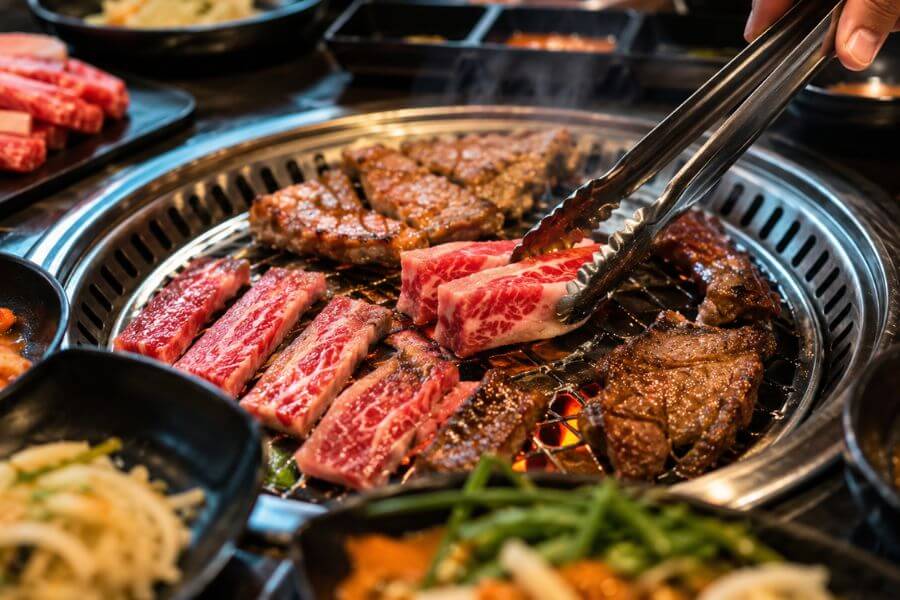
Stepping into a Korean barbecue restaurant for the first time can feel like walking onto a theater stage where you are suddenly the main actor, the chef, and the audience all at once. Unlike traditional Western dining setups where your food arrives fully arranged on a plate, this style of eating turns your table into a live kitchen. You sit around a fiery grill built right into the middle of the table, surrounded by dozens of tiny bowls filled with colorful toppings. You hold the tongs, you watch the fat render, you listen to the loud sizzle, and you create every single bite according to your exact mood that second.
To help you master this beautiful culinary tradition without any stress, here is the ultimate cheat sheet of what matters most before you pick up your chopsticks.
- The Grill Master Rule: One person usually takes control of the tongs to ensure the meat does not burn. If your server steps in to help cook, let them guide you, but always keep an eye on your food so it stays juicy.
- The Power of the Wrap: Never eat the meat completely by itself all night. The true magic happens when you build a wrap using fresh lettuce or sesame leaves, adding a slice of grilled garlic, a dip of savory sauce, and a pinch of pickled vegetables.
- The Art of Shared Plates: Every single side dish on the table belongs to everyone. Never claim a whole bowl for yourself, use your clean utensils to grab what you need, and feel free to ask for free refills on any side dish that runs out.
- Pork Versus Beef: Pork cuts like thick belly are usually cooked on a heavy metal plate to handle the grease, while high-quality beef cuts thrive on a thin wire mesh grill over an open flame. Always let the staff change your grill type when you switch meats.
- The Feast Beyond Meat: A great meal never stops at the meat. You always round out the heavy flavors by ordering hot stews, savory pancakes, or ice-cold noodles at the very end to cleanse your mouth.
The Core Concept of the Experience
To truly enjoy this style of dining, you must understand that it is far more than a simple way to fill your stomach. It is a highly social event designed to bring people together. In Western restaurants, you order your own plate, eat your own food, and focus on your individual portion. Here, the entire meal requires cooperation, sharing, and active participation. You are cooking for your friends, passing dishes across the table, toast-ing your glasses, and talking over the sound of crackling fat.
The environment inside a traditional house of meat is intentionally loud, bright, energetic, and filled with rich aromas. Thick smoke rises from the tables, captured by shiny metal tubes hanging from the ceiling. Laughter echoes off the walls as friends gather after a long workday. It is a place where you are encouraged to get your hands a little messy, speak with enthusiasm, and take your time over multiple hours. You are not rushing through a meal; you are participating in a multi-layered food event that rewards curiosity and a big appetite.
When you sit down, you will notice that the table layout is incredibly strategic. The center belongs entirely to the fire, which might run on glowing charcoal chunks or a steady gas flame. Around this central heat source, a beautiful pattern of small ceramic or metal dishes begins to form. This arrangement ensures that no matter where you sit, you can easily reach out and grab a bite of something crispy, something spicy, or something sweet to balance the rich savory notes of the proteins.
Navigating the Table Layout
As soon as you find your seat, your table will quickly fill up with an array of tools and dishes that might look unfamiliar if you are new to the setup. Understanding what these items are and how to use them will immediately make you feel like a pro.
Your Personal Dining Station
Right in front of your chair, you will find a small set of personal items. This usually includes a flat plate, a small bowl for rice, a pair of metal chopsticks, and a long-handled spoon.
Korean chopsticks are traditionally made of flat metal rather than round wood or plastic. They can feel slippery and heavy in your hand at first, but they are designed this way for hygiene and to make it easy to grip small pickled vegetables. Your spoon is meant for soups, stews, and rice, while your chopsticks handle everything else.
You will also receive your own individual dipping dishes. These small containers hold the liquid seasonings that you will plunge your cooked meat into right before taking a bite.
The Tools of the Trade
You do not need to bring anything to the table because the restaurant supplies the essential gear for live cooking. The two most important tools are the long metal tongs and the oversized kitchen scissors.
The scissors might surprise you if you are used to cutting steak with a knife, but they are actually the most efficient tool for this job. They allow the cook to snipe thick strips of pork or beef into perfect, bite-sized squares right over the fire without scratching the metal surface below.
You will also find a small button on the side of your table or on the wall next to you. This is a call button. Instead of waving your hands or yelling across a loud room to get a server’s attention, you simply press this button. A pleasant chime will ring, and a team member will arrive at your side within moments to take your order or replace a dirty grill plate.
Understanding the Meat Selection
The heart of the meal lies within the quality, thickness, and preparation of the proteins you select. The menu can be long and intimidating, often featuring names written in both Korean and English. To get the best experience, you should know exactly what part of the animal you are ordering and whether it comes pre-treated with a sweet marinade or completely raw and unseasoned.
The Pork Varieties
Pork holds a legendary status in this culinary tradition. It is often affordable, incredibly juicy, and packed with deep flavor that pairs perfectly with sharp, fermented side dishes.
Samgyeopsal (Pork Belly): This is undisputed royalty. It translates directly to “three-layered meat” because when you look at a raw slice, you can see distinct, beautiful stripes of pink meat separated by thick bands of clean white fat. It looks exactly like thick-cut American bacon, but it is not cured or smoked.
When you place this onto a hot plate, the fat melts down, crisping up the edges of the meat until they are golden brown. The texture is a beautiful contrast between a crunchy exterior and a melt-in-your-mouth interior. It is rich, heavy, and deeply satisfying.
Moksal (Pork Neck Shoulder): If you find pork belly a bit too fatty or heavy for your taste, this cut is your best alternative. Pork neck is much leaner, but it still contains enough fine lines of fat running through the muscle to keep it from drying out on the grill. It is cut into thick, round steaks.
When cooked properly over high heat, it takes on a texture that mimics a high-quality beef steak. It is chewy in a pleasant way, deeply savory, and absorbs the smoky flavor of charcoal exceptionally well.
Dwaeji Galbi (Marinated Pork Ribs): This cut uses meat sourced from around the ribs, which is deeply scored with a knife to allow a sweet and savory sauce to soak into the very center of the muscle fibers. The marinade typically uses a base of soy sauce, sweet brown sugar, minced garlic, sesame oil, and crushed Asian pears.
The fruit contains natural chemicals that break down the tough fibers of the meat, making it incredibly soft. When this hits the fire, the sugars caramelize quickly, creating dark, sweet, charred edges that taste amazing.
The Beef Selection
Beef is viewed as a premium option, often reserved for special celebrations, dates, or when you want to treat your guests to a luxury dining experience. The marinating styles for beef are often lighter than pork to let the natural quality of the meat shine through.
Bulgogi (Marinated Thinly Sliced Beef): This is perhaps the most famous dish outside of Asia. It features paper-thin ribbons of beef, usually cut from the ribeye or top sirloin. Because it is so thin, it cooks in a matter of seconds.
The meat sits in a sweet soy sauce bath before it hits the table. It is incredibly tender, sweet, and gentle on the palate, making it a massive hit for kids or people who are trying this style of food for the very first time.
Galbi (Beef Short Ribs): This is the star of the beef menu. Chefs use a special cutting technique to unroll the meat from the flat rib bone into a long, smooth ribbon. You can order it marinated in a sweet soy mixture or completely unmarinated.
The unmarinated version is highly prized because it relies solely on the high fat content of the short rib to deliver flavor. It is rich, buttery, and has a clean beef taste that pairs perfectly with a simple dip of salt and sesame oil.
De 등심 (Deungsim / Ribeye Steak): This is a classic thick steak cut that features high marbling, meaning tiny flecks of white fat are scattered evenly throughout the red muscle like a snowflake pattern. It is grilled as a whole steak and then cut into cubes with scissors just as it reaches a medium-rare state. It is juicy, luxurious, and packs a massive beefy punch.
Unseasoned Versus Seasoned Proteins
A common mistake beginners make is ordering a random mix of meats and throwing them onto the fire all at once. The order in which you cook your proteins matters immensely for your tastebuds.
You should always start your meal by ordering unseasoned, raw cuts of meat first. This allows you to enjoy the pure, clean flavors of the beef or pork without overloading your tongue with sugar or salt early on.
Once you have enjoyed a few rounds of raw meat, you can transition into the marinated selections like Bulgogi or sweet Galbi. If you do this in reverse, the strong sweet sauces will coat your mouth, making the unseasoned meats taste bland and uninteresting afterward.
Exploring the Dipping Sauces
Once your meat is perfectly browned and snipped into a bite-sized piece, you should never send it straight into your mouth without a quick stop at one of the dipping stations. These liquids and pastes add moisture, salt, and deep savory notes that complete the flavor profile of the protein.
Ssamjang (The Ultimate Barbecue Paste)
This thick, orange-brown paste is the ultimate condiment for this style of eating. It is made by mixing together two of the most important fermented ingredients in the cuisine: Doenjang (a salty, earthy fermented soybean paste) and Gochujang (a sweet and spicy red chili pepper paste).
To this base, chefs add minced garlic, chopped green onions, a drizzle of sweet sesame oil, and sometimes a touch of honey or sugar. The result is a paste that is simultaneously salty, slightly sweet, savory, and mildly spicy. It is thick enough to stick to the meat, providing a burst of complex flavor that cuts through the grease of fatty pork belly beautifully.
Gireum-jang (Oil and Salt Dip)
If you are eating high-quality, unmarinated beef or pork and you do not want to mask its natural flavor with a thick paste, this is your go-to option. It is a incredibly simple mixture of toasted sesame oil, coarse sea salt, and a generous pinch of cracked black pepper.
You drop a piece of hot meat into this clear oil, and the salt crystals stick to the surface while the nutty, roasted aroma of the sesame oil wraps around the protein. It enhances the meat’s natural juices without changing its core character.
Yangpa-jeorim (Sweet Soy and Onion Sauce)
This is a refreshing, liquid-based dipping option. It consists of a shallow bowl filled with a thin, tart sauce made from soy sauce, clear vinegar, sugar, and water. Floating inside this liquid are paper-thin slices of raw white onions and wild chives.
You use your chopsticks to grab a piece of meat along with a few strands of these crunchy onions that have soaked up the tangy vinegar solution. The sharp acidity of the vinegar cleanses your palate, resetting your mouth after every bite so you never feel weighed down by the fat.
The Wonderful World of Banchan (Side Dishes)
When you look at a table fully set for a feast, you will notice that the meat actually takes up a small percentage of the physical space. The rest of the table is a mosaic of tiny bowls containing side dishes known collectively as banchan.
These are not appetizers meant to be eaten before the main course arrives. Instead, they are active sidekicks meant to be eaten with the meat throughout the entire meal. They provide a balance of textures, temperatures, and flavors.
The Kimchi Collection
No table is complete without at least one form of kimchi, which consists of vegetables fermented with red pepper flakes, garlic, ginger, and salted seafood paste. It is sour, spicy, effervescent, and incredibly healthy.
Baechu Kimchi (Napa Cabbage Kimchi): This is the classic version that everyone recognizes. Whole leaves of cabbage are rubbed with a fiery red paste and aged for weeks or months.
At a barbecue restaurant, you should try eating it raw for a cold, crunchy, sour kick. However, an even better trick is to place a few ribbons of old, sour kimchi directly onto the edges of the hot grill plate. As the pork fat flows down the grill, the cabbage roasts in the oil, turning soft, sweet, smoky, and less intensely sour.
Kkakdugi (Diced Radish Kimchi): Made from Korean white radish cut into neat cubes, this variety offers a massive, satisfying crunch that does not fade over time. It is juicy, sweet, and has a sharp, peppery bite that cleanses your mouth after a heavy piece of short rib.
The Refreshing and Crispy Sides
To balance the hot, smoky nature of the grill, many side dishes are served ice-cold, sweet, or mildly pickled.
Gamja Salad (Potato Salad): This might surprise you because it looks very similar to an American deli salad. It features mashed potatoes whipped with mayonnaise, sugar, and tiny bits of crunchy cucumber, apple, or carrot. It is incredibly sweet, creamy, and cold. Eating a spoonful of this salad acts like a cooling blanket for your tongue if you accidentally eat something too spicy or hot.
Mu Ssam (Pickled Radish Wraps): These are paper-thin round discs of white radish that have been preserved in a sweet vinegar and water solution. They are ice-cold, crispy, and translucent. You can use these flat discs as a secondary wrapper instead of lettuce, rolling your hot meat inside them for a sweet, sour, and crunchy experience.
Kongnamul Muchim (Seasoned Soybean Sprouts): Yellow head soybean sprouts are blanched quickly in boiling water to keep them crunchy, then tossed with a light dressing of sesame oil, garlic, and sometimes a few red pepper flakes. They offer a clean, earthy flavor and a nutty crunch that adds excellent texture to any bite.
The Savory and Steamed Sides
Gyeran-jjim (Steamed Egg Soufflé): This dish arrives at your table inside a piping hot, black earthenware pot. The eggs are beaten with a light savory broth and cooked until they puff up over the rim of the bowl like a golden, cloud-like soufflé. It is incredibly soft, light, spongy, and hot. It provides a comforting, mild, savory flavor that grounds the meal.
Mastering the Wrapping Technique (Ssam)
The absolute pinnacle of this dining experience is the creation of a wrap, known locally as ssam, which means “wrapped.” Eating the meat straight off the grill piece by piece is fine, but building a wrap is how you unlock the full potential of the cuisine. It allows you to combine multiple textures and flavors into one perfect package.
Choosing Your Base Leaf
Your table will be supplied with a basket overflowing with fresh, green leafy vegetables. The two main options you will encounter are red leaf lettuce and sesame leaves.
The lettuce is soft, mild, and acts as a neutral canvas for your ingredients.
The sesame leaf, which looks like a large mint leaf with jagged edges, is a completely different story. It has a powerful, distinct herbal aroma that carries hints of anise, basil, and mint. It is bold and sharp, making it an incredible partner for highly seasoned or fatty meats like marinated pork ribs.
Step-by-Step Wrap Construction
Building a wrap is a personal art form, but you should follow a few basic structural steps to ensure it does not fall apart or explode when you try to eat it.
- Prep the Leaf: Pick up a fresh leaf of lettuce or sesame from the basket. Shake off any excess drops of water. Place it flat across the palm of your non-dominant hand, keeping your fingers open to support the weight. If the lettuce leaf is massive, you can fold it in half to create a sturdier base.
- Add the Foundation Meat: Use your chopsticks to select a hot piece of meat directly from the grill. Dip it quickly into your sauce of choice, such as the salty sesame oil or a smear of orange paste. Place this piece right in the physical center of your leaf.
- Layer the Toppings: Grab a few small items from the side dish bowls. Excellent choices include a few strands of seasoned green scallions, a piece of crunchy soybean sprout, or a slice of pickled radish.
- The Hidden Bomb (Garlic): If you enjoy bold flavors, take a thin slice of raw or grilled garlic, dip it into the thick soybean paste, and place it on top of the meat. This adds a pungent, sharp kick that cuts through the fat instantly.
- The Fold: Bring the bottom of the leaf up over the meat. Then, fold in the left side and the right side, rolling it forward into a tight, neat little pouch or ball.
The One-Bite Golden Rule
This is perhaps the most important rule of etiquette when it comes to eating a wrap: You must put the entire wrap into your mouth all at once.
Never attempt to take a small bite out of a wrap and look at the inside. If you do this, the structural integrity of the leaf will fail, the juices and thick sauces will leak out onto your fingers or clothes, and the remaining half will fall apart onto your plate.
Because of this rule, you must be very careful about how much food you place inside your leaf during construction. If you build a giant mountain of meat and vegetables, you will struggle to close your mouth, which can look messy to your dining companions. Keep your wraps compact, neat, and small enough to slide past your lips comfortably in one go.
Deciphering Grill Etiquette and Table Manners
Because you are the cook in this restaurant environment, there is a set of unwritten social rules that keeps the meal flowing smoothly, safely, and respectfully for everyone at the table. Adhering to these simple customs will show your hosts and friends that you respect their culture.
Who Controls the Tongs?
In general social situations, the person who is hosting the meal or the youngest person at the table takes control of the cooking duties as a sign of respect and care for the rest of the group. However, if you are a group of beginners, the most important thing is that one single person should be designated as the main Grill Master for each round of meat.
If everyone at the table constantly reaches in with their own chopsticks to flip pieces of meat at random intervals, the meat will lose its heat, cook unevenly, and create confusion. The Grill Master ensures that the raw meat is laid out flat, flipped at the perfect moment, cut into uniform shapes, and pushed to the cooler outer edges of the grill plate once it is fully cooked so it does not dry out.
If your dedicated cook is busy working the tongs, you should show your appreciation by building a beautiful, perfect wrap and feeding it directly to them by hand, or placing a piece of cooked meat onto their personal plate so they can eat while they work.
Caring for the Cooking Surface
As you cook multiple rounds of meat, especially cuts that contain sweet sugary marinades, the surface of your grill will inevitably begin to collect black, burnt bits of carbon and caramelized sugar. If you continue to place fresh, expensive meat onto this black surface, the burnt flavor will transfer directly to your food, ruining its clean taste.
You do not need to clean this yourself. Simply catch the eye of a server or press the call button on your table and say the word “Bulpan,” which means grill plate, while pointing at the fire. The staff will arrive instantly with a fresh, clean, piping-hot replacement metal plate.
They will use special handles to lift the dirty, heavy metal away and drop a clean one down in seconds without interrupting your conversation. Do not hesitate to ask for a grill change three, four, or even five times during a long meal.
The Etiquette of Shared Utensils
Since all the side dishes and sauces are shared among everyone sitting at the table, keeping things clean is highly valued.
Never use the chopsticks that have been inside your mouth to stir around a shared bowl of potato salad or cabbage kimchi. If you want to grab a portion of a side dish, use the clean end of your chopsticks, or look for the shared spoons provided with the bowls.
Additionally, never reach across someone else’s space to grab a piece of meat from the far side of the fire. Always ask politely for someone closer to pass the dish or slide a piece of meat your way using the shared tongs.
Choosing Your Drinks and Toasting Customs
A true barbecue feast is almost always accompanied by traditional adult beverages that are specifically selected to complement the rich, smoky, salty flavors of the grilled proteins. Understanding how to pour, receive, and drink these beverages is a major part of the social experience.
The Core Beverage Options
Soju (Clear Rice Spirit): This is the undisputed national drink. It comes in a small, iconic green glass bottle and is served completely chilled in tiny shot glasses. It is a clear, neutral spirit that tastes similar to a very smooth, mild vodka.
Its clean, sharp finish acts as an excellent palate cleanser, wiping away the rich film of pork fat from your tongue after a bite of belly meat. Today, you can also find low-alcohol versions infused with sweet fruit flavors like green grape, strawberry, or grapefruit, which are incredibly easy to sip.
Maekju (Korean Beer): Local beers are typically light, crisp, highly carbonated lagers. They are not heavy or thick like craft ales or dark stouts. This light body is completely intentional. A heavy beer would compete with the rich flavors of the meat, while a light, icy-cold lager cuts through the heat of the grill room and refreshes your body instantly.
Somaek (The Popular Cocktail Mixture): If you want to drink like a true local, you should combine these two drinks into a popular cocktail called Somaek, which mixes the words Soju and Maekju together.
You pour a single shot of clear spirit into a larger beer glass, fill the remaining space with cold beer, and then strike the bottom of the glass sharply with the tip of a long spoon. This action creates a sudden wave of micro-bubbles that thoroughly mixes the two liquids together, creating a smooth, creamy beverage that goes down incredibly easy.
The Rules of Pouring and Receiving Drinks
If you are drinking alcohol with companions, you must follow a few deeply ingrained customs regarding physical handling.
- Never Pour Your Own Drink: It is considered poor form to grab a bottle and fill your own glass. You should always wait for a dining companion to notice your empty glass and fill it for you. Conversely, you should constantly look around the table, and if you see a friend’s glass running low, you should immediately reach for the bottle to top them off.
- The Two-Handed Rule: Whenever you pour a drink for someone else, or whenever someone is pouring a drink into the glass you are holding, you must use both of your hands. You hold the bottle with your right hand while lightly resting your left hand under your right forearm or against your chest as a sign of respect. If you are receiving a drink, you hold your small shot glass with both hands while bowing your head slightly.
- Turning Your Head to Sip: If you are drinking with someone who is significantly older than you or higher than you in professional rank, it is polite to turn your head slightly away from them toward the side when you take your sip, covering your mouth and glass lightly with your hand so they do not see you gulping the liquid down.
Finishing the Meal Like a Local (The After-Grill Course)
A common mistake made by newcomers is stopping the meal once the last strip of meat has been removed from the fire. In this food culture, the meat is merely the first major act of the play. To complete the experience properly, you must transition into the starch and soup phase, which helps settle your stomach and provides a grand finale to the evening.
Cold Noodles (Naengmyeon)
This might sound unusual if you are used to eating hot meals, but ordering a bowl of ice-cold noodles at the very end of a hot, sweaty barbecue session is absolute heaven.
These noodles are made from buckwheat or potato starch, making them incredibly thin, dark, chewy, and long. They are served inside a massive metal bowl filled with a clear, tangy beef broth that has actual chunks of ice floating around the noodles. The dish is topped with crunchy slices of Asian pear, pickled cucumbers, and a hard-boiled egg.
When the bowl arrives, your server will use large scissors to cut the long noodles into manageable strands. You then add a splash of sharp yellow mustard and clear vinegar to the broth.
Slurping down these freezing, tangy, chewy noodles cools your entire body down instantly, cuts through any remaining grease in your throat, and leaves your mouth feeling clean and refreshed.
Stews and Rice (Kimchi Jjigae and Doenjang Jjigae)
If you prefer a warm, comforting conclusion to your meal instead of cold noodles, you can order a bubbling hot stew served in a thick stone pot alongside a fresh bowl of fluffy white rice.
Kimchi Jjigae (Kimchi Stew): This is a thick, fiery red soup made by boiling old, highly fermented cabbage kimchi with fatty chunks of pork, soft tofu, and green onions. It is intensely sour, spicy, and savory.
Doenjang Jjigae (Fermented Soybean Paste Stew): This is an earthy, comforting brown soup made from a base of fermented soybean paste, filled to the brim with diced zucchini, sweet onions, earthy mushrooms, potatoes, and soft cubes of tofu. It has a deep, savory flavor that feels incredibly grounded.
To eat these stews like a pro, you take a spoonful of the hot, savory soup and pour it directly over your bowl of white rice, mashing the soft vegetables into the grains before taking a bite. The warm comfort of the starch and hot broth provides a perfect sense of fullness that signals the end of a magnificent feast.
Comparing Different Dining Setups
Not all barbecue restaurants are created equal. Depending on your budget, your hunger levels, and the occasion, you will choose between two primary types of establishments. Understanding how these setups operate will help you pick the right spot for your night out.
| Feature | All-You-Can-Eat Establishments | À La Carte (Pay Per Portion) Restaurants |
| Pricing Model | Fixed flat fee per person for unlimited food | You pay a specific price for every single plate ordered |
| Meat Quality | Standard grade, often pre-frozen and cut thinner | High premium grade, fresh, never frozen, thick cuts |
| Cooking Service | You must do one hundred percent of the cooking yourself | Servers often handle the grill work for you at your table |
| Side Dish Variety | Simple, classic sides often set up as a self-serve bar | High-end, unique, house-made sides served to you |
| Best Used For | Large groups, casual friendly hangouts, massive appetites | Special dates, business dinners, celebrating milestones |
As you can see, both options have a clear place in your dining rotation. If you are a beginner looking to practice your wrapping skills and try a vast variety of cuts without worrying about a rising bill, an all-you-can-eat spot is a fantastic training ground. However, if you want to experience the true melt-in-your-mouth luxury of high-marbled short ribs or premium fresh pork belly, saving up for an à la carte restaurant will deliver an unforgettable culinary memory.
Frequently Asked Questions
What should I do if the fire gets too hot and the meat starts burning or catching fire?
First, do not panic or throw water onto the grill surface, as this will create a dangerous explosion of hot steam and ash. Every grill station has a control knob on the side of the table or on the wall that controls the gas flow or the airflow to the charcoal. Simply turn this knob down to reduce the heat. You should also use your long metal tongs to immediately lift the burning pieces of meat off the direct center of the heat and push them to the very outer ring of the metal plate, where the temperature is much cooler. If a flare-up happens because fat dripped onto the charcoal, you can press your call button, and a server will arrive to adjust the vents or swap your grill plate for a fresh one.
Can I ask for more of a specific side dish if I finish the bowl quickly?
Yes, absolutely. One of the most beautiful aspects of this dining style is that all the small side dishes, known as banchan, come with completely free, unlimited refills. The staff expects you to finish your favorite bowls multiple times throughout the evening. If you want a refill at a traditional table-service restaurant, simply hold up the empty small dish to catch a server’s eye or press the call button and ask politely for more. At many modern or casual all-you-can-eat locations, there will be a central self-serve salad bar where you can walk up with your empty bowls and scoop out as much cabbage kimchi, garlic slices, and soybean sprouts as your heart desires. Just be sure to only take what you can actually finish so that no delicious food goes to waste.
Is it safe to eat the raw garlic slices that are served with the side dishes?
Yes, it is entirely safe to eat them raw, but you should be prepared for an incredibly sharp, fiery, and pungent flavor that will stay on your breath for quite some time. Eating raw garlic slices dipped in savory paste inside a lettuce wrap is a highly traditional way to enjoy the meal because the intense sharpness of the raw vegetable cuts through the heavy fat of pork belly instantly. However, if you find the flavor of raw garlic too intense or overpowering, you can simply drop the white slices directly onto the hot metal grill plate next to your meat. Let them roast in the melting fat for a few minutes until they turn golden brown and soft. Grilling garlic changes its chemistry, removing the sharp burn and turning it into a sweet, buttery, and mellow treat that anyone can enjoy.
What should I do with the large metal tube hanging over the middle of my table?
That metal tube is a highly specialized exhaust hood designed to vacuum up the thick smoke, steam, and vaporized fat that rises from the hot grill before it can fill the dining room or soak into your clothes. These tubes are flexible and can be pulled down close to the fire or pushed up out of the way. As a general rule, you want the bottom of the shiny metal tube to hover roughly four to six inches directly above the cooking surface while meat is actively grilling to catch the smoke early. When you are ready to flip the meat, cut a steak with scissors, or chat with the person sitting directly across from you, you can gently grab the tube and slide it upward a few inches to clear your field of vision and give your hands more room to move safely around the heat.
Are there any options available at a meat house for people who do not eat meat or follow a vegetarian diet?
While the core focus of the restaurant is undoubtedly on animal proteins, a vegetarian can still enjoy a wonderful evening out with friends at a traditional grill house if they know what to look for. You can utilize the hot grill plate to roast various non-meat items that are often provided or can be ordered separately, such as thick slices of king oyster mushrooms, sweet white onions, green peppers, and aged cabbage kimchi. You can also order a dedicated pot of Doenjang Jjigae (fermented soybean paste stew) and explicitly ask the kitchen to prepare it using only a vegetable broth instead of the standard dried anchovy or beef base, filling your bowl with soft tofu, squash, and rice. Many places also offer savory vegetable or mung bean pancakes that are incredibly crispy and filling.