Key Takeaway
Planning a budget trip to South Korea requires blending smart local logistics with non-traditional choices. By substituting high-speed express trains with intercity buses, choosing unique lodging options like neighborhood bathhouses or residential study rooms, and dining at local office worker diners and traditional markets, you can experience the nation deeply on a minimal budget. Maximizing transfer discounts through a single transit card and timing visits during secondary shoulder seasons ensures your funds extend exceptionally far without compromising on cultural immersion or comfort.
The Landscape of Affordable Travel in South Korea
South Korea stands as a fascinating intersection of hyper-modern technology and deeply rooted traditions. From the neon-lit streets of Seoul and the coastal stretches of Busan to the ancient burial mounds of Gyeongju, this destination offers endless exploration. Many travelers assume that visiting an industrialized powerhouse requires an extensive bank account. This is a common misconception. While luxury experiences certainly exist, the country possesses an incredibly robust public infrastructure and cultural norms that cater perfectly to independent, budget-conscious exploration.
Understanding how local systems operate allows you to navigate the country efficiently. The domestic market places a premium on efficiency and affordability for its citizens, meaning that visitors who mimic local habits can save significant amounts of money. Whether it is utilizing the extensive public transit networks or dining at small alleyway establishments, your dollars can stretch surprisingly far.
The global perception of South Korea often highlights flashy shopping districts, premium skincare clinics, and high-end dining. However, the true heartbeat of the culture resides in places that cost very little to experience. Mountain hiking trails, public parks along major rivers, ancient temple grounds, and bustling neighborhood markets provide world-class entertainment and insight for pennies on the dollar. Navigating these spaces simply requires moving beyond standard resort style vacations and adopting a mindset of local integration.
Success in keeping costs low depends heavily on preparation. Downloading local navigation tools, learning basic cultural manners, and understanding alternative lodging formats will alter the financial trajectory of your journey. By stepping away from global booking platforms and international hotel chains, you uncover a network of low-cost solutions built specifically for regional students, workers, and domestic travelers.
Strategic Timing for Lower Flight and Lodging Rates
The time of year you choose to cross the ocean dictates a massive portion of your total vacation expenditures. South Korea experiences four distinct seasons, each bringing varying waves of domestic and international tourism. Pinpointing windows where weather remains pleasant but demand drops is the first major step in protecting your wallet.
Spring and autumn represent the absolute peak periods for tourism. Late March through mid-April sees massive crowds arriving for the cherry blossom season, driving hotel rates to their highest annual marks. Similarly, October and November bring stunning fall foliage that fills national parks and historic neighborhoods with sightseers. If your primary goal is minimizing expenses, avoiding these exact peak weeks is highly recommended.
Summer introduces intense humidity, heavy rainfall during the mid-summer monsoon season, and school vacations that crowd coastal destinations like Busan and Jeju Island. Winter brings bitter cold winds from Siberia, causing temperatures to drop well below freezing, which naturally depresses tourism numbers outside of ski resort zones. This makes deep winter an incredibly cheap time to visit cities, provided you pack heavy thermal clothing.
The ideal sweet spot for budget conscious travelers lies in the shoulder seasons. Consider booking your trip during late May to early June, or throughout the month of September. During these specific windows, the harsh winter cold has faded, the summer downpours have not yet begun, and the peak blossom or foliage crowds are completely absent. Airlines and guesthouses frequently slash prices during these periods to fill capacity, allowing you to secure excellent flight deals and nightly rates.
| Season | Calendar Months | Cost Level | Crowd Density | Ideal Budget Strategies |
| Spring Peak | Late March to April | Highest | Extreme | Book six months early, stay outside main urban cores |
| Late Spring Shoulder | May to Early June | Moderate | Medium | Walk outdoor parks, leverage regional bus discounts |
| Summer Monsoon | July to August | High | High (Coastal) | Focus on indoor free museums, avoid beach resorts |
| Autumn Shoulder | September | Low to Moderate | Medium | Enjoy perfect walking weather, use city bikes |
| Autumn Peak | October to November | High | High | Visit lesser known provincial parks instead of Seoraksan |
| Winter Off-Peak | December to February | Lowest | Very Low | Utilize indoor markets, save maximum on hostel rooms |
Navigating the Public Transportation Grid
The transit infrastructure across South Korea ranks among the finest on earth. It is clean, safe, operates precisely on time, and offers incredible value if you understand how the ticketing and transfer systems function. You never need to utilize private taxis or expensive rental vehicles to explore major urban centers or rural provinces.
The Universal Smart Card System
Your very first purchase upon clearing customs at Incheon International Airport or any point of entry must be a rechargeable transit card, widely known as a T-Money card. Available at every convenience store for a nominal fee of a few thousand Korean Won, this plastic card serves as your digital key to the nation. You load it with physical cash at subway stations or convenience counters, and then tap it upon entering and exiting buses and trains.
Using this card provides immediate financial benefits over purchasing individual paper single-rider tickets. It slashes the base fare of every journey automatically. More importantly, it unlocks the integrated transfer system. If you step off a city subway and board a local bus within thirty minutes, the transit computer calculates the journey as a single continuous ride, making the bus portion completely free or reducing it to a tiny fraction of a dollar. Always remember to tap your card against the reader when leaving a bus, or you will forfeit this transfer discount and face a penalty fare on your next ride.
Subways versus City Buses
In major metropolises like Seoul, Busan, Daegu, and Gwangje, the subway network forms a subterranean web that reaches almost every historical landmark, market, and neighborhood. Fares are calculated by distance, with the base rate covering the initial ten kilometers for roughly one dollar. The system is fully signposted in English, making navigation straightforward.
City buses complement the rail system by weaving into narrower alleyways and climbing steep residential hillsides. While subways are excellent for long distance cross city travel, buses often provide a more direct route to specific hillside attractions, such as the colorful Gamcheon Culture Village in Busan or the traditional villages of Seoul. Utilizing both via the free transfer system ensures you never have to pay for individual point to point journeys.
Long Distance Intercity Travel
When moving between different provinces or major cities, you face a distinct choice between speed and savings. The Korea Train Express, commonly called the KTX, is a high-speed bullet train that zips from Seoul to the southern coast in under three hours. While incredibly efficient, a one way ticket can cost upwards of fifty dollars, which eats up a daily budget quickly.
For a significantly cheaper alternative, turn your attention to the intercity and express bus networks. These long distance buses depart from central terminals frequently and cost a fraction of the high-speed rail price. While a bus journey from the capital to Busan takes roughly four to four and a half hours, the ticket costs nearly two-thirds less than the KTX. The vehicles feature large, comfortable reclining seats, and the highway routes include stops at famous Korean rest areas, which double as affordable food courts offering local snacks.
Alternative and Non-Traditional Accommodations
Lodging will consume a massive portion of your capital unless you look past standard western style business hotels. South Korea features several culturally unique accommodation styles that provide safe, clean places to rest for incredibly low nightly fees.
Guesthouses and Hostel Dormitories
For solo travelers or small groups, the guesthouse culture in neighborhoods like Hongdae or Myeongdong is highly developed. Booking a single bed in a shared dormitory room keeps costs remarkably low, often hovering around fifteen to twenty-five dollars per night. Many of these independent establishments include basic morning provisions like toast, eggs, instant noodles, and filtered coffee within the room rate, saving you from spending cash on breakfast.
The Phenomenon of the Jimjilbang
If you find yourself caught out late after the subways stop running, or if you want to experience an authentic lifestyle hack, visit a jimjilbang. These are massive, twenty-four hour public bathhouses and sauna complexes found in every town. For a single entry fee usually ranging between ten and fifteen dollars, you receive access to hot tubs, steam rooms, cold plunges, and a set of cotton pajamas.
After bathing, visitors move to massive communal sleeping halls equipped with heated floors, mats, and traditional blocks for pillows. While it lacks the absolute privacy of a hotel room, a jimjilbang is incredibly secure, highly relaxing, and represents the cheapest legal overnight stay in the country. It is an ideal option for backpackers looking to trim their lodging expenses for a night or two while experiencing a cornerstone of local relaxation culture.
Goshiwons and Residential Mini Rooms
Originally designed decades ago as tiny, distraction free study rooms for university students prepping for intense state exams, goshiwons have transformed into low-cost monthly and weekly housing options for budget travelers. These micro units feature a single bed, a small desk, a mini refrigerator, and sometimes a private wet room shower compressed into a space the size of a walk-in closet.
While incredibly small, goshiwons are exceptionally cheap. Many operators now advertise on regional booking portals for short-term tourist stays. The major financial perk of a goshiwon lies beyond the cheap room rate; almost every single establishment features a communal kitchen stocked with free, unlimited white rice, domestic kimchi, instant ramen, and basic condiments. For a traveler looking to eliminate grocery costs, utilizing these free kitchen staples can cut your daily food spending down to almost nothing.
Minbeoks and Local Pensions
When venturing into rural areas, beach towns, or mountainous national parks, traditional western hotels disappear or become overpriced. Instead, look for signs reading “Minbeok” or search online for local pensions. A minbeok is essentially a spare room rented out by local families, often featuring traditional floor bedding known as yo.
Pensions are independent countryside cabins or apartment units that frequently feature private kitchenettes. Traveling with a small group and sharing a pension room allows you to split the cost evenly, while the attached kitchen enables you to cook meals using fresh ingredients sourced from rural agricultural markets.
| Lodging Type | Average Nightly Cost (USD) | Primary Advantage | Major Trade-Off |
| Hostel Dorm Bed | $15 – $25 | Free breakfast, social atmosphere | Lack of total privacy |
| Jimjilbang Bathhouse | $10 – $15 | Ultra cheap, spa access included | Sleeping on mats in public halls |
| Goshiwon Micro Room | $20 – $30 | Private room, unlimited free rice and kimchi | Extremely tight physical quarters |
| Traditional Hanok Home | $40 – $70 (Shared) | Cultural beauty, historic zones | Thin walls, floor bedding only |
| Rural Minbeok | $25 – $35 | Authentic local hospitality | Limited English spoken by hosts |
Authentic Local Dining on a Shoestring Budget
South Korea is a paradise for food lovers, and fortunately, the best food rarely comes from expensive establishments. The culinary culture prioritizes deep, savory flavors, hearty portions, and a unique system of complimentary side dishes that ensure you leave every meal completely satisfied.
The Glory of Traditional Markets
To experience maximum culinary variety for minimal cash, skip standard sit-down restaurants and head directly into the historic covered markets. Locations like Gwangjang Market or Namdaemun Market in Seoul, and Jagalchi Market in Busan, are packed with food stalls run by independent cooks.
You can perch on a heated bench and order classics like tteokbokki, which are thick, chewy rice cakes simmered in a sweet and fiery red pepper sauce. Pair them with gimbap, a seaweed and rice roll packed with pickled vegetables, egg, and fishcake, which acts as the perfect portable lunch. A massive plate of these staples rarely costs more than a few dollars, providing clean, filling fuel for hours of walking.
Understanding the Baekban Eatery
If you want a proper sit-down meal but wish to avoid tourist prices, look out for small neighborhood diners displaying the word “Baekban.” A baekban restaurant specializes in a traditional home style set meal. When you sit down, you do not choose from a massive menu; instead, the kitchen brings out a steaming bowl of rice, a hot soup or stew such as soybean paste stew, and a large spread of banchan, which are small side dishes.
These side dishes typically include various types of seasoned kimchi, pickled radishes, rolled omelets, marinated bean sprouts, and braised potatoes. The magic of dining in South Korea lies in the hospitality rule regarding banchan: they are completely unlimited. When a small dish runs low, you simply ask the staff for a refill or head to a self-service station in the back. A full baekban meal provides incredible nutritional value and deep satisfaction for less than seven dollars.
Convenience Store Culture as a Legitimate Option
Do not dismiss Korean convenience stores like GS25, CU, and Seven-Eleven as mere places to grab a soda. In this country, convenience stores function as neighborhood dining hubs for busy students and office workers alike. They feature pristine seating areas, microwave banks, and hot water dispensers designed for immediate dining.
The refrigerated shelves are packed daily with dosirak, which are multi-compartment plastic lunchboxes containing balanced meals of rice, bulgogi beef or pork, fried eggs, and small side bites. These cost around three to five dollars and rival the quality of quick service restaurants. You can also purchase instant ramen bowls, drop in a cheap cheese slice or a soft-boiled egg from the counter, and create a hot, savory meal for pennies.
The Business District Lunch Special
If you want to experience premium dining concepts like Korean barbecue or specialized beef stews without paying full evening prices, structure your day around the lunch hour. Between eleven in the morning and two in the afternoon, restaurants located near major office towers and university campuses offer lunch specials known as jeom-sim-teuk-seon. Fares for identical cuts of meat or stew pots drop by thirty to fifty percent during these hours to attract local workers, allowing you to enjoy a sit-down feast at a bargain rate.
Free and Low-Cost Attractions Across the Nation
Entertainment and exploration do not require hefty ticket fees. South Korea offers an abundance of world-class history, nature, and modern culture entirely for free, provided you know where to look.
The Palaces of Seoul
The capital city hosts five grand palaces from the Joseon Dynasty, with Gyeongbokgung and Changdeokgung being the most famous. Individual entry tickets are already highly affordable, usually costing under three dollars. However, you can bypass this fee entirely by participating in a unique cultural initiative.
If you wear a hanok, which is the traditional Korean clothing, entry to all grand palaces is one hundred percent free. Rental shops line the streets surrounding the palace gates. While renting a costume costs a small fee, it provides unique photography opportunities and unlocks free admission across multiple historic grounds. Additionally, if you plan your itinerary around the final Wednesday of any given month, you hit “Culture Day,” a national event where entry fees to all major palaces, royal shrines, and public museums are waived for everyone.
Mountain Hikes and Public Parks
Over seventy percent of the Korean peninsula is covered by mountainous terrain, making hiking a core national pastime. Every major city is bordered by peaks accessible via public transport. In Seoul, taking a local train to the base of Bukhansan National Park grants you access to rugged peaks, ancient stone fortress walls, and sweeping city vistas without spending a single cent on admission.
In the lowlands, cities have invested heavily in creating urban green spaces. The Hangang Park system weaves along both sides of the massive River Seine in Seoul. Here, you can watch free evening fountain shows, view local buskers playing live music, or simply sit on the grass and enjoy the skyline. In Busan, sprawling public beaches like Haeundae and Gwangalli provide free coastal access, complete with clean public restrooms and changing facilities.
Mural Villages and Historic Streets
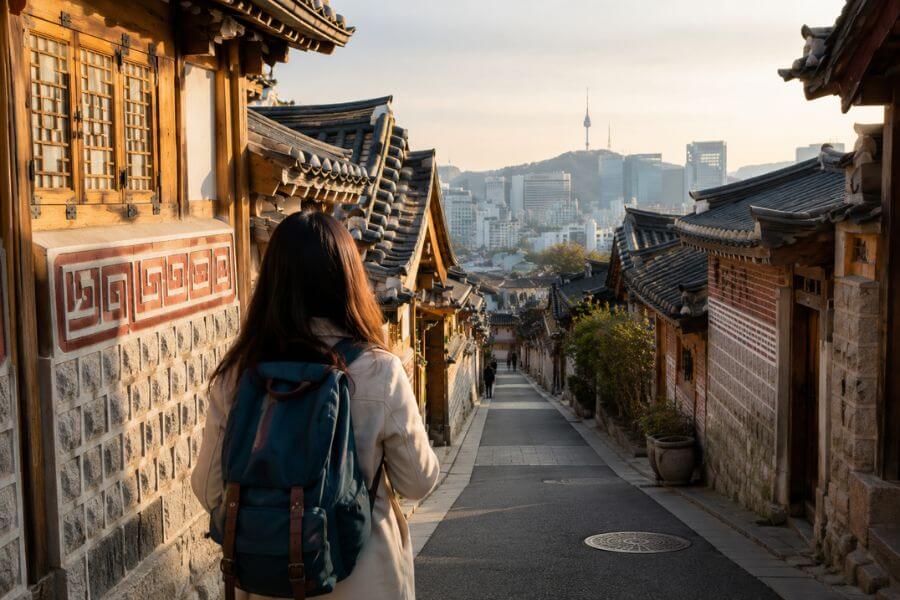
Turn ordinary walks into open-air museum tours by visiting transformed historical neighborhoods. Across the nation, aging hillside communities have been revitalized by local artists into vibrant mural villages. Ihwa Mural Village in Seoul and Gamcheon Culture Village in Busan feature steep, winding stairways and alleys adorned with colorful paintings, sculptures, and art installations. Exploring these neighborhoods costs absolutely nothing and offers deep insight into urban revitalization and local creative movements.
Smart Connectivity, Apps, and Banking Habits
Staying connected to the local digital grid is vital for keeping costs low. Western navigation tools do not function correctly within South Korea due to national security regulations regarding mapping data. Without the correct digital tools, you risk getting lost and wasting money on emergency transit choices.
Navigating via Regional Applications
Before stepping onto your flight, download Naver Map or KakaoMap. These are the twin gold standards for finding your way around the country. They provide real-time bus arrival data, tell you exactly which subway car door to stand near for a fast transit transfer, and list minor pedestrian walking paths that global mapping apps completely ignore.
For communication and translation, skip generic translation software and install Papago. Developed by a major domestic tech firm, Papago processes the Korean language with extreme contextual accuracy. It features a live camera translation tool that allows you to instantly decipher handwritten alleyway menus, bus schedules, and ingredient labels at local grocery stores, saving you from accidentally ordering expensive specialized dishes.
Affordable Data Options
Avoid using your home cellular provider’s international roaming plan, which often carries exorbitant daily fees. Instead, arrange for a local eSIM or pocket Wi-Fi device before arrival. If your smartphone supports digital SIM cards, you can purchase an affordable data-only eSIM online for a couple of dollars a day, granting you unlimited access to high-speed networks. Having constant data ensures you can check bus schedules on the fly and look up restaurant reviews to avoid high tourist prices.
Fee-Free Banking and Cash Management
While South Korea is a highly digitized society where credit cards are accepted at almost every retail shop, carrying a small reserve of physical cash remains essential for a budget traveler. Street food stalls, traditional market vendors, and the cash loading machines for your transit cards do not accept foreign credit cards.
When withdrawing cash locally, look for automated teller machines displaying a prominent “Global ATM” sign. Many standard domestic bank machines reject foreign debit cards or charge massive processing fees. Utilizing specific global banking networks ensures you receive the official interbank exchange rate without losing five to ten dollars per transaction to hidden financial fees.
Comparing Budget Itineraries Across Major Hubs
To visualize how these various cost-saving strategies come together in practice, it helps to look at how real daily expenses break down across the primary travel regions of the country. Urban capitals demand different financial trade-offs than coastal cities or historic provinces.
Seoul: The Urban Capital Experience
In the capital, your primary financial challenge is accommodation. However, because the subway network is incredibly vast, you can save significant money by booking lodging outside the hyper-centers of Myeongdong or Gangnam. Look for hostels or micro rooms in student-heavy residential areas like Mapo, Seongbuk, or Dongdaemun, where nightly costs are low and surrounding restaurants cater to budget-conscious university students.
Busan: The Coastal Alternative
Busan stretches along a dramatic coastline, meaning transit times between attractions can be longer. Here, utilizing the integrated bus and subway transfer system is paramount. Instead of dining at expensive beachfront seafood restaurants where tourist premiums are high, walk a few blocks inland to find local diners serving pork rice soup, a famous, incredibly filling regional specialty that costs very little.
Gyeongju: The Historic Open-Air Museum
Gyeongju sits in the eastern province and serves as the ancient capital of the Silla Kingdom. Because the historic core is relatively flat and concentrated, you can completely eliminate public transit costs by renting a basic city bicycle for the day. Pedal between ancient burial mounds, historic observatories, and palace ruins, most of which require either no admission fee or a token entry payment of less than two dollars.
| Expense Category | Seoul Daily Estimate (USD) | Busan Daily Estimate (USD) | Gyeongju Daily Estimate (USD) |
| Dorm Bed / Eco Lodging | $22.00 | $18.00 | $16.00 |
| Local Market & Diner Meals | $14.00 | $12.00 | $11.00 |
| Smart Card Public Transit | $4.00 | $3.50 | $1.50 (Bicycle rental scale) |
| Sightseeing & Palace Entry | $3.00 | $0.00 (Focus on coastal walks) | $2.00 |
| Convenience Store Snacks & Coffee | $3.00 | $2.50 | $2.00 |
| Total Daily Cost | $46.00 | $36.00 | $32.50 |
Frequently Asked Questions
Is South Korea expensive compared to other popular Asian destinations?
South Korea occupies a highly favorable middle ground. It is significantly more affordable than destinations like Japan or Singapore when it comes to everyday public transportation, museum admissions, and casual dining. While it carries higher baseline costs than countries in Southeast Asia, an independent traveler utilizing local systems, traditional markets, and alternative lodging options can comfortably explore the country for a fraction of what a European or North American trip would demand. Fares for local trains and hearty market meals regularly sit below western averages.
Can I travel across the country comfortably if I do not speak any Korean?
Yes. Every major transit hub, subway station, and intercity bus terminal features clear signage in English. Public announcement systems on urban trains broadcast upcoming stops in multiple languages. For independent dining and navigating deep inside local neighborhood markets, keeping a regional translation app like Papago active on your phone removes any substantial language barrier. Pointing to menu pictures or utilizing the camera translation tool makes ordering food and finding platforms stress free.
How much cash should I carry versus relying on international credit cards?
A wise approach is to maintain a balance of roughly eighty percent card usage and twenty percent physical cash. Your international credit card will work seamlessly at established convenience stores, major retail brands, chain cafes, and hotel desks. However, you will need physical Korean Won banknotes to load money onto your transit card at station kiosks, purchase inexpensive snacks from open-air market vendors, and buy small items from street carts. Keeping roughly fifty thousand Won in physical cash on your person is ideal.
Is tap water safe to drink across South Korea to save on buying bottled water?
The public water infrastructure across the nation is highly advanced, and municipal tap water is completely safe to consume. However, because of old piping in specific historic neighborhoods, a vast majority of locals prefer to filter their water or use public dispensers. To eliminate beverage costs completely, carry a reusable water bottle. You will find completely free, ultra clean hot and cold filtered water dispensers installed inside every guesthouse, hostel, subway station, museum lobby, and department store across the country.
Are tipping customs expected at budget restaurants or inside local taxis?
There is absolutely no tipping culture anywhere in South Korea. If you leave extra money on a table at a local diner or attempt to give a cash tip to a service worker, they will assume you accidentally forgot your change and run down the street to return it to you. The price listed on a menu or flashing on a transit meter is the exact final amount you are expected to pay, with all service costs and taxes already included by law. This absolute financial transparency makes budgeting highly accurate.