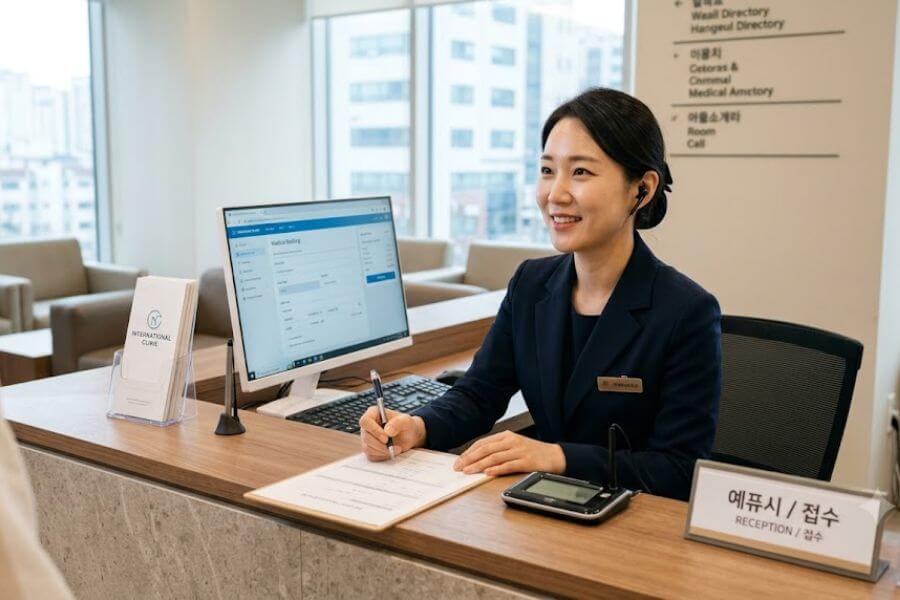
Seoul is world-renowned for its hyper-efficient, state-of-the-art medical and dental infrastructure, but finding a provider who speaks your language requires a bit of insider knowledge. This guide will walk you through every step of locating, booking, and attending a medical or dental appointment in Seoul with clear communication and total confidence.
Understanding the South Korean Healthcare Landscape
Before you make your first phone call, it helps to understand how the system is structured. South Korea divides its medical facilities into three distinct tiers, and knowing where to go will save you hours of waiting and unexpected expenses.
Primary Care Clinics
These are neighborhood facilities, usually run by a single doctor or a small group of specialists. You will see these everywhere in Seoul, often occupying a single floor of a commercial building near a subway station. They are designated by signs ending in “Uiwon” (clinic). These clinics are perfect for minor illnesses, cold symptoms, simple skin issues, or routine checkups. Many neighborhood doctors speak excellent conversational and medical English because a large portion of their textbooks and medical training is conducted in English.
Secondary General Hospitals
These are mid-sized hospitals that offer a broader range of specialists and diagnostic equipment, such as advanced X-ray machines and basic scanning technology. You might visit a secondary hospital if your neighborhood doctor suggests a more thorough evaluation or if you need outpatient testing that a local clinic cannot provide.
Tertiary University Hospitals
These are massive, multi-building medical complexes managed by major universities or large corporations. They possess the highest level of specialized technology and deal with complex surgeries and rare conditions. Examples include Seoul National University Hospital, Yonsei Severance Hospital, and Asan Medical Center. Almost every tertiary hospital in Seoul operates a dedicated international clinic or a specialized international healthcare center specifically designed to assist foreign patients with English-speaking staff and coordinators.
Navigating the Primary Care and General Clinic System
If you have a common ailment like a sinus infection, a sprained ankle, or a stomach bug, starting at a primary care clinic is your best move.
Choosing the Right Specialty
Unlike in some Western countries where you must see a general practitioner first to get a referral for everything, South Korea allows you to walk straight into a specialized clinic. If your skin is breaking out, you can go directly to a dermatologist. If your ears hurt, you can head straight to an ear-nose-throat specialist, locally referred to as an “Ibihuika.”
The Walk-In Culture
Many local clinics do not require an appointment for basic consultations. You can simply walk into the clinic, approach the front desk, and present your identification. However, because you want to guarantee that an English-speaking doctor is available that day, calling ahead or sending a quick message via local apps is highly recommended.
Accessing International Healthcare Centers at Major Hospitals
When you require advanced care or prefer a seamless, English-first experience from the moment you step through the door, the international centers at major tertiary hospitals are exceptional.
What to Expect at an International Center
These centers act as a hospital within a hospital. They have their own dedicated waiting rooms, reception desks, and bilingual coordinators who will accompany you to various departments, help you navigate the pharmacy, and handle your billing paperwork. The doctors working in these centers are frequently professors who have studied or practiced medicine abroad.
The Referral Rule
There is an important financial detail you must know about major university hospitals. If you hold Korean National Health Insurance and go straight to a tertiary hospital without a referral letter from a smaller neighborhood clinic, your insurance may not cover the base costs, leaving you with a much higher out-of-pocket bill. However, some international clinics have specific workarounds or separate fee structures for foreign travelers and expats, so it is wise to clarify this when booking.
Finding a Great English-Speaking Dentist in Seoul
Dental care in Seoul is highly sophisticated, utilizing digital scanning, rapid in-house labs, and modern cosmetic techniques. Finding a dentist who speaks English is relatively straightforward because dental tourism is highly popular in neighborhoods like Gangnam, Hongdae, and Itaewon.
Types of Dental Practices
Similar to medical clinics, you will find small neighborhood dental offices as well as massive, multi-floor dental centers. The larger centers frequently employ specialized staff dedicated entirely to international patients, ensuring that your cleanings, fillings, root canals, or orthodontic adjustments are explained to you in perfect detail.
Treatment Plans and Transparency
Korean dental clinics are known for providing comprehensive dental plans before any work begins. A coordinator will typically sit down with you, display your digital X-rays on a screen, and give you a detailed breakdown of costs for each tooth. Do not hesitate to ask questions about materials used, such as resin versus ceramic, as this can affect both the price and durability.
Step-by-Step Guide to Booking Your Appointment
Once you have identified a facility, following a systematic booking process will ensure your slot is secured and that the medical team is prepared for your visit.
Step 1: Gather Your Information
Before contacting the clinic, write down your basic information so you can provide it quickly. You will need your full legal name as it appears on your passport, your date of birth, your phone number, a brief description of your symptoms, and your insurance type.
Step 2: Choose Your Communication Channel
Many foreigner-friendly clinics offer multiple ways to book an appointment.
- Phone Call: The fastest way. When you call, simply ask, “Is there an English speaker available?” The receptionist will usually transfer you to a bilingual staff member.
- Messenger Apps: KakaoTalk and WhatsApp are incredibly popular for booking appointments in Seoul. Many clinics list their ID or a QR code on their website. You can send a message in English, and they will reply with available time slots.
- Email or Web Forms: Best for non-urgent or complex inquiries, especially at major university international centers.
Step 3: Confirm the Details
Always verify the exact address, the floor number, the name of the specific doctor you will be seeing, and what materials you need to bring with you.
What to Bring to Your Medical or Dental Visit
Arriving prepared will make your registration process swift and stress-free. Pack these essential items in your bag before you leave your home or hotel.
- Identification: Your physical passport or your Alien Registration Card, now formally known as a Residence Card.
- Insurance Card or Documentation: If you have Korean National Health Insurance, the clinic can look you up using your ID number, but keeping a digital copy of your enrollment is helpful. If you have international travel insurance, bring the physical policy certificate and a claim form.
- Current Medications: Bring the actual boxes or a clear, written list of any prescriptions, over-the-counter vitamins, or supplements you take regularly.
- Medical History: If you are dealing with a chronic condition, a brief summary of past surgeries, major illnesses, or recent lab results will help the doctor immensely.
Navigating the Costs and Insurance Systems
Understanding how billing works in South Korea will prevent any surprises when you hand over your credit card at the reception desk.
Korean National Health Insurance
If you live, work, or study in South Korea for more than six months, you are generally enrolled in the statutory National Health Insurance system. This program covers a significant portion of medical treatments, routine checkups, and standard dental cleanings. When you visit a local clinic, your out-of-pocket copay for a basic doctor consultation can be remarkably affordable, often ranging from five to fifteen dollars.
International Travel Insurance and Private Policies
If you are a tourist or a temporary digital nomad using international travel insurance, you will usually pay the clinic directly at the end of your visit. You must request a detailed, itemized receipt written in English, along with a formal diagnostic report showing the medical codes. You will submit these documents to your insurance provider later for reimbursement.
Payment Comparison for Common Services
The following table provides an estimated look at how costs differ based on your insurance status at typical neighborhood clinics in Seoul.
| Service Type | With Korean National Health Insurance | Without Insurance (Self-Pay/Travel Insurance) |
| General Consultation | Low out-of-pocket copay ($5 to $15) | Full standard rate ($30 to $70) |
| Specialist Center Visit | Moderate copay ($15 to $30) | Higher base fee ($50 to $120) |
| Routine Dental Cleaning | Highly subsidized once per year ($15 to $25) | Standard clinic rate ($50 to $100) |
| Basic Dental Cavity Filling | Partial coverage based on material ($10 to $30) | Full material and labor cost ($80 to $250) |
Language Tools and Communication Tips
Even if your doctor speaks English, the front-desk receptionists, nurses, or pharmacy staff might only speak basic phrases. Utilizing a few practical strategies will bridge any communication gaps effortlessly.
Essential Translation Apps
Download translation software before your appointment. Apps like Papago, which is developed locally in South Korea and specializes in contextual Korean-English translation, are lifesavers. You can type out your symptoms, use the voice feature to speak directly into the phone, or use the camera function to instantly translate printed medical forms or signs.
Helpful Korean Medical Phrases
While the goal is to get an English-speaking provider, knowing a few words can help you navigate the hallways or communicate with a nurse who is taking your blood pressure.
- “Yeong-eo ganeung-haseyo?”: Do you speak English?
- “Apayo”: It hurts.
- “Yeori nayo”: I have a fever.
- “Yeogi-ga apayo”: It hurts here (while pointing).
- “Cheobangjeon”: Prescription.
The Pharmacy Process and Managing Medications
The appointment does not end when you leave the doctor’s office. In South Korea, doctors do not dispense medicine, and clinics do not have an in-house pharmacy aisle. The separation of prescribing and dispensing is strictly enforced by law.
Finding the Nearest Pharmacy
When you check out at the clinic reception, the staff will hand you a paper prescription sheet. You must take this physical paper to an independent pharmacy, known as a “Yakguk.” Pharmacies are almost always located on the ground floor of the exact same building as the clinic or immediately next door to the subway exit. Look for a bright neon sign displaying the single Korean character: 약.
Understanding Your Medication Packets
Korean pharmacies use an incredibly organized system for dispensing pills. Instead of receiving plastic bottles filled with loose tablets, the pharmacist will print out individual, clear plastic pouches connected in a long strip. Each individual pouch contains the exact combination of pills you need to take for a single meal.
The outer paper bag or the plastic pouches will have clear markings indicating when to take your dose. You will see checkmarks next to morning, afternoon, or evening, along with a note telling you to take the medicine thirty minutes after eating. The pharmacist will often point to these symbols and explain them to you using simple English terms.
What to Do in a Medical or Dental Emergency
When an urgent situation occurs in the middle of the night, skipping the standard booking process and going straight to emergency care is vital.
Emergency Contact Numbers
If you require immediate medical assistance, an ambulance, or rescue services, dial 119 from any phone. This service is completely free, operates twenty-four hours a day, and connects you to emergency dispatchers. If you speak English, the dispatcher will transfer your call to an interpreter who will translate your situation to the ambulance crew.
The Emergency Medical Information Center
For urgent but non-life-threatening situations where you simply need to find an open emergency room or an overnight pharmacy that has English support, dial 1339. This is a dedicated healthcare hotline that provides real-time information about medical facilities across Seoul.
Summary of the Entire Medical Appointment Process
To help you visualize your journey from feeling unwell to receiving your medication, here is a quick overview of how a typical medical encounter unfolds in Seoul.
- Locate a Clinic: Choose a nearby neighborhood clinic or a major hospital international center based on your medical needs.
- Contact and Verify: Call or message the facility to ensure an English-literate physician is available during your desired hours.
- Register at Front Desk: Arrive ten minutes early, present your passport or Residence Card, and state whether you have local or international insurance.
- Consultation: Meet with the physician, explain your symptoms, undergo any necessary diagnostic tests, and receive your paper prescription.
- Payment: Return to the reception desk, settle your bill via cash or credit card, and collect your physical prescription document.
- Pharmacy Visit: Walk to the nearest pharmacy marked with the “Yakguk” sign, hand over your paper prescription, receive your personalized medication pouches, and pay for your medicine.
Frequently Asked Questions
Do I need a local Korean phone number to book an appointment?
While having a local phone number makes communication much simpler, it is not an absolute requirement. Many international clinics at university hospitals can correspond with you via email. For smaller neighborhood practices, you can use messaging apps like KakaoTalk or WhatsApp over a wireless internet connection to text their business accounts and arrange a date and time.
Can I get birth control or emergency contraception at a Seoul clinic?
Regular daily oral contraceptive pills are available over the counter at any local pharmacy in Seoul without a doctor’s visit; you can simply walk in and ask the pharmacist for them. However, emergency contraception requires a physical prescription from a doctor. You can visit any local obstetrics and gynecology clinic, known as a “Sanbuingwa,” or go to a general urgent care clinic to obtain the necessary paperwork.
Are dental cleanings covered by international travel insurance?
Most standard international travel insurance policies only cover unexpected, emergency dental procedures, such as treating a broken tooth or stopping a severe infection. Routine preventative care, including regular cleanings or cosmetic whitening, is typically paid out of pocket if you do not possess a specific dental add-on policy. It is best to check your insurance handbook before scheduling a routine cleaning.
What should I do if the doctor prescribes a medication I take at home but it looks different?
Medication brand names vary significantly between countries. Korean pharmacies may dispense a local version of a drug that has a different shape, color, or name than what you use at home, even though the active chemical ingredient is identical. If you feel uncertain, look at the active ingredient name printed on the packet or ask the pharmacist to verify the chemical name so you can compare it to your usual prescription.
Can a tourist use the emergency room at a major university hospital?
Yes, emergency rooms in South Korea are open to everyone, including foreign tourists, expats, and students. If you experience an urgent medical issue at night or over the weekend, you can walk directly into the emergency department of any large hospital. Be aware that emergency room fees for non-emergency conditions can be high if you do not have local health insurance, so try to utilize daytime clinics for minor health issues.