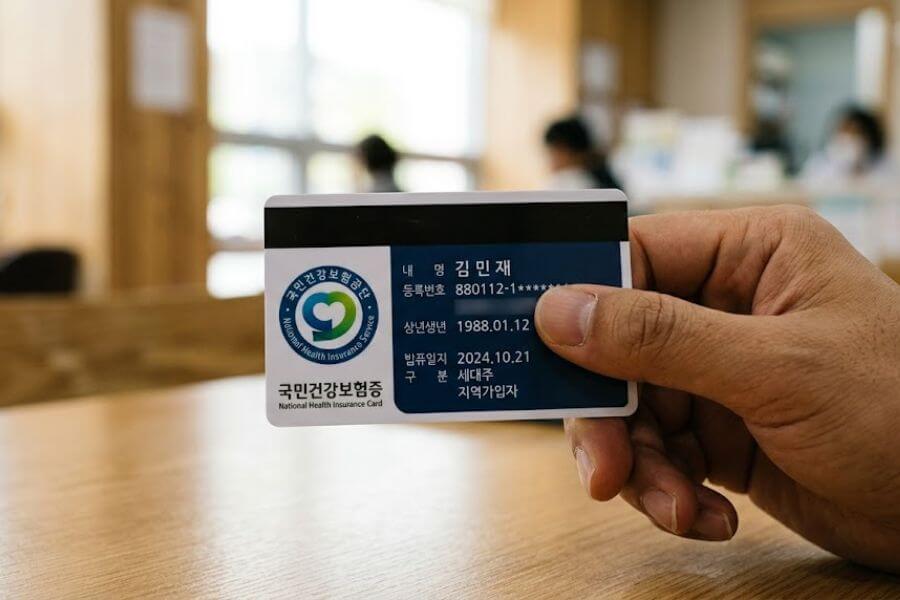
Moving to a new country brings a mountain of paperwork, but figuring out your medical care does not have to be a headache. South Korea offers one of the top health systems globally, and as an expat, you get to access the exact same medical perks as local citizens. This ultimate guide will walk you through everything you need to know to get signed up with the National Health Insurance Service (NHIS) without any stress.
Understanding the South Korean Health Insurance Scheme
Before diving into the paperwork, it helps to understand what the system actually is. The National Health Insurance Service is a government-managed program that provides healthcare coverage to everyone living in the country. Instead of buying private policies from corporate entities, you pay into a centralized public fund.
When you go to a medical clinic or a major hospital, this system covers a large portion of your bill right at the checkout counter. You do not have to fill out complicated reimbursement forms after your visit. The hospital simply scans your registration card, and the discount applies instantly.
How Much Do You Pay Out of Pocket
While the state fund absorbs the majority of your medical costs, you are still responsible for a small share of the bill. This payment is called a co-payment. The exact amount you pay depends entirely on where you go for treatment.
- Neighborhood Clinics: If you visit a small local doctor for a cold or a minor check-up, you generally pay around thirty percent of the total cost.
- General Hospitals: If you need to see a specialist or visit a large hospital facility, your share of the cost rises to anywhere between forty and sixty percent.
- Inpatient Care: If you are admitted to a hospital bed for an extended stay or a surgical procedure, you only pay about twenty percent of the overall costs.
This structure keeps everyday doctor visits incredibly affordable. A standard check-up at a neighborhood clinic often costs less than fifteen dollars, which includes your consultation and basic physical tests.
What Is Covered and What Is Left Out
The public health fund is highly comprehensive, but it does not cover absolutely everything. It focuses heavily on necessary medical care rather than elective procedures.
- Covered Services: Routine doctor visits, emergency room treatments, surgical procedures, prescription medications, annual physical exams, and basic dental care like scaling or fillings.
- Excluded Services: Cosmetic surgeries, advanced dental treatments like orthodontic braces or teeth whitening, high-tech diagnostic procedures that are not deemed strictly necessary by a doctor, and private hospital room upgrades.
Who Needs to Sign Up
The registration rules in South Korea are strict and clear. For long-term foreign residents, getting health coverage is not an optional luxury. It is a legal requirement.
The Six Month Threshold Rule
If you hold a long-term visa and plan to stay in the country for more than six months, you are legally obligated to join the national health system. The government tracks your entry dates through the immigration portal. Once your continuous stay hits the one hundred and eighty day mark, the system flags your record and initiates enrollment.
If you leave the country for a brief vacation during those six months, it might alter your timeline. If you step outside of South Korea for more than thirty days in one go, the six-month clock resets completely. You will have to wait another six months from your new re-entry date before you become eligible to join. However, if your trip abroad is short and lasts less than thirty days, your continuous stay remains unbroken.
Visa Exceptions for Immediate Coverage
Not everyone has to wait half a year to get covered. Certain visa types grant you entry into the national health system on the very day you arrive or as soon as you complete your local residence registration.
Instant Eligibility Visas
| Visa Category | Visa Description | Timing of Coverage |
| D-2 | International University Students | Immediate upon entry and residence registration |
| F-6 | Marriage Migrants Spouse of Citizen | Immediate upon entry and residence registration |
| E Visas | Professional Corporate Workers | Immediate upon the start date of employment |
If you enter on a D-4 general trainee visa for language studies, you do not get instant coverage. You must wait out the standard six-month period before the system allows you to register.
The Two Enrollment Categories
Your registration pathway depends entirely on your employment situation inside South Korea. The system divides all policyholders into two distinct groups.
Workplace Subscribers
If you are employed by a local company, school, university, or registered institution, you fall into the workplace subscriber category. This pathway requires almost zero effort on your part because your employer handles the heavy lifting.
Under local labor laws, any business employing foreign workers must register them for health benefits. Your company will ask for your identification documents during your first week on the job. Their human resources department submits the paperwork directly to the state health authority.
The best part about being a workplace subscriber is the cost split. The monthly premium is calculated as a fixed percentage of your gross salary, which sits at around seven percent. Your employer is legally required to pay exactly half of that amount. The remaining half is deducted directly from your monthly paycheck before it hits your bank account.
Local Subscribers
If you do not have a standard corporate employer, you fit into the local subscriber category. This group includes freelance workers, English tutors working on specific independent contracts, digital nomads, religious workers, and anyone residing on a long-term residency visa without local corporate employment.
As a local subscriber, you are fully responsible for managing your own application and paying the entire monthly premium by yourself. The government calculates your monthly bill based on your local income and any property or assets you own inside the country. If you do not have a significant tracked local income, the government charges you a standard flat premium rate based on the average payment of all citizens across the nation.
Step-by-Step Workplace Sign Up Process
If you have a traditional job lined up, the registration process runs smoothly behind the scenes. However, you still need to follow a few critical steps to make sure your company can file the paperwork correctly.
Step 1: Secure Your Residence Card
You cannot get health coverage without a legal identity code. Within your first ninety days in the country, you must visit your local immigration office to apply for your physical Residence Card, which was formerly known as the Alien Registration Card.
This process requires your passport, visa documentation, housing contract, and a small processing fee. It typically takes anywhere from three to six weeks for the immigration office to print and issue your physical card.
Step 2: Submit Documents to Your Employer
The moment your physical Residence Card arrives, take a clear photo of the front and back and hand it over to your human resources coordinator. They will combine your residence identity number with your corporate employment contract to build your profile in the state portal.
Step 3: Verify the First Paycheck Deduction
Once your employer completes the registration, your coverage goes live retroactively to your official job start date. Keep a close eye on your very first paycheck stub. You should see a clear line item labeled for national health insurance. If you see this deduction, your coverage is active, and you can walk into any doctor office without worry.
Step-by-Step Local Subscriber Sign Up Process
If you are an independent worker, an artist, or a long-term resident without a corporate boss, you have to manage the registration details on your own. While the system tries to automate this process, relying entirely on the automated system can sometimes lead to unexpected gaps or surprise bills.
Step 1: Wait for the Official Mail Notification
Once you cross your sixth month of continuous residence in South Korea, the immigration database triggers an alert to the health authority. The health authority automatically signs you up as a local subscriber and prints an enrollment notice pack.
This official package ships directly to the home address registered on your Residence Card. The packet contains your official insurance card, a detailed terms booklet printed in multiple languages, and your very first monthly bill.
Step 2: Handle Missing Mail Promptly
Local mail delivery can sometimes go awry, especially if your name on your mailbox does not match your official passport spelling perfectly. If you cross your six-month mark and two weeks pass without any mail from the health department, you must take action.
Do not assume that missing mail means you do not owe money. The system accumulates your monthly fees regardless of whether you received the paper bill. Call the bilingual helpline or head directly to a physical office branch to check the status of your account.
Step 3: Visit a Branch Office for Manual Registration
If you need your health benefits to start immediately on day one hundred and eighty one, or if your mail never arrived, you should register manually in person. You will need to pack a folder with your passport, your physical Residence Card, and a copy of your current housing lease agreement to prove your official address.
If you live in the capital city area, the government operates specialized foreign resident centers in major districts like Seoul, Incheon, and Gyeonggi province. These specialized hubs feature staff members who speak fluent English, Chinese, Vietnamese, and Uzbek. If you live outside these major zones, you can walk into any standard neighborhood branch office, though you may want to bring a bilingual friend along to help interpret the local terminology.
Registering Family Dependents
If you moved to South Korea with your spouse or children, you can bundle everyone under a single insurance profile to save money on monthly premiums. This setup is known as registering dependents.
The Six Month Dependent Rule
Local laws state that foreign dependents must reside in South Korea for a full six months before they can be added to a primary worker policy. This rule prevents individuals from flying into the country exclusively for quick, cheap medical treatments before leaving.
Your family members must maintain continuous residence just like local subscribers. The only exceptions to this waiting period are minor children and spouses of registered workplace subscribers who hold specific long-term family visas. They can often get linked to the primary earner profile right away.
Required Documents for Family Ties
To prove that your family members qualify as legitimate dependents, you must provide official documents that verify your relationships. The health office will not accept basic written statements.
- Foreign Relationship Certificates: You must provide official marriage licenses for your spouse and birth certificates for your children.
- Apostille or Embassy Verification: Any document issued by a foreign government must be officially certified with an Apostille stamp or verified by your home country embassy inside South Korea.
- Korean Translations: If your certificates are written in English or any other foreign language, you must provide a clean translation into Korean. You do not need to hire an expensive professional translator for this step. You can translate the text yourself, as long as you write your name, signature, and phone number at the bottom to certify that the translation is accurate.
Understanding Premium Calculations and Payments
The health system runs on a prepayment structure. This means you always pay for the upcoming month of coverage ahead of time, rather than paying for the month that just passed.
How Workplace Fees are Subtracted
For corporate employees, the payment loop is simple. Your half of the premium comes out of your gross pay automatically every single month. Your employer bundles your payment with their corporate share and routes the total funds directly to the government database. You never have to worry about missing a deadline as long as you remain employed.
How Local Subscriber Bills are Computed
For independent residents, the billing calculations look a bit different. The health authority evaluates your entire financial profile inside the country. If you own a local apartment or a registered vehicle, those assets push your monthly premium higher.
If you do not have any local property or tracked domestic income, you will simply pay the national baseline flat rate. This baseline fee changes slightly every calendar year to keep pace with inflation, but it generally hovers around eighty to ninety dollars per month.
Payment Delivery Channels
When your paper bill arrives in your mailbox around the tenth of every month, you have until the twenty-fifth day of that same month to clear the balance. The government provides several distinct pathways to make your payment.
Payment Methods Breakdown
| Method | How It Works | Best For |
| Automatic Bank Transfer | Funds pull directly from your local bank account on the due date. | Forgetful expats who want zero hassle |
| Virtual Account Transfer | Use your banking app to send funds to a unique account listed on the bill. | Expats who like manual control over their money |
| Convenience Store Cash | Take the paper bill barcode to a cashier at GS25, CU, or Seven-Eleven. | Anyone who prefers using cash over digital banking |
| Physical Bank Drop | Use any local ATM to read the electronic billing code on your bill card. | Expats living near major bank hubs |
Setting up an automatic direct debit is the safest route. If your account runs out of money or if you forget to check your mailbox while traveling, missing a single payment deadline can trigger strict administrative penalties.
Consequences of Missing Insurance Payments
The South Korean government views health insurance contributions as a serious civic duty. If you neglect your bills or fall behind on your payments, the system reacts swiftly with escalating penalties.
Immediate Loss of Medical Subsidies
The moment your account falls into arrears past the final due date, your medical benefits freeze. If you walk into a neighborhood doctor office with an overdue balance on your record, the computer system will flag your account.
You will be forced to pay the full, unsubsidized price for your medical consultation, diagnostic tests, and prescription medicines out of your own pocket. Once you clear your past due balance at a branch office, your subsidized rates turn back on instantly.
Heavy Visa Extension Restrictions
The immigration department works in tandem with the health insurance network. When you sit down at an immigration desk to extend your visa or alter your stay status, the officer will pull up your health payment history on their screen.
If you have outstanding insurance debts, the immigration office will refuse to grant you a long-term visa extension. Instead, they may only give you a temporary, short-term extension of just a few weeks or months. They will tell you that you must pay off every single cent of your insurance debt before they will issue a standard one-year or two-year visa renewal.
Seizure of Assets and Bank Accounts
If an independent resident ignores multiple warning letters and allows their debt to pile up for several months, the health authority will pass the file to a legal collection department. The government has the legal right to freeze your local South Korean bank accounts without your permission. They can seize the exact amount you owe directly from your savings to settle your public debt.
Frequently Asked Questions
Can I opt out of the national health system if I already have a private international travel policy?
No, you generally cannot opt out simply because you possess private travel insurance. The South Korean government makes enrollment mandatory for all long-term residents to ensure everyone contributes to the public medical pool.
The only rare exceptions apply to individuals who are fully covered by specific foreign national legislation, or those whose foreign employers maintain a direct, comprehensive medical coverage contract with the South Korean government. Standard commercial travel policies bought online do not qualify for an exemption.
What happens to my insurance status if I decide to switch jobs?
If you resign from your current company or change employers, your workplace subscriber profile deactivates on your very last official day of work. If you move directly into a new job the following week, your new employer will register you under their corporate umbrella, keeping your coverage seamless.
However, if you take a multi-month break between jobs while staying in the country on a job-seeker visa, the system will automatically convert your profile into a local subscriber account. You will start receiving individual paper bills at your home address, and you must pay those bills independently until you sign a contract with a new company.
Do I need to update the health insurance office if I move to a new apartment?
If you change your living address, you must report your move to the local district immigration office within fourteen days of your move. Once the immigration officer updates the address on the back of your physical Residence Card, that new information automatically synchronizes with the health department database. Your monthly paper bills will start arriving at your new mailbox within the next billing cycle. If you fail to update your address with immigration, your bills will go to your old apartment, putting you at risk of missing deadlines and facing penalties.
Are international students eligible for any premium discounts?
Yes, international students who reside in South Korea on D-2 or D-4 visas receive an automatic discount on their monthly local subscriber premiums. The government reduces the standard flat rate by fifty percent for students to keep living costs manageable during their academic studies. This discounted rate applies automatically as long as your university enrollment status remains active in the immigration database, and your declared annual local income stays below the national threshold.
How can I get medical help if I do not speak any Korean?
If you need to contact the health authority directly to discuss your bills, you can dial their dedicated foreign language service line at 033-811-2000. This service connects you with friendly, bilingual representatives who can explain your account details in English.
When you need to visit a physical doctor or hospital, you can use independent phone interpretation hotlines like the tourist information line or volunteer translation services. Many major university hospitals in big cities also operate specialized international clinics with full-time staff who guide foreign patients through every step of their medical appointments.