Key Takeaways
- Discover real urban neighborhoods where your favorite television stories come to life across the capital.
- Find a mix of historical fortresses and modern skyscrapers that double as memorable production backsets.
- Plan your daily walking paths using local transit systems to reach every historic gate and romantic observation point.
- Learn when to visit each location to avoid large crowds while securing the best lighting for your personal photographs.
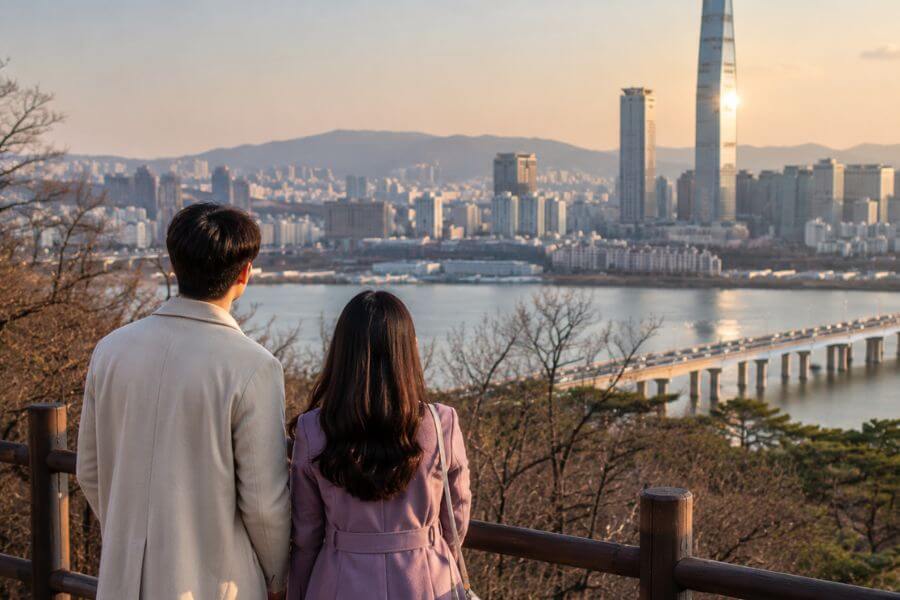
Have you ever sat on your couch, completely locked into a television screen, watching two characters confess their deep feelings under a shower of pink cherry blossoms or glowing city lights? If you love Korean television shows, your answer is probably a big yes. The stories are magical, but the actual settings often steal the show. The good news is that these places are not fake studio sets built on a hidden backlot. They are real, physical landmarks that you can walk through, touch, and experience with your own two feet.
Walking through the capital city of South Korea feels like stepping directly into an active television screen. One minute you are walking down an old stone wall pathway from a historical romance, and the next you are standing on a glass bridge surrounded by glowing digital signs from a corporate thriller. This guide will take you on a detailed journey through the most unforgettable filming spots across the city. Get your walking shoes ready, clear out your phone storage for photos, and prepare to live out your ultimate television fantasies in real life.
The Timeless Romance of Namsan Seoul Tower and Park
When people think about romantic moments in Korean television, their minds almost always jump straight to the glowing tower on top of Mount Namsan. This towering structure is more than just a radio transmitter. It is the absolute symbol of romance for millions of viewers around the globe. The mountain park surrounding the tower offers sweeping views of the urban landscape below, making it the perfect backdrop for intense declarations of love or dramatic reunions.
The Famous Locks of Love Roof Terrace
Your first stop on the mountain should be the expansive wooden roof deck located right beneath the base of the tower. This terrace is completely covered in thousands of bright, multicolored padlocks attached to heavy metal fences. Couples from all over the world come here to write their names on a lock, clip it to the fence, and throw away the key to seal their love forever.
You will instantly recognize this deck from legendary shows like Boys Over Flowers and My Love from the Star. Remember the scene where the main characters sit at the outdoor tables, shivering in the cold winter air while waiting for a date? That happened right here. Walking along the rows of plastic locks allows you to feel the romantic energy that has built up over decades of television history. The metallic clicking sounds of the locks swaying in the wind create a very unique soundtrack as you search for the exact spots where actors stood during their most emotional scenes.
The Scenic Namsan Cable Car Ride
To reach the high peak of the mountain, you can choose to take a slow, peaceful ride in a glass cable car that glides over the treetops. This aerial tramway has been a staple of television romance for generations. It is often used as a small, tight space where characters are forced to stand close together, leading to nervous glances and accidental hand holding.
During the daytime, the ride gives you a clear look at how the green forest of the park collides directly with the gray concrete buildings of downtown. At night, the experience transforms completely into a sea of glittering yellow and white lights. Riding the cable car allows you to feel the exact same sense of wonder that characters express when they look out over the city skyline during a late-night talk.
The Majestic Baekbeom Square Fortress Wall
Located just a short walk down the mountain slope from the main tower area sits a wide, grassy park known as Baekbeom Square. This area features a beautifully restored section of the ancient Seoul City Wall, constructed from large gray stones that snake up the green hillside. The wall lights up with a warm, golden glow as soon as the sun dips below the horizon.
This specific stretch of the ancient wall was featured heavily in the hit show Itaewon Class, as well as the romantic series Love Alarm. It serves as a quiet space where characters go to think about their lives, walk off their stress, or have deep conversations away from the noisy streets below. The contrast between the old stone wall in the front and the modern skyscrapers glowing in the distance captures the visual style of modern television perfectly.
The Historical Grandeur of Gyeongbokgung Palace
If your favorite television shows involve royal politics, sword fights, traditional silk robes, and time-traveling scholars, then you are likely a fan of historical dramas. The ultimate home for these epic stories is Gyeongbokgung Palace, the largest of the five grand palaces built during the Joseon Dynasty. With its massive wooden gates, expansive stone courtyards, and calm water pavilions, this palace lets you step back centuries into the past.
The Grand Gwanghwamun Gate and Front Square
Before you even enter the palace grounds, you must pass through Gwanghwamun, the main southern gate of the complex. This huge stone structure features three arched entrances and a two-story wooden pavilion painted in bright red, green, and blue patterns. Directly in front of the gate lies a long, wide public square that stretches into the heart of the downtown traffic.
This massive square and gate area served as the primary cross-dimensional gateway in the fantasy drama The King: Eternal Monarch. It is the exact spot where the king pulls his white horse to a stop in the middle of modern city traffic, shocking the female detective. Standing in the center of the concrete square while looking up at the ancient gate gives you that exact same surreal feeling of being caught between two completely different eras at the exact same moment.
The Serene Gyeonghoeru Pavilion
Once you walk inside the palace walls and clear the main throne halls, you will find a large, rectangular artificial pond. Sitting gracefully on forty-eight massive stone pillars inside this water feature is Gyeonghoeru Pavilion. This open-air banquet hall looks like it is floating directly on top of the calm, glassy water, reflecting the weeping willow trees and distant green mountains that surround it.
This pavilion is the go-to location for emotional night walks, secret royal meetings, and quiet romantic confessions in almost every major historical show, including Moonlight Drawn by Clouds. The way the wooden roof lines curve upward toward the sky creates a frame that directors use to capture the isolation of royal life. Walking along the edge of the water lets you picture the characters staring down at their reflections while contemplating the heavy future of their kingdom.
| Palace Section | Architectural Feature | Common Television Usage |
| Gwanghwamun Gate | Three Arched Portals | Time Travel and Portals |
| Main Courtyard | Raised Stone Pathways | Royal Processions and Confrontations |
| Gyeonghoeru Pavilion | Floating Water Pillars | Secret Romances and Banquets |
| Royal Living Quarters | Paper-Screen Doors | Private Schemes and Heartbreak |
The Urban Energy of Itaewon and Noksapyeong
For viewers who prefer stories about gritty ambition, youth culture, and modern social struggles, the international district of Itaewon is hallowed ground. This hilly neighborhood is famous for its steep alleyways, diverse food scene, and vibrant nightlife. It gained global fame as the central setting for Itaewon Class, a show that celebrated underdog entrepreneurs fighting against giant corporate bullies.
The Noksapyeong Sky Bridge
To catch the most iconic view in the entire neighborhood, you need to head over to the concrete pedestrian footbridge located right outside Noksapyeong Station. This bridge spans across a deep, multi-lane roadway that cuts through the valley, offering an unobstructed view of Mount Namsan and the Seoul Tower rising high in the background.
In Itaewon Class, this bridge was practically a character of its own. The main character spent hours standing against the green metal railing, staring down at the moving car headlights while planning his restaurant empire. Walking across this bridge at sunset allows you to experience that exact same view. The rush of wind from the traffic below combined with the massive scale of the mountain ahead makes you feel the raw, unfiltered energy of the city.
The Steep Alleyways of Haebangchon
Just a short walk from the main bridge lies Haebangchon, one of the oldest hillside neighborhoods in the city. This area is a maze of incredibly steep streets, old brick homes, and tiny rooftop cafes that look out over the sprawling urban valley below. It represents the older, hardworking side of the city that exists right alongside modern developments.
Television crews love this area because the vertical landscape creates instant visual drama. You can walk down the same narrow sidewalks where characters trudged home after long work shifts, or sit at a corner convenience store where deep conversations took place over cheap cups of instant coffee. The neighborhood has a raw, residential charm that connects you deeply to the daily struggles and small victories of the characters on screen.
The Original Danbam Restaurant Buildings
No tour of this area would be complete without tracking down the physical buildings that served as the home base for the Danbam pub. The show actually used two different locations as the restaurant expanded its business. The first location is a small, modest structure on a sloped street in Haebangchon, while the second is a larger building with a wide rooftop terrace located closer to the main streets of Itaewon.
Standing outside these structures allows you to appreciate the clever choices made by the production team. You can easily visualize the characters hanging up their neon signs, prepping vegetables by the front windows, and laughing together on the roof after a successful night of business. Even though the real-world businesses inside these buildings change over time, the physical structures still hold that distinct spirit of youthful rebellion and teamwork.
The Traditional Charm of Bukchon and Ikseon-dong
When directors want to capture a sense of classic Korean beauty without leaving the modern city center, they head straight to the historic neighborhoods of Bukchon and Ikseon-dong. These areas are packed with hundreds of hanok, which are traditional Korean houses featuring beautiful tiled roofs, wooden support beams, and private central courtyards. Walking through these alleys feels like a gentle escape from the roar of modern life.
The Historic Streets of Bukchon Hanok Village
Bukchon is a historic residential neighborhood situated on a high hill between two major palaces. The narrow alleys here are lined with beautifully preserved homes that have been passed down for generations. The most famous street features a long, uphill climb where the stone walls and dark tiled roofs frame a view of the distant modern glass skyscrapers at the very top.
This neighborhood played a massive role in the classic romance Personal Taste, where the main characters lived inside one of these traditional homes. More recently, it made appearances in fantasy romances like Goblin and Our Beloved Summer. As you walk silently through these paths, you can observe the intricate brickwork and heavy wooden gates that have served as the backdrop for countless dramatic entrances, sudden rain showers, and tearful goodbyes.
The Trendy Alleys of Ikseon-dong
While Bukchon has a quiet, aristocratic feel, Ikseon-dong is a much tighter maze of alleys that explodes with modern creative energy. These tiny, winding walkways are so narrow that two people can barely walk side-by-side. Over the last few years, young artists and chefs have converted these old homes into vibrant clothing shops, flower cafes, and handmade dessert spots.
This colorful mix of old architecture and bright modern decor made it the perfect filming spot for youth dramas like True Beauty and See You in My 19th Life. You can walk past the cafe windows covered in trailing purple flowers where characters hid from their classmates, or explore the small accessory shops where friends picked out matching jewelry pieces. The lively atmosphere makes you feel like you are walking through an active, joyful montage scene.
The Romantic Deoksugung Stone Wall Road
Located just south of the main hanok clusters, running along the side of Deoksugung Palace, is a picturesque pathway known as the Stone Wall Road. This street is lined with massive, ancient trees that explode into brilliant yellow leaves during the autumn season. The sidewalk is paved with smooth flat stones, and a beautiful gray stone wall keeps the palace separate from the public street.
This specific walkway is legendary in television history, most famously appearing in Goblin as the place where the mystical Grim Reaper meets passing souls. The road has an undeniable air of mystery and melancholy. Walking along the curved wall as dried leaves drift down around you makes it easy to see why directors use this exact location whenever they need to film a scene about fate, time, or long-lost memories.
The Futuristic Architecture of Dongdaemun Design Plaza
To experience the complete opposite of a traditional village, you must visit the Dongdaemun Design Plaza, commonly known as the DDP. Designed by a world-famous architect, this massive silver structure looks like a giant alien spaceship that has smoothly landed in the middle of a bustling commercial shopping district. The building features zero straight lines, relying entirely on smooth curves, metallic panels, and sweeping concrete walkways.
The Endless Metallic Curves
Walking along the exterior paths of the DDP is a surreal experience. The building is covered in over forty-five thousand individual aluminum panels that reflect the changing sunlight during the day and glow with soft integrated LED lights at night. There are no clear seams or corners, making the structure feel like it is constantly shifting as you move around it.
This futuristic look has made the DDP a favorite spot for high-profile dramas, including You Who Came from the Stars and The Producers. It often represents a high-fashion runway, a top-tier corporate headquarters, or a secret meeting spot for powerful characters. Walking through the sweeping outdoor corridors allows you to appreciate the massive scale of the architecture, making you feel small and important all at the same time, much like the characters navigating the complex plots of their television worlds.
The Glowing LED Rose Garden
For many years, one of the most famous features of the DDP was a massive outdoor art installation consisting of thousands of electronic white roses that would light up as soon as night fell. This glowing field of light created a stunning contrast against the dark, industrial metal walls of the main building.
This specific garden was the location for major romantic moments where characters would finally admit their feelings after seasons of waiting. While the display was originally intended to be temporary, it was kept alive for a long time due to its massive popularity among television fans. Walking through the pathways where the artificial flowers used to glow reminds you of how television can turn a simple urban design project into a global monument for romance.
The Academic Beauty of Yonsei and Choong Ang
University campuses in the capital city are famously beautiful, featuring historic stone buildings covered in thick green ivy, wide grassy lawns, and grand European-style architecture. These campuses are open to the public, allowing you to walk the same steps as the young characters who are figuring out life, love, and friendship for the very first time.
The Ivy-Covered Halls of Yonsei University
Yonsei University features one of the most picturesque central quadrangles in the entire country. The old stone buildings look like they belong in a classic storybook, especially during the spring when flowers bloom across the lawns, or during autumn when the ivy leaves turn a deep, fiery red.
This classic academic look made Yonsei the prime location for popular youth series like True Beauty, Extraordinary You, and Reply 1994. You can stand in front of the central statue where characters accidentally tripped over their backpacks, or sit on the stone benches where students gathered to study or gossip about their crushes. The peaceful, studious atmosphere instantly brings back that sweet, nostalgic feeling of young college romance.
The Gothic Architecture of Choong Ang High School
Tucked away on a quiet hill near the traditional hanok village sits Choong Ang High School. Despite being a functioning high school, its main building looks more like a historic castle, complete with pointed stone arches, high glass windows, and a dramatic central tower that rises above the surrounding neighborhood.
This stunning location is a powerhouse in the world of television history. It served as the main high school setting for the global phenomenon Goblin, as well as the hit youth romance Lovely Runner. Walking up the steep front approach to the school gates allows you to instantly picture characters running late for class, standing under umbrellas in the rain, or sharing a secret conversation before the morning bell rings.
Comparing the Vibe of Different Filming Locations
To help you plan your itinerary based on your favorite genre of television, it helps to look at how these different locations stack up against each other in terms of their visual style and atmosphere.
| Location Name | Primary Television Genre | Best Time to Visit | Visual Highlight |
| Namsan Tower | Modern Romance | Late Evening | City Lights and Locks |
| Gyeongbokgung | Historical Drama | Early Morning | Water Pavilion and Gates |
| Itaewon Streets | Gritty Youth / Drama | Nighttime | Neon Signs and Bridges |
| Bukchon Village | Classic Romance | Afternoon | Tiled Roofs and Alleys |
| Dongdaemun Plaza | Sci-Fi / High Fashion | Midnight | Metallic Curves and Lights |
| Yonsei Campus | College / Youth Life | Weekend Daytime | Ivy Stone Buildings |
Detailed Neighborhood Travel Planning
When you are ready to venture out and see these sites in person, organizing your trip by geographic clusters will save you hours of travel time on the local transit lines. The city is massive, but the transit network connects these neighborhoods efficiently.
The Historic Northern Circuit
You can easily combine Gyeongbokgung Palace, Bukchon Hanok Village, and Choong Ang High School into a single day of exploration because they sit right next to each other in the northern central district.
- Start your morning early at Gyeongbokgung Palace to catch the opening gates without large tour groups blocking your view.
- Walk directly east into the alleys of Bukchon Hanok Village around lunchtime, stopping at a traditional tea house for a quick rest.
- Head further up the hill to view the exterior of Choong Ang High School in the early afternoon when the sunlight hits the stone arches beautifully.
The Romantic Southern Hub
For a completely different experience focused on modern city life and high views, save your afternoon and evening for the central and southern areas.
- Spend your mid-afternoon exploring the futuristic walkways of the Dongdaemun Design Plaza.
- As the sun begins to set, take the subway over to Noksapyeong Station to stand on the pedestrian bridge just as the streetlights turn on.
- Finish your night by taking the cable car up to Namsan Seoul Tower to see the entire city illuminated beneath the stars.
Frequently Asked Questions
Can I actually go inside the historical buildings seen in the dramas?
Yes, most of the grand palaces like Gyeongbokgung allow you to walk freely throughout their courtyards, pavilions, and major ceremonial grounds for a very small entry fee. However, you cannot step inside the actual private indoor rooms or sit on the royal thrones to protect the fragile wood and paper structures from wear and tear.
Do I need to pay a fee to visit the traditional villages?
No, both Bukchon Hanok Village and Ikseon-dong are active public neighborhoods, so there is absolutely no admission ticket required to walk through the streets. Because real people live in these traditional homes, visitors are kindly asked to keep their voices down and avoid taking photos directly through the private windows of the houses.
Is it hard to navigate between these locations using public transportation?
Not at all. The capital city has an incredibly clean, safe, and organized underground train system that connects every single location mentioned in this guide. Every station has clear English signs, and you can buy a simple transit card at any local convenience store to pay for your train and bus rides effortlessly.
Are the restaurants and cafes from the shows real businesses?
Many of the cafes and restaurants featured in modern dramas are indeed real, fully operational businesses where you can walk in, sit down, and order food or drinks. While some spots might alter their interior decorations slightly after filming wraps up, most businesses embrace their television history and proudly display signed posters from the actors who filmed there.
What should I wear when visiting these filming locations?
You should prioritize wearing comfortable walking shoes, as many of these locations, especially Itaewon, Bukchon, and Namsan Park, are built on very steep hills with long stone staircases. If you want to take special photos at the palaces, you can rent traditional silk robes from shops near the entry gates, which also grants you free admission into the palace grounds.