Key Takeaways
Planning your first trip to South Korea means stepping into a world where centuries-old traditions stand beside glowing neon skyscrapers. This comprehensive guide maps out a perfect fourteen-day route that hits the absolute best of the country. By following this plan, you will see the full picture of the peninsula without feeling like you are constantly rushing.
- The Route: Spend your first block of time exploring the huge capital of Seoul, take a quick trip to the peaceful historic village of Jeonju, travel south to the coastal city of Busan, step back in time in Gyeongju, and finish your vacation on the volcanic island of Jeju.
- Transit Strategy: You can zip between major mainland hubs using the high-speed rail network. Local public transport works beautifully with a single rechargeable transit card that you tap when entering and leaving buses and subways.
- Navigation Tools: Global mapping applications do not provide walking or driving directions here due to local security regulations. You must download local mapping applications before you land to find your way around smoothly.
- Cultural Rules: Always use two hands when you hand money, cards, or drinks to another person, and make sure to take your shoes off whenever you enter a home or a traditional dining room.
Welcome to the Land of the Morning Calm
Imagine a place where you can wander through a peaceful royal palace built in the thirteenth century, and then thirty minutes later, walk through a neighborhood filled with futuristic buildings, fashion boutiques, and cafes that use robotic arms to brew coffee. That is the daily reality of South Korea. It is a country that moves forward at lightning speed while holding onto its deep historic roots with immense pride.
For a first-time visitor, arriving here can feel thrilling and slightly overwhelming all at once. The signs feature a unique alphabet, the food smells of rich sesame oil and fiery red peppers, and the pace of life in the cities is fast. Yet, beneath the high-energy surface, you will find an incredibly safe, polite, and welcoming society where people are glad to help you find your destination. This ultimate two-week itinerary is built to give you the perfect balance of experiences. You will dive into the massive urban energy of the north, taste the legendary culinary creations of the western plains, feel the ocean breeze of the southern ports, and hike along the dramatic volcanic cliffs of the southern paradise island.
The Master Fourteen-Day Route at a Glance
Before diving into the daily details, it helps to understand the physical flow of your journey. This itinerary forms a loop that maximizes your time and minimizes the hours you spend moving your bags from one hotel to another. You will start in the north, head down the spine of the country, and fly out to the island before returning to the capital for your flight home.
Overview of Your Two-Week Journey
| Days | Primary Base | Main Focus of the Block | Major Activities |
| 1 to 5 | Seoul | City culture, ancient history, and northern day trips | Royal palaces, market food, street fashion, and the border zone |
| 6 | Jeonju | Traditional architecture and culinary heritage | Hanok houses, slow living, and traditional rice bowls |
| 7 to 9 | Busan | Coastal views, fresh seafood, and beach culture | Cliffside temples, colorful hillside neighborhoods, and night views |
| 10 | Gyeongju | Ancient kingdoms and archaeological treasures | Royal burial mounds, old star observatories, and lake walks |
| 11 to 13 | Jeju Island | Volcanic nature, waterfalls, and ocean relaxation | Sunrise peaks, giant lava tubes, green tea fields, and beaches |
| 14 | Seoul | Last-minute shopping and departure preparations | Souvenir hunting, packing, and your final evening dinner |
Essential Steps Before You Fly
A successful vacation to South Korea starts well before you step onto the airplane. The country relies heavily on digital systems, meaning you need to complete a small amount of paperwork and load your smartphone with specific applications to move around like a local expert.
Digital Paperwork and Entry Requirements
You must complete the digital arrival card online up to three days before you land. This system replaces the old paper forms that flight attendants used to hand out on the aircraft. Filling this out ahead of time saves you a long wait in line at the border control counters. If you carry specific prescription medications, especially strong pain relievers, make sure to check the regulations with the Ministry of Food and Drug Safety weeks in advance, as certain substances require an official digital permit to clear customs.
Your Essential Smartphone Toolkit
Because of specific national security laws regarding geographic data, standard global map applications cannot offer walking paths, driving routes, or updated transit schedules within South Korea. If you try to use them, the map will look blank or point you in the wrong direction. You must download specialized local navigation tools.
- Local Maps: Download the premier national mapping applications. They are fully available in English and provide precise schedules for subways and buses, down to the exact minute.
- Translation Help: Get the translation application created by the top national internet company. It handles conversational text and lets you point your smartphone camera at signs or menus to read them instantly.
- Ride Hailing: Download the primary local taxi application. It connects directly to licensed city cabs and lets you call a driver to your exact location without needing to speak any words or explain where you are going.
Days 1 to 5: The Energy and History of Seoul
Your adventure begins in the massive capital city, home to nearly ten million people. Seoul is a collection of distinct neighborhoods separated by dramatic mountains and the wide Han River. Each area has its own personality, and the best way to explore is to focus on one specific zone each day.
Day 1: Arrival, Settling In, and Neon Lights
Most international flights touch down at Incheon International Airport, which sits on an island west of the capital. Your first task after clearing customs is to locate an airport convenience store and purchase a reloadable transit card. You will use this card to pay for every single train, subway, and city bus during your two weeks on the mainland.
To reach the city center, board the airport express train. The non-stop train takes forty-three minutes to reach the central train station, while the stopping train takes about an hour. Once you check into your hotel, spend your evening getting used to the sights and sounds of the city.
If you choose a hotel in the central district, take a walk through the bright alleys of the main shopping quarter. The streets here light up after dark with glowing signs, and vendors set up small carts selling hot snacks. If you prefer a younger vibe, head west to the university district, where students gather to watch street performers, musicians, and dancers under the bright store lights. Grab a simple dinner of fried chicken or noodle soup and get a good night of rest to beat the jet lag.
Day 2: Royal Palaces, Old Alleys, and Traditional Tea
Dedicate your first full day to the deep history of the kingdom. Start your morning early at the grandest of the five royal compounds in the city, built during the dawn of the Joseon Dynasty.
Exploring the Royal Heart of the City
- The Changing of the Guard: Arrive at the massive front gate just before ten in the morning. You will see a performance featuring guards dressed in bright red, blue, and yellow silk robes marching to the beat of traditional drums.
- The Palace Grounds: Walk through the stone courtyards to view the main throne hall, which sits over a wide pond on carved stone pillars. The wooden architecture features detailed geometric patterns painted in rich greens, reds, and golds.
- The Costume Trick: You will notice many visitors wearing traditional high-waisted silk dresses and embroidered tunics. If you rent one of these outfits from the many rental shops surrounding the stone walls, the ticket collectors will let you into the palace completely free of charge.
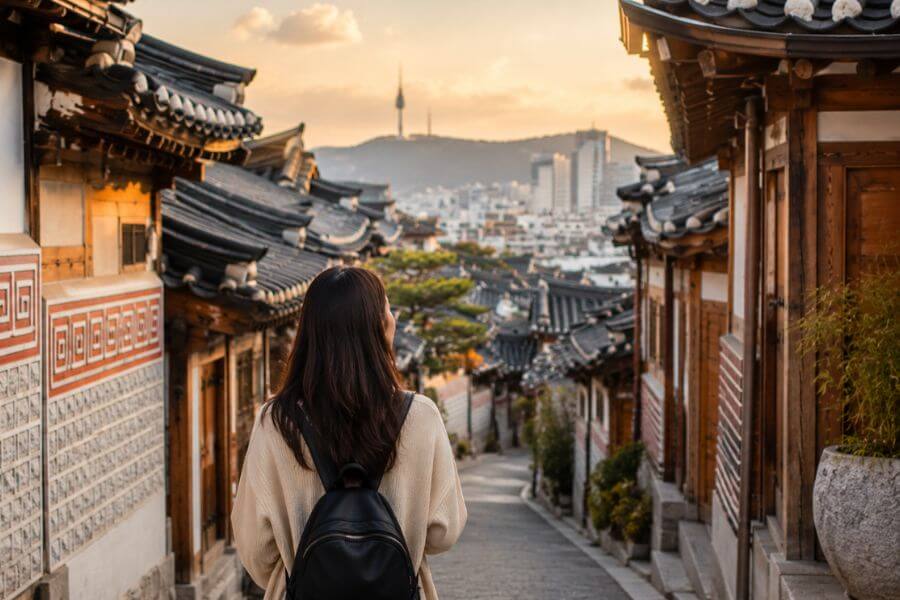
From the palace gates, walk east into the nearby historic village. This neighborhood is a living historic area where hundreds of traditional wooden homes sit tightly along steep, narrow brick alleys. These buildings feature distinctive curved tiled roofs and stone foundations. Remember that people still live in these homes, so keep your voice low as you walk through to snap photos of the rooftops against the modern city skyscrapers in the distance.
End your afternoon by walking into the nearby arts and crafts district. The main street here is closed to cars and contains dozens of small artisan shops, paper makers, ceramic galleries, and traditional wooden tea houses. Step inside a quiet courtyard tea house to sip hot ginger or plum tea while sitting on floor cushions, a perfect way to rest your feet after hours of walking.
Day 3: Secret Gardens and Futuristic Design
Start your third day at the second major palace compound, which sits just east of the first. This palace is famous because it was designed to blend perfectly with the natural trees, hills, and valleys behind it.
You can sign up for a guided walk through the hidden garden located behind the main buildings. This area was once the private playground of the royal family. The path leads you past old oaks, maples, and walnuts that are hundreds of years old, looping around small square ponds and quiet wooden pavilions where kings used to write poetry.
In the afternoon, take the subway to the eastern design district to see the ultimate contrast. Here, you will find a massive, metallic structure designed by a world-famous architect. The building looks like an alien spaceship landed in the middle of the city, with curved aluminum panels and no straight lines. Walk through the design museum inside, and stay until the sun goes down, when the entire exterior lights up with thousands of tiny embedded lights.
Day 4: A Journey to the Border Zone
On your fourth day, take a break from the urban landscape to visit one of the most unique locations on the planet: the Demilitarized Zone that separates the north and the south. You cannot visit this area on your own; you must sign up for an authorized group day tour that departs from central Seoul early in the morning.
Always remember to bring your physical passport on this day, as military guards will step onto your tour bus to check your identification at the river checkpoints. The tour takes you to a viewing point on top of a high hill where you can look through binoculars across the wide river into the fields of the north. You will see a distant village, a massive flagpole, and sometimes local farmers working in the fields.
The most intense part of the day involves walking down into one of the secret underground tunnels discovered deep in the granite rock beneath the border. You will put on a plastic safety helmet and walk down a steep slope into a dark, damp tunnel that is over seventy meters below the surface. The space is tight and the air is cool, offering a powerful reminder of the complex history that still shapes the peninsula today. The bus returns you to the city center by late afternoon, leaving you time to enjoy a comforting dinner of Korean barbecue at a local neighborhood spot.
Day 5: Mountain Trails and City Views
Spend your final day in the capital enjoying the natural scenery that surrounds the concrete landscape. Seoul is unique because a rugged national park sits right at the northern edge of the subway lines.
Hop on the train to the base of the northern peak. The trails here are lined with smooth granite rocks, clear streams, and pine forests. You do not need professional gear to hike here, but a sturdy pair of walking shoes is essential. The path leads past small mountain temples where golden lanterns hang from the eaves, eventually bringing you to ridges that look out across the entire city.
If you prefer a less strenuous walk, stay in the center of the city and head to the central park hill instead. You can take a cable car or walk up a paved path through the trees to reach the tall transmission tower that sits at the very peak. The observation platform at the top gives you a complete view of the city layout, showing how the river cuts through the skyscrapers. In the evening, visit the grand food market nearby, where rows of stalls sell thick mung bean pancakes frying on hot grates, rice cakes in spicy red sauce, and fresh noodles cut by hand right in front of you.
Day 6: The Slow Food and Old Charm of Jeonju
On the morning of your sixth day, pack your bags and head to the central train station to catch the high-speed train south. Your destination is a city famous throughout the country as the absolute capital of traditional food and slow-paced living. The train journey takes less than two hours, moving past wide fields and misty mountain ranges.
The Capital of Traditional Homes
When you exit the modern train station, take a short taxi ride to the historic core of the town. While Seoul has small pockets of old architecture, this city features a massive, continuous district containing more than eight hundred traditional buildings.
The experience of staying here is completely different from the capital. Many of the old wooden homes operate as small guesthouses. When you check in, you will slip off your shoes at the wooden entrance and sleep on thick, comfortable quilted mattresses laid directly on the smooth, heated floors. This traditional floor-heating system keeps the rooms cozy and warm.
The Birthplace of a National Dish
This city is internationally recognized as the home of the most famous rice bowl in the country. This dish consists of warm white rice topped with an array of carefully prepared vegetables, beef, a raw egg yolk, and a spoonful of red pepper paste, all mixed together thoroughly before eating.
Culinary Highlights of the Region
- The Ultimate Rice Bowl: The local version uses rice cooked in a rich beef broth and includes unique local bean sprouts that stay perfectly crunchy even when mixed with hot rice.
- The Sweet Rice Wine: Pair your meals with a local rice wine brewed with various spices and herbs. It has a sweet, warm flavor that cuts through the heat of the spicy side dishes.
- The Market Feast: In the evening, wander through the local covered market. The vendors here serve modern twists on traditional snacks, such as skewers of cheese grilled over open flames and drizzled with sweet honey.
Spend your evening walking through the dark alleys of the old district. The curved tile roofs look beautiful against the night sky, and the absence of tall buildings creates a peaceful, timeless atmosphere that lets you recharge before you head to the bustling southern coast.
Days 7 to 9: Coastal Views and Seafood in Busan
On day seven, board an intercity bus or a train to travel to the second-largest city in South Korea. This massive port metropolis stretches along the rugged southeastern coast, wedged between steep mountains and the deep blue waters of the ocean. The energy here is noticeably more relaxed than in Seoul, and the local dialect has a distinct, expressive rhythm.
Day 7: Hillside Colors and Coastal Temples
Start your coastal exploration at one of the most colorful neighborhoods you will ever see. This district was built on a steep mountainside by refugees during the war in the mid-fictional century. For decades, it was a poor, crowded area, but local artists later teamed up with residents to paint the small concrete houses in bright pastel pinks, blues, and yellows.
The neighborhood forms a giant staircase of color on the hill. Walk through the narrow paths to find hidden art installations, small viewing decks that look out over the massive shipping port, and cafes built on the flat roofs.
In the afternoon, take a ride out to the eastern edge of the coast to visit a temple that breaks from national tradition. While most temples sit deep in the silence of the mountains, this unique complex is built right on the rocky cliffs overlooking the ocean waves. You will walk down a stone staircase lined with lanterns to reach the main shrines, where the salt spray from the ocean dampens the stone courtyards. It is a spectacular place to listen to the deep chanting of the monks mixed with the sound of waves crashing against the black rocks below.
Day 8: Sandy Beaches and Fish Markets
Dedicate your second day to the ocean culture of the city. Start your morning at the largest fish market in the country, which sits right next to the busy harbor.
Navigating the Great Ocean Market
- The Ground Floor: Walk through the damp avenues inside the massive concrete building. You will see rows of open water tanks filled with every sea creature imaginable, from giant octopuses and king crabs to sea urchins and unfamiliar flatfish.
- The Second Floor: Once you choose something that catches your eye, the vendor will clean it and send you up the stairs to a dining hall. Here, you sit on the floor while cooks prepare your seafood choices, serving them alongside hot stews and spicy dipping sauces.
- The Outside Stalls: Walk along the wooden boardwalk outside the building to see elderly women selling dried fish, seaweed, and salted seafood from wooden crates.
After lunch, head east to the most famous stretch of sand in the country. This wide beach is lined with luxury hotels, high-rise apartments, and a long wooden boardwalk. In the warmer months, it is a bustling center of activity, but even in the cooler seasons, it is a fantastic place for a long walk.
As the sun sets, continue walking east along the coastal path to reach a small park filled with green pine trees. The path leads to a modern, circular building that looks out over the water, offering a view of the massive suspension bridge that spans the bay. When night falls, the entire bridge lights up with a choreographed light show that reflects across the dark ocean water.
Day 9: Coastal Paths and Cable Cars
Spend your last day on the coast enjoying the dramatic landscapes of the southern cliffs. Head to a forested park located on a peninsula that juts out into the sea.
The walking paths here wind through dense woods of pine and camellia trees, leading to high white cliffs that drop straight into the dark blue water. On clear days, you can see small fishing boats navigating the waves far below. There is a lighthouse on the edge of the cliff with a viewing platform that gives you a view of the distant islands.
In the afternoon, head to the nearby bay to ride the glass-bottomed cable car that glides high above the water. The cabins travel from a beach park across the open sea to a forested island on the other side. Looking down through the clear glass floor gives you a thrilling view of the waves passing directly beneath your feet. Spend your final evening in the city enjoying a hot pot of local pork soup, a rich broth filled with tender meat and green onions that is a signature comfort food of the region.
Day 10: The Ancient Tombs and Treasures of Gyeongju
On the tenth morning, take a short thirty-minute train ride north into a city that functions as a massive, open-air historical museum. This quiet valley was the capital of the ancient Silla Kingdom, which ruled the southern half of the peninsula for nearly a thousand years.
Walking Among the Kings
The moment you arrive in the center of the town, you will notice giant, green hills rising up directly between the modern stores, houses, and streets. These are not natural hills; they are the ancient burial mounds of Silla royalty.
The Ancient Landmarks of the Valley
- The Green Mounds: Walk through the quiet park grounds to see these perfectly round, grass-covered tombs. Some are as tall as a multi-story building. You can step inside one specific excavated tomb to see how the ancient builders constructed a wooden chamber packed with heavy river stones before covering it with soil. Inside, displays show the gold crowns, rings, and swords found with the ancient rulers.
- The Stone Star Tower: A short walk from the tombs brings you to a unique stone structure shaped like a bottle. Built in the seventh century, this is the oldest surviving astronomical observatory in East Asia. The building uses exactly three hundred and sixty-five stones to represent the days of the year, showing the mathematical precision of the ancient builders.
- The Royal Pond: In the evening, head to the site of an old palace garden. The stone foundations of the buildings sit around a curved artificial pond. When the sun goes down, spotlights illuminate the wooden pavilions and trees, creating a reflection on the still water that looks like a classical painting.
Temples in the Mountains
Before your day ends, take a local bus up into the forested slopes of the mountain that rises east of the city. Here sits one of the most architecturally significant Buddhist temples in the world.
The temple features stone terraces, bridges, and staircases that have survived for over a millennium. Walk up the wooden pathways to view the main prayer halls, which house massive bronze statues of the Buddha. If you hike further up the mountain path, you will reach a hidden stone grotto carved deep into the granite peak. Inside, a serene white stone Buddha sits looking out toward the eastern ocean, positioned perfectly to catch the rays of the rising sun. Return to the town center for a quiet dinner of local grilled beef and prepares for your flight to the island paradise.
Days 11 to 13: The Volcanic Wonders of Jeju Island
On the morning of day eleven, take a taxi or a local train to the nearby domestic airport to catch a short, one-hour flight across the ocean to a volcanic island. This destination is dominated by a massive, dormant shield volcano that rises directly out of the center of the land. The climate here is mild, the volcanic soil is dark and rich, and the landscape feels entirely different from the mainland.
Day 11: Sunrise Peaks and Underground Lava Tubes
Start your island exploration on the dramatic eastern coast. Your first major stop is a volcanic cone that formed thousands of years ago from an eruption under the shallow ocean. The structure looks like a giant green fortress floating on the water, with steep vertical walls and a wide, bowl-shaped crater at the very top.
A well-maintained wooden staircase leads from the green fields up the side of the cone. The climb takes about twenty minutes of steady walking, and the reward at the top is a panoramic view of the ocean, the green farmlands, and the distant volcanic peaks that dot the island.
In the afternoon, travel a short distance inland to explore a completely different volcanic structure. This island is home to one of the most extensive networks of lava tubes in the world. These are giant underground tunnels formed when hot lava flowed beneath a hardened crust.
You can walk down a stone staircase into a section of the tunnel that is open to the public. The interior is cool, dark, and damp, with high ceilings and wide pathways. The walls show lines left by the flowing molten rock thousands of years ago, and spotlights highlight unique stone formations that look like frozen waterfalls. It is a fascinating look at the powerful natural forces that built the island.
Day 12: Mountain Trails and Rushing Waterfalls
Spend your second day exploring the southern coast of the island, focusing on the dramatic water features created by the volcanic rock. Start your morning at a unique waterfall where the fresh river water drops straight into the salty ocean.
The Natural Wonders of the South
- The Ocean Waterfall: Walk down a path through the pine trees to reach a rocky cove. The water tumbles over a vertical black cliff, splashing directly into the ocean waves. It is one of the only waterfalls of this type in Asia.
- The Hexagonal Cliffs: Drive a short distance west to see dramatic rock cliffs formed from cooling basalt lava. The rock has cracked into perfect vertical hexagonal pillars that look like they were carved by hand rather than formed by nature.
- The Mountain Paths: If you love walking, spend your afternoon on the lower trails of the central mountain. You do not have to hike to the very peak to enjoy the scenery; the lower loops lead through quiet forests of oak, hornbeam, and cedar, crossing clear mountain streams.
In the evening, visit a local coastal town market to sample the signature food of the island: grilled black pork. This local meat is famous for its rich flavor and tenderness. The restaurants grill the thick cuts over hot charcoal right at your table, serving them with a dipping sauce made from salted anchovies.
Day 13: Green Tea Fields and Sandy Coves
On your last full day on the island, explore the western and northern coasts, where the pace is slow and the views are wide. Start your morning at a massive green tea plantation that stretches across the rolling hills of the western district.
The fields form bright green rows that follow the curves of the land. You can walk along the paths between the tea bushes, visit a modern museum that explains the history of tea production on the island, and sit in a glass cafe to enjoy green tea ice cream, lattes, and cakes while looking out over the fields.
In the afternoon, head to the northwest coast to find a beautiful crescent-shaped beach. The sand here is bright and white, and the water in the shallow bay is a clear turquoise color that looks like the Caribbean. Black volcanic rocks frame the white sand, creating a stunning visual contrast.
Spend your afternoon walking along the sandy shore or sitting in one of the cafes that line the coastal road. For your final dinner on the island, stop by a small coastal shack to try a bowl of seafood noodles packed with fresh mussels, crabs, prawns, and abalone caught by the local elderly women divers who plunge into the cold ocean waters without air tanks.
Day 14: Return to Seoul and Final Farewells
On your final day, take a morning flight from the island back to the capital city. Depending on the timing of your international flight home, you can head directly to the international airport or head back into central Seoul for a few hours of last-minute exploration and souvenir gathering.
Last-Minute Discoveries and Gift Hunting
Use your final afternoon to gather gifts for friends and family back home. Head to the grand shopping districts or the creative neighborhoods to find unique items that will remind you of your journey.
Top Things to Collect Before Departure
- Skincare Products: Visit the main shopping district to browse the massive beauty stores. The shelves are packed with innovative moisturizers, sunscreens, and face masks made with unique ingredients like green tea, volcanic clay, and ginseng.
- Traditional Crafts: Head to the arts district to pick up handmade items, such as beautifully textured mulberry paper notebooks, ceramic tea cups, or intricate wooden bookmarks.
- Packaged Snacks: Step into a local supermarket to buy boxes of unique snacks, including almond nuts flavored with sweet butter or hot spices, crunchy seaweed crisps, and boxes of traditional rice cakes.
Before you make your way to the airport express train, sit down for one final meal. Choose a comforting bowl of hot soup or a plate of crispy fried pork cutlets. As you sit in the busy city, look back at how much you have experienced over the past fourteen days. You have traveled from the high-tech heart of the north to the quiet historic villages of the plains, down to the southern ocean ports, and out to the volcanic cliffs of the sea. You have learned to navigate a completely new culture, mastered new tools, and tasted flavors that you will remember for the rest of your life. South Korea has a way of getting under your skin, and as you board your flight home, you will likely find yourself already thinking about when you can return.
Frequently Asked Questions
Is two weeks a sufficient amount of time to experience South Korea for a first visit?
Yes, a fourteen-day window is a fantastic duration for your first journey to the country. This timeframe gives you long enough to explore the major urban centers without feeling like you are rushing through the sights. You can spend five full days diving deep into the diverse neighborhoods of Seoul, take a quick detour to see the historic architecture of Jeonju, explore the coastal culture of Busan for three days, learn about ancient history in Gyeongju, and still have three days to experience the unique volcanic landscapes of Jeju Island. It offers a complete overview of the nation’s diverse regions.
Do I need to carry a significant amount of physical cash, or can I rely on plastic cards?
South Korea has a highly advanced digital payment system, and you can pay with international plastic credit or debit cards at almost every single restaurant, retail store, hotel, and cafe across the country. However, you still need a small amount of physical cash for transit purposes. The rechargeable transit cards used for subways and city buses can only be topped up with physical bills at train stations or convenience stores. It is a smart idea to withdraw a small amount of local currency from an airport automated teller machine when you land to cover your transportation needs.
How do I stay connected to the internet during my two-week trip?
Staying connected is vital because you will rely on your smartphone for translation tools and local map applications. You can purchase a digital data profile online before you fly, which allows you to install a local data connection directly onto your phone without removing your home card. Alternatively, you can pick up a physical local subscriber identity card or rent a portable wireless internet router at the arrival hall of the international airport. Both options provide fast, reliable data across the entire peninsula.
Is the country a safe destination for individuals traveling completely on their own?
South Korea is consistently ranked as one of the safest nations in the entire world. Violent crime rates are extremely low, and public transport systems are well-lit, clean, and monitored by security cameras. It is common to see people walking alone through city alleys late at night without any safety concerns. While you should always practice basic travel awareness, solo travelers can explore the cities, dine at local restaurants, and move between regions on trains with total confidence and peace of mind.
What is the most effective way to travel between the different cities on the mainland?
The high-speed rail network is the absolute best way to travel between major hubs on the mainland. The sleek express trains travel at speeds over three hundred kilometers per hour, connecting Seoul to southern hubs like Busan or Jeonju in under two hours. The trains are clean, punctual, and feature comfortable seating with plenty of room for your bags. For smaller historic towns that do not sit on the main rail lines, the intercity express bus system is an excellent alternative, offering comfortable reclining seats and direct routes.
Do I need to speak or read the local language to get around smoothly?
You do not need to be fluent in the language to have an incredible vacation. Most signs in subway stations, train depots, and major tourist spots feature clear English translations alongside the local script. Additionally, many younger people in the major cities understand conversational English. When you encounter a language barrier at a local restaurant or a neighborhood market, you can simply open your smartphone translation application to translate text in real-time or show a photo of a dish to a vendor.